Chef Juliette
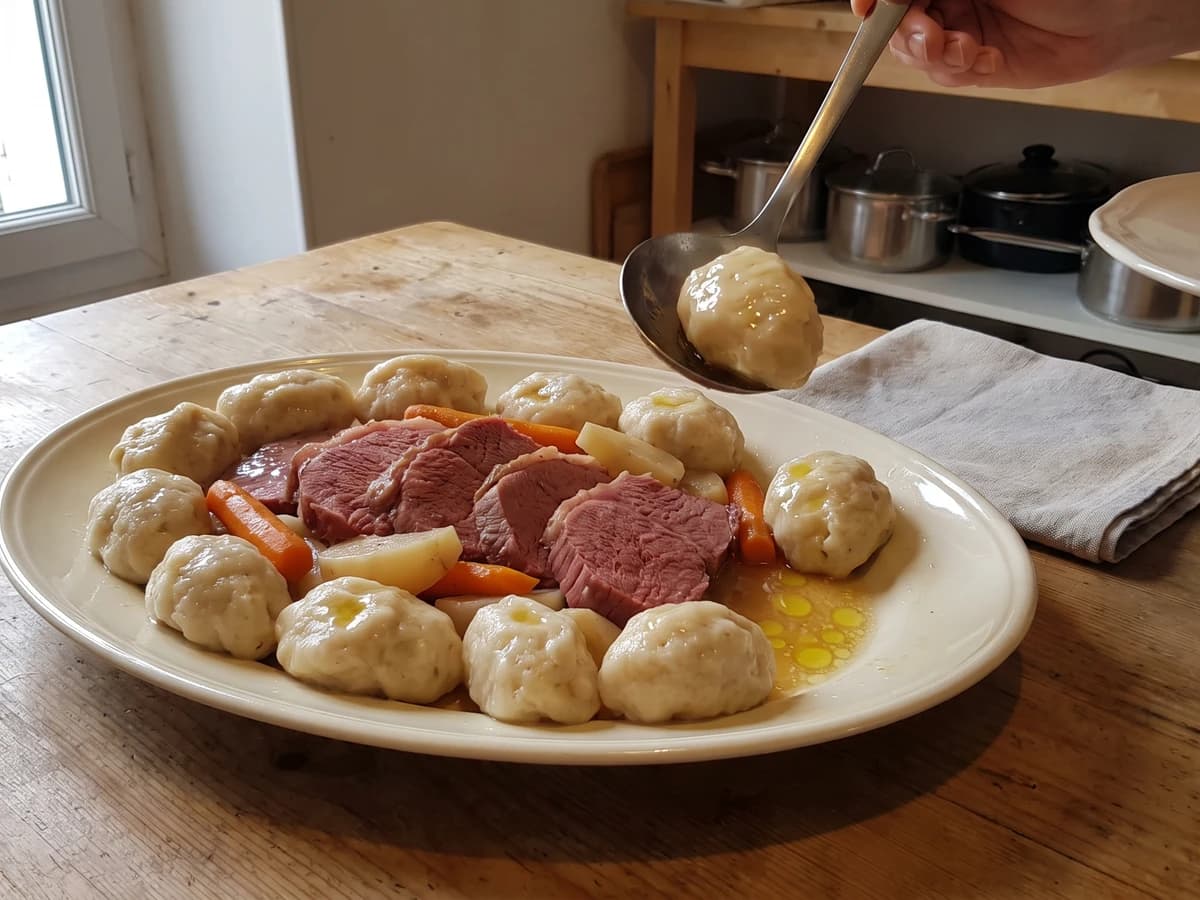
Suet Dumpling
Boulettes au suif, poached beside salt beef, turn equal weights of flour and finely chopped suet into tender, rich dumplings. Keep the beef liquor at a bare tremble and the old garnish works beautifully at home.
A cooking platform built around craft, culture, and the stories behind what we eat.

Created by Chef Juliette
Based on No. 2226, Pommes de Terre Lorette, from Le Guide Culinaire (1907) by Auguste Escoffier
Cheese folded into Pommes Dauphine, shaped into the crescent that defines Lorette, lightly floured, then fried for six minutes: crisp and bronzed outside, tender and airy within.
Pommes de Terre Lorette (cheese-enriched Pommes Dauphine crescents) teaches how a measured enrichment can change character without upsetting structure. The one true thing to know before touching a pan is this: the book's ounce of grated cheese to each pound of Pommes Dauphine is a ratio, not a suggestion. More cheese makes the paste heavy and prone to leaking; kept exactly, it fries into a crisp shell around a tender, airy middle.
The brigade entry assumed prepared Pommes Dauphine waiting in the mise en place, hands to weigh and mould a whole tray, and a deep fryer already steady at service heat. At home, the honest equivalents are a finished one-pound batch of that preparation, a digital scale, a heavy pot, and a thermometer. The ratio and six-minute fry remain untouched; only the batch size and a brief low-oven hold have changed so one cook can serve eleven crescents together. One cook, one stove, one evening.
The brigade's tray work is scaffolding and can go. The 1½-ounce portion, crescent shape, moderate dredge, and last-minute fry are the dish and must stay. Before the oil heats, make the crescents firm and cold enough to keep their seams closed; if the paste softens, chill it rather than burying it in flour.
Pommes de Terre Lorette belongs to the Parisian classical repertory of pommes de terre apprêtées, named potato preparations devised to give the formal table distinct shapes and textures. It grew directly from Pommes Dauphine by adding grated cheese and moulding the paste into crescents rather than round puffs; despite its ornamental name, it is not a regional farmhouse potato dish. The preparation passed naturally into cuisine bourgeoise because the paste could be made ahead, then shaped and fried as the main dish came to the table.
Quantity
about 2 cups (480 ml / 1 lb / 454 g)
cold
Quantity
1/4 cup (60 ml / 1 oz / 28 g)
finely grated
Quantity
1/3 cup (80 ml / 40 g)
for dredging
Quantity
6 cups (1.4 L / 1.3 kg), or enough for a 2-inch (5 cm) depth
for deep-frying
| Ingredient | Quantity |
|---|---|
| prepared Pommes Dauphine mixturecold | about 2 cups (480 ml / 1 lb / 454 g) |
| Gruyère cheesefinely grated | 1/4 cup (60 ml / 1 oz / 28 g) |
| plain flourfor dredging | 1/3 cup (80 ml / 40 g) |
| neutral frying oilfor deep-frying | 6 cups (1.4 L / 1.3 kg), or enough for a 2-inch (5 cm) depth |
Put the cold Pommes Dauphine preparation in a wide bowl and scatter the finely grated Gruyère over it in three additions, folding gently with a flexible spatula after each. Stop as soon as the cheese is evenly dispersed. Beating the mixture works the potato starch too hard and turns an airy paste gluey. If it softens under the spatula, cover and chill it for 15 minutes before shaping.
Set a parchment-lined tray on the scale. Divide the mixture into 1½-ounce (43 g) portions, making about 11, and reserve the small remainder for testing the frying fat. With lightly floured hands, roll each portion into a tapered log about 3½ inches (9 cm) long, then bend it into a broad crescent without thinning the middle. The crescent is the signature, so make it unmistakable rather than timid.
Heat the oven to 210°F (100°C) and set a wire rack over a sheet pan. Put the flour in a shallow dish, roll each crescent through it once, then pat and brush away the excess; moderately dredged means a thin, dry veil, not a white coat. Pour the oil into a dry, heavy pot, keeping the vessel no more than half full, and heat it to 350°F (175°C). Keep the pot handle turned inward and water well away from the stove.
Lower five or six crescents into the fat one at a time with a spider or slotted spoon. Fry for six minutes, turning them gently after they float, until puffed and evenly bronzed. Hold the oil between 340°F and 355°F (170°C and 180°C); crowding cools it and gives a greasy crust. If the crescents darken too quickly, draw the pot partly off the heat while the centres finish. If they remain pale, let the oil recover before the next batch rather than extending every cooking time.
Lift the first batch onto the wire rack and hold it in the low oven only while the second batch fries, no longer than six minutes. Drain the second batch beside it, then arrange all the crescents on a warm platter. The prepared Pommes Dauphine and Gruyère already carry the seasoning, so don't salt automatically. Serve at once, while the curved shells remain crisp and the centres are light. À table!
1 serving (about 120g)
Culinary guides, cultural storytelling, and the editorial depth that makes cooking meaningful.
Discover Culinary ExplorerChef Juliette
Boulettes au suif, poached beside salt beef, turn equal weights of flour and finely chopped suet into tender, rich dumplings. Keep the beef liquor at a bare tremble and the old garnish works beautifully at home.

Chef Juliette
Bread, flour, frangipane, and rice become four cool, supple panades for binding forcemeats, each changing body and flavor while preserving tenderness. The finest Mousselines need none, and knowing that distinction is the lesson.

Chef Juliette
Panade au pain is bread, milk, salt, heat, and attention: stir until the paste releases cleanly, butter it against a skin, and you have the quiet binder behind tender French farces.

Chef Juliette
Panade de farine teaches the drying stroke behind pâte à choux: flour meets boiling buttered water, then stays over the fire until the paste gathers, smooths, and quits the pan cleanly.