Chef Juliette
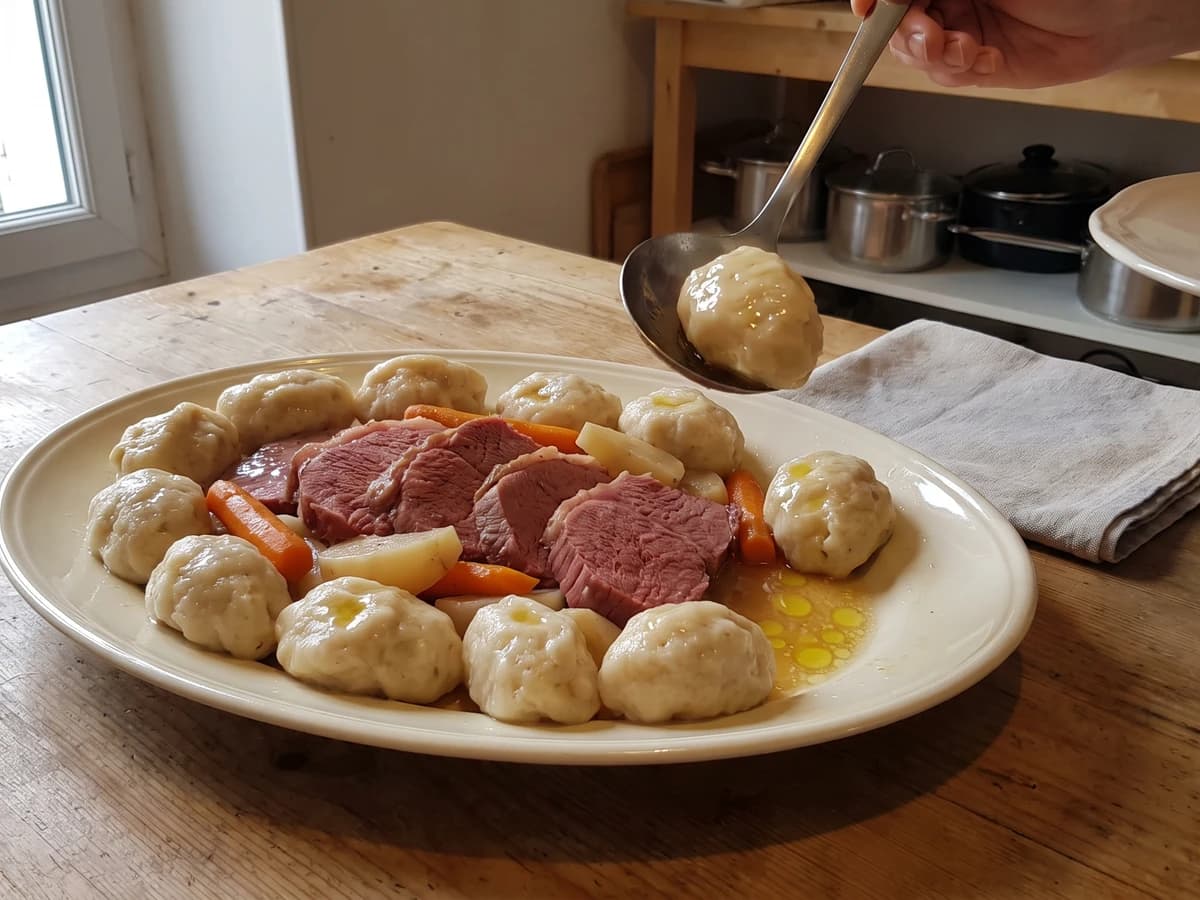
Suet Dumpling
Boulettes au suif, poached beside salt beef, turn equal weights of flour and finely chopped suet into tender, rich dumplings. Keep the beef liquor at a bare tremble and the old garnish works beautifully at home.
A cooking platform built around craft, culture, and the stories behind what we eat.

Created by Chef Juliette
Based on No. 2220, Pommes de Terre Pont-Neuf, from Le Guide Culinaire (1907) by Auguste Escoffier
Pommes de terre Pont-Neuf prove that cut size is technique: stout half-inch rods meet one steady bath of fat and emerge crisp at the corners, tender and creamy through the middle.
Pommes de terre Pont-Neuf (half-inch fried potato rods) teach the first law of fried potatoes: the cut is the cooking time. Make every rod the same stout size and the surface can turn crisp while the center remains creamy. Thin ends and thick middles cannot finish together, however grand the pot.
The classical entry assumed a deep professional fryer held at steady heat and a commis trimming potatoes for a whole service. Here, 1 3/4 pounds of potatoes go into a heavy home pot in two modest batches, with a thermometer doing the watching. The vast vat and brigade quantity were scaffolding, so they go. The square cut and single uninterrupted fry are the dish, so they stay. One cook, one stove, one evening.
When Pont-Neuf are right, the corners are deep gold and rigid, while a broken rod shows a soft ivory center with no chalkiness. Measure the first few cuts and dry them completely before they meet the fat. That careful half-inch rod is the one step that decides everything.
Pommes de terre Pont-Neuf belong to Paris and take their name from the Pont Neuf, whose busy approaches became known for street sellers and public eating. In classical French nomenclature, Pont-Neuf names a precise cut: stout squared rods, larger than allumettes or pailles, with enough interior to remain creamy. The preparation became the generic model of pommes frites, with the thinner cuts understood as branches of the same family.
Quantity
4 medium-large (about 1 3/4 lb / 800 g)
peeled
Quantity
2 qt (1.9 L / about 1.75 kg)
for deep-frying
Quantity
1 tsp (5 ml / 6 g), plus more to taste
| Ingredient | Quantity |
|---|---|
| russet potatoespeeled | 4 medium-large (about 1 3/4 lb / 800 g) |
| refined peanut oil or other neutral high-heat frying oilfor deep-frying | 2 qt (1.9 L / about 1.75 kg) |
| fine sea salt | 1 tsp (5 ml / 6 g), plus more to taste |
Trim the curved sides from each peeled potato to make a long rectangular block, saving every trimming for soup or purée. Cut the blocks lengthwise into 1/2-inch (1.25 cm) slabs, then cut those slabs into square rods of the same width, ideally 2 1/2 to 3 1/2 inches (6 to 9 cm) long. Measure the first few. Uniformity is not fuss here; it makes the crisp exterior and creamy center arrive together.
Rinse the rods in two or three changes of cold water, moving them gently with your hand, until the water loses most of its cloudy surface starch. Drain well, spread them between clean towels, and dry every side thoroughly. Water makes hot fat spit, and a damp potato delays the crust you are trying to build.
Set a wire rack over a sheet pan and warm the oven to 200°F (95°C). Pour the oil into a heavy 5-to-6-quart (4.7-to-5.7 L) pot, leaving the vessel no more than half full, and heat it over medium heat to 350°F (175°C). Keep a fitted lid nearby and never leave the pot unattended. If frying fat ignites, turn off the heat and cover the pot; water never goes near it.
Divide the potatoes into two equal batches. Lower the first batch gently into the fat with a wire skimmer, then adjust the heat so the temperature settles between 325 and 340°F (165 and 170°C). Fry without interruption for 8 to 11 minutes, stirring carefully to prevent sticking, until the rods are evenly deep gold and their corners feel firm. Break open a thick one: the center should be creamy and tender, with no hard white core. If they color too fast while the centers remain firm, lower the heat and continue gently. If a batch turns pale and limp because the temperature collapsed, ça se rattrape: drain it, let the oil return to 350°F (175°C), then return the rods for 60 to 90 seconds to restore the crust.
Lift the finished Pont-Neuf with the skimmer and let the excess fat fall back into the pot for several seconds. Spread them in one layer on the rack, season at once with half the salt, and hold them in the low oven while the fat returns to 350°F (175°C). Fry the second batch in the same manner. Do not cover or heap the potatoes, since trapped moisture softens the crust. Combine the batches, taste for salt, and bring them straight to the table. À table!
1 serving (about 110g)
Culinary guides, cultural storytelling, and the editorial depth that makes cooking meaningful.
Discover Culinary ExplorerChef Juliette
Boulettes au suif, poached beside salt beef, turn equal weights of flour and finely chopped suet into tender, rich dumplings. Keep the beef liquor at a bare tremble and the old garnish works beautifully at home.

Chef Juliette
Bread, flour, frangipane, and rice become four cool, supple panades for binding forcemeats, each changing body and flavor while preserving tenderness. The finest Mousselines need none, and knowing that distinction is the lesson.

Chef Juliette
Panade au pain is bread, milk, salt, heat, and attention: stir until the paste releases cleanly, butter it against a skin, and you have the quiet binder behind tender French farces.

Chef Juliette
Panade de farine teaches the drying stroke behind pâte à choux: flour meets boiling buttered water, then stays over the fire until the paste gathers, smooths, and quits the pan cleanly.