Chef Juliette
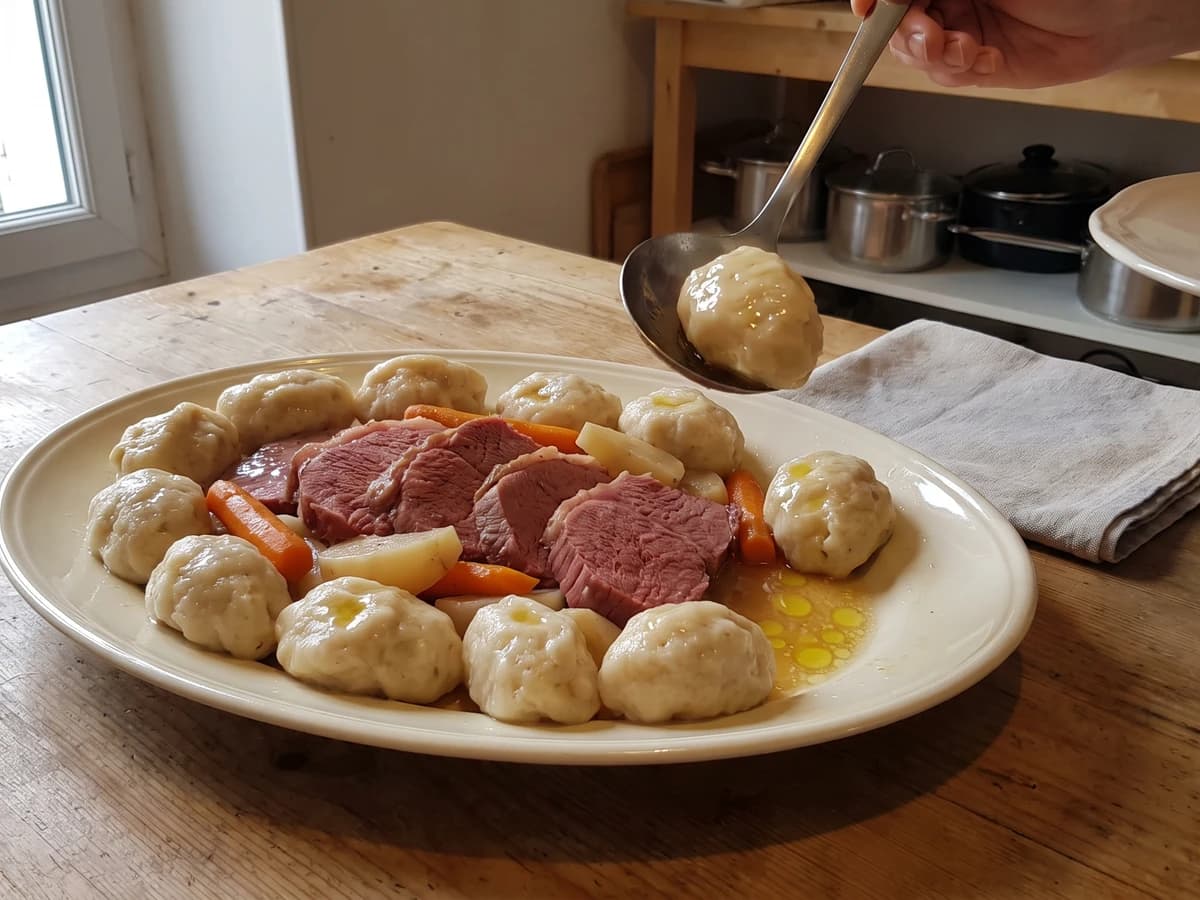
Suet Dumpling
Boulettes au suif, poached beside salt beef, turn equal weights of flour and finely chopped suet into tender, rich dumplings. Keep the beef liquor at a bare tremble and the old garnish works beautifully at home.
A cooking platform built around craft, culture, and the stories behind what we eat.

Created by Chef Juliette
Based on No. 2218, Pommes de Terre Collerette, from Le Guide Culinaire (1907) by Auguste Escoffier
Small fluted potato collars, crisp from ridge to center, cut from hand-turned corks and fried like pommes chips: an exact lesson in why classical French cuts are technique, not decoration.
Pommes de Terre Collerette (fluted potato collars) teach a small but exact classical lesson: here, shape is the dish. Before you touch the pan, know this one thing: every round must be equally thin and completely dry. The cork shape gives you even circles, while the parallel grooves create extra crisp edges and catch the salt. Cut them smooth or thick and you have another potato entirely.
The original entry assumed a commis turning potatoes by the tray, a special grooving knife, and a fryer held ready through service. At home, a paring knife makes four short corks, a fine corrugated mandoline replaces the rare blade, and a thermometer steadies a heavy saucepan. Brigade-volume shaping is scaffolding and can go. The cork form, the fluted cut, and the treatment as pommes chips, thin fried potato chips, are the dish itself and must stay. One cook, one stove, one evening.
Fry the collerette in small batches until they are evenly golden and the bubbling around them has nearly quieted. Most important, dry every groove before the first disc meets the oil. Water makes the oil spit and leaves the potato leathery; careful drying decides the plate.
Pommes de Terre Collerette belong to the Parisian classical garnish repertoire, where fried potatoes were distinguished by their geometry as carefully as sauces were by their foundations. The cork-turned cylinder and grooved blade produced little rounds resembling a collerette, a fluted collar or ruff, and generations of dining-room kitchens served them wherever a crisp potato garnish was wanted. They are sometimes confused with pommes gaufrettes, but gaufrettes are cross-hatched by rotating the potato between cuts; collerette keep parallel flutes, and that difference is the dish.
Quantity
4 large (about 2 lb / 900 g)
peeled
Quantity
1½ quarts (1.4 L / about 1.3 kg)
Quantity
1 teaspoon (5 ml / 6 g), plus more to taste
| Ingredient | Quantity |
|---|---|
| large floury potatoes, preferably Russet, Agria, or Bintjepeeled | 4 large (about 2 lb / 900 g) |
| neutral high-heat frying oil, preferably refined peanut or sunflower oil | 1½ quarts (1.4 L / about 1.3 kg) |
| fine sea salt | 1 teaspoon (5 ml / 6 g), plus more to taste |
Peel the potatoes and square off their ends. With a sharp paring knife, turn each potato into a short, even cylinder about 1¼ inches (3 cm) across and 2½ to 3 inches (6 to 7.5 cm) long, the shape of a stout cork. Perfection isn't the point; a consistent diameter is. It gives you rounds that fry at the same rate. Reserve every trimming for soup, purée, or a gratin.
Fit a mandoline with its fine corrugated blade and set it to cut about 1/16 inch (1.5 to 2 mm) thick. Slice each cork straight across without rotating it between cuts, using the hand guard as soon as the cylinder shortens. Each disc should carry parallel flutes from edge to edge. Rotation would make pommes gaufrettes, while a smooth blade would make ordinary pommes chips; the grooves are the collerette.
Rinse the fluted discs in several changes of cold water, separating them with your fingers, until the water is no longer cloudy. Leave them in fresh cold water for 10 minutes, then drain thoroughly. Spread them in one layer between absorbent kitchen towels and press carefully into the grooves; leave them uncovered for 5 minutes. The surfaces must feel dry, with no beads of water hiding in the channels. This is the step that decides whether they crisp.
Pour the oil into a heavy 5-quart (4.7 L) saucepan or Dutch oven, filling it no more than one-third full. Clip on a deep-fry thermometer and heat the oil to 350°F (175°C). Set a wire rack over a rimmed tray beside the stove. The thermometer is the honest home equivalent of a fryer held steady through service, and it matters because thin potatoes punish guesswork.
Lower 8 to 10 discs into the oil, one at a time and away from you. Stir gently with a spider so they remain separate, keeping the oil between 330°F and 350°F (165°C and 175°C). Fry for 3 to 4 minutes, until the ridges are evenly golden, the slices feel light, and the bubbling has nearly subsided. Drain one and wait 20 seconds; it should become crisp from edge to center. If a batch cools pale and leathery, the oil was crowded. Let the discs cool, return the oil to 355°F (180°C), and fry them again for 30 to 45 seconds. Ça se rattrape.
Transfer each batch to the rack without piling the discs and season at once, while the fine film of oil still holds the salt. Let the oil regain 350°F (175°C) before adding the next batch. Keep the finished collerette uncovered in a 200°F (95°C) oven for no more than 20 minutes; covering traps moisture and undoes the crispness. Tip them into a warm serving dish and bring them straight to the table. À table!
1 serving (about 130g)
Culinary guides, cultural storytelling, and the editorial depth that makes cooking meaningful.
Discover Culinary ExplorerChef Juliette
Boulettes au suif, poached beside salt beef, turn equal weights of flour and finely chopped suet into tender, rich dumplings. Keep the beef liquor at a bare tremble and the old garnish works beautifully at home.

Chef Juliette
Bread, flour, frangipane, and rice become four cool, supple panades for binding forcemeats, each changing body and flavor while preserving tenderness. The finest Mousselines need none, and knowing that distinction is the lesson.

Chef Juliette
Panade au pain is bread, milk, salt, heat, and attention: stir until the paste releases cleanly, butter it against a skin, and you have the quiet binder behind tender French farces.

Chef Juliette
Panade de farine teaches the drying stroke behind pâte à choux: flour meets boiling buttered water, then stays over the fire until the paste gathers, smooths, and quits the pan cleanly.