Chef Juliette
Suet Dumpling
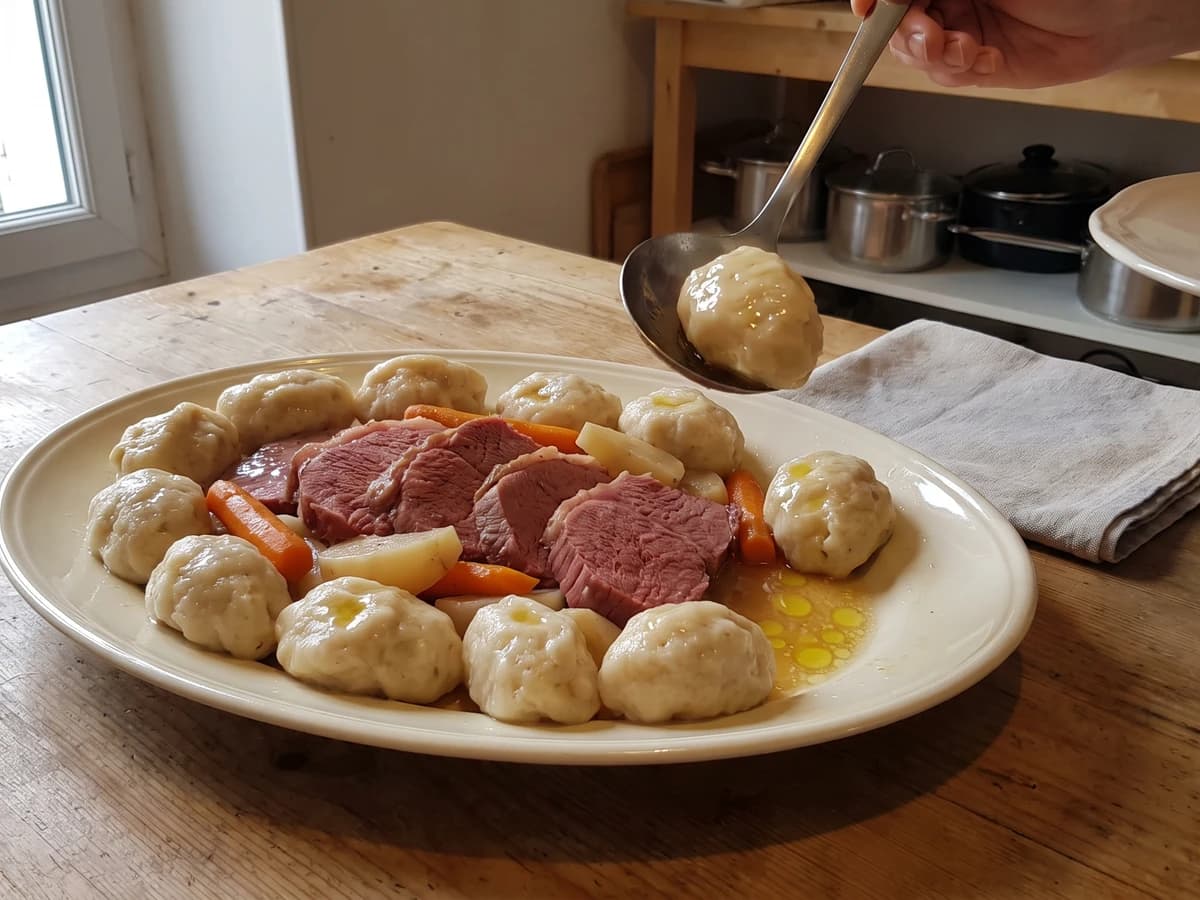
Boulettes au suif, poached beside salt beef, turn equal weights of flour and finely chopped suet into tender, rich dumplings. Keep the beef liquor at a bare tremble and the old garnish works beautifully at home.
A cooking platform built around craft, culture, and the stories behind what we eat.
Created by Chef Juliette
Based on No. 2207, Pommes de Terre Byron, from Le Guide Culinaire (1907) by Auguste Escoffier
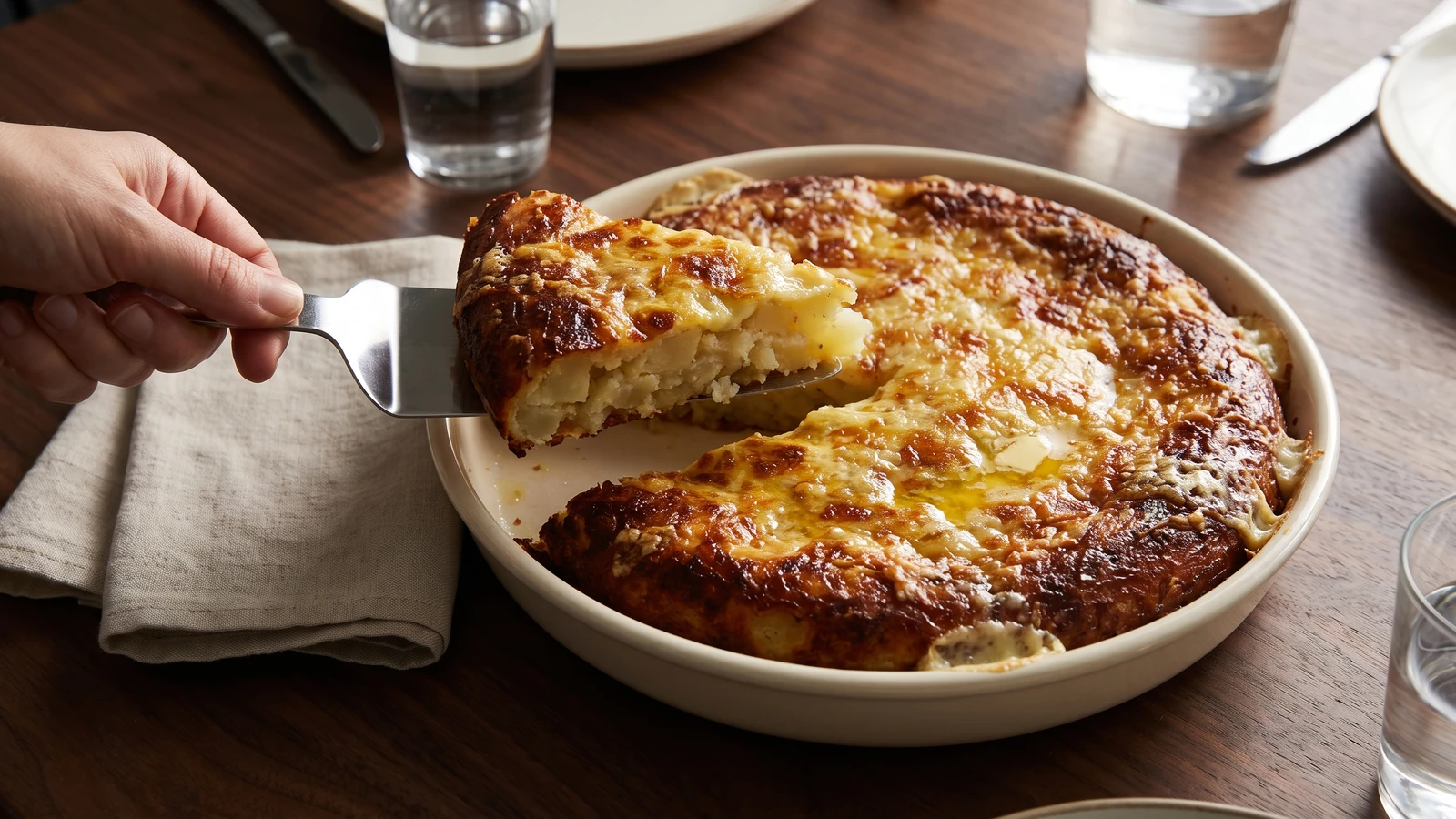
Pommes de Terre Byron turns a deeply browned potato galette into a cream-and-cheese gratin, glazed fast under fierce heat. The lesson is exact: colour first, richness second.
Pommes de Terre Byron (a butter-browned potato galette glazed with cream and cheese) teaches order. Cream and cheese can gild a crust, never create it. Begin with a deeply browned galette or finish with a pale one wearing an expensive hat.
The source asks for neither saucier nor stockpot. Its brigade advantage is different: Pommes de Terre Macaire (No. 2228) ready from another station and a salamander blazing above the pass. At home, one prepared 8-inch galette and a thoroughly heated broiler do the same work. Repeated service batches are scaffolding and go; the butter-browned base, copious cream, grated cheese, and rapid glaze are the dish and stay. One cook, one stove, one evening.
Before the cream touches the potato, inspect both sides of the galette. They must be deep hazelnut brown and crisp. That browning is the one step that decides Pommes de Terre Byron.
Pommes de Terre Byron belongs to the Parisian classical service repertoire, where a base preparation could be changed at the last moment into a distinct garnish for roast meat. It is Pommes de Terre Macaire (No. 2228) enriched after browning, not a regional potato dish or a gratin built from raw slices; the Byron name follows the classical habit of giving finished variations distinguished names. The salamander supplied its rapid glaze in a grand kitchen, while the home broiler carries the same intention to the dinner table.
Quantity
1 8-inch (20 cm) galette Pommes de Terre Macaire (No. 2228)
Quantity
⅓ cup (80 ml / 80 g)
allowed to lose its refrigerator chill
Quantity
¾ cup loosely packed (180 ml / 75 g)
finely grated
| Ingredient | Quantity |
|---|---|
| prepared potato galette | 1 8-inch (20 cm) galette Pommes de Terre Macaire (No. 2228) |
| heavy cream, 35% fatallowed to lose its refrigerator chill | ⅓ cup (80 ml / 80 g) |
| Gruyèrefinely grated | ¾ cup loosely packed (180 ml / 75 g) |
Set an oven rack about 4 inches (10 cm) below the broiler and heat it on high for a full ten minutes. Place a shallow broiler-safe serving dish nearby and take the cream from the refrigerator. The glaze must happen quickly; gentle heat gives the cream time to soak through the crust before the cheese colours.
Have the Pommes de Terre Macaire (No. 2228) freshly cooked and well browned on both sides, then slide it carefully into the serving dish. Look for a firm, crisp surface the colour of hazelnut shells. If it is pale or damp, stop before adding the cream and return it briefly to its pan until the crust deepens. Ça se rattrape now; after topping, it does not.
Set the more evenly browned face upward. Spoon the cream generously over the entire galette, letting a little reach the rim without forming a deep moat. Scatter the grated Gruyère evenly from centre to edge. Work only when the broiler is ready, because the topping should not sit long enough to soften the crust.
Set the dish beneath the broiler and watch without leaving it. Glaze for 1 to 3 minutes, until the cheese has melted into mottled butter-gold and chestnut patches and the cream bubbles around the edge. If the cheese darkens before the cream bubbles, move the dish one rack lower; if one patch catches, shield that spot with a small piece of foil and finish the rest.
Let the galette stand for 2 minutes, just long enough for the cream to settle into the surface without surrendering the crust. Cut it into four generous wedges and serve immediately from the warm dish. À table!
1 serving (about 170g)
Culinary guides, cultural storytelling, and the editorial depth that makes cooking meaningful.
Discover Culinary ExplorerChef Juliette
Boulettes au suif, poached beside salt beef, turn equal weights of flour and finely chopped suet into tender, rich dumplings. Keep the beef liquor at a bare tremble and the old garnish works beautifully at home.

Chef Juliette
Bread, flour, frangipane, and rice become four cool, supple panades for binding forcemeats, each changing body and flavor while preserving tenderness. The finest Mousselines need none, and knowing that distinction is the lesson.

Chef Juliette
Panade au pain is bread, milk, salt, heat, and attention: stir until the paste releases cleanly, butter it against a skin, and you have the quiet binder behind tender French farces.

Chef Juliette
Panade de farine teaches the drying stroke behind pâte à choux: flour meets boiling buttered water, then stays over the fire until the paste gathers, smooths, and quits the pan cleanly.