Chef Juliette
Suet Dumpling
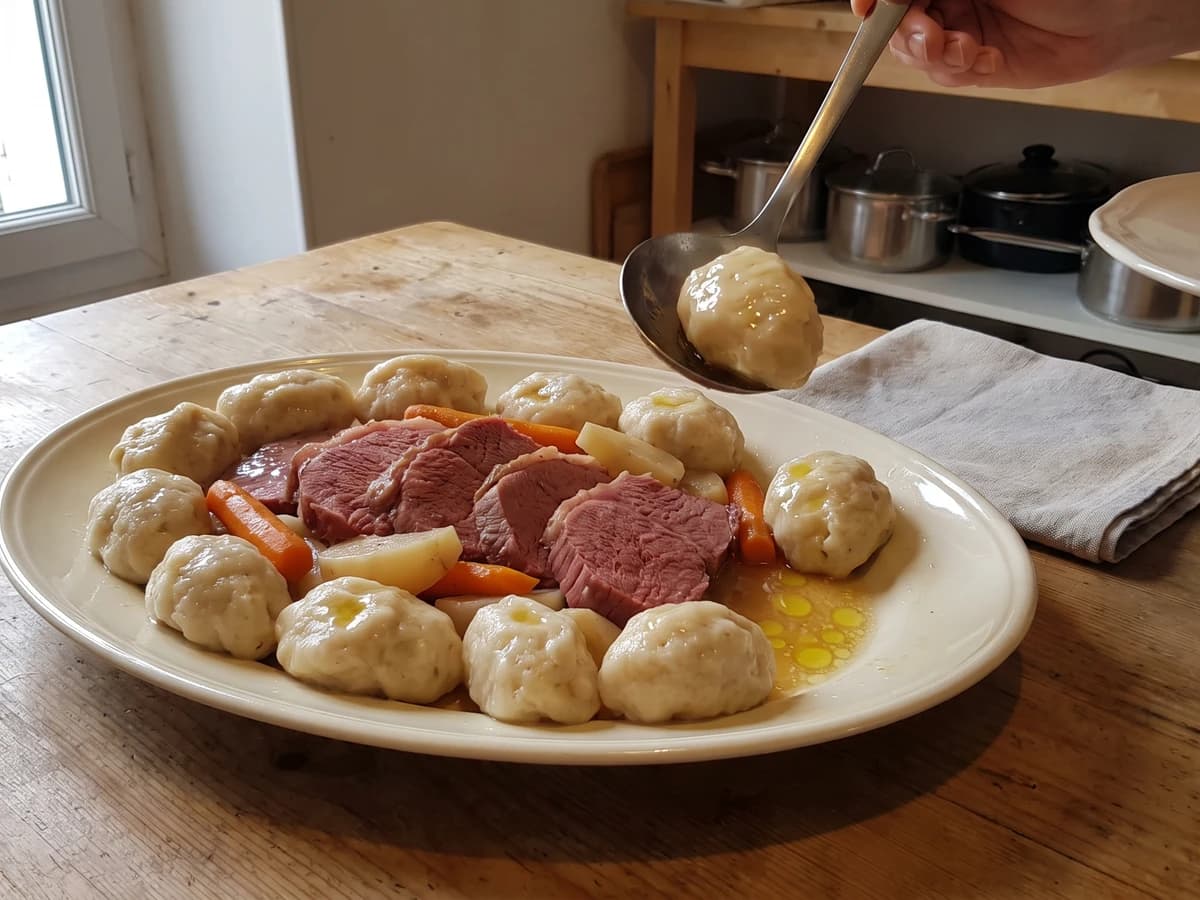
Boulettes au suif, poached beside salt beef, turn equal weights of flour and finely chopped suet into tender, rich dumplings. Keep the beef liquor at a bare tremble and the old garnish works beautifully at home.
A cooking platform built around craft, culture, and the stories behind what we eat.
Created by Chef Juliette
Based on No. 2206, Pommes de Terre à la Boulangère, from Le Guide Culinaire (1907) by Auguste Escoffier
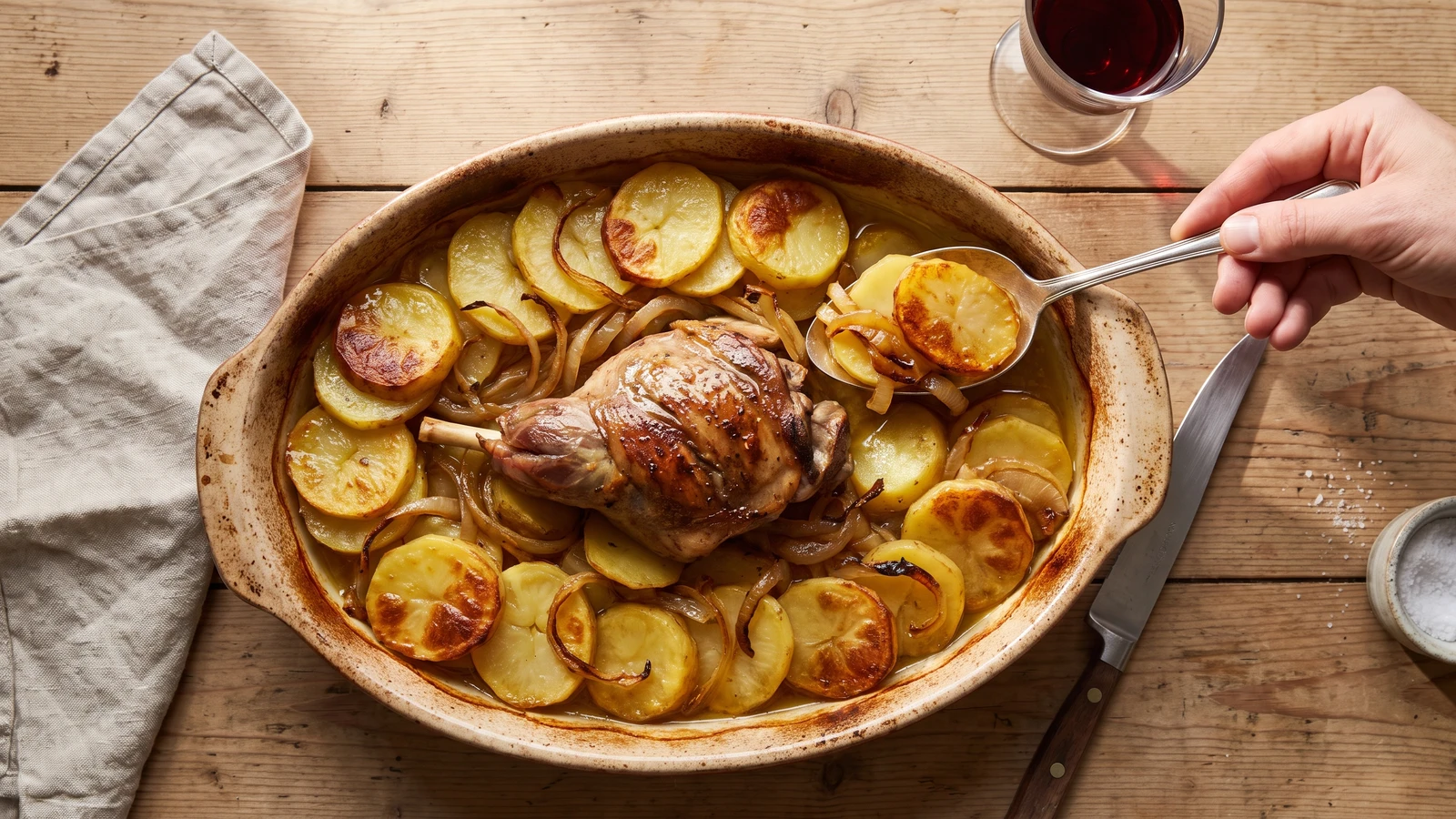
Pommes de Terre à la Boulangère turn lamb fat, onions, and thick potato rounds into one generous roasting-dish garnish, bronzed at the edges and tender beneath, served beside the joint that seasons them.
Pommes de Terre à la Boulangère (baker's-style potatoes) teach the cleanest lesson in roast cookery: the garnish should drink from the joint. Thick potato rounds and onions enter the dish only after the lamb is two-thirds cooked, then its running fat seasons them while their edges bronze. The one true thing to know before touching a pan is timing. Add them at the start and the onions scorch before the meat is ready; add them too late and the potatoes remain stubborn.
The book's method lives inside Gigot à la Boulangère (No. 1307). It assumes a full joint already browned in earthenware, a generous roasting dish, and enough rendered lamb fat to moisten eight potatoes and four onions. A saucier, a stockpot kept on the fire, and a salamander contribute nothing here; the roast is the sauce, the oven does the browning, and the dish comes straight to the table. For one cook, one stove, one evening, the garnish is halved to four potatoes and two onions, keeping the book's one-to-two onion-to-potato count exactly.
The brigade-sized quantity is scaffolding and can go. The brief toss of onions in real butter, the half-inch potato roundels, the lamb fat, and the late addition around the joint are the dish, so they stay. If the lamb is ready first, lift it out and let the vegetables finish alone. Ça se rattrape. The step that decides the dish is adding the garnish only when the joint has its final third of cooking left.
Pommes de terre à la boulangère belong to France's household and cuisine bourgeoise tables, and their name points to the village baker's oven, where families sent dishes to cook after the loaves came out. The method moved naturally into home roasting dishes: potatoes and onions sat beneath or around a joint and absorbed what ran from it. Stand-alone versions often use stock, but the gigot form represented here is defined by lamb fat, not broth.
Quantity
1 home-scale Gigot à la Boulangère (No. 1307)
browned and cooked until one-third of its cooking remains, with its rendered fat kept in the dish
Quantity
2 large (about 4 cups / 600 g)
sliced 1/4 inch (6 mm) thick
Quantity
4 large (about 8 cups / 1.2 kg)
peeled and cut into 1/2-inch (1.25 cm) roundels
Quantity
2 tablespoons (30 ml / 28 g)
Quantity
1 1/2 teaspoons (7.5 ml / 9 g)
divided
Quantity
1/2 teaspoon (2.5 ml / 1 g)
| Ingredient | Quantity |
|---|---|
| Gigot à la Boulangèrebrowned and cooked until one-third of its cooking remains, with its rendered fat kept in the dish | 1 home-scale Gigot à la Boulangère (No. 1307) |
| large yellow onionssliced 1/4 inch (6 mm) thick | 2 large (about 4 cups / 600 g) |
| large yellow-fleshed potatoespeeled and cut into 1/2-inch (1.25 cm) roundels | 4 large (about 8 cups / 1.2 kg) |
| unsalted butter | 2 tablespoons (30 ml / 28 g) |
| fine sea saltdivided | 1 1/2 teaspoons (7.5 ml / 9 g) |
| freshly ground black pepper | 1/2 teaspoon (2.5 ml / 1 g) |
Heat the oven to 425°F (220°C), with a rack in the lower-middle position. Have the Gigot à la Boulangère (No. 1307) ready at its garnish stage, browned on both sides and cooked until roughly one-third of its cooking remains. Keep the joint in its hot roasting dish and retain every spoonful of rendered fat; that fat is the preparation's cooking medium and seasoning.
Melt the butter in a 12-inch (30 cm) skillet over medium heat. Add the onions with 1/4 teaspoon of the salt and toss them for 5 to 7 minutes, until they soften slightly and acquire a few pale golden edges. Stop there. This is not a caramelization; the onions still have a final roast ahead of them, and taking them dark now leaves them bitter later.
Peel the potatoes and cut them crosswise into roundels exactly 1/2 inch (1.25 cm) thick. Check the first slice against a ruler, then use it as your guide. Even thickness matters more than speed because every round must become tender at the same moment. Season the potatoes with the remaining salt and the pepper.
Spread the buttered onions around the joint, scraping their butter into the roasting dish. Settle the potato roundels over and among them in a loose, slightly overlapping ring, preferably no more than two layers deep. Spoon the hot lamb fat from the dish over every exposed potato. If the joint has yielded very little, use every trace of butter from the onion pan to carry what fat there is; do not add stock, because in this preparation the joint itself moistens the garnish.
Return the dish to the oven. After 25 minutes, rotate it and baste the potatoes with the fat gathered at the bottom. Continue roasting for 10 to 20 minutes, until a knife enters the centre of a potato without resistance, the exposed faces are deep butter-gold, and the onions are amber at their edges. If the lamb reaches its proper doneness first, lift it to a board and let the potatoes finish in the dish. If the potatoes colour before their centres soften, lower the oven to 375°F (190°C), cover the dish loosely for 10 minutes, then uncover it for the final 5 minutes. Ça se rattrape.
Rest the lamb as its preparation directs, then return it to the centre of the roasting dish if it was removed. Spoon away only an excessive pool of clear fat, leaving the potatoes properly glazed, and taste one for salt. Carry the same dish to the table, including every bronzed onion caught along its edges. À table!
1 serving (about 380g)
Culinary guides, cultural storytelling, and the editorial depth that makes cooking meaningful.
Discover Culinary ExplorerChef Juliette
Boulettes au suif, poached beside salt beef, turn equal weights of flour and finely chopped suet into tender, rich dumplings. Keep the beef liquor at a bare tremble and the old garnish works beautifully at home.

Chef Juliette
Bread, flour, frangipane, and rice become four cool, supple panades for binding forcemeats, each changing body and flavor while preserving tenderness. The finest Mousselines need none, and knowing that distinction is the lesson.

Chef Juliette
Panade au pain is bread, milk, salt, heat, and attention: stir until the paste releases cleanly, butter it against a skin, and you have the quiet binder behind tender French farces.

Chef Juliette
Panade de farine teaches the drying stroke behind pâte à choux: flour meets boiling buttered water, then stays over the fire until the paste gathers, smooths, and quits the pan cleanly.