Chef Juliette
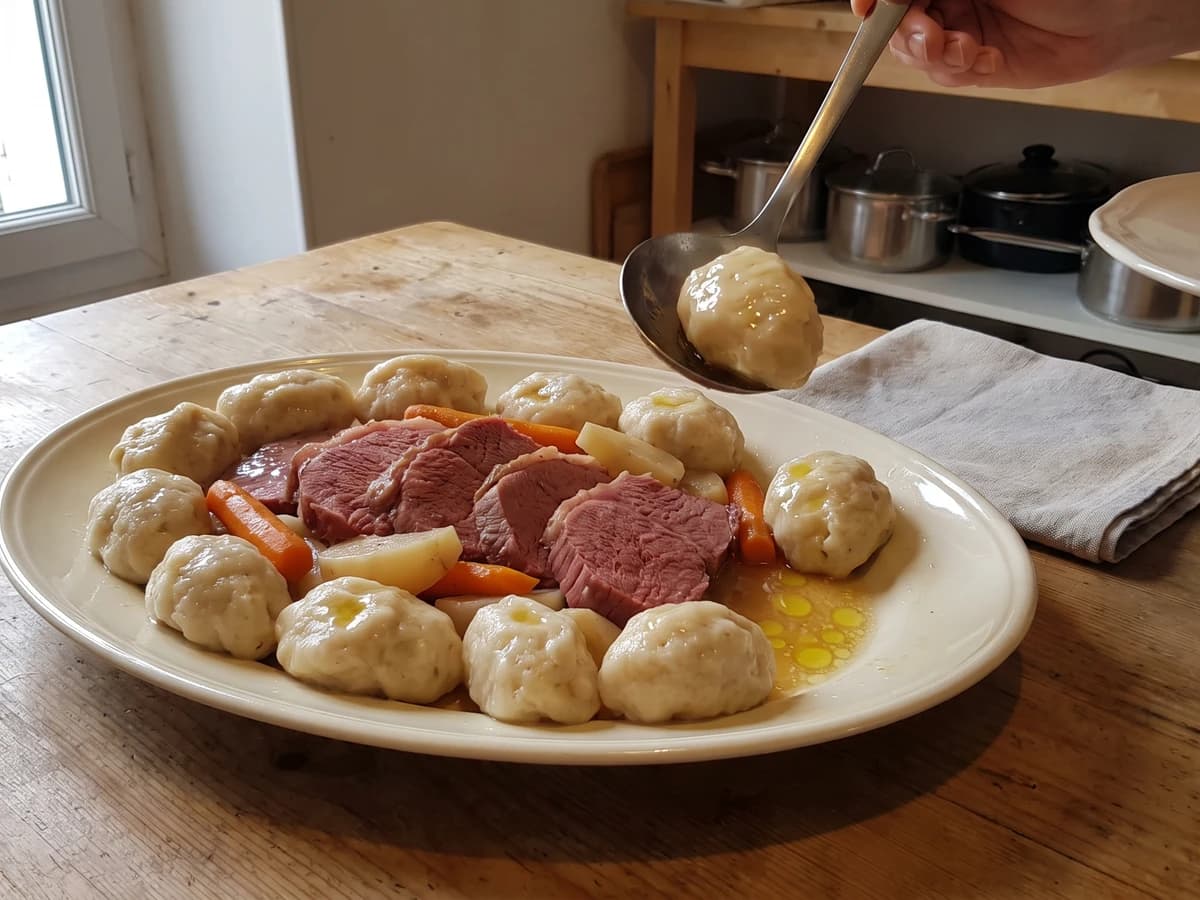
Suet Dumpling
Boulettes au suif, poached beside salt beef, turn equal weights of flour and finely chopped suet into tender, rich dumplings. Keep the beef liquor at a bare tremble and the old garnish works beautifully at home.
A cooking platform built around craft, culture, and the stories behind what we eat.
Created by Chef Juliette
Based on No. 2203, Pommes de Terre Anna, from Le Guide Culinaire (1907) by Auguste Escoffier
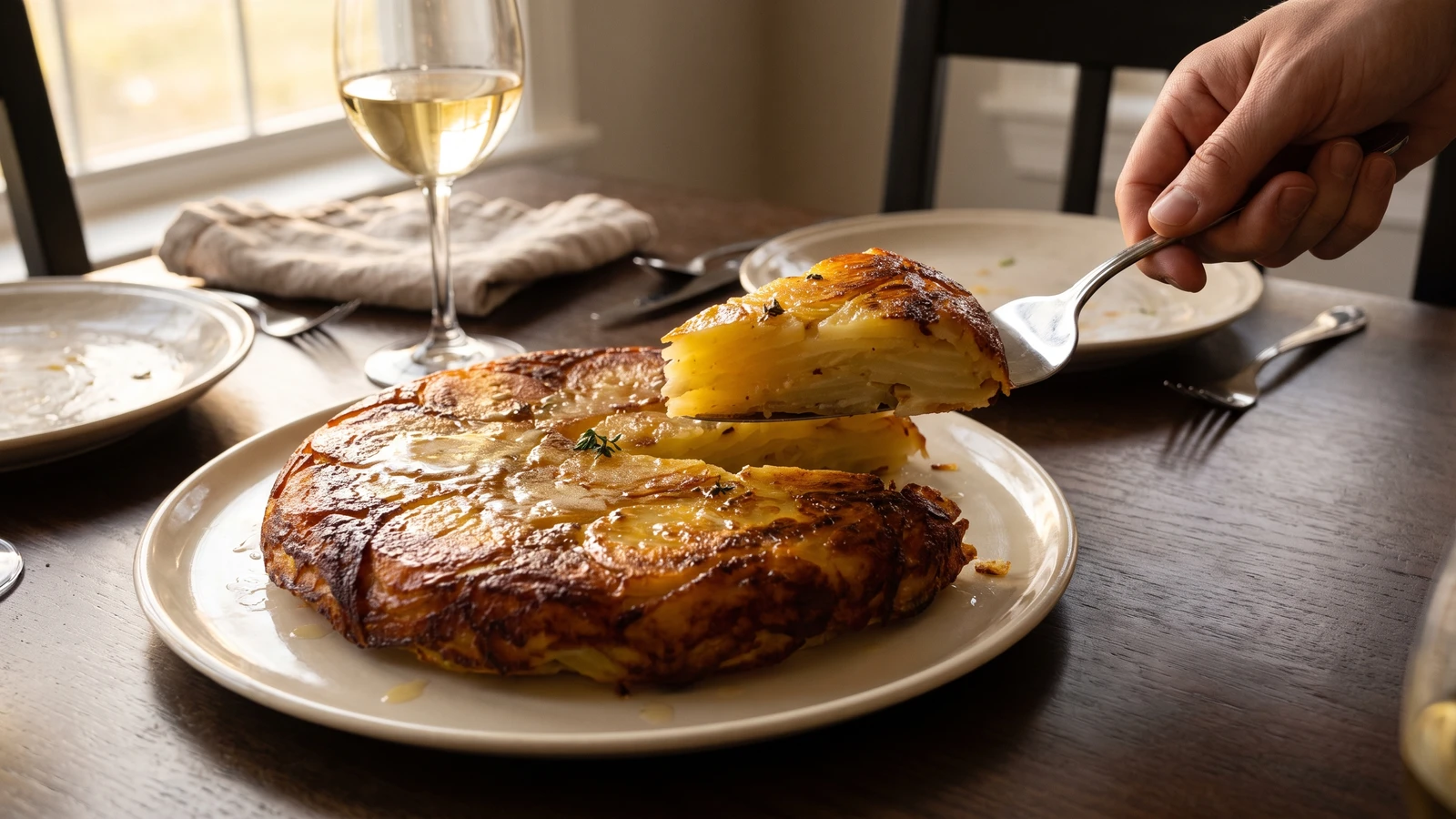
Pommes Anna turns potatoes, butter, salt, and patient arrangement into a bronzed, sliceable cake, crisp at both faces and tender through the middle, proof that exact technique can make abundance from almost nothing.
Pommes de Terre Anna (a layered, buttered potato cake) teaches that precision can be generous. The one true thing to know before touching the pan is this: every potato roundel must be equally thin and completely dry. Then butter can coat rather than skid, the circles settle into one cake, and the oven browns them instead of trapping water between them.
The book's kitchen assumed a proper Anna mould, butter ready at hand, and a cook practiced at turning the whole preparation onto a saucepan lid. Your equivalent is a 9-inch heavy ovenproof skillet, a flat heatproof plate, and a quantity scaled for four. The special mould and brigade portion are scaffolding and can go; the trimmed cylinders, washed and dried slices, reversed overlapping circles, seasoning and butter on every layer, covered cooking, turning, and draining are the dish, and they stay. I add one short stovetop set because a heavy home skillet needs help matching the immediate bottom heat of the dedicated copper mould. One cook, one stove, one evening.
The finished Pommes Anna should emerge as one coherent cake, deep butter-gold across both faces and tender enough for a knife to pass through without crushing its layers. Before you begin, set the mandoline to ⅛ inch and spread out two clean towels. Uniform slicing and thorough drying decide the dish before the first roundel meets the pan.
Pommes Anna belongs to Parisian grand cuisine and is traditionally said to honor Anna Deslions, a celebrated courtesan whose table carried unusual influence in the city's dining rooms. Accounts disagree over every detail of the dedication, but the cooking practice is clear: potatoes and butter were layered in a dedicated two-part copper cocotte that made turning and even browning easier. The dish passed naturally from grand kitchens to bourgeois tables because its luxury lies in attention rather than rarity.
Quantity
5 to 6 potatoes, 2½ pounds (1.15 kg) before trimming, yielding about 6 cups (1.4 L / 900 g)
peeled, trimmed into cylinders, and sliced into ⅛-inch (3 mm) roundels
Quantity
10 tablespoons (150 ml / 140 g)
melted
Quantity
1¼ teaspoons (6 ml / 7 g)
Quantity
¼ teaspoon (1.25 ml / 0.6 g)
| Ingredient | Quantity |
|---|---|
| large firm yellow potatoespeeled, trimmed into cylinders, and sliced into ⅛-inch (3 mm) roundels | 5 to 6 potatoes, 2½ pounds (1.15 kg) before trimming, yielding about 6 cups (1.4 L / 900 g) |
| unsalted buttermelted | 10 tablespoons (150 ml / 140 g) |
| fine sea salt | 1¼ teaspoons (6 ml / 7 g) |
| finely ground white pepper | ¼ teaspoon (1.25 ml / 0.6 g) |
Heat the oven to 425°F (220°C), or 400°F (200°C) with a fan, with a rack in the lower third. Melt the butter gently without browning it. Brush about 1½ tablespoons over the bottom and sides of a 9-inch (23 cm) heavy ovenproof skillet, reserve 1 tablespoon for the second face, and keep the remainder fluid for layering.
Peel the potatoes and trim their long sides into rough cylinders, then square off the ends so the mandoline produces even roundels. Save the trimmings for soup or mash. Slice the cylinders crosswise into ⅛-inch (3 mm) roundels, wash them in a bowl of cold water as the book directs, and drain well. Spread them between clean lint-free towels and press until thoroughly dry. Wet roundels slip, trap water, and refuse to bronze; if the towels show damp patches, blot the potatoes again before proceeding.
Combine the salt and white pepper. In the cold buttered skillet, arrange an outer ring of potato roundels, overlapping each by about half. Lay the next concentric circle in the opposite direction and fill the centre with a neat roundel. Season lightly, then brush with melted butter. Build five or six layers in the same way, reversing the lay of neighboring circles and offsetting the seams from the layer below. Season and butter every layer, dividing both evenly. The first layer becomes the visible crown, so take your time with it; the hidden layers need order, not ornament.
Set the skillet over medium heat for 7 to 9 minutes, rotating it once if your burner heats unevenly. Listen for a steady, quiet sizzle and watch for the outermost potatoes to turn golden at their edges. Smoking butter means the heat is too high, so slide the pan off the burner, lower the flame, and continue gently. Cover the skillet tightly with its lid or foil and bake for 28 to 32 minutes. A thin knife inserted at the centre should meet almost no resistance. If the centre is still firm, keep the pan covered and bake in 5-minute intervals; if the rim is already dark, lower the oven to 375°F (190°C) while the middle finishes.
Remove the cover and loosen the edge with a thin flexible spatula. Set the skillet on a rimmed baking sheet, place a flat heatproof plate slightly larger than the pan over it, grip both firmly with dry oven mitts, and invert in one confident motion, keeping your hands clear of any escaping butter. If the cake clings, return the skillet upright, warm its base over low heat for 30 seconds, loosen the edge again, and retry. Ça se rattrape. Brush the empty skillet with the reserved butter, then slide the cake back so its paler face lies against the pan. Cook over medium heat for 5 to 8 minutes, or return it uncovered to the oven for 8 to 10 minutes, until the second face matches the first. If a section breaks during the turn, fit it back into place, press gently, and give the cake another 5 minutes in the pan so the layers bind again.
Invert the Pommes Anna onto the heatproof plate once more. Secure it with a broad spatula and tilt the plate carefully over a bowl to drain away the free butter, exactly as the book directs, then slide the cake onto a warm serving platter. Let it rest for 8 to 10 minutes so the layers settle into clean wedges. Cut at the table and serve while the faces remain crisp and the centre is buttery and tender. À table!
1 serving (about 230g)
Culinary guides, cultural storytelling, and the editorial depth that makes cooking meaningful.
Discover Culinary ExplorerChef Juliette
Boulettes au suif, poached beside salt beef, turn equal weights of flour and finely chopped suet into tender, rich dumplings. Keep the beef liquor at a bare tremble and the old garnish works beautifully at home.

Chef Juliette
Bread, flour, frangipane, and rice become four cool, supple panades for binding forcemeats, each changing body and flavor while preserving tenderness. The finest Mousselines need none, and knowing that distinction is the lesson.

Chef Juliette
Panade au pain is bread, milk, salt, heat, and attention: stir until the paste releases cleanly, butter it against a skin, and you have the quiet binder behind tender French farces.

Chef Juliette
Panade de farine teaches the drying stroke behind pâte à choux: flour meets boiling buttered water, then stays over the fire until the paste gathers, smooths, and quits the pan cleanly.