Chef Juliette
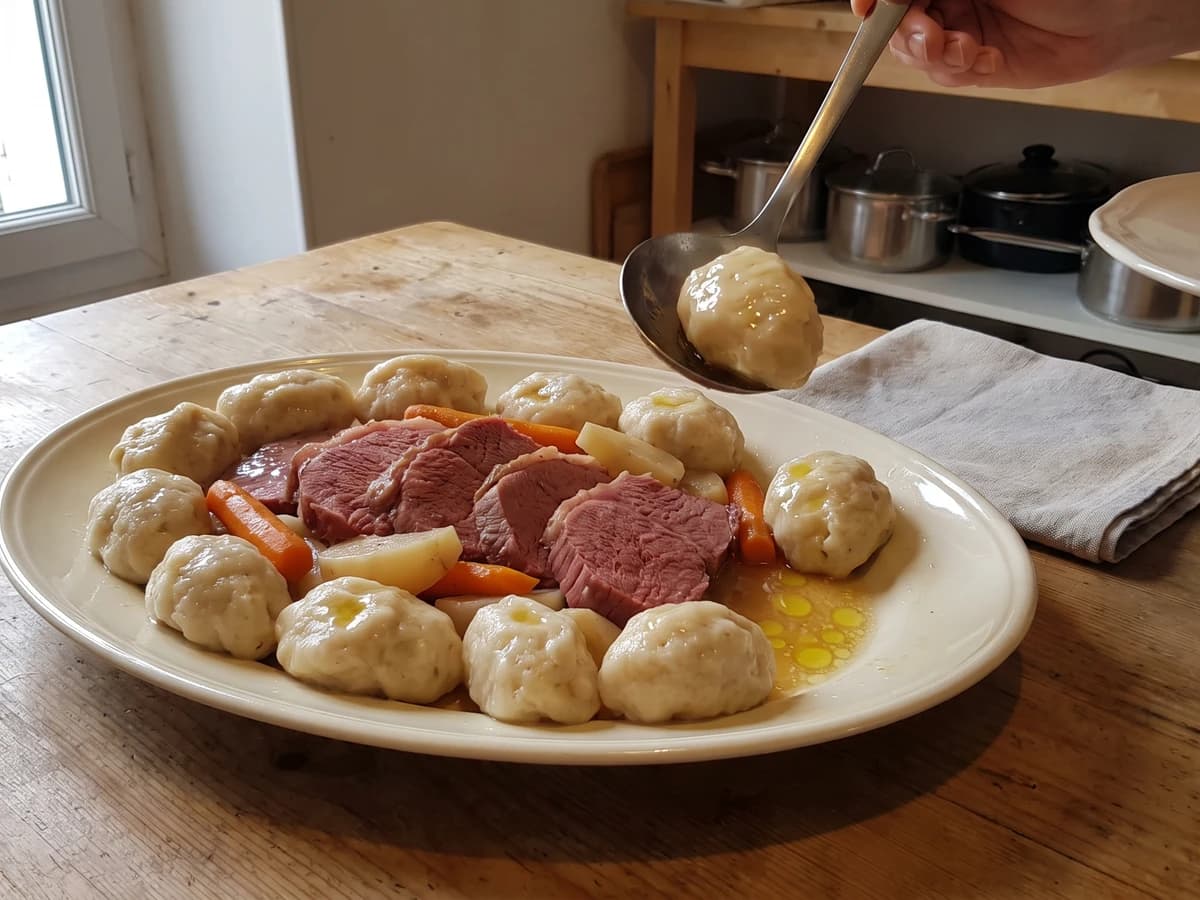
Suet Dumpling
Boulettes au suif, poached beside salt beef, turn equal weights of flour and finely chopped suet into tender, rich dumplings. Keep the beef liquor at a bare tremble and the old garnish works beautifully at home.
A cooking platform built around craft, culture, and the stories behind what we eat.
Created by Chef Juliette
Based on No. 2199, Capsicums for Garnishing, from Le Guide Culinaire (1907) by Auguste Escoffier
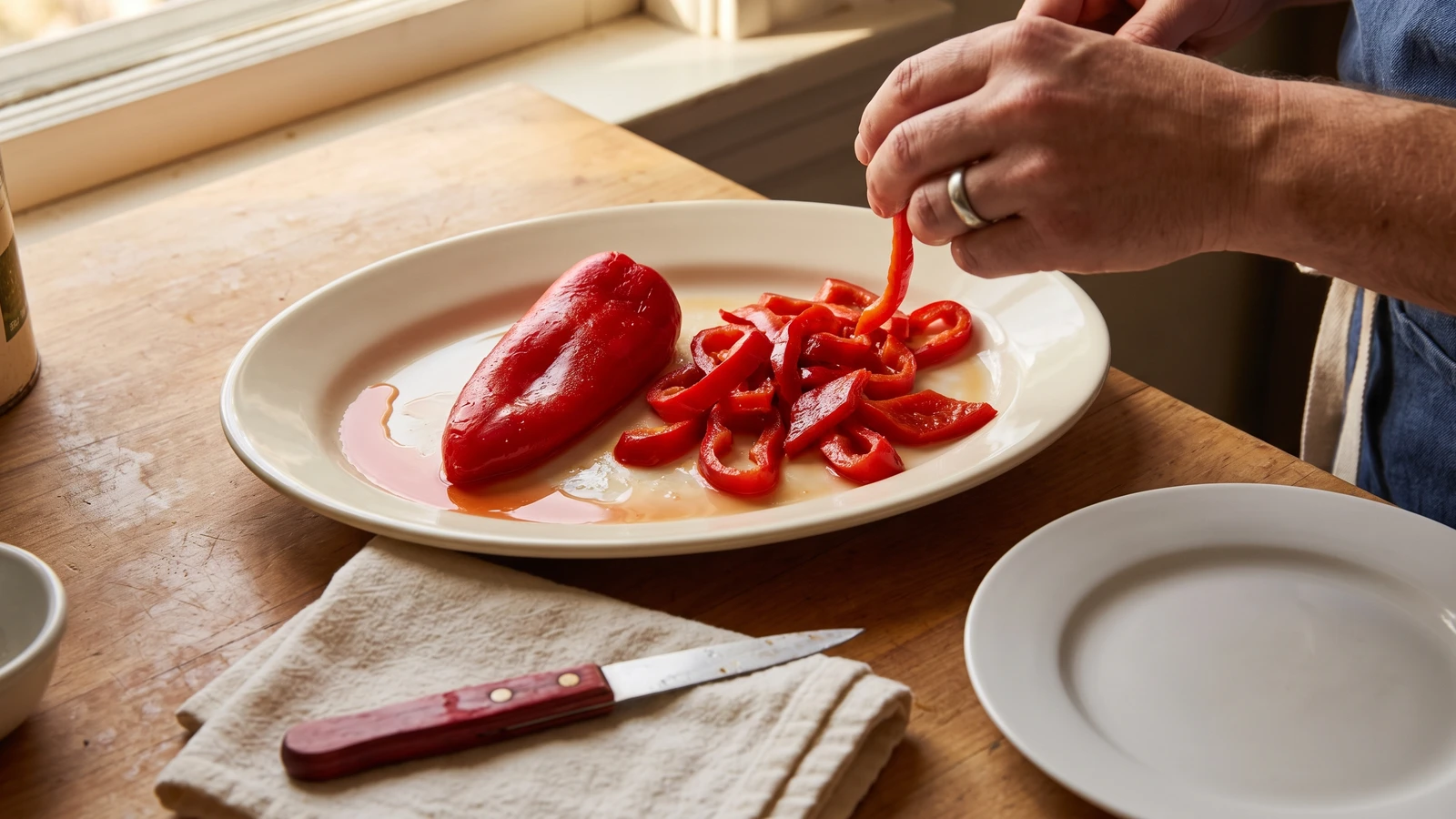
Poivrons rouges braisés turn a brittle pepper into a supple classical garnish: peeled cleanly, enclosed with butter, and cooked just until it can be shaped without tearing.
Poivrons rouges braisés pour garniture (braised red peppers for garnishing) teach the difference between merely softening a vegetable and making it supple. Blistering loosens the skin, but the covered braise is what relaxes the flesh so it bends, takes a clean knife cut, and lies obediently around a roast, an omelette, or a piece of fish.
The book's brief instruction assumed a brigade with a fierce salamander, pans already buttered, and another pair of hands ready to make the service cuts. Your broiler is the honest equivalent, followed by one shallow covered casserole and four peppers. I add only butter, salt, and enough water to begin the braise, because the entry names no stock or aromatics. Brigade quantities and trays of waiting mise en place are scaffolding and can go. Peeling first and braising whole are the dish, and they stay.
The moment that matters comes near the end: the poivrons should fold without cracking but still hold their walls. Take them beyond that and rings become impossible, though strips remain entirely within reach. Cool them in their buttery liquor before cutting, and the knife will pass through without dragging or tearing.
Sweet red peppers moved from the Mediterranean and Basque larders of southern France into the national classical repertoire, where formal kitchens treated them as a useful garniture rather than a dish tied to one regional table. The book's “Spanish capsicum” means the large, fleshy sweet pepper known through market vocabulary, not a hot piment and not a claim that the preparation itself is Spanish. Peeling and braising made the pepper mild, supple, and precise enough for the geometric cuts expected beside eggs, fish, and roasted meats.
Quantity
4 (about 2 lb 4 oz / 1 kg total)
smooth and thick-walled
Quantity
2 tablespoons (30 ml / 28 g)
Quantity
1/4 cup (60 ml / 60 g)
plus more only if needed
Quantity
1 teaspoon (5 ml / 5 g)
| Ingredient | Quantity |
|---|---|
| large red bell pepperssmooth and thick-walled | 4 (about 2 lb 4 oz / 1 kg total) |
| unsalted butter | 2 tablespoons (30 ml / 28 g) |
| waterplus more only if needed | 1/4 cup (60 ml / 60 g) |
| fine sea salt | 1 teaspoon (5 ml / 5 g) |
Set an oven rack about 4 inches (10 cm) below the broiler and heat it fully. Dry the peppers and place them whole on a rimmed metal baking sheet. Leave the stems, cores, and seeds in place for now; that inner structure helps the peeled peppers survive the braise without collapsing.
Broil the peppers for 12 to 16 minutes, turning them with tongs every 3 to 4 minutes, until the skins are blistered and blackened in broad patches on every side. The flesh should begin to yield but must not slump. This is peeling work, not the final cooking.
Transfer the peppers to a bowl and cover it with a plate for 10 minutes. When they are comfortable to handle, slip off the skins with your fingers while keeping each pepper whole. Don't rinse them, because water carries away their concentrated juices. If a patch of skin clings stubbornly, return that side to the broiler for 1 minute, cover again briefly, and peel. Ça se rattrape.
Heat the oven to 325°F (165°C). Melt the butter in a shallow ovenproof casserole over gentle heat, add the peeled peppers, and roll them carefully until coated. Sprinkle with the salt, pour the water around them, then cover with a round of parchment set directly on the peppers and a close-fitting lid. Braise for 18 to 25 minutes, turning once, until a pepper folds gently under the tongs without its wall breaking.
Lift the casserole from the oven and leave the peppers covered in their buttery cooking liquor for 15 minutes. For warm service, cut them once they are just cool enough to handle. For exact diamonds or rings, cool them completely first; the flesh firms as it rests and accepts a cleaner cut.
Pull out each stem and attached core, then shake or wipe away the seeds without rinsing. Cut the poivrons as the finished dish requires: lengthwise into 1/4-inch (6 mm) lanières, broad strips; into neat lozenges for a composed garnish; or crosswise into rings if the walls remain intact. Brush them with a little of the buttery braising liquor before serving. Use them warm as a side dish or arrange them around eggs, fish, poultry, or roasted meat. À table!
1 serving (about 180g)
Culinary guides, cultural storytelling, and the editorial depth that makes cooking meaningful.
Discover Culinary ExplorerChef Juliette
Boulettes au suif, poached beside salt beef, turn equal weights of flour and finely chopped suet into tender, rich dumplings. Keep the beef liquor at a bare tremble and the old garnish works beautifully at home.

Chef Juliette
Bread, flour, frangipane, and rice become four cool, supple panades for binding forcemeats, each changing body and flavor while preserving tenderness. The finest Mousselines need none, and knowing that distinction is the lesson.

Chef Juliette
Panade au pain is bread, milk, salt, heat, and attention: stir until the paste releases cleanly, butter it against a skin, and you have the quiet binder behind tender French farces.

Chef Juliette
Panade de farine teaches the drying stroke behind pâte à choux: flour meets boiling buttered water, then stays over the fire until the paste gathers, smooths, and quits the pan cleanly.