Chef Juliette
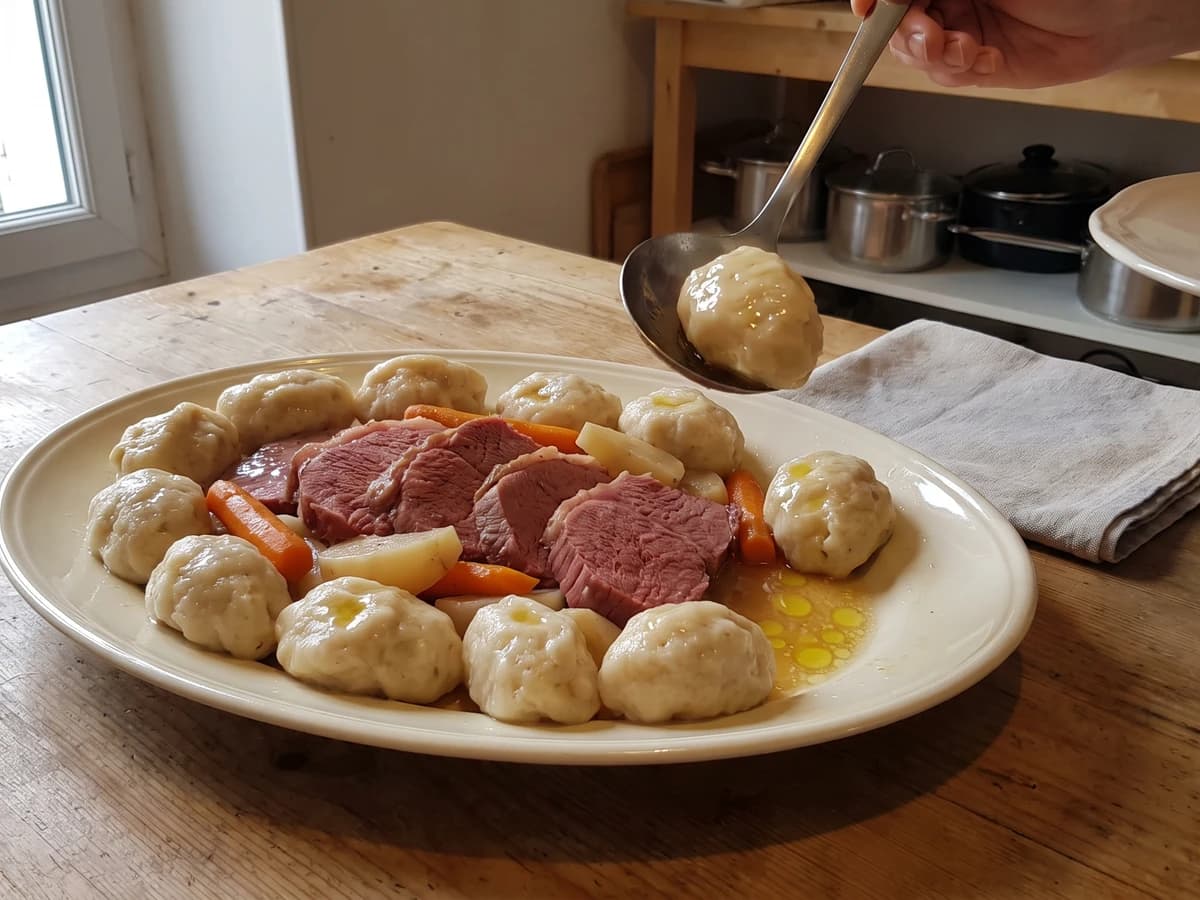
Suet Dumpling
Boulettes au suif, poached beside salt beef, turn equal weights of flour and finely chopped suet into tender, rich dumplings. Keep the beef liquor at a bare tremble and the old garnish works beautifully at home.
A cooking platform built around craft, culture, and the stories behind what we eat.
Created by Chef Juliette
Based on No. 2197, Capsicum or Pimentos (Poivrons doux), from Le Guide Culinaire (1907) by Auguste Escoffier
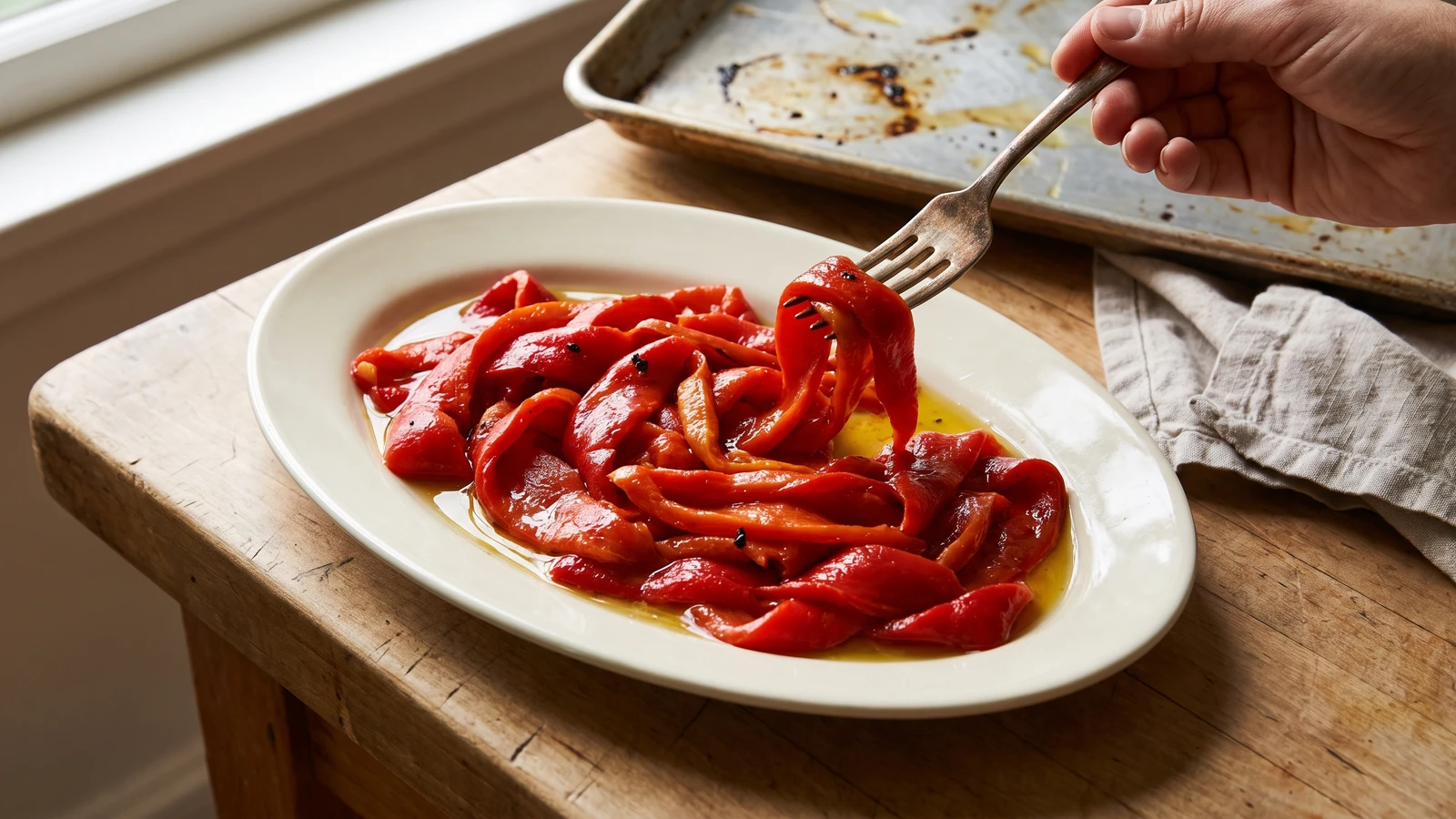
Sweet peppers blackened until their skins lift cleanly, then peeled and cleared of every seed. The home broiler replaces the salamander, while the decisive blistering remains exactly where the canon put it.
Poivrons doux (skinned sweet peppers) teach one clean lesson: the skin releases only when you blacken it completely while leaving the sweet flesh beneath tender and juicy. Stop at bronze and you'll scrape and tear; take the papery skin to black blisters and it slips away.
The classical entry assumed a fierce grill or salamander, a commis peeling enough peppers for service, and no fixed portion because the finished peppers were destined for other dishes. At home, the salamander becomes your broiler and the brigade quantity becomes four large peppers, enough for four people. That equipment and scale were scaffolding. Blackening, peeling without rinsing, and clearing every seed are the dish, and they stay. One cook, one stove, one evening.
When they're right, the peeled peppers are supple and satin-glossed with their own sweet juices, ready to remain whole or fall into broad ribbons. Blacken every patch of skin before you cover them. That's the one step that matters.
Poivrons doux belong most naturally to Mediterranean France, especially Provence, where ripe peppers are grilled, skinned, and served as vegetables in their own right. Parisian classical kitchens carried the same treatment into the grammar of garnishes; large red Spanish peppers were prized for thick, sweet flesh, but every mild green, yellow, or red pepper takes the same method, while hot chile and Cayenne peppers remain condiments.
Quantity
4 large (about 2 lb / 900 g total)
preferably red, washed and dried
| Ingredient | Quantity |
|---|---|
| large mild sweet pepperspreferably red, washed and dried | 4 large (about 2 lb / 900 g total) |
Set an oven rack 4 to 6 inches (10 to 15 cm) below the broiler and heat it on high. Line a rimmed metal sheet pan with foil. Dry the peppers thoroughly and leave them whole; water on the surface slows the blistering that makes the skin release.
Set the peppers on the pan with room between them. Broil for 12 to 18 minutes, turning with tongs every 3 to 4 minutes, until every side is blistered and black and the peppers have softened slightly. Mottled brown is too early. If one side colors much faster than the others, lower the pan one shelf and keep turning; you want black skin, not scorched flesh.
Transfer the peppers immediately to a large heatproof bowl and cover it with a plate or tight lid. Leave them for 10 minutes, until cool enough to handle. The trapped moisture softens the bond between skin and flesh. Save any juices that collect in the bowl.
Pull and rub away the black skins with your fingers, using the back of a paring knife only where needed. Never rinse the peppers under the tap, which carries away their sweet juices and roasted character. If a pale patch refuses to release, set that patch beneath the broiler for another 1 to 2 minutes, cover the pepper again for 5 minutes, and peel. Ça se rattrape.
For strips, split each pepper lengthwise, pull away the stem and seed cluster, then scrape out every loose seed and trim the thick white ribs. Work over the bowl so the juices are not lost, then strain those juices through a fine sieve. To keep a pepper whole, loosen the stem with the paring knife, draw the core out through the opening, and shake out the seeds without splitting the walls.
Leave the peppers whole when their final use requires it, or cut them into broad strips about 1 inch (2.5 cm) wide for the table. Arrange the strips loosely on a platter and spoon their strained juices over them. This preparation stops here by design: oil, vinegar, garlic, or anchovy would lead into another dish. Serve warm or at room temperature. À table!
1 serving (about 155g)
Culinary guides, cultural storytelling, and the editorial depth that makes cooking meaningful.
Discover Culinary ExplorerChef Juliette
Boulettes au suif, poached beside salt beef, turn equal weights of flour and finely chopped suet into tender, rich dumplings. Keep the beef liquor at a bare tremble and the old garnish works beautifully at home.

Chef Juliette
Bread, flour, frangipane, and rice become four cool, supple panades for binding forcemeats, each changing body and flavor while preserving tenderness. The finest Mousselines need none, and knowing that distinction is the lesson.

Chef Juliette
Panade au pain is bread, milk, salt, heat, and attention: stir until the paste releases cleanly, butter it against a skin, and you have the quiet binder behind tender French farces.

Chef Juliette
Panade de farine teaches the drying stroke behind pâte à choux: flour meets boiling buttered water, then stays over the fire until the paste gathers, smooths, and quits the pan cleanly.