
Chef Juliette
Stuffed Onions
Oignons farcis teach the discipline of the shell: mild onions hollowed without weakness, filled with their own flesh and Duxelle, braised in butter and stock, then glazed until the tops bronze.
A cooking platform built around craft, culture, and the stories behind what we eat.
Created by Chef Juliette
Based on No. 2195, Purée de Pois Frais, dite Saint-Germain, from Le Guide Culinaire (1907) by Auguste Escoffier
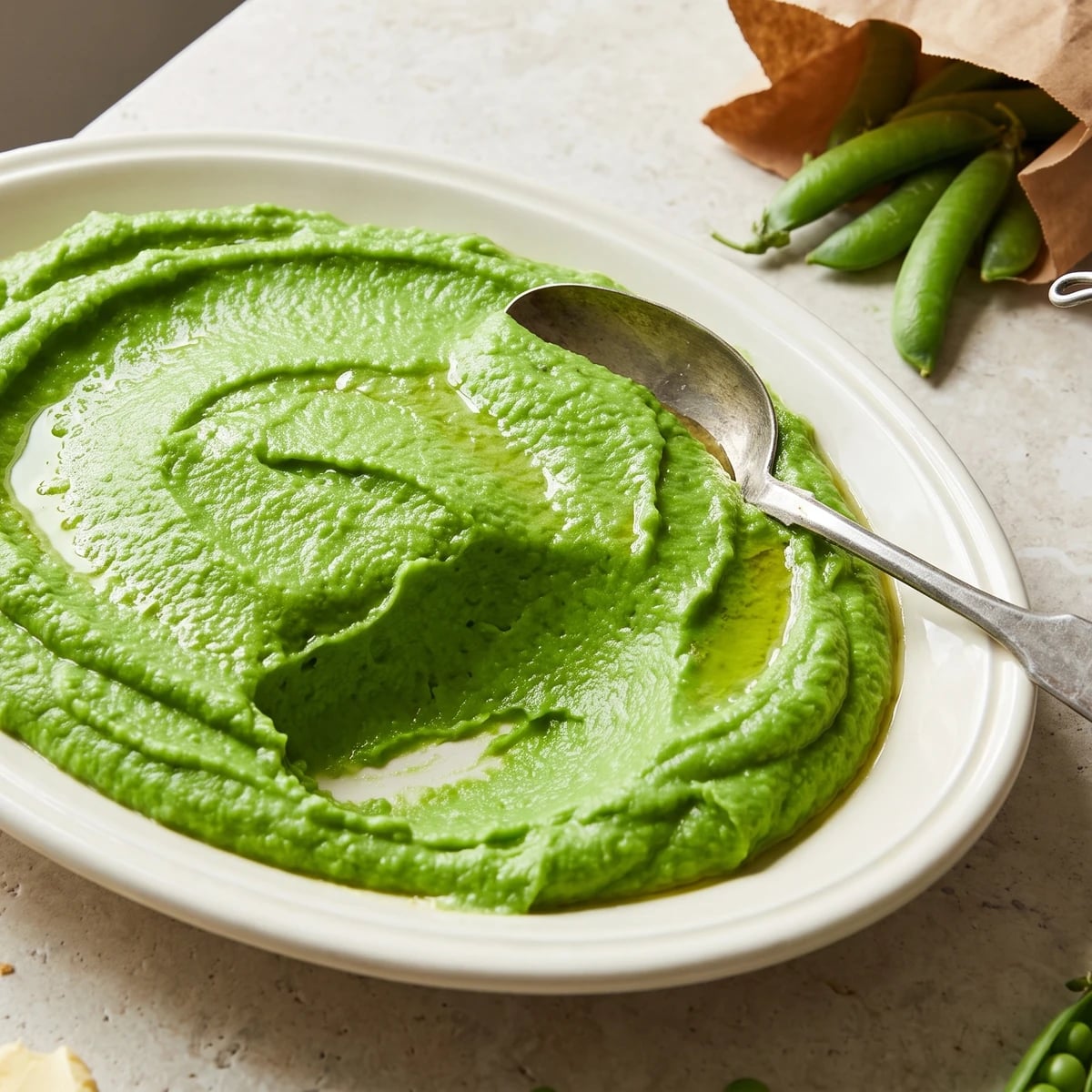
Fresh peas, lettuce, and parsley become a satin green Saint-Germain, finished with real butter and their own liquor reduced nearly to a glaze: concentration, not complication.
Purée de Pois Frais, dite Saint-Germain (fresh pea purée) teaches concentration. Peas, lettuce, and parsley give their flavor to a measured cooking liquor, and that liquor comes back only after it has reduced almost to a glaze. The one true thing to know before touching a pan is this: the cooking liquor is part of the purée, not waste. Pour it away, or return it thin, and you lose the dish's clear, gathered taste.
The source formula assumed brigade quantities and a saucier free to reduce the liquor while another hand rubbed the peas through a sieve. Your kitchen has one saucepan, one fine-mesh sieve, and you. We cut only that simultaneous labor, the scaffolding of service, and scale the butter to four home servings. We keep the sieving, the fresh butter, and the reduction because those are the dish. The stockpot that never left the fire and the salamander of other classical formulas have no place here; the peas make their own foundation. One cook, one stove, one evening.
Done properly, Saint-Germain is vivid green, satin-smooth, and rich without cream. Watch the final minute of the reduction. When its bubbles grow slow and glossy and the pan shows briefly beneath your spoon, it is ready to gather the peas rather than dilute them.
Saint-Germain belongs to the vocabulary of the classical Parisian table, where place names became concise labels for established preparations. The title has been used for both fresh green-pea and dried split-pea soups and purées across generations, but this formula settles the matter plainly with pois frais, fresh peas. Its journey from market-garden cookery into the grand repertoire appears in the finish: familiar peas, lettuce, and parsley are made formal through sieving, reduction, and butter, without stock or cream.
Quantity
4 cups (950 ml / 570 g)
Quantity
2½ cups (590 ml / 590 g), or just enough to cover in a narrow saucepan
Quantity
1½ teaspoons (7.4 ml / 8.8 g)
Quantity
¾ teaspoon (3.7 ml / 3 g)
Quantity
1 small
Quantity
12 large leaves
Quantity
4 tablespoons (60 ml / 57 g) for the expected 2 cups of sieved purée
softened and divided into small pieces
| Ingredient | Quantity |
|---|---|
| freshly shelled young green peas | 4 cups (950 ml / 570 g) |
| boiling water | 2½ cups (590 ml / 590 g), or just enough to cover in a narrow saucepan |
| fine sea salt | 1½ teaspoons (7.4 ml / 8.8 g) |
| granulated sugar | ¾ teaspoon (3.7 ml / 3 g) |
| butter lettuce heart | 1 small |
| flat-leaf parsley leaves | 12 large leaves |
| very fresh unsalted buttersoftened and divided into small pieces | 4 tablespoons (60 ml / 57 g) for the expected 2 cups of sieved purée |
Wrap the lettuce leaves around the parsley and secure them with kitchen twine so the bundle can be removed whole. Put the boiling water, salt, and sugar into a narrow heavy saucepan and return it to a full boil. These precise quantities preserve the source ratio of one-half ounce of salt and one-sixth ounce of sugar per quart of water. Measure rather than season by instinct, because nearly all that liquor will be concentrated and returned.
Add the peas and lettuce bundle. The water should barely cover them; if it does not, move everything to a narrower pan before adding more, since excess water only lengthens the reduction. Return quickly to the boil, then cook uncovered at a lively simmer for 8 to 12 minutes, until a pea crushes smoothly between your fingers. Bright but raw peas will not pass cleanly through the sieve. Cook them tender, but stop before their color turns dull.
Lift out and discard the lettuce and parsley bundle. Drain the peas over a bowl, reserving every drop of their cooking liquor, then return that liquor to the saucepan. Boil it uncovered over medium-high heat while you sieve the peas. Reduce it to about 2 to 3 tablespoons, when the bubbles become broad and slow and a spoon drawn across the pan leaves a clear path for a moment. If it tightens into a sticky syrup before you are ready, remove it from the heat and loosen it with a tablespoon of boiling water. If it smells scorched or tastes bitter, do not fold it into the peas.
While the liquor reduces, rub the hot peas through a sturdy fine-mesh sieve into a warm bowl, working in small batches with the back of a ladle or a flexible scraper. Scrape the smooth purée from the underside after each batch and discard the dry skins left above. This is not brigade scaffolding. The sieving is the dish, giving Saint-Germain its fine, close texture without cream. If the peas refuse to pass, they are undercooked; simmer them for another 2 minutes with a spoonful of boiling water, then try again.
Measure the sieved purée. Use 2 tablespoons (30 ml / 28 g) of butter for every cup, preserving the source ratio of 4 ounces per quart. For the expected 2 cups, return the purée to the dry saucepan over the lowest heat and beat in the 4 tablespoons of softened butter one piece at a time, incorporating each before adding the next. If the butter beads on the surface, the pan is too hot. Lift it off the heat and beat in a teaspoon of cool water until smooth, then continue. Ça se rattrape. Never let the buttered purée boil.
Scrape every drop of the reduced cooking liquor into the buttered purée and beat until the color is even and the surface gleams. Saint-Germain should fall from the spoon in a slow satin fold and hold a soft mound, neither runny nor stiff. If it is too tight, loosen it with boiling water a teaspoon at a time; if it is loose, stir it over the gentlest heat only until the spoon leaves a brief track. Taste before adding anything, since the reduction carries the measured salt and sugar. Spoon it generously into a warm serving dish. À table!
1 serving (about 125g)
Culinary guides, cultural storytelling, and the editorial depth that makes cooking meaningful.
Discover Culinary Explorer
Chef Juliette
Oignons farcis teach the discipline of the shell: mild onions hollowed without weakness, filled with their own flesh and Duxelle, braised in butter and stock, then glazed until the tops bronze.

Chef Juliette
Oignons frits prove that frying is temperature before timing: thin onion rings, lightly floured and cooked in very hot oil until crisp outside, yielding within, then drained and salted at once.

Chef Juliette
Oignons glacés in two classical finishes, one ivory and clear, one butter-gold, prove that gentle heat and a final turn of the pan can make the smallest onion worthy of a holiday table.

Chef Juliette
Scalded onions, dried well and stewed slowly in butter until sweet but still pale, then bound with Béchamel and passed fine: Soubise proves that deep onion flavor does not require browning.