Chef Juliette
Suet Dumpling
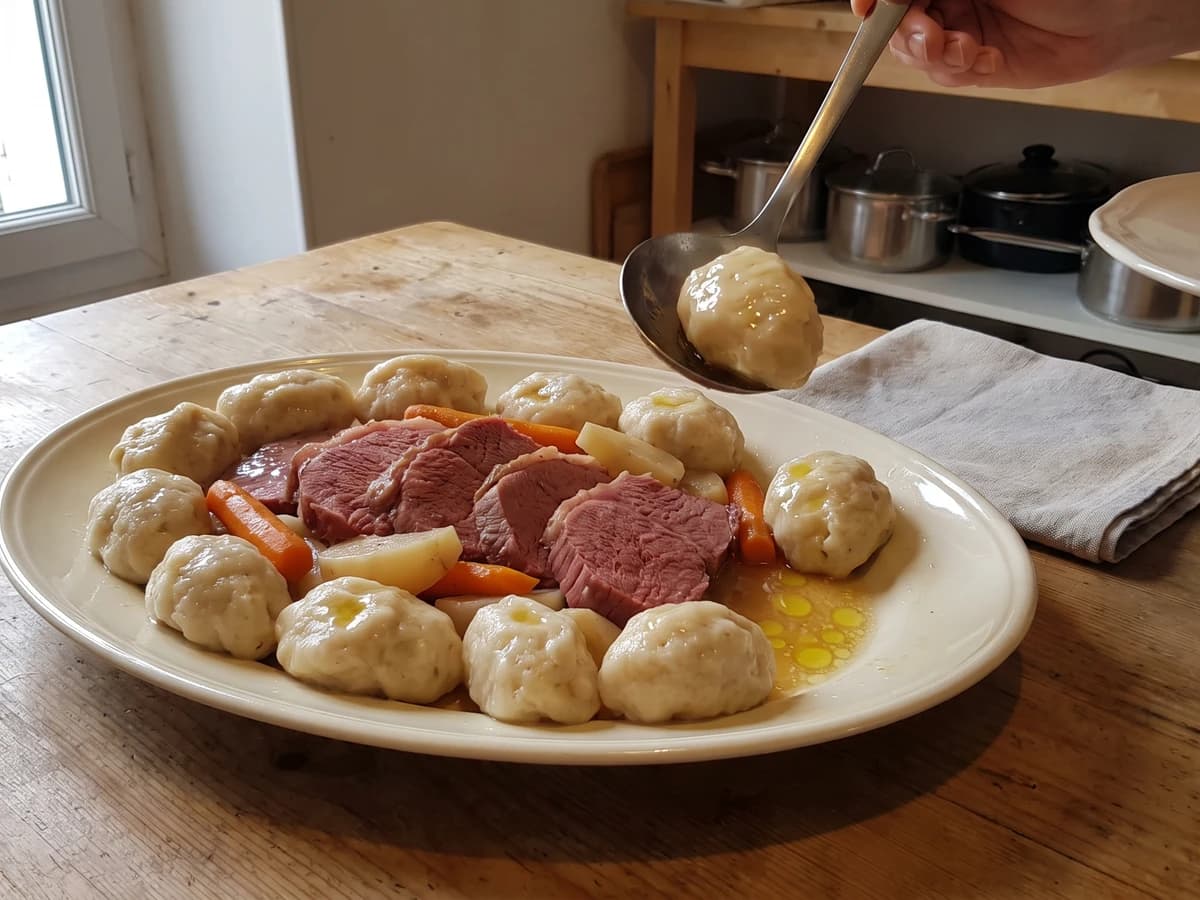
Boulettes au suif, poached beside salt beef, turn equal weights of flour and finely chopped suet into tender, rich dumplings. Keep the beef liquor at a bare tremble and the old garnish works beautifully at home.
A cooking platform built around craft, culture, and the stories behind what we eat.
Created by Chef Juliette
Based on No. 2194, Petits Pois à la Menthe, from Le Guide Culinaire (1907) by Auguste Escoffier
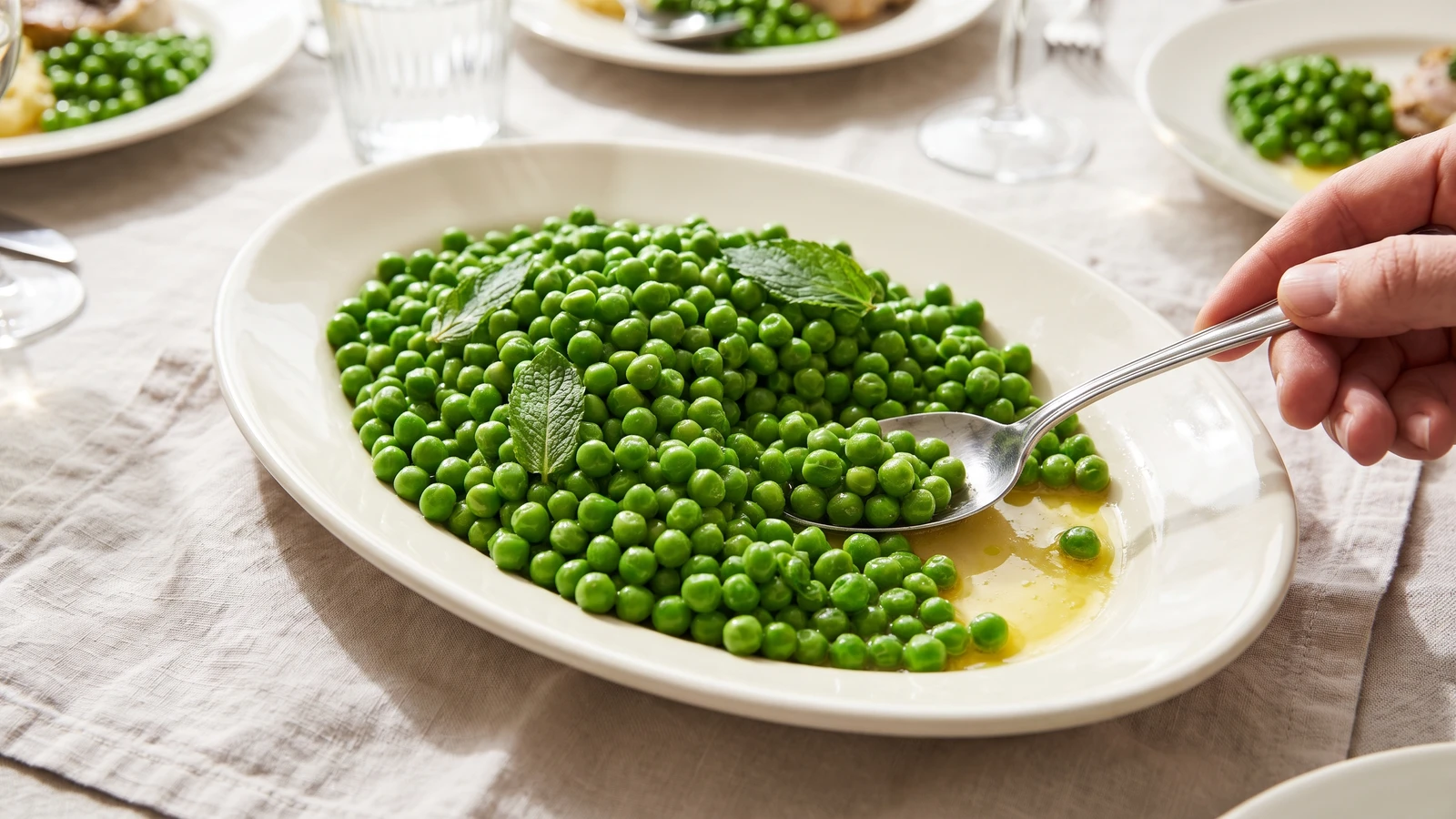
Petits Pois à la Menthe are a lesson in timing: peas boiled with fresh mint, then glossed with butter while their sweetness and brilliant green are still alive.
Petits Pois à la Menthe (minted peas) teaches one true thing: green vegetables must leave the water the moment they become tender. A minute too little can be corrected. A minute too much steals their sweetness, colour, and delicate pop, and no quantity of mint will give those back.
Unlike many brigade preparations, this one asks for neither a saucier, a standing stockpot, nor a salamander. What the original assumed was a great cauldron kept at the boil, peas cooked to order, and a warm serving dish waiting. At home, a wide saucepan and a colander do the same work. The brigade quantity becomes 500 grams for four, while the book's sequence remains intact: boil the peas with a bunch of fresh mint, drain them, finish à l'anglaise (English style) or au beurre (butter-finished), then lay parboiled mint leaves over the top. The cold rinse for those garnish leaves is the only modern addition, preserving their green without changing the flavour.
The two finishes are distinct. À l'anglaise leaves pats of butter melting over the peas in the serving dish; au beurre tosses peas and butter together in the warm pan until they gleam. Both are right. Taste early, then drain the peas at the precise instant their raw starchiness gives way to sweetness. That moment is the dish.
Petits Pois à la Menthe belongs to the French bourgeois and grand-kitchen table rather than to one province, and its pairing of peas with mint reflects a long exchange with English garden cookery. In the classical French vocabulary, à l'anglaise does not mean vaguely British: it names green vegetables boiled in ample salted water, drained, and served simply with fresh butter. The alternative, au beurre, shifts the butter from the serving dish to the pan, while the mint remains an infusion and a leaf garnish, not a chopped herb sauce.
Quantity
3½ cups (830 ml / 500 g)
Quantity
3 quarts (2.8 L / 2.8 kg)
Quantity
1½ tablespoons (22 ml / 27 g)
Quantity
1 large bunch (about 30 g)
reserve 8 handsome leaves and tie the remaining stems together
Quantity
4 tablespoons (60 ml / 57 g)
divided into pats or small cubes
| Ingredient | Quantity |
|---|---|
| fresh shelled garden peas | 3½ cups (830 ml / 500 g) |
| water | 3 quarts (2.8 L / 2.8 kg) |
| fine sea salt | 1½ tablespoons (22 ml / 27 g) |
| fresh mintreserve 8 handsome leaves and tie the remaining stems together | 1 large bunch (about 30 g) |
| cold unsalted butterdivided into pats or small cubes | 4 tablespoons (60 ml / 57 g) |
Bring the water to a strong rolling boil in a wide saucepan, then add the salt. Tie the main bunch of mint loosely so water can move through it, and warm the serving dish with hot tap water while the peas cook. Plenty of boiling water is the useful remnant of the brigade method: it returns to the boil quickly after the peas go in, so they cook cleanly instead of lingering in tepid water.
Drop the 8 reserved mint leaves into the boiling water for 10 seconds, just until they soften and deepen in colour. Lift them out with a slotted spoon, rinse them immediately under very cold water, and blot them dry between clean towels. Set them aside flat. The rinse stops their cooking and is only for the garnish leaves, never the peas.
Add the tied mint bunch and the peas to the boiling water. Keep the pan uncovered and let the water return promptly to a boil. Begin tasting after 2 minutes; young peas may be ready then, while larger or more mature peas can need 4 to 6 minutes. Drain as soon as they are tender through the centre but still have a gentle pop under the teeth. If they begin softening faster than expected, drain them at once and rinse for only a few seconds with cool water to arrest the cooking, then warm them gently during the au beurre finish. Ça se rattrape, provided you stop now.
Reserve ¼ cup (60 ml / 60 g) of the cooking water, then remove the mint bundle and tip the peas into a colander. Shake them well and let them drain for about 15 seconds, no longer. They should remain hot with only a trace of moisture clinging to them. Water pooled beneath the peas dilutes the butter; leaving them forgotten in the colander cools them before the finish.
For à l'anglaise, empty and dry the warmed serving dish, mound in the peas, and arrange all the butter in generous pats over the surface so it melts down among them at the table. For au beurre, return the peas to the warm, dry saucepan over very low heat, add the butter in small cubes, and toss for 30 to 60 seconds until every pea carries a creamy gloss. If the butter separates into an oily film, take the pan off the heat, add 1 teaspoon of the reserved cooking water, and toss firmly until the coating comes together. Ça se rattrape.
Lay the parboiled mint leaves loosely over the finished peas, exactly as the original preparation directs. Don't chop in extra mint; the bunch in the cooking water has already given the peas their quiet perfume, and the leaves on top complete it. Carry the dish straight to the table while the butter still gleams. À table!
1 serving (about 140g)
Culinary guides, cultural storytelling, and the editorial depth that makes cooking meaningful.
Discover Culinary ExplorerChef Juliette
Boulettes au suif, poached beside salt beef, turn equal weights of flour and finely chopped suet into tender, rich dumplings. Keep the beef liquor at a bare tremble and the old garnish works beautifully at home.

Chef Juliette
Bread, flour, frangipane, and rice become four cool, supple panades for binding forcemeats, each changing body and flavor while preserving tenderness. The finest Mousselines need none, and knowing that distinction is the lesson.

Chef Juliette
Panade au pain is bread, milk, salt, heat, and attention: stir until the paste releases cleanly, butter it against a skin, and you have the quiet binder behind tender French farces.

Chef Juliette
Panade de farine teaches the drying stroke behind pâte à choux: flour meets boiling buttered water, then stays over the fire until the paste gathers, smooths, and quits the pan cleanly.