Chef Juliette
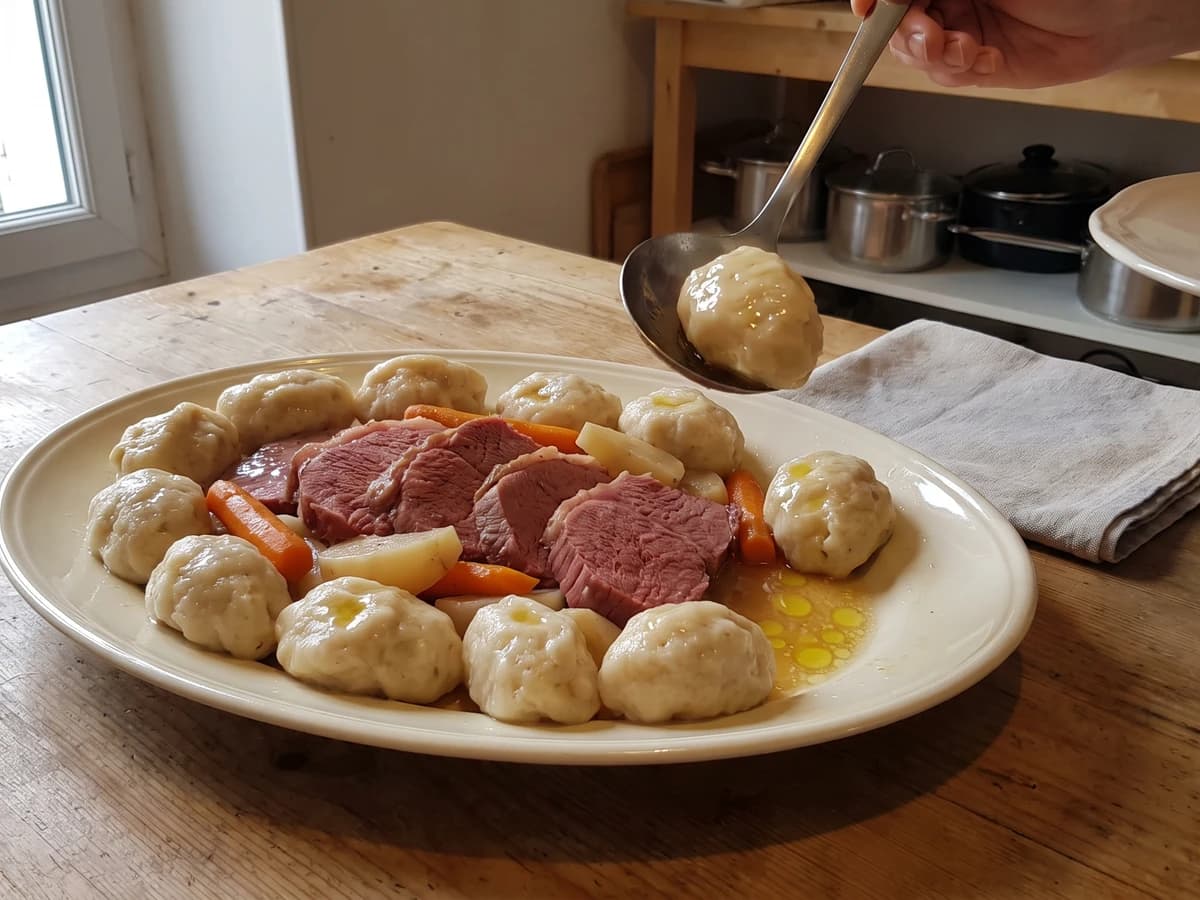
Suet Dumpling
Boulettes au suif, poached beside salt beef, turn equal weights of flour and finely chopped suet into tender, rich dumplings. Keep the beef liquor at a bare tremble and the old garnish works beautifully at home.
A cooking platform built around craft, culture, and the stories behind what we eat.

Created by Chef Juliette
Based on No. 2192, Petits Pois à la Flamande, from Le Guide Culinaire (1907) by Auguste Escoffier
New carrots begin in a pale butter glaze, fresh peas join halfway, and both finish tender and bright before a final off-heat buttering turns the pan juices glossy.
Petits Pois à la Flamande (Flemish-style peas with new carrots) teaches staggered cooking: two vegetables can finish in one pan only if the slower one gets a head start. The carrots become tender and lightly glazed without losing their shape, while the peas stay sweet, green, and distinctly themselves.
The old entry says to prepare the carrots as though they were to be glazed because it assumed a vegetable cook who already knew the whole method and a brigade that had shelled the peas before service. Your honest equivalent is a lidded skillet, measured water, sugar, salt, and real butter. No saucier, standing stock, or salamander belongs here. The source's half-pound of carrots and two-thirds pint of peas already make four generous side servings, so the vegetables remain at their original scale; only the implicit glaze has been written out for one cook, one stove, one evening.
The cartouche and separate holding pans of a large kitchen are scaffolding and can go. The staggered timing and the final butter added away from the fire are the dish, and both must stay. Judge the carrots carefully at halfway: yielding around the edge, still firm at the core.
Petits pois à la Flamande sits in the French classical repertoire's northern vocabulary: à la Flamande points toward Flanders, where peas, young carrots, and butter suit the cool-country garden and dairy table. Professional kitchens codified that household pairing as a timed vegetable garnish, beginning the carrots in a pale glaze and adding the quicker-cooking peas halfway through. It is sometimes confused with petits pois à la française, but this preparation contains no lettuce, onion, or bacon; its identity is the shared cooking of carrots and peas, followed by butter away from the fire.
Quantity
½ pound (about 12 small carrots / 225 g)
scrubbed and trimmed
Quantity
1½ cups (375 ml / 220 g)
Quantity
2 tablespoons (30 ml / 28 g)
divided and kept cold
Quantity
½ cup (120 ml / 120 g), plus more if needed
Quantity
1 teaspoon (5 ml / 4 g)
Quantity
¾ teaspoon (3.75 ml / 4.5 g)
divided
| Ingredient | Quantity |
|---|---|
| new carrotsscrubbed and trimmed | ½ pound (about 12 small carrots / 225 g) |
| freshly shelled peas | 1½ cups (375 ml / 220 g) |
| unsalted butterdivided and kept cold | 2 tablespoons (30 ml / 28 g) |
| water | ½ cup (120 ml / 120 g), plus more if needed |
| granulated sugar | 1 teaspoon (5 ml / 4 g) |
| fine sea saltdivided | ¾ teaspoon (3.75 ml / 4.5 g) |
Choose carrots of roughly equal thickness. Leave tender skins in place after a good scrubbing, then halve any carrot thicker than your thumb lengthwise so everything cooks together. Shell the peas and keep them cool. Cut 1 tablespoon of the butter into small pieces and return it to the cold for the finish.
Arrange the carrots in one layer in a 10-inch (25 cm) skillet. Add the water, sugar, ½ teaspoon of the salt, and 1 tablespoon of the butter. Bring to a lively simmer, then lower the heat and cover with the lid slightly ajar. Cook for 5 to 7 minutes, rolling the carrots once, until a paring knife enters the outer flesh easily but meets a firm core. This is half-cooked, not nearly done.
Scatter the peas around the half-cooked carrots and bring the liquid back to a gentle simmer. Cover again with the lid slightly ajar and cook for 5 to 7 minutes, turning everything once or twice, until the carrots are tender through and the peas yield under the teeth without becoming soft. The liquid should reduce to two or three glossy spoonfuls. If the pan dries before the vegetables are ready, add water one tablespoon at a time. If they become tender while too much liquid remains, lift them into a warm bowl, reduce the liquid briskly, then return them. Ça se rattrape.
Take the skillet completely off the heat. Add the remaining cold butter a few pieces at a time, shaking and rolling the pan until the butter and reduced cooking juices form a thin, glossy coating around every carrot and pea. Do not return the pan to the burner; boiling now makes the butter separate. If butter pools at the bottom, add a teaspoon of cold water and shake firmly until the glaze comes together again. Taste, add the remaining salt as needed, and serve at once. À table!
1 serving (about 120g)
Culinary guides, cultural storytelling, and the editorial depth that makes cooking meaningful.
Discover Culinary ExplorerChef Juliette
Boulettes au suif, poached beside salt beef, turn equal weights of flour and finely chopped suet into tender, rich dumplings. Keep the beef liquor at a bare tremble and the old garnish works beautifully at home.

Chef Juliette
Bread, flour, frangipane, and rice become four cool, supple panades for binding forcemeats, each changing body and flavor while preserving tenderness. The finest Mousselines need none, and knowing that distinction is the lesson.

Chef Juliette
Panade au pain is bread, milk, salt, heat, and attention: stir until the paste releases cleanly, butter it against a skin, and you have the quiet binder behind tender French farces.

Chef Juliette
Panade de farine teaches the drying stroke behind pâte à choux: flour meets boiling buttered water, then stays over the fire until the paste gathers, smooths, and quits the pan cleanly.