Culinary Explorer

A cooking platform built around craft, culture, and the stories behind what we eat.
Discover Culinary Explorer
Petits Pois à l’Anglaise

Petits Pois à l’Anglaise

Created by Chef Juliette

Based on No. 2189, Petits Pois à l’Anglaise, from Le Guide Culinaire (1907) by Auguste Escoffier

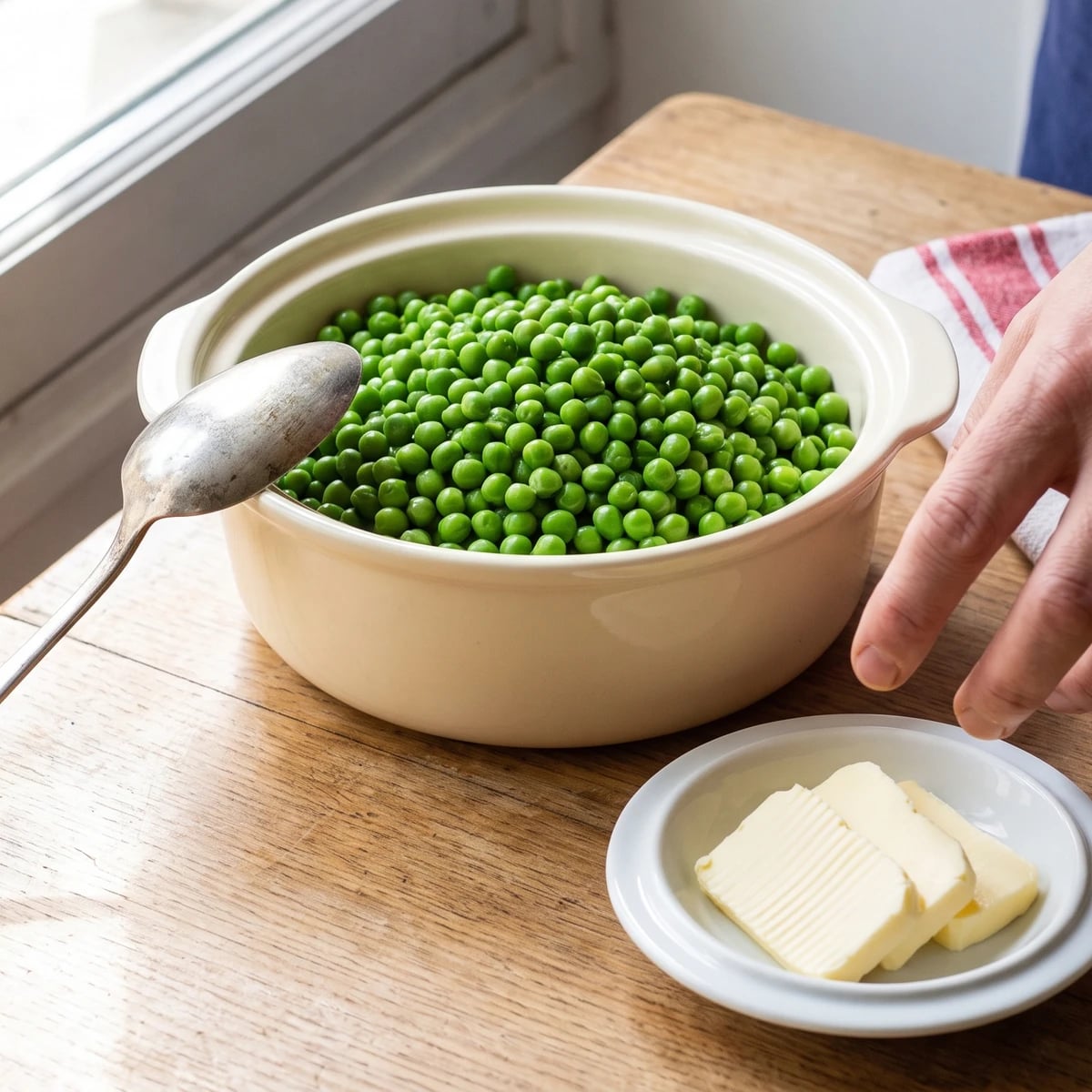
Petits pois at their most exact: boiled just tender, drained without mercy, and tossed over fierce heat until dry, with fresh butter waiting at the table rather than coating the pan.

Side Dishes
French
Weeknight
Quick Meal
10 min
Active Time
10 min cook20 min total
Yield4 servings

Petits Pois à l’Anglaise (peas in the English manner) teaches a severe little truth: boiling is not the finish. The peas must leave the water tender and bright, then be tossed over fierce heat until every clinging drop is gone. Otherwise the butter waiting at the table melts into bathwater instead of dressing each spoonful.

The brigade version assumed a cauldron already at the boil, a range hot enough to dry a service quantity in seconds, a warmed timbale, and another pair of hands to carry it. A saucier, a stock never off the fire, and a salamander have no work here. For one cook, one stove, one evening, a large saucepan, a colander, and a warmed serving bowl do the same work. Only the scale and equipment have changed. The quick boiling, fierce drying, and butter served separately are the dish, so all three stay.

Watch the second cooking, not the first. Once the drained peas return to the fierce heat, toss only until the pan grows quiet and no water follows them into the bowl. That brief, attentive drying is the step that decides everything.

Petits pois à l’anglaise belong to the Parisian classical repertoire, where à l’anglaise named green vegetables boiled plainly in well-salted water and served with butter, often apart at the table. The title records a French reading of English vegetable cookery: direct boiling and clean flavor, set against more composed French pea preparations made with lettuce, onions, or sauce. It is often mistaken for a mint-scented dish, but the canonical method is barer and stricter, because complete draining and the final fierce drying make the peas themselves the whole point.

The technique, the tradition, and the story behind every dish.

Discover Culinary Explorer

Ingredients

freshly shelled green peas, or frozen petits pois

Quantity

4 cups (950 ml / 580 g)

frozen peas left unthawed

cold water

Quantity

12 cups (2.8 L / 2.8 kg)

fine sea salt

Quantity

1½ tablespoons (22 ml / 27 g)

very fresh unsalted butter

Quantity

4 tablespoons (60 ml / 56 g)

cut into 8 pats and kept cool

Equipment Needed

  • 5-quart (4.7 L) saucepan with lid
  • Large colander
  • Broad wooden spoon or heatproof spatula
  • 1½-quart (1.4 L) deep serving bowl or timbale
  • Small butter dish

Instructions

  1. 1

    Ready bowl and butter

    Arrange the butter pats on a small dish and keep them cool but not refrigerator-hard. Warm a deep serving bowl or timbale with hot tap water, then leave it filled while the peas cook. The butter is served separately, exactly as the preparation intends, so do not melt it into the cooking pan.

  2. 2

    Raise the boil

    Put the cold water and salt in a 5-quart saucepan, cover, and bring it to a full rolling boil over high heat. The generous quantity of water is practical, not grand: it returns to the boil quickly after the peas enter, which cooks them fast and preserves their fresh color and shape.

  3. 3

    Cook the peas quickly

    Add the peas all at once and leave the pan uncovered. Let the water return to a strong boil, then cook until a pea yields easily between the teeth but remains round, sweet, and intact, about 2 to 3 minutes for frozen petits pois or 3 to 5 minutes for fresh peas, depending on their maturity. Taste after 2 minutes rather than trusting the clock. If the skins begin to wrinkle or split, drain immediately; they are telling you they have had enough.

    A properly cooked pea has no chalky center, but it still gives a small pop under the teeth. Softness without shape means it has gone too far.
  4. 4

    Drain without delay

    Tip the peas immediately into a large colander and shake firmly for 10 seconds. Do not leave them sitting there to cool, and do not rinse them. Surface water is the enemy now, but the peas must remain hot enough to dry in the pan and reach the table properly.

  5. 5

    Dry over fierce heat

    Return the empty saucepan to high heat for 10 to 15 seconds, just until its water film disappears. Add the drained peas and toss them continuously over the fierce heat for 20 to 40 seconds, using the pan itself or a broad spoon, until they look dry and satin-bright and the pan no longer hisses. Add no fat. If droplets still collect, continue in 10-second bursts; if the peas begin to stick or wrinkle, lift the pan off the heat and keep tossing in its residual warmth. Ça se rattrape.

    Drying is not permission to brown the peas. The moment the pan falls nearly silent and no water gathers beneath them, the work is done.
  6. 6

    Dish and serve

    Empty and dry the warmed bowl, heap in the peas, and carry them straight to the table with the dish of butter pats alongside. Each diner can fold a pat through a serving while the peas are hot. The butter should melt against the peas, not disappear into cooking water. À table!

Chef Tips

  • Fresh peas are splendid during their short season, provided they are genuinely young. If the pods are tired or the calendar is against you, use frozen petits pois straight from the freezer. They were preserved at their peak, and they are more honest than starchy fresh peas that have waited too long.
  • Use butter that smells sweet and clean when you unwrap it. Butter served plainly has nowhere to hide, and one that has collected refrigerator odors will announce every one of them.
  • No sugar, mint, lettuce, pepper, or cream belongs in this entry. Those can lead to other legitimate pea dishes, but Petits Pois à l’Anglaise depends on seasoned water, complete draining, fierce drying, and fresh butter served apart.
  • Do not crowd the peas into a small pan. The large volume of boiling water and the broad drying surface are the modest pieces of equipment that replace a brigade range.

Advance Preparation

  • Fresh peas may be shelled up to 8 hours ahead and kept covered in the refrigerator. Frozen petits pois should remain frozen until the water is boiling.
  • The butter can be cut into pats and arranged on its dish several hours ahead, then covered and kept cool. Warm the serving bowl only when the water goes on.
  • Do not boil the peas ahead. Their sweetness, color, and taut texture fade while they wait, and this preparation has no sauce to conceal the loss.

Frequently Asked Questions

Nutrition Information

1 serving (about 175g)

Calories
220 calories
Total Fat
12 g
Saturated Fat
7 g
Trans Fat
0 g
Unsaturated Fat
4 g
Cholesterol
30 mg
Sodium
390 mg
Total Carbohydrates
21 g
Dietary Fiber
7 g
Sugars
7 g
Protein
8 g

Note: Chef personas and recipes are created with AI assistance. Cook with care: follow safe food-handling practices, check doneness with a thermometer when needed, and adapt for allergies and your kitchen.

Where cooking meets culture.

Culinary guides, cultural storytelling, and the editorial depth that makes cooking meaningful.

Discover Culinary Explorer

More from Vegetables and Farinaceous Products - Onions (Oignons)

Browse the full collection