Chef Juliette
Suet Dumpling
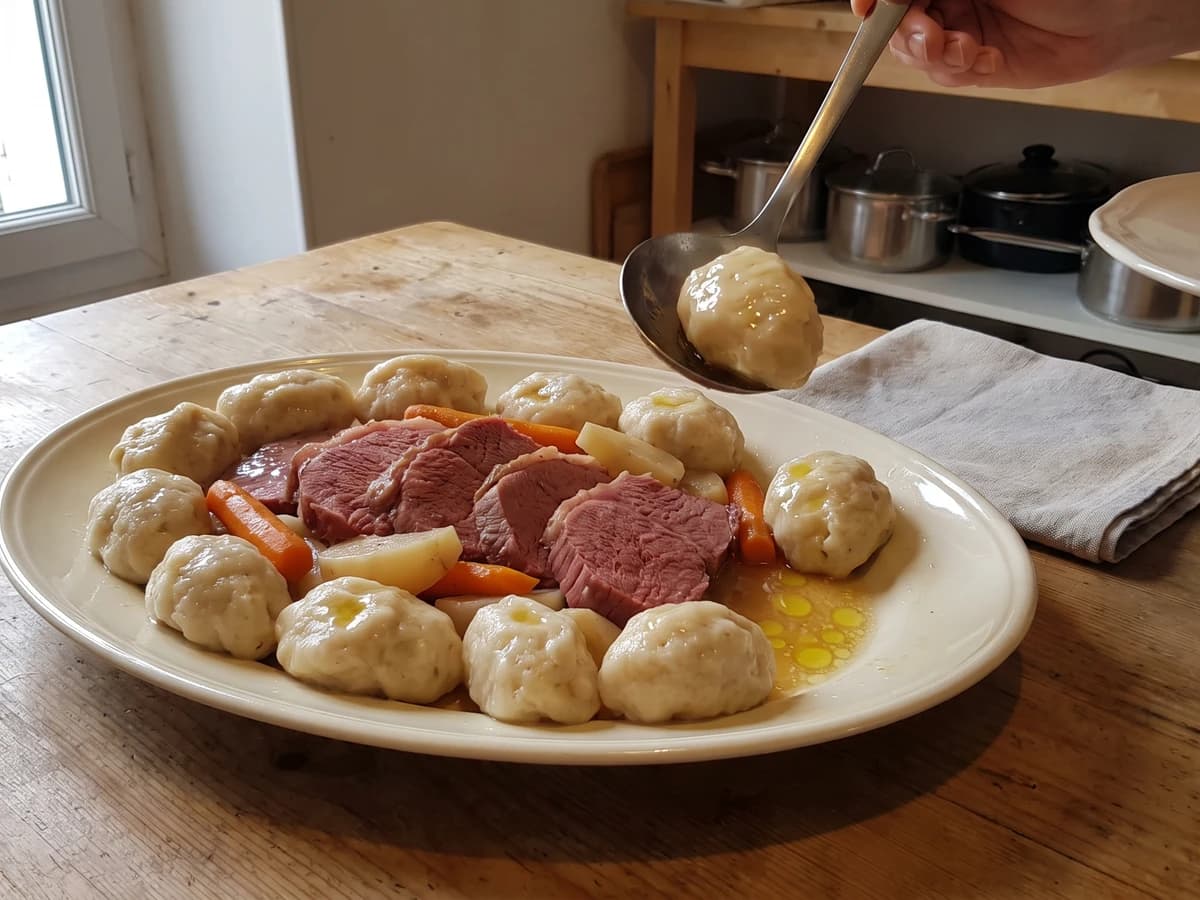
Boulettes au suif, poached beside salt beef, turn equal weights of flour and finely chopped suet into tender, rich dumplings. Keep the beef liquor at a bare tremble and the old garnish works beautifully at home.
A cooking platform built around craft, culture, and the stories behind what we eat.
Created by Chef Juliette
Based on No. 2188, Peas (Petits Pois), from Le Guide Culinaire (1907) by Auguste Escoffier
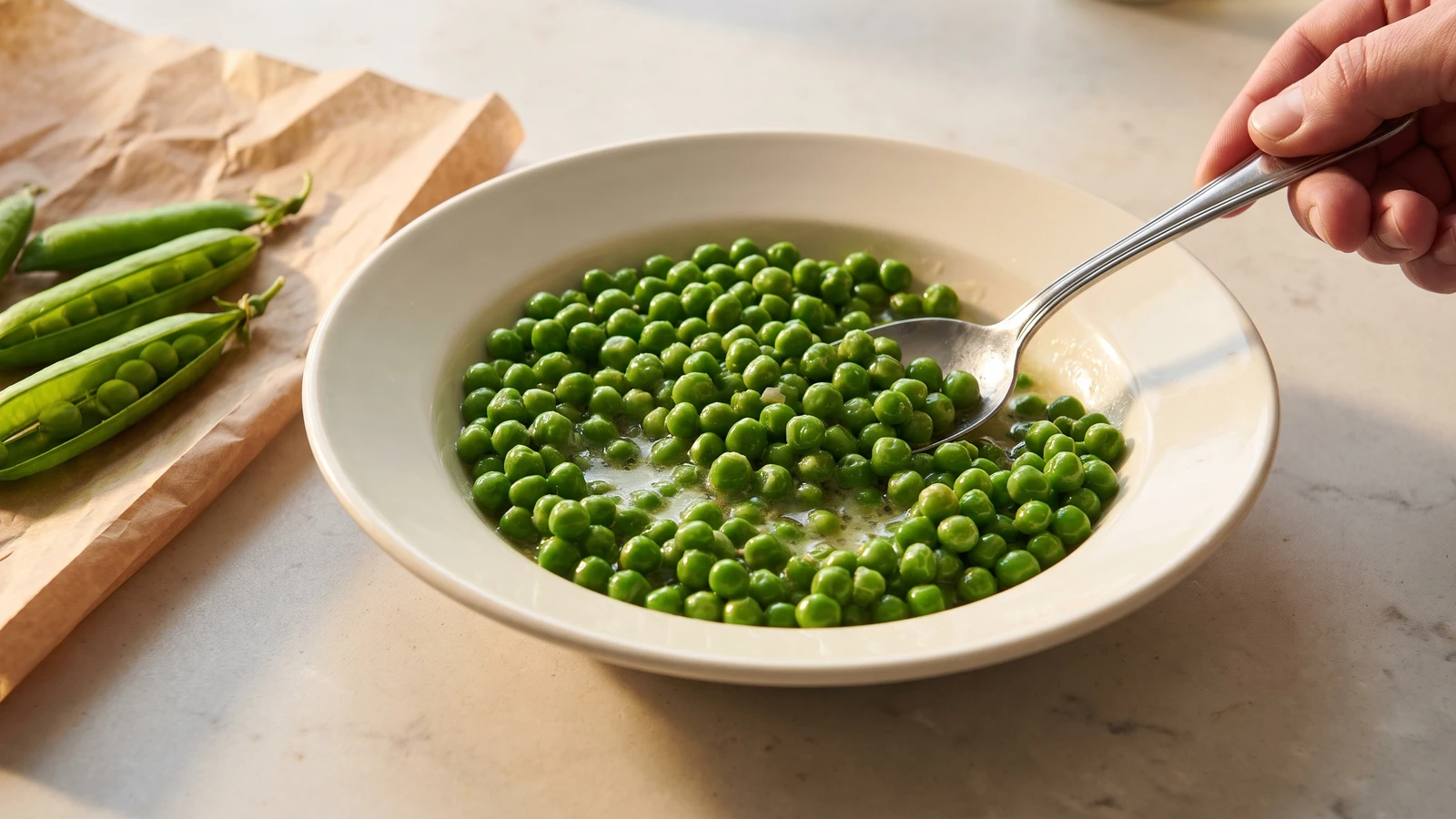
Petits pois prove that freshness is a technique: shell them late, cook them fast, then roll them through a light butter emulsion until every pea shines and still tastes green.
Petits pois (young green peas) teach one severe little truth: their sweetness is borrowed time. Take them very green, shell them at the last possible moment, and cook them without delay. Neglect turns delicacy into starch faster than any clever sauce can disguise it.
The classical entry assumed peas gathered that morning and kitchen hands ready to shell them for service. Your honest home equivalent is a modest basket of pods, salted water already boiling, and one sauté pan for the final butter glaze. I have scaled the quantity to four servings and removed the blanching, chilling, and holding routine a brigade used between orders. That routine is scaffolding. Last-minute shelling, brief cooking, and real butter are the dish.
Properly done, the petits pois arrive vivid green, tender without collapsing, and coated in a light emulsion that gleams rather than pools. Shell only when the water is ready. That short journey from pod to pan is the step that decides everything.
Petits pois belong to the national French table, though the classical ideal was supplied by the market gardens surrounding Paris, where young peas could reach cooks soon after gathering. The name describes maturity as much as size: petits pois are tender, newly formed peas, not merely any small pea, and generations of cooks treated last-minute shelling as part of the preparation. Elaborate formulas with lettuce, onions, or bacon have their own names; the plain preparation keeps the pea's sweetness in front.
Quantity
3 lb (1.36 kg), yielding about 3 cups (710 ml / 450 g)
shelled at the last minute
Quantity
8 cups (1.9 L / 1.9 kg)
Quantity
1 tablespoon plus 1/4 teaspoon (16 ml / 20 g)
divided
Quantity
3 tablespoons (45 ml / 42 g)
divided
Quantity
1/8 teaspoon (0.6 ml / 0.3 g)
| Ingredient | Quantity |
|---|---|
| very fresh green peas in their podsshelled at the last minute | 3 lb (1.36 kg), yielding about 3 cups (710 ml / 450 g) |
| cold water | 8 cups (1.9 L / 1.9 kg) |
| fine sea saltdivided | 1 tablespoon plus 1/4 teaspoon (16 ml / 20 g) |
| cold unsalted butterdivided | 3 tablespoons (45 ml / 42 g) |
| finely ground white pepper (optional) | 1/8 teaspoon (0.6 ml / 0.3 g) |
Put the water and 1 tablespoon of the salt in a 3-quart saucepan and bring it to a full boil. Only then begin shelling the peas, dropping them into a bowl as you work and discarding any that are yellow, shrivelled, or hard. If the peas need washing, rinse them quickly and drain well. Don't leave them sitting about once shelled; the clock has started.
Tip the shelled petits pois into the boiling water and leave the pan uncovered. Once the boil returns, cook for 2 to 4 minutes, tasting after 2 minutes. A pea should yield under the teeth with a creamy centre and a fresh, sweet flavour, never a chalky core or wrinkled skin. Very young peas may need barely 2 minutes; larger ones need longer. The clock advises, but the pea decides.
Scoop out 1 cup (240 ml / 240 g) of the cooking water, then drain the petits pois immediately. Don't rinse them under cold water when serving at once; chilling was useful when a brigade needed to hold vegetables for later orders, but tonight it only cools the peas and leaves them wet. If one tastes chalky after draining, ça se rattrape: finish it in the butter pan with an extra spoonful of cooking water, testing every 30 seconds.
Melt 2 tablespoons of the butter with 3 tablespoons of the reserved cooking water in a 10-inch sauté pan over medium heat. Swirl until the liquid bubbles and turns cloudy, then add the petits pois and toss for 1 to 2 minutes, just until each pea is glossy and the liquid lightly clings. This is a small butter emulsion, not peas swimming in melted fat. If it separates into clear butter, take the pan off the heat and toss in reserved water 1 teaspoon at a time. Ça se rattrape. If the glaze remains watery, lift out the tender peas and reduce the liquid alone for a few seconds before returning them.
Take the pan off the heat. Add the remaining cold butter in small pieces and toss until it disappears into the glaze. Season with the remaining salt only as needed and add the white pepper, if using. Spoon the petits pois into a warmed serving bowl and bring them straight to the table; their colour, sweetness, and butter emulsion wait for nobody. À table!
1 serving (about 130g)
Culinary guides, cultural storytelling, and the editorial depth that makes cooking meaningful.
Discover Culinary ExplorerChef Juliette
Boulettes au suif, poached beside salt beef, turn equal weights of flour and finely chopped suet into tender, rich dumplings. Keep the beef liquor at a bare tremble and the old garnish works beautifully at home.

Chef Juliette
Bread, flour, frangipane, and rice become four cool, supple panades for binding forcemeats, each changing body and flavor while preserving tenderness. The finest Mousselines need none, and knowing that distinction is the lesson.

Chef Juliette
Panade au pain is bread, milk, salt, heat, and attention: stir until the paste releases cleanly, butter it against a skin, and you have the quiet binder behind tender French farces.

Chef Juliette
Panade de farine teaches the drying stroke behind pâte à choux: flour meets boiling buttered water, then stays over the fire until the paste gathers, smooths, and quits the pan cleanly.