Chef Juliette
Suet Dumpling
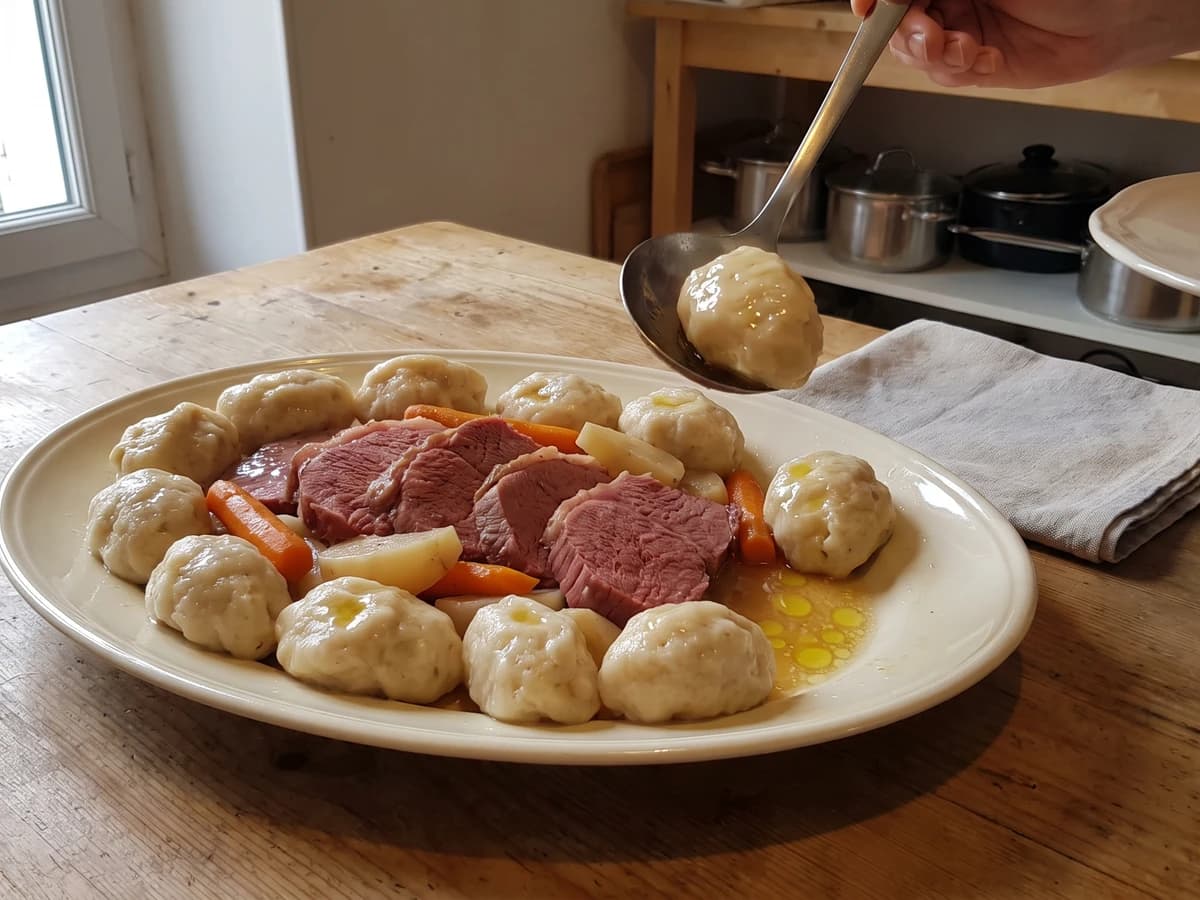
Boulettes au suif, poached beside salt beef, turn equal weights of flour and finely chopped suet into tender, rich dumplings. Keep the beef liquor at a bare tremble and the old garnish works beautifully at home.
A cooking platform built around craft, culture, and the stories behind what we eat.
Created by Chef Juliette
Based on No. 2183, Glazed Onions, from Le Guide Culinaire (1907) by Auguste Escoffier
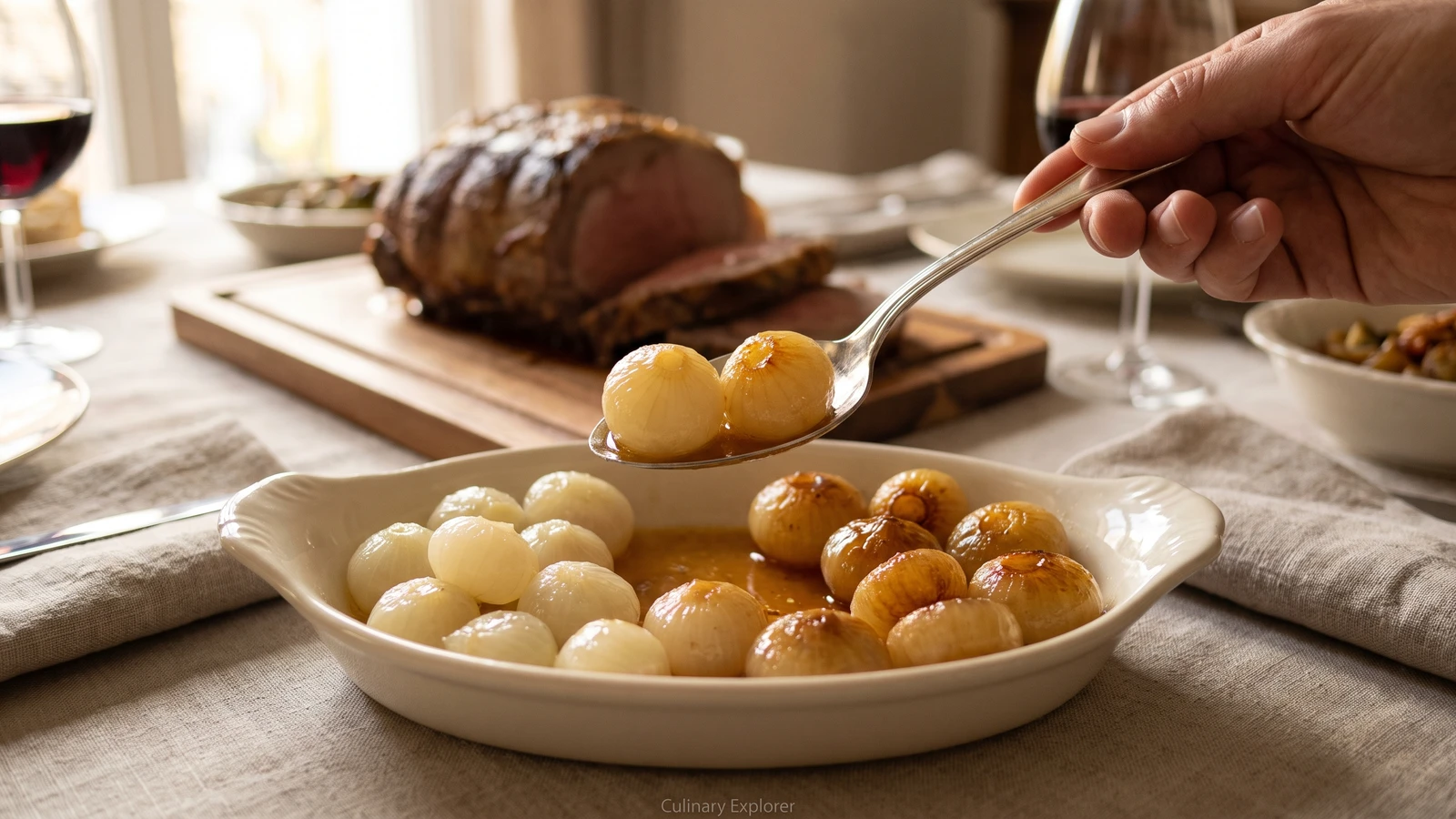
Oignons glacés in two classical finishes, one ivory and clear, one butter-gold, prove that gentle heat and a final turn of the pan can make the smallest onion worthy of a holiday table.
Oignons glacés (glazed small onions) teach one exact thing: cooking and glazing must arrive together. In à blanc, the onions become tender under pale consommé and butter, then roll through their reduced liquor until ivory and glassy. In à brun, gentle butter and a pinch of sugar cook the centres while the surfaces become evenly gold. Rush either version and you get raw hearts beneath a sticky coat.
The original entry assumed a saucier cook at hand, white consommé never off the fire, and shallow pans proportioned for brigade service. At home, a clear pale chicken stock may stand in for the consommé, though its glaze will be slightly less crystalline; 24 g butter to 240 ml liquid preserves the book's proportion, and 32 onions feed four generously. A salamander contributes nothing here, since the colour must grow slowly in butter at pan level. One cook, one stove, one evening.
A dedicated saucier and separate holding pans were brigade scaffolding, so they can go. Matching onions, intact root plates, gentle heat, and the final rolling of the à blanc cannot, because they are the dish. Watch the last spoonful of liquid most closely: it must reduce around the onions, never brown beneath them.
Oignons glacés belong to the classical garniture repertoire of Parisian grand kitchens and cuisine bourgeoise rather than to one French region. Their two forms are functional, not rival traditions: à blanc accompanies pale preparations where clarity matters, while à brun lends bronze sweetness to darker roasts and braises. What passed into the home kitchen was not mere decoration but control, the humble onion cooked separately so it reached the table whole, tender, and shining.
Quantity
16 (about 8 ounces / 225 g)
peeled with the root plates intact
Quantity
1 cup (240 ml / 240 g)
Quantity
1 tablespoon plus 2 teaspoons (25 ml / 24 g)
Quantity
16 (about 8 ounces / 225 g)
peeled with the root plates intact
Quantity
2 tablespoons (30 ml / 28 g)
Quantity
1 small pinch, about 1/16 teaspoon (0.3 ml / 0.25 g)
| Ingredient | Quantity |
|---|---|
| small pearl or boiling onions for oignons glacés à blancpeeled with the root plates intact | 16 (about 8 ounces / 225 g) |
| white consommé, or well-seasoned clear pale chicken stock | 1 cup (240 ml / 240 g) |
| unsalted butter for oignons glacés à blanc | 1 tablespoon plus 2 teaspoons (25 ml / 24 g) |
| small pearl or boiling onions for oignons glacés à brunpeeled with the root plates intact | 16 (about 8 ounces / 225 g) |
| unsalted butter for oignons glacés à brun | 2 tablespoons (30 ml / 28 g) |
| powdered sugar | 1 small pinch, about 1/16 teaspoon (0.3 ml / 0.25 g) |
Sort the onions into two groups of equal size. Trim away only the dry root whiskers, leaving each basal plate intact, then cut a shallow cap from the stem end and remove the papery skin without nicking the flesh. An exposed layer separates as it cooks, while an intact onion stays round and holds its glaze. If the skins cling, soak the onions in warm water for 5 minutes, then peel and dry them thoroughly.
Arrange the onions for oignons glacés à blanc in one close layer in an 8-inch (20 cm) shallow pan. Add the white consommé and 24 g butter; the liquid should almost cover the onions. Bring it slowly to a bare simmer, then cook uncovered for 18 to 22 minutes, turning the onions gently every few minutes. The liquid should tremble, never boil hard, or the outer layers loosen before the centres become tender.
When a fine skewer enters an onion with only slight resistance, raise the heat just enough to reduce the remaining cooking liquor. Roll the pan constantly as the final spoonful thickens, coating every onion in a clear, buttery glaze without allowing the pan floor to brown. If the glaze separates into watery streaks and clear fat, add 1 teaspoon (5 ml / 5 g) consommé and roll the pan off the heat until it comes together. Ça se rattrape. If colour begins forming underneath, add another spoonful of consommé immediately and lower the heat.
Transfer the pale onions to a warm dish and wipe the pan clean, or use a second pan. Melt the remaining 28 g butter over the gentlest heat, add the onions for oignons glacés à brun in one layer, and dust them evenly with the pinch of powdered sugar. Cook very gently for 25 to 30 minutes, rolling them every 2 minutes so tenderness and colouring develop together. They should pass slowly from ivory to straw to an even butter-gold, with no scorched patches.
Test one golden onion with a fine skewer. If the outside is already darkening while the centre remains firm, lift the pan from the heat, add 1 tablespoon (15 ml / 15 g) water, and cover for 2 minutes. Roll the onions through the loosened caramel, uncover, and return them to the lowest heat until the water disappears and the butter coats them again. Catch it while the sugar is amber, not black, and ça se rattrape.
Arrange the oignons glacés à blanc and oignons glacés à brun side by side in a warmed shallow serving dish, keeping their two colours distinct. Spoon each pan's glaze over its own onions and serve at once. The pale onions taste of consommé and butter; the golden ones bring quiet sweetness and bronze. They need no herbs and no decoration. À table!
1 serving (about 110g)
Culinary guides, cultural storytelling, and the editorial depth that makes cooking meaningful.
Discover Culinary ExplorerChef Juliette
Boulettes au suif, poached beside salt beef, turn equal weights of flour and finely chopped suet into tender, rich dumplings. Keep the beef liquor at a bare tremble and the old garnish works beautifully at home.

Chef Juliette
Bread, flour, frangipane, and rice become four cool, supple panades for binding forcemeats, each changing body and flavor while preserving tenderness. The finest Mousselines need none, and knowing that distinction is the lesson.

Chef Juliette
Panade au pain is bread, milk, salt, heat, and attention: stir until the paste releases cleanly, butter it against a skin, and you have the quiet binder behind tender French farces.

Chef Juliette
Panade de farine teaches the drying stroke behind pâte à choux: flour meets boiling buttered water, then stays over the fire until the paste gathers, smooths, and quits the pan cleanly.