Chef Juliette
Bouillabaisse à la Marseillaise
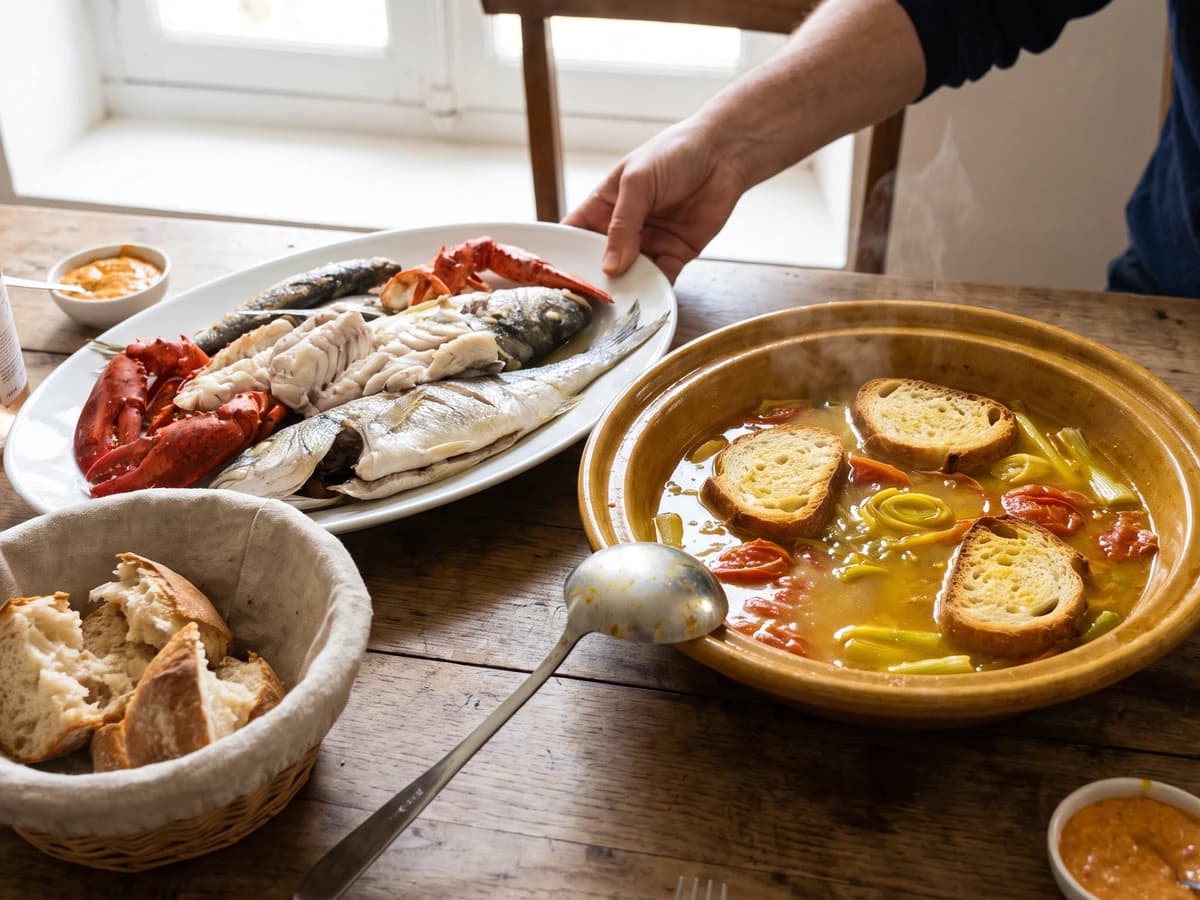
Marseille's great fish stew, saffron-gold and garlic-scented, proves that a hard boil can be the careful choice: it binds olive oil into broth before the whole pot meets bread.
A cooking platform built around craft, culture, and the stories behind what we eat.
Created by Chef Juliette
Based on No. 217, Threaded Eggs, from Le Guide Culinaire (1907) by Auguste Escoffier
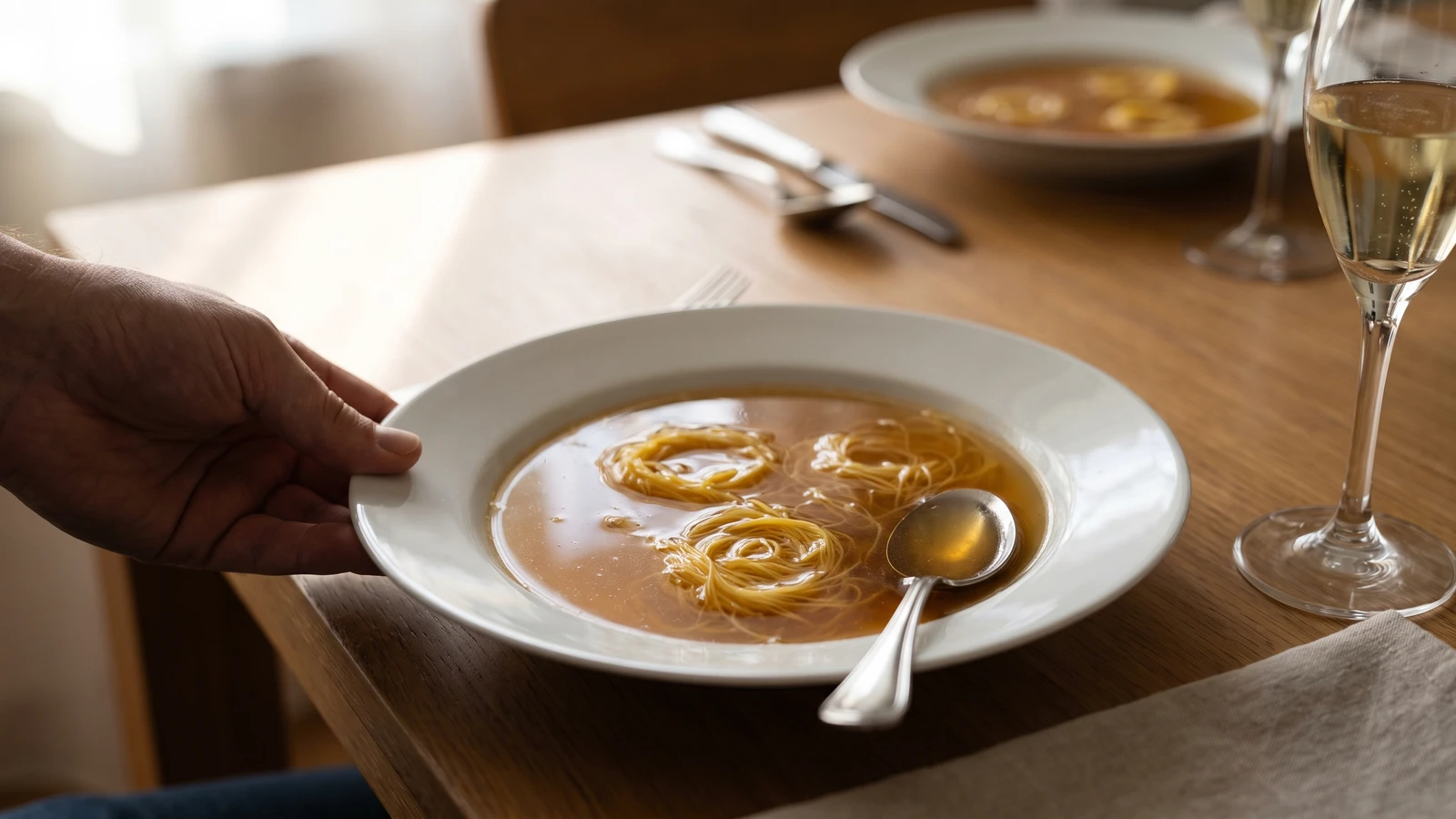
Œufs filés turn three seasoned eggs into fine golden threads, set instantly in boiling consommé and drained with care, a small classical technique where temperature and movement do all the work.
Œufs filés teach one precise lesson: coagulation can be shaped by heat and movement alone. The consommé must be at a true boil before the egg falls. In timid heat it feathers, clouds the broth, and gathers into soft clumps; at a boil, each narrow stream sets the instant it touches the liquid.
The original entry assumed a stockpot of finished consommé never off the fire, a broad sauté pan, duplicate sieves, and a saucier's hands free at service. Your home equivalent is a measured portion of consommé in a small pan, one fine sieve rinsed and used twice, and a wire skimmer. Three eggs are already a sensible home quantity, enough for eight first-course bowls, but they pass through the sieve in three additions so a home burner can restore the boil. The endless stockpot and extra equipment were brigade scaffolding. Pre-straining the egg, moving the sieve, maintaining the boil, and draining without pressure are the dish itself, so those stay. One cook, one stove, one evening.
Keep the sieve moving, and let no egg fall until the consommé rolls across its whole surface. That is the step that decides whether you lift fine threads or one yellow raft.
Œufs filés belong to the garniture repertoire of the classical Paris kitchen, where clear consommés were distinguished as much by their carefully formed additions as by the broth beneath them. The technique traveled readily to bourgeois dining rooms because it required no mold or grand apparatus, only seasoned egg, a sieve, and accurately controlled heat. It is sometimes mistaken for a soup thickened with egg, but the classical intent is the opposite: the threads are coagulated separately, drained intact, and placed in reserved consommé so its clarity remains visible.
Quantity
3
Quantity
¼ teaspoon (1.25 ml / 1.5 g)
Quantity
⅛ teaspoon (0.6 ml / 0.3 g)
finely ground
Quantity
2½ quarts (10 cups / 2.4 L / about 2.4 kg)
divided
| Ingredient | Quantity |
|---|---|
| large eggs | 3 |
| fine salt | ¼ teaspoon (1.25 ml / 1.5 g) |
| pepper, white preferredfinely ground | ⅛ teaspoon (0.6 ml / 0.3 g) |
| finished clear consommédivided | 2½ quarts (10 cups / 2.4 L / about 2.4 kg) |
Beat the eggs with the salt and pepper until yolks and whites become completely uniform, but stop before you raise a cap of foam. Let them stand for one minute, skim away any large bubbles, then pass the mixture through a fine-mesh sieve into a spouted jug. This first straining removes chalazae and stubborn white that would block the mesh and make thick ropes. Rinse and dry the sieve for threading.
Pour 2 cups (475 ml) of the consommé into a small straight-sided sauté pan and bring it to a brisk, even boil over medium-high heat. The liquid must roll across the entire surface, not merely bubble around the rim. Keep the remaining consommé covered for serving. A true boil sets the egg on contact and protects the broth from clouding.
Pour one-third of the strained egg into the clean sieve. Hold it about 2 inches (5 cm) above the boiling consommé and move it continuously in small overlapping circles, letting the egg fall through under its own weight. Do not press it with a spoon. Fine streams should set instantly wherever they land. If the egg spreads into a sheet or clump, stop, lift it out with the skimmer, pull it gently into smaller strands with two forks, and restore the full boil before continuing. Ça se rattrape. The first strands may be shorter, but they are not lost.
As soon as the sieve empties, slide a wide wire skimmer beneath the threads and lift them as one loose nest. Hold the skimmer over the pan until the quick dripping stops, then ease the threads onto a warmed shallow dish. Never press, shake, or pour the pan through a colander; their own weight is enough to break them. Let the consommé return to a complete boil, then repeat with the remaining egg in two additions.
Warm the reserved 2 quarts (1.9 L) of consommé to a bare simmer and taste before adding any seasoning, since a finished consommé already carries its salt. Divide the drained Œufs filés among warmed soup plates, loosening each nest with two forks if needed. Ladle the consommé gently around the threads rather than directly onto them, preserving their shape and the broth's clear surface. Serve immediately. À table!
1 serving (about 240g)
Culinary guides, cultural storytelling, and the editorial depth that makes cooking meaningful.
Discover Culinary ExplorerChef Juliette
Marseille's great fish stew, saffron-gold and garlic-scented, proves that a hard boil can be the careful choice: it binds olive oil into broth before the whole pot meets bread.
Chef Juliette
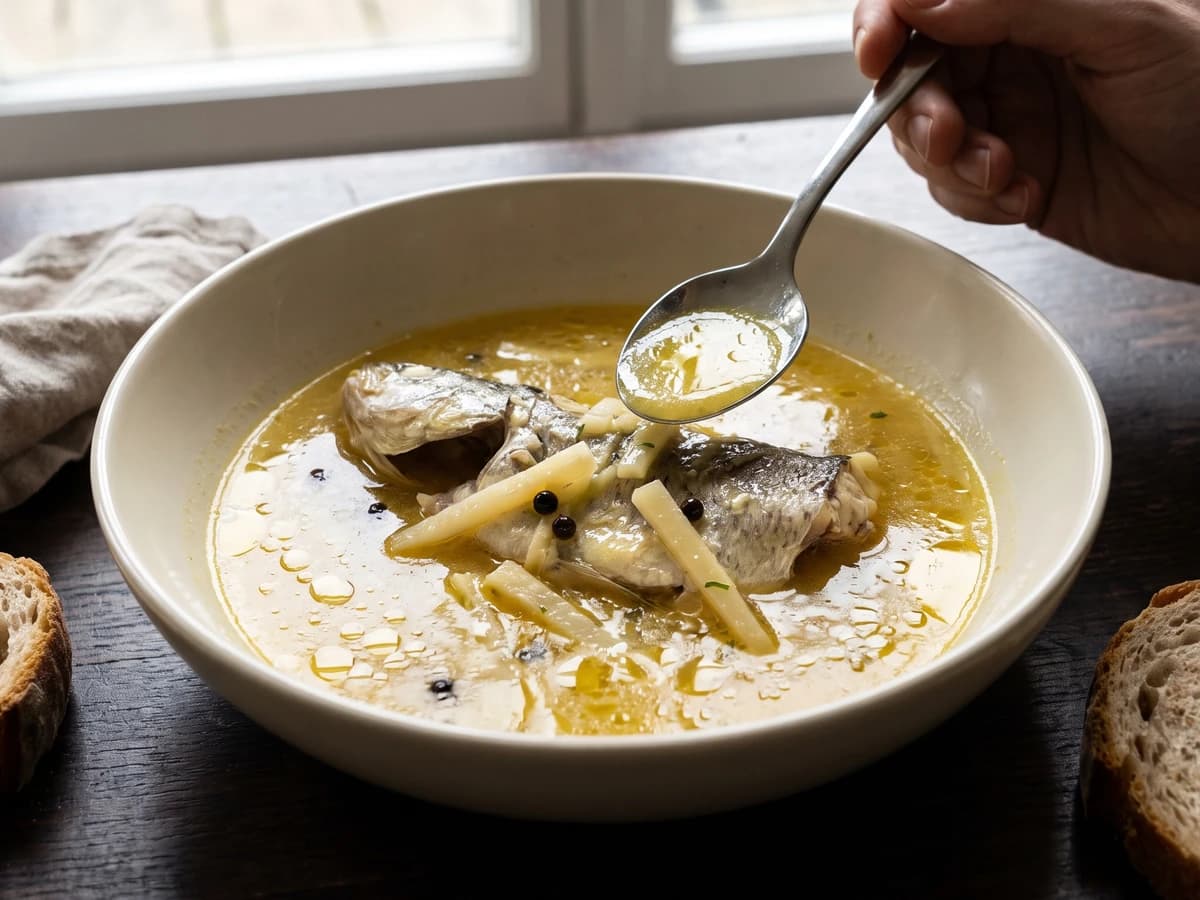
Waterzoi asks fresh, bone-in river fish to thicken its own buttery broth, with parsley root and pepper for company. No flour, no stockpot, just a brisk simmer watched closely.
Chef Juliette
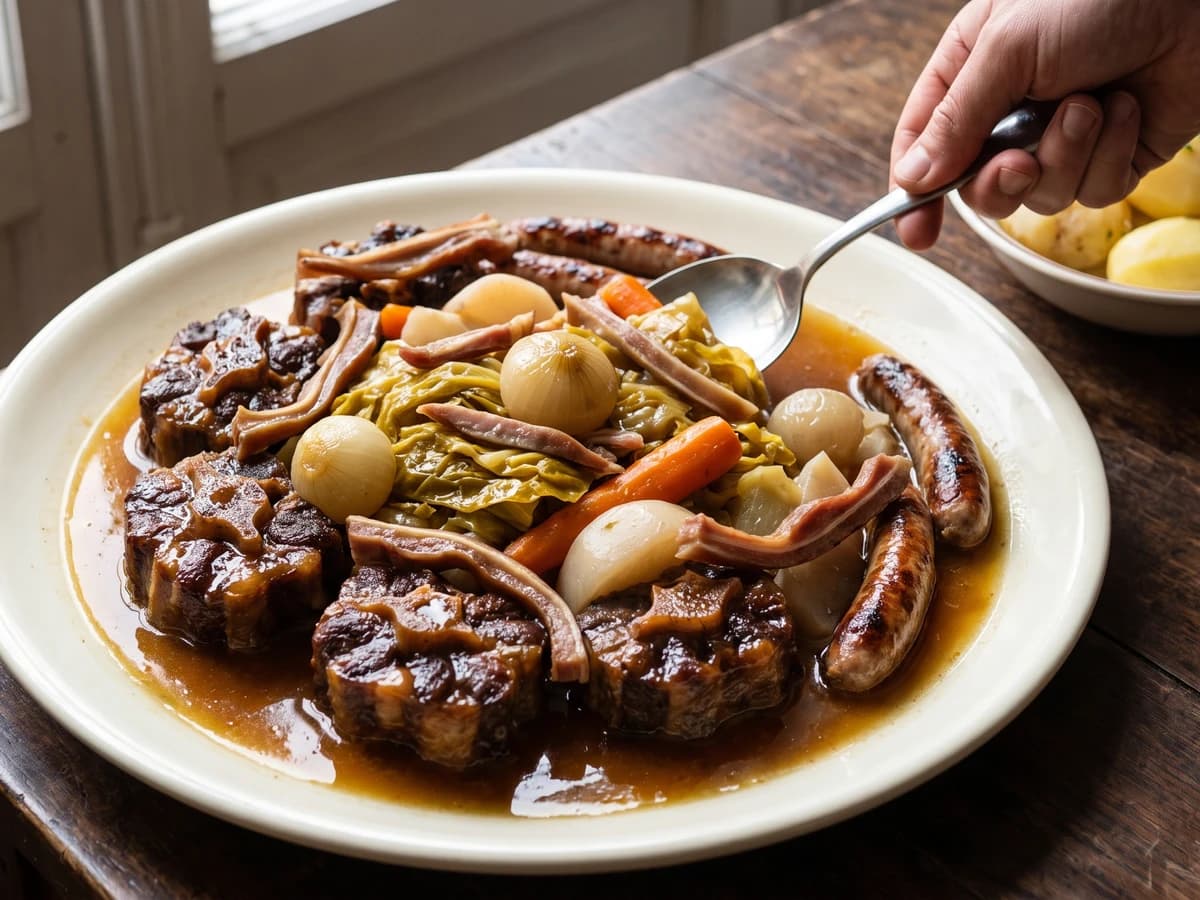
Queue de Bœuf en Hochepot gathers oxtail, pig's trotter and ear, cabbage, roots, and grilled chipolatas around a clear, gelatin-rich broth whose quiet simmer keeps every piece tender and distinct.
Chef Juliette
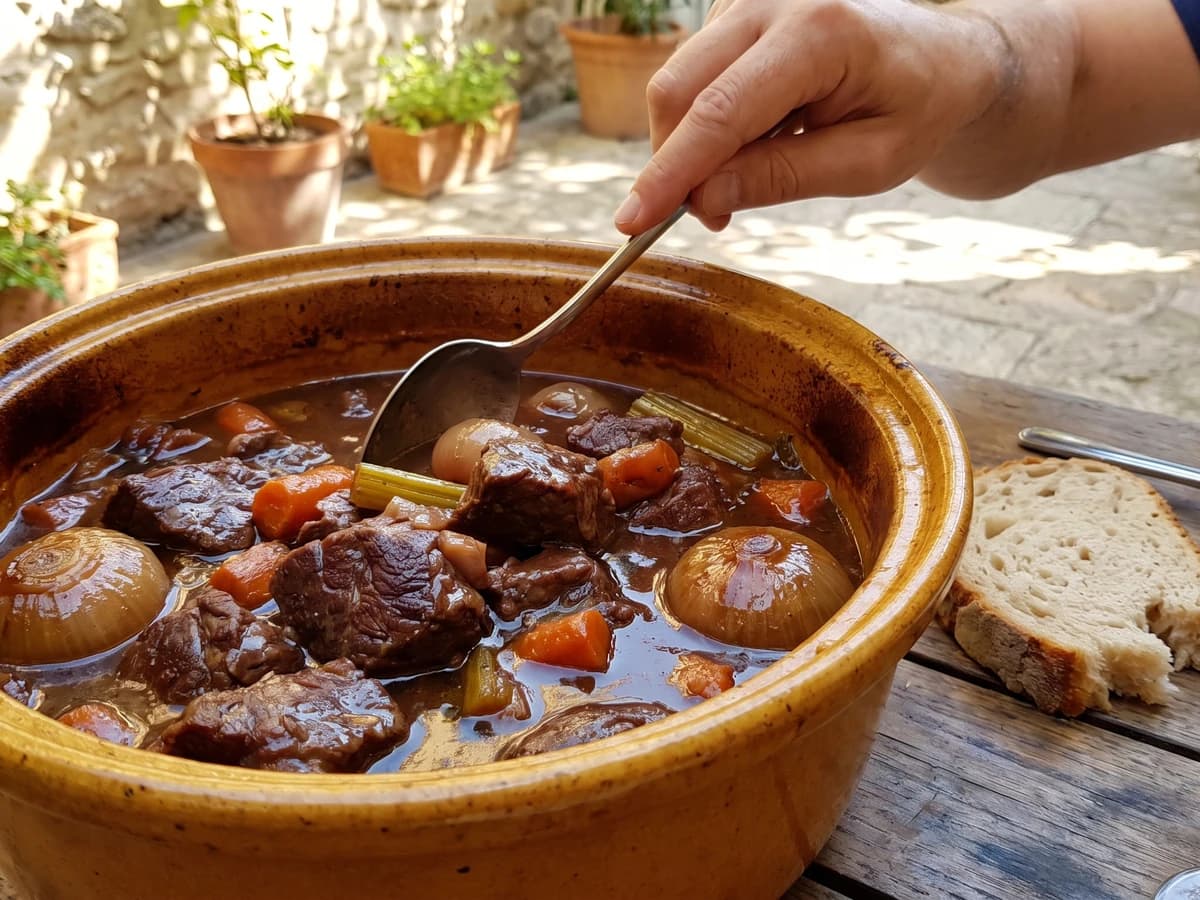
Beef shoulder larded with bacon, sharpened by red wine and vinegar, then sealed with garlic, vegetables, and dry lemon peel until the low oven turns it yielding and the gravy darkly glossy.