Chef Juliette
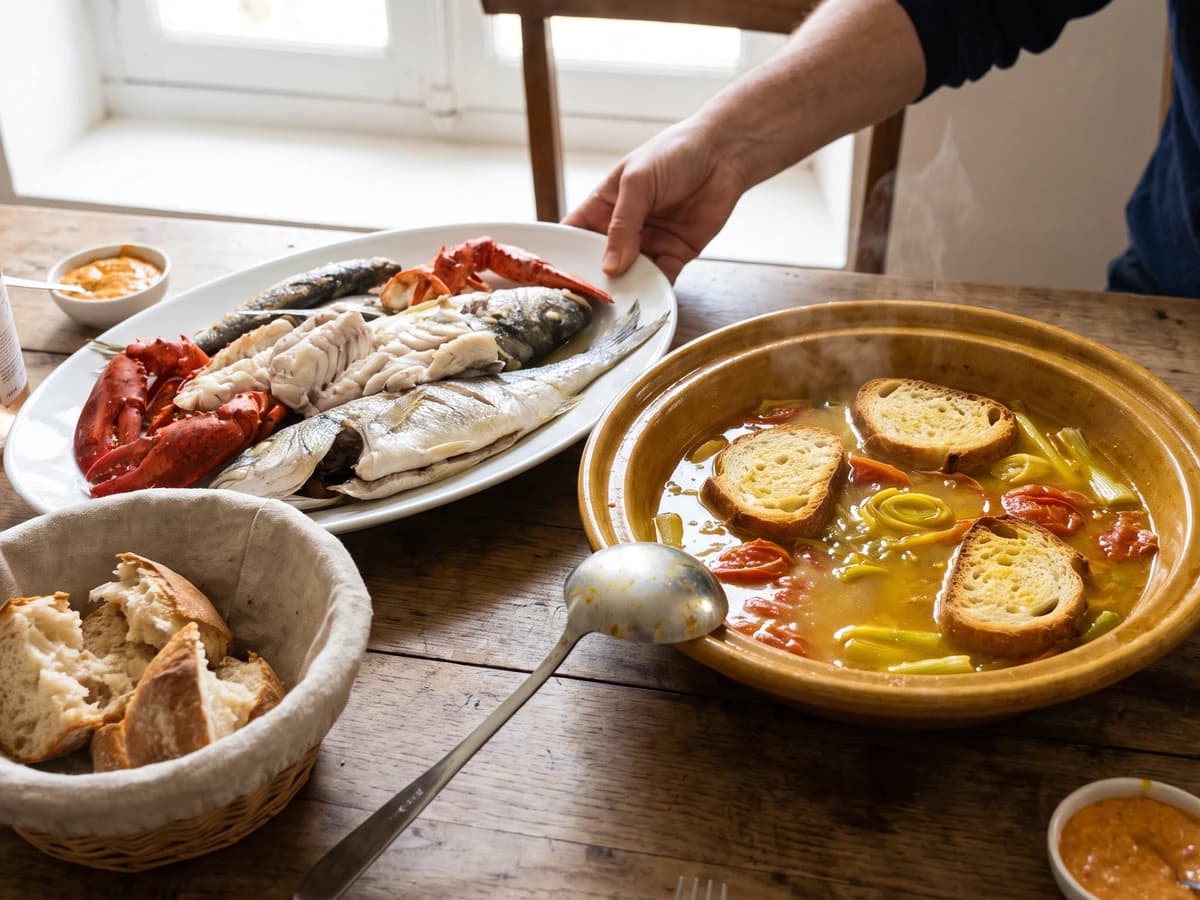
Bouillabaisse à la Marseillaise
Marseille's great fish stew, saffron-gold and garlic-scented, proves that a hard boil can be the careful choice: it binds olive oil into broth before the whole pot meets bread.
A cooking platform built around craft, culture, and the stories behind what we eat.
Created by Chef Juliette
Based on No. 216, Directions for Soup with Pastes, from Le Guide Culinaire (1907) by Auguste Escoffier
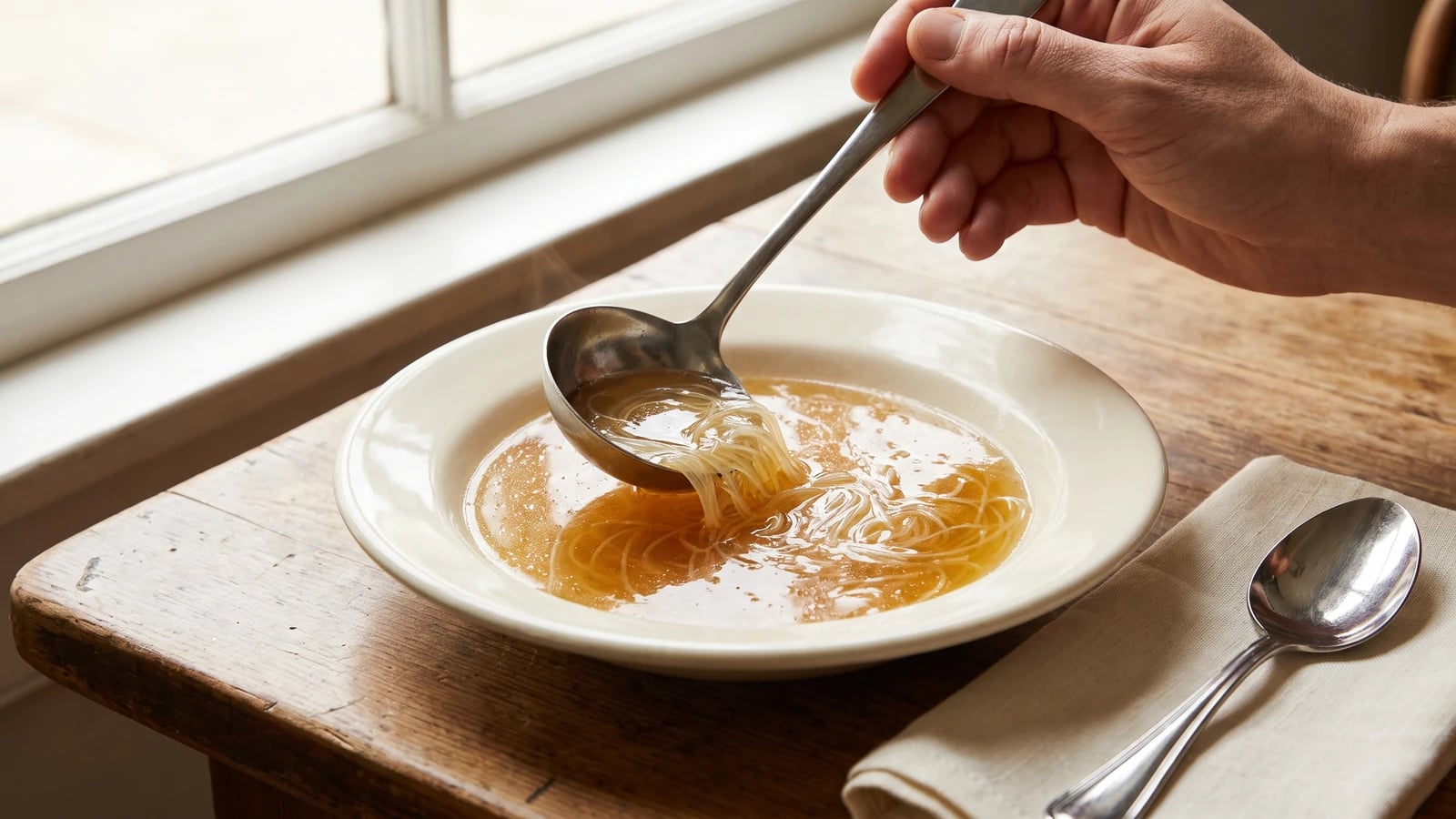
The quiet lesson of consommé aux pâtes: wash loose flour from vermicelli before it enters the broth, then finish it gently until clear, tender, and worthy of the bowl.
Consommé aux pâtes (clear broth with pasta) teaches that clarity is an ingredient, not decoration. The loose flour clinging to dried vermicelli has no business in a brilliant broth. Blanchir, to parboil and cool, removes it before the pasta finishes in the consommé, so every strand stays distinct and the broth still catches the light.
The classical kitchen assumed a stockpot never off the fire and a saucier watching the soup through service. At home, begin with two quarts of finished consommé, a four-quart saucepan, and a fine sieve. Only the quantity and equipment have changed. The waiting stockpot and its attendant were brigade scaffolding, so they can go; the ratio, the three-minute blanch, and the gentle finish are the dish and must stay. One cook, one stove, one evening.
Tapioca, sago, salep, and larger pearls take another path: they enter the consommé dry and cook until the liquid returns to absolute transparency. Before touching a pan, choose one paste and weigh six ounces for two quarts of consommé. If you choose vermicelli or small pasta, the step that matters most is the blanch: three minutes in salted water, then drain and cool it before it sees the broth.
Consommé aux pâtes belongs to the classical soup course of Parisian dining rooms, where Italian dried pasta entered the French repertoire as a restrained garnish for brilliantly clarified broth. Bourgeois kitchens adopted the same method because parboiling served a practical purpose: it removed the flour that would turn an expensive consommé cloudy. Commercial names such as Brazilian and Japanese pearls belonged to the grocer's catalogue, not to separate French regional traditions; cooks judged every product by whether it became translucent and left the broth clear.
Quantity
8 cups (1.9 L / about 1.9 kg)
well seasoned
Quantity
up to 1 cup (240 ml / about 240 g)
kept hot for adjustment
Quantity
12 cups (2.8 L / about 2.8 kg)
for blanching the pasta
Quantity
1 tablespoon (15 ml / 18 g), plus more only if needed
for the blanching water
Quantity
about 1½ cups small pasta or 3 loosely packed cups broken vermicelli (170 g / 6 oz)
choose this for the pasta path
Quantity
about 1 to 1½ cups, depending on product (170 g / 6 oz)
choose one for the fine-product path
Quantity
about 1 cup (170 g / 6 oz)
choose this for the large-pearl path
| Ingredient | Quantity |
|---|---|
| finished clear consomméwell seasoned | 8 cups (1.9 L / about 1.9 kg) |
| additional finished consommé (optional)kept hot for adjustment | up to 1 cup (240 ml / about 240 g) |
| waterfor blanching the pasta | 12 cups (2.8 L / about 2.8 kg) |
| fine saltfor the blanching water | 1 tablespoon (15 ml / 18 g), plus more only if needed |
| small pasta or broken wheat vermicelli (optional)choose this for the pasta path | about 1½ cups small pasta or 3 loosely packed cups broken vermicelli (170 g / 6 oz) |
| small pearl tapioca, sago, or food-grade salep powder (optional)choose one for the fine-product path | about 1 to 1½ cups, depending on product (170 g / 6 oz) |
| large pearl tapioca (optional)choose this for the large-pearl path | about 1 cup (170 g / 6 oz) |
Choose only one paste for the full batch. The governing proportion is three ounces per quart of consommé, which gives six ounces for this two-quart home quantity. Pour the consommé into a clean four-quart saucepan and bring it just to a boil, then lower the heat so the surface barely trembles. Keep the additional consommé hot only if your chosen starch needs loosening.
For vermicelli or small pasta, bring the water to a full boil in a second pot and add the salt. Drop in the pasta, stir once to separate it, and poach it for exactly three minutes. Drain immediately into a fine sieve, rinse under cool running water until the pasta is no longer warm, and drain thoroughly. This blanching washes away the flour that would cloud the consommé; it is not optional scaffolding.
Slip the cooled, drained pasta into the barely simmering consommé. Poach gently until tender, usually another two to five minutes depending on its shape and maker. Skim away any foam and avoid a hard boil, which breaks the pasta and stirs sediment through the broth. If flour haze appears, stop stirring and strain out the pasta. Ça se rattrape: rinse the pasta briefly, let the consommé settle for five minutes, then pass it through a damp unbleached coffee filter into a clean pan before returning the pasta. This restores much of the clarity.
For small pearl tapioca, sago, or salep, do not blanch the product. Bring the consommé to a boil and sprinkle in the measured paste gradually while stirring continuously, then lower the heat to a gentle simmer. Skim whenever foam forms and cook until the consommé is completely clear again; the time depends on the product, so transparency is the reliable test. If the paste clumps, remove the pan from the heat. Ça se rattrape: lift the clumps into a bowl, loosen them with a ladleful of hot consommé, and return the mixture in a thin stream while stirring. If the soup tightens excessively, add hot additional consommé a little at a time.
For large pearl tapioca, bring the consommé to a boil and rain in the pearls while stirring so they remain separate. Lower the heat immediately and poach at the gentlest simmer for thirty minutes, skimming the surface as often as needed. The pearls are ready when they appear translucent and the consommé around them is clear. An opaque center means undercooking, not failure; continue in five-minute intervals until the pearls turn glassy.
For pasta, stop when the pieces are tender and the broth remains brilliant. For starches and pearls, absolute transparency is the sign of completion, more trustworthy than a package clock. Taste the consommé and correct the salt only if necessary, then ladle it into warmed bowls without adding herbs, butter, or another garnish that would disturb its clean purpose. Serve immediately. À table!
1 serving (about 290g)
Culinary guides, cultural storytelling, and the editorial depth that makes cooking meaningful.
Discover Culinary ExplorerChef Juliette
Marseille's great fish stew, saffron-gold and garlic-scented, proves that a hard boil can be the careful choice: it binds olive oil into broth before the whole pot meets bread.
Chef Juliette
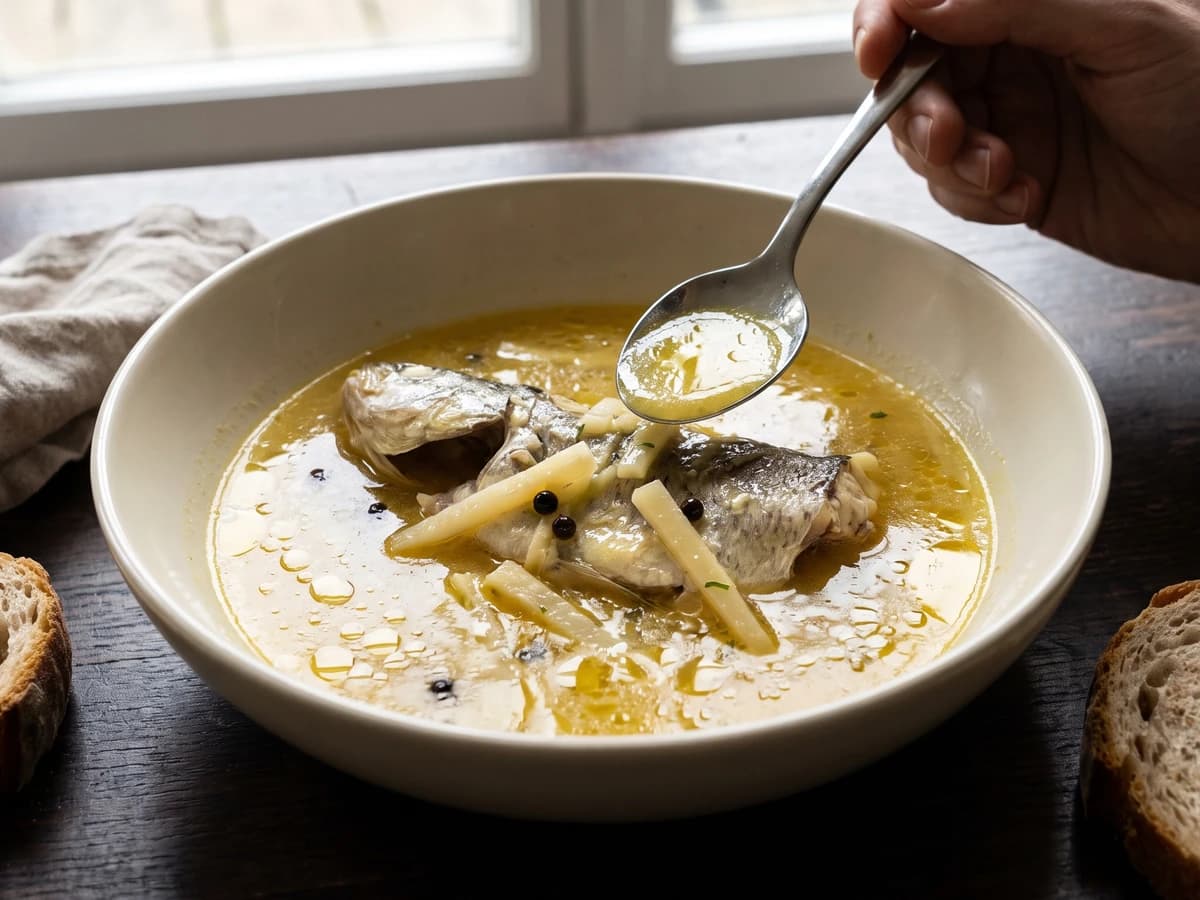
Waterzoi asks fresh, bone-in river fish to thicken its own buttery broth, with parsley root and pepper for company. No flour, no stockpot, just a brisk simmer watched closely.
Chef Juliette
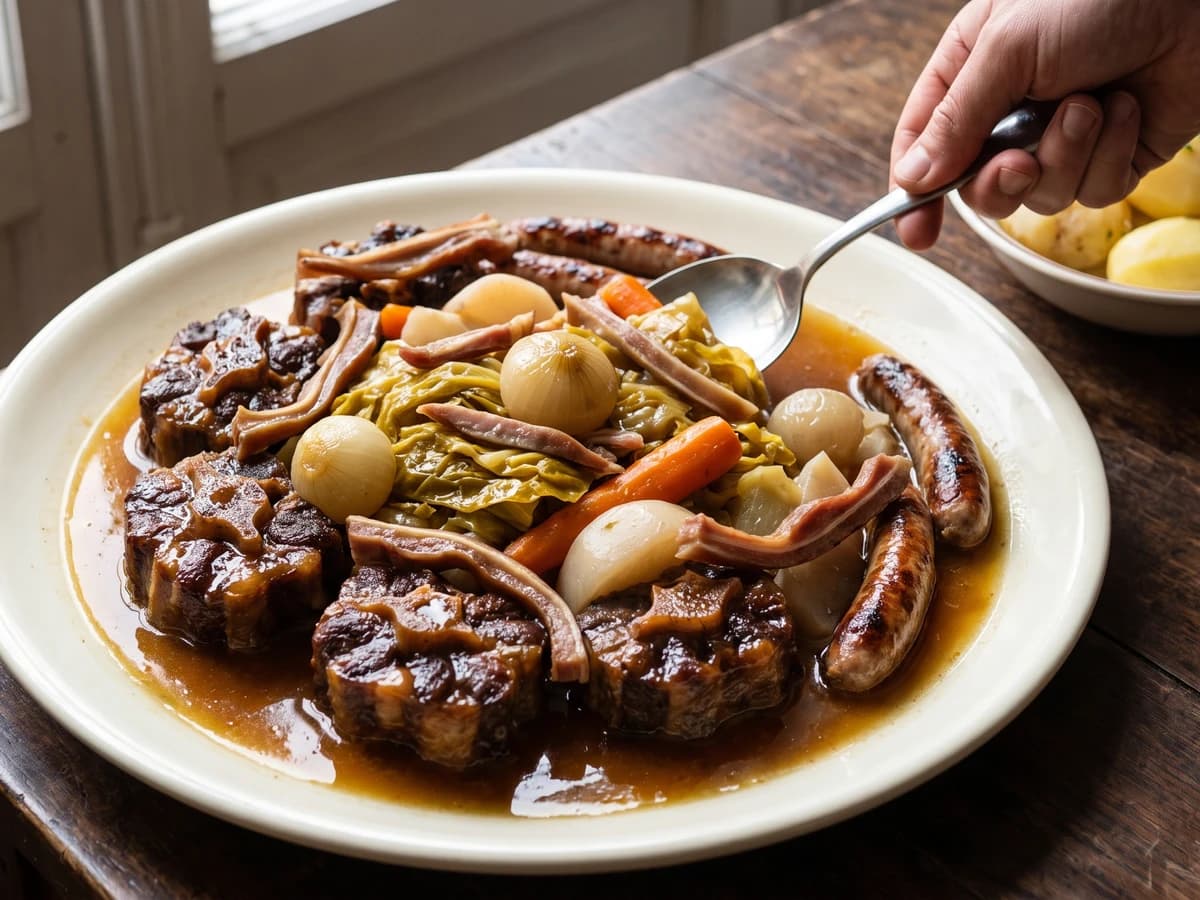
Queue de Bœuf en Hochepot gathers oxtail, pig's trotter and ear, cabbage, roots, and grilled chipolatas around a clear, gelatin-rich broth whose quiet simmer keeps every piece tender and distinct.
Chef Juliette
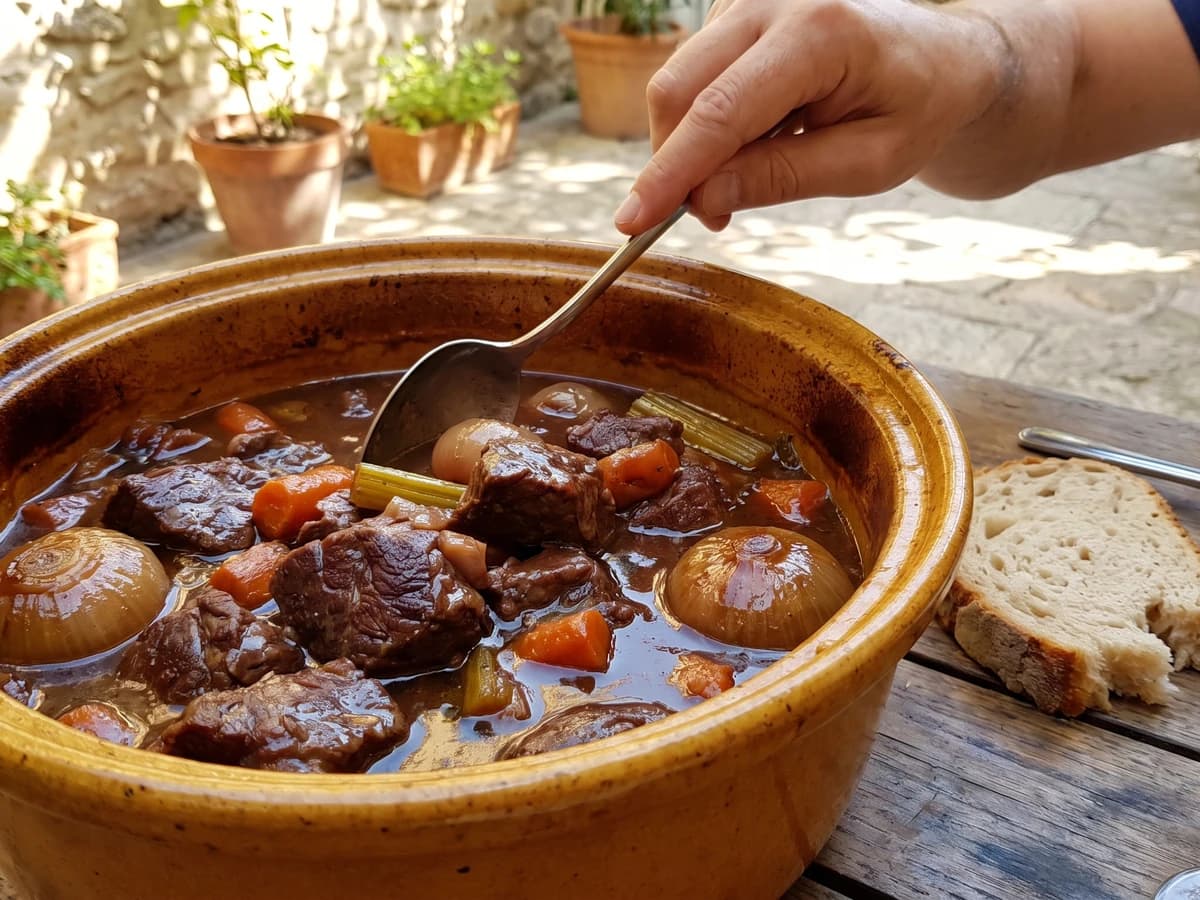
Beef shoulder larded with bacon, sharpened by red wine and vinegar, then sealed with garlic, vegetables, and dry lemon peel until the low oven turns it yielding and the gravy darkly glossy.