Chef Juliette
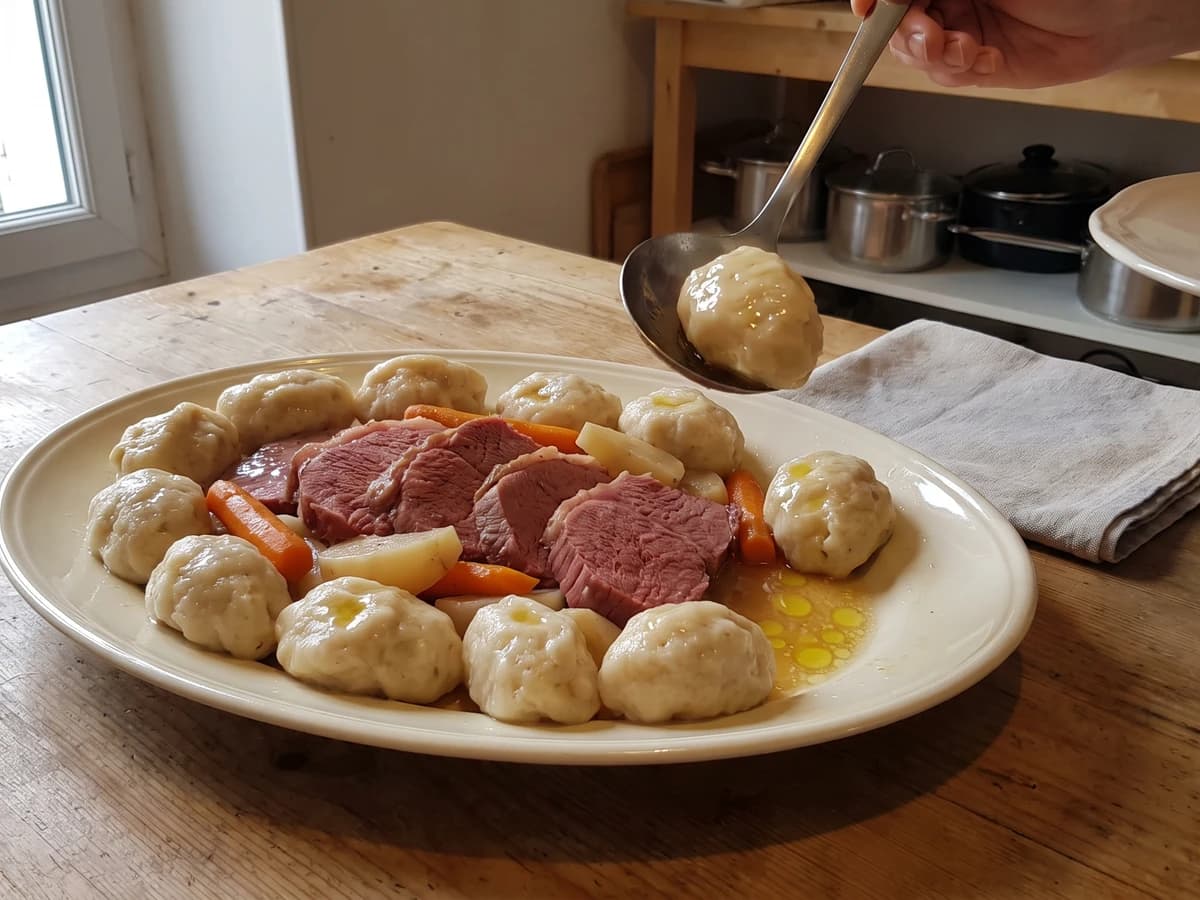
Suet Dumpling
Boulettes au suif, poached beside salt beef, turn equal weights of flour and finely chopped suet into tender, rich dumplings. Keep the beef liquor at a bare tremble and the old garnish works beautifully at home.
A cooking platform built around craft, culture, and the stories behind what we eat.
Created by Chef Juliette
Based on No. 2149, Gombos pour Garnitures, from Le Guide Culinaire (1907) by Auguste Escoffier
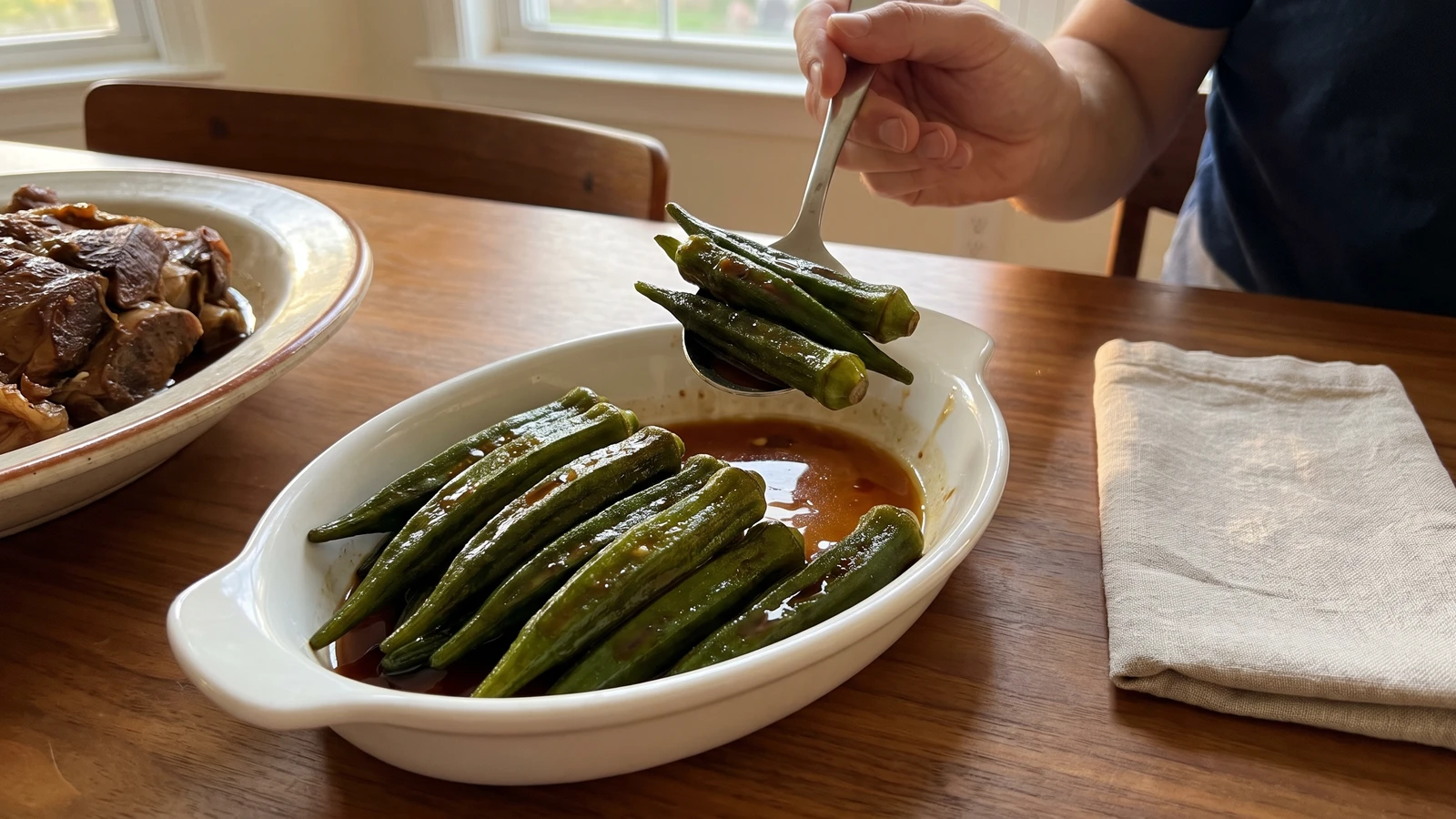
Gombos take their character from the dish beside them: parboiled while still firm, then finished in braising liquor or thin veal gravy until glossy, tender, and full of the main dish's flavour.
Gombos pour Garnitures (okra for garnishing) teach one of the quiet rules of classical cooking: a garnish should taste of the dish it accompanies. The pods are only parboiled in water. Their final tenderness and character come from the braising liquor of the meat, or from thin veal gravy beside a poulet sauté (chicken browned and cooked quickly in fat). This is why they arrive glossy and savoury rather than watery.
The original kitchen assumed a saucier beside you and a veal stockpot never off the fire. At home, reserve one cup of liquor from the meat's pot, strain and defat it, or have thin veal gravy ready when the gombos accompany poulet sauté. What changed is the staffing and quantity, not the sequence. The separate stockpot is brigade scaffolding; parboiling only two-thirds and finishing in the companion sauce is the dish. One cook, one stove, one evening.
Choose small, whole pods and don't cut into their seed cavities. Before the gombos meet their finishing liquor, drain them until no water clings. That dry handoff is the step that decides whether they take on the sauce or merely dilute it.
Gombos reached French cooks through West African and Caribbean foodways, and the French word gombo preserves a Central African name for the pod. In the Parisian classical kitchen, okra entered the repertory as a garniture rather than a regional specialty: parboiled first, then made to taste of a braised joint or poulet sauté by finishing in its sauce. The method placed an ingredient from beyond France within the familiar grammar of garnish and jus.
Quantity
About 5 cups (1 lb / 454 g)
rinsed, dried, and neatly trimmed without cutting into the seed cavities
Quantity
8 cups (1.9 L / 1.9 kg)
for parboiling
Quantity
1 cup (240 ml / about 240 g)
kept hot
| Ingredient | Quantity |
|---|---|
| small fresh okra podsrinsed, dried, and neatly trimmed without cutting into the seed cavities | About 5 cups (1 lb / 454 g) |
| waterfor parboiling | 8 cups (1.9 L / 1.9 kg) |
| strained, defatted braising liquor from the accompanying meat, or thin veal gravy when serving with poulet sautékept hot | 1 cup (240 ml / about 240 g) |
Measure the strained, defatted braising liquor from the meat the gombos will accompany. If they are for poulet sauté, use the thin veal gravy instead. Taste it before proceeding: it should be fluid, deeply savoury, and a little less salty than a finished sauce because it will reduce around the pods. Keep it hot over low heat.
Trim only the dry tip of each stem, keeping the pod and its seed cavity whole. A cut pod releases more mucilage into the water and sauce, while a whole one stays distinct and takes on the finishing liquor without collapsing. Sort out any bruised or woody pods now.
Bring the water to a full boil in a roomy saucepan. Add the gombos and cook for 3 to 5 minutes, adjusting for their size, until the green deepens and a knife entering near the stem meets clear resistance after breaking the surface. They should bend slightly but remain too firm to serve. If they become fully tender here, drain and spread them out at once; do not simmer them again. Reduce the finishing liquor separately, then turn the pods through it only long enough to glaze. Ça se rattrape.
Drain the gombos in a colander for 2 minutes, shaking gently, then spread them over a dry kitchen towel and blot away the water caught around the caps. Don't rinse them. Water left on the pods weakens the braising liquor, and this preparation depends entirely on passing cleanly from water to sauce.
Bring the braising liquor or thin veal gravy to a bare simmer in a wide sauté pan. Add the gombos in one layer and turn them gently for 4 to 6 minutes, until a knife enters with little resistance and the sauce leaves a glossy film over every pod. If the liquor becomes sticky or salty before the gombos are tender, loosen it with hot water a tablespoon at a time. If the pods are ready while the liquor remains thin, lift them out, reduce the liquid briefly, then return them for one careful turn. Ça se rattrape.
Set the gombos beside the braised meat or poulet sauté while both are hot, arranging them generously rather than piling them beneath the meat. Spoon over just enough of the finishing liquor to keep their surface glossy. They need no stray herbs or second sauce; their purpose is to carry the flavour of the piece they accompany. À table!
1 serving (about 155g)
Culinary guides, cultural storytelling, and the editorial depth that makes cooking meaningful.
Discover Culinary ExplorerChef Juliette
Boulettes au suif, poached beside salt beef, turn equal weights of flour and finely chopped suet into tender, rich dumplings. Keep the beef liquor at a bare tremble and the old garnish works beautifully at home.

Chef Juliette
Bread, flour, frangipane, and rice become four cool, supple panades for binding forcemeats, each changing body and flavor while preserving tenderness. The finest Mousselines need none, and knowing that distinction is the lesson.

Chef Juliette
Panade au pain is bread, milk, salt, heat, and attention: stir until the paste releases cleanly, butter it against a skin, and you have the quiet binder behind tender French farces.

Chef Juliette
Panade de farine teaches the drying stroke behind pâte à choux: flour meets boiling buttered water, then stays over the fire until the paste gathers, smooths, and quits the pan cleanly.