Chef Juliette
Suet Dumpling
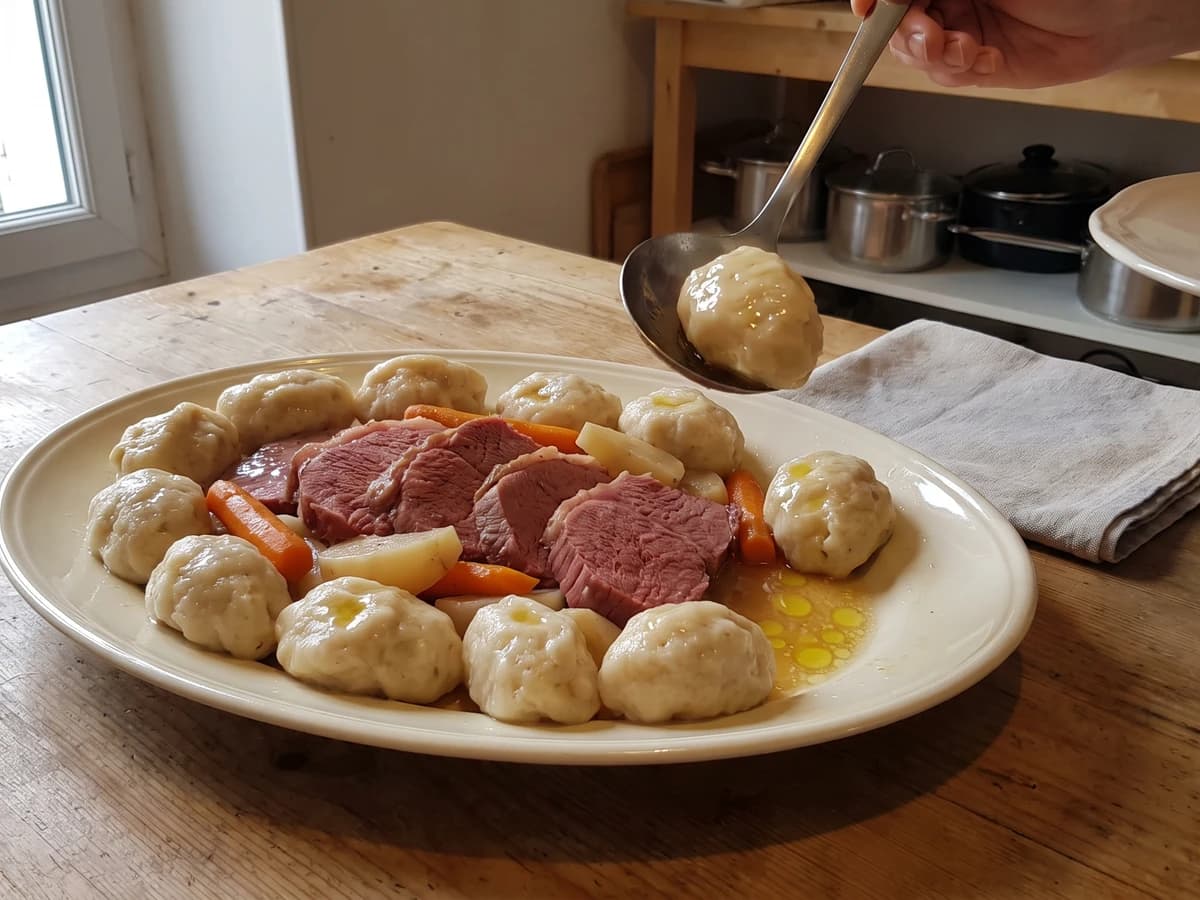
Boulettes au suif, poached beside salt beef, turn equal weights of flour and finely chopped suet into tender, rich dumplings. Keep the beef liquor at a bare tremble and the old garnish works beautifully at home.
A cooking platform built around craft, culture, and the stories behind what we eat.
Created by Chef Juliette
Based on No. 2147, Gombos, from Le Guide Culinaire (1907) by Auguste Escoffier
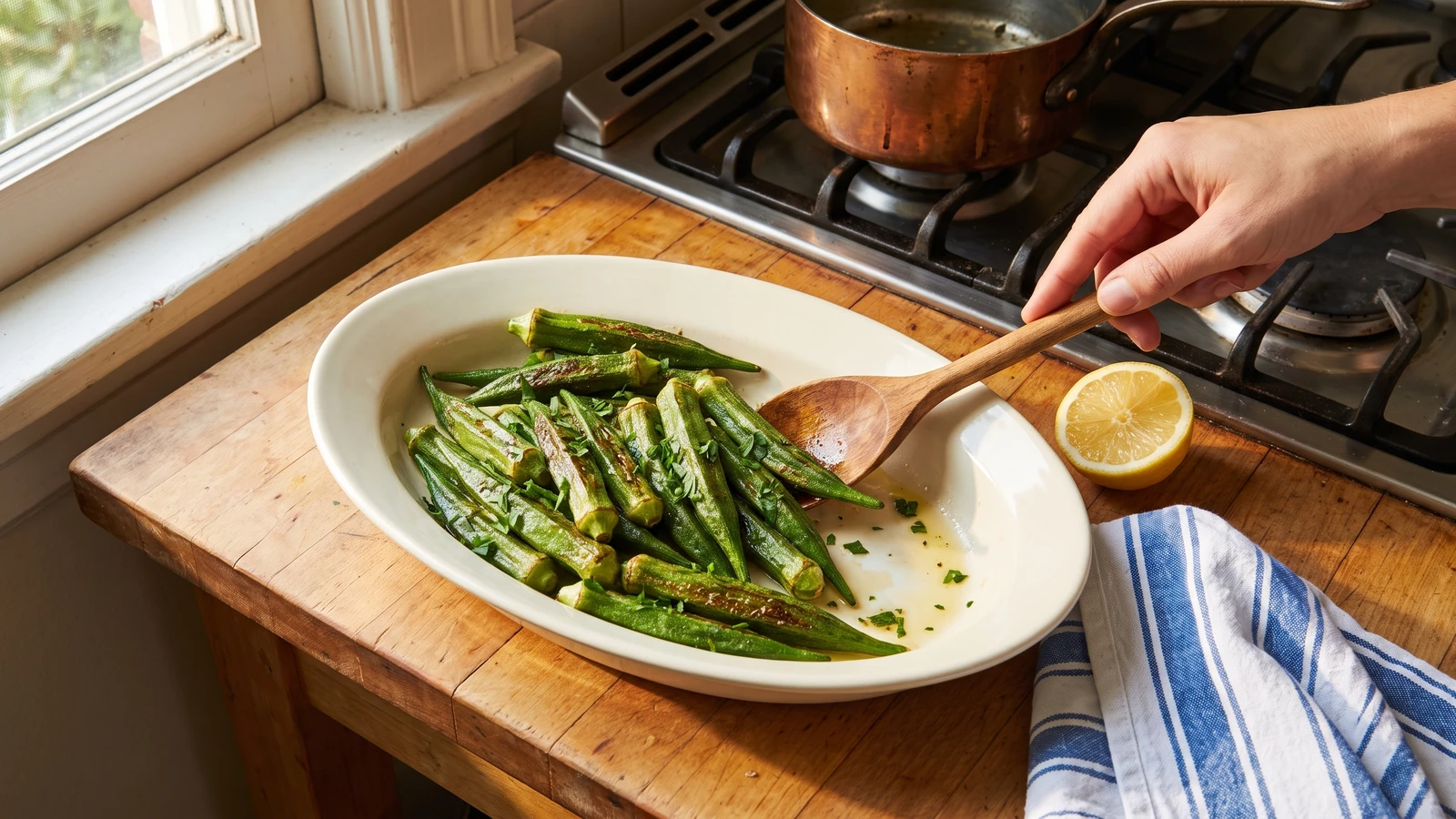
Gombos sautéed whole in foaming butter stay green, tender, and clean-edged, with lemon and parsley at the finish. Trim the cap, never the pod, then give moisture room to escape.
Gombos sautés au beurre (okra sautéed in butter) teach one clean principle: control the cut and you control the texture. Trim the stalk cap without opening the pod. Once the knife enters the seed chamber, the juices that thicken soups escape into your skillet, while an intact gombo stays distinct, tender, and lightly bronzed.
The source entry is a classification, not a formula. It distinguishes long gombos from the round kind called bamia or bamiès, says both take the same preparations, then leaves the professional cook to choose one. For this home-scale sauté, the useful quantity is 1 pound, finished simply with butter, lemon, and parsley. No saucier, standing stock, or salamander is needed. Advance trays of trimmed vegetables are brigade scaffolding and can go; keeping the pods whole and the skillet uncrowded is the dish and must stay. One cook, one stove, one evening.
The finished gombos should glisten rather than swim in butter, their ridges touched with bronze and their centers tender without collapse. The step that decides everything comes before the pan: dry each pod completely, then pare the cap without letting the blade enter the green shoulder.
Gombos belong to no single French region: okra has long been cultivated across Africa and became ordinary food around the eastern Mediterranean, the Caribbean, and the Americas before metropolitan French compendia treated it as a market vegetable. The name bamia or bamiès preserves its eastern Mediterranean vocabulary, while gombo entered French through Atlantic and Caribbean exchange. The classical distinction between long and round pods changes neither their preparation nor their value at the table; freshness and tenderness matter more than shape.
Quantity
6 cups (about 450 g)
rinsed and dried completely
Quantity
2 tablespoons (30 ml / 28 g)
divided
Quantity
¾ teaspoon (3.75 ml / 4.5 g)
divided
Quantity
¼ teaspoon (1.25 ml / 0.6 g)
Quantity
1 tablespoon (15 ml / 15 g)
Quantity
2 tablespoons (30 ml / 8 g)
finely chopped
| Ingredient | Quantity |
|---|---|
| small fresh gombos (okra), long or round (bamia or bamiès)rinsed and dried completely | 6 cups (about 450 g) |
| unsalted butterdivided | 2 tablespoons (30 ml / 28 g) |
| fine sea saltdivided | ¾ teaspoon (3.75 ml / 4.5 g) |
| freshly ground black pepper | ¼ teaspoon (1.25 ml / 0.6 g) |
| fresh lemon juice | 1 tablespoon (15 ml / 15 g) |
| flat-leaf parsleyfinely chopped | 2 tablespoons (30 ml / 8 g) |
Hold each dry gombo by its stem. Shorten the stem to about ¼ inch, then use a small paring knife to shave the firm rim around the cap in a shallow cone, as though sharpening a pencil. Never cut below the shoulder or expose the seeds, and leave the blossom tip alone. If you nick a pod and see sticky beads, blot it dry and reserve it for the first batch, placing the opening directly against the pan. Ça se rattrape.
Warm a 12-inch heavy skillet over medium-high heat. Add 2 teaspoons of the butter; when it foams eagerly and smells nutty but remains golden, add half the gombos in one uncrowded layer. Sprinkle with ¼ teaspoon of the salt and leave them untouched for 2 minutes so their undersides color. Roll and turn them occasionally for another 5 to 6 minutes, until deep green, bronze along the ridges, and barely yielding at the thickest part. Transfer them to a plate.
Add another 2 teaspoons butter and repeat with the remaining gombos and another ¼ teaspoon salt. If liquid gathers or the pods begin trailing sticky threads, the pan is too crowded or too cool. Lift half the pods out, raise the heat slightly, and leave the remainder undisturbed until the moisture cooks away; finish the removed pods afterward. Do not chase them around the skillet. Patience, space, and steady heat restore the dry surface.
Return all the gombos to the skillet. Add the remaining 2 teaspoons butter, the black pepper, and the final ¼ teaspoon salt, then toss for 1 minute until every pod wears a fine gloss. Take the skillet off the heat, add the lemon juice, and scrape the light bronze fond from the pan into the butter. Fold in the parsley, taste, and serve at once. The finish should cling to the vegetables, not puddle beneath them. À table!
1 serving (about 115g)
Culinary guides, cultural storytelling, and the editorial depth that makes cooking meaningful.
Discover Culinary ExplorerChef Juliette
Boulettes au suif, poached beside salt beef, turn equal weights of flour and finely chopped suet into tender, rich dumplings. Keep the beef liquor at a bare tremble and the old garnish works beautifully at home.

Chef Juliette
Bread, flour, frangipane, and rice become four cool, supple panades for binding forcemeats, each changing body and flavor while preserving tenderness. The finest Mousselines need none, and knowing that distinction is the lesson.

Chef Juliette
Panade au pain is bread, milk, salt, heat, and attention: stir until the paste releases cleanly, butter it against a skin, and you have the quiet binder behind tender French farces.

Chef Juliette
Panade de farine teaches the drying stroke behind pâte à choux: flour meets boiling buttered water, then stays over the fire until the paste gathers, smooths, and quits the pan cleanly.