Chef Juliette
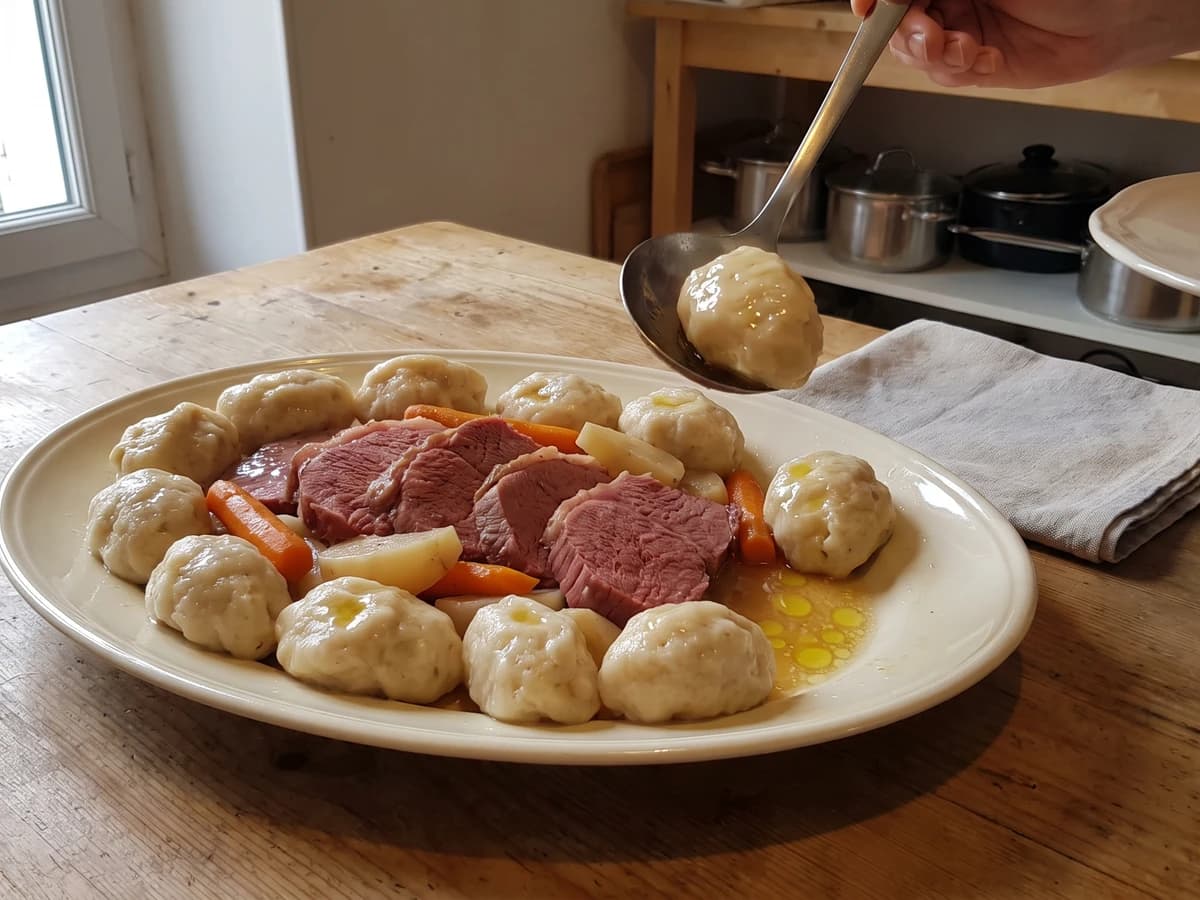
Suet Dumpling
Boulettes au suif, poached beside salt beef, turn equal weights of flour and finely chopped suet into tender, rich dumplings. Keep the beef liquor at a bare tremble and the old garnish works beautifully at home.
A cooking platform built around craft, culture, and the stories behind what we eat.

Created by Chef Juliette
Based on No. 2146, Purée de Fèves, from Le Guide Culinaire (1907) by Auguste Escoffier
Broad beans become silk beneath the sieve, then take cold butter into a pale green gloss. This is the classical garnish for ham, scaled for one saucepan and a generous home table.
Purée de fèves (silken broad-bean purée) teaches the difference between smooth and delicate. A machine can crush the beans, but only a sieve removes their stubborn jackets. Before you touch a pan, know this: the sieving is not fuss. It is the dish.
The original gave its cook one sentence because the method for purée of peas was already part of the kitchen's grammar. It assumed prep hands for shelling, a broad tamis (drum sieve) for service quantities, and a bain-marie holding the finished purée beside carved ham. Here, 500 grams of shelled beans feed four, a food processor does the first crushing, and a fine-mesh sieve replaces the great tamis. The machine is brigade scaffolding and can change; passing the beans through the sieve, drying the purée, and mounting it with butter must stay. One cook, one stove, one evening.
Done properly, the purée is pale green and satin-fine, with enough body to hold the soft valley of a spoon. It should taste of broad beans first and butter second. Have the sieve waiting before you drain the beans, because passing them while they are hot is the step that matters most.
Purée de fèves belongs to French cuisine bourgeoise and the classical garnish repertoire rather than to one provincial larder; Parisian grand kitchens refined the household pot of broad beans by passing it through a tamis and serving it beside carved ham. In this usage, fèves means broad beans, or fava beans, not dried haricots, a distinction that preserves the purée's green color and spring delicacy. Its journey to the formal table changed the texture and service, not the pairing: the sweetness and faint bitterness of broad beans still answer cured pork beautifully.
Quantity
3 cups (710 ml / 500 g)
Quantity
2 quarts (1.9 liters / 1.9 kg)
Quantity
1 tablespoon (15 ml / 18 g)
for the cooking water
Quantity
4 tablespoons (60 ml / 56 g)
cut into 4 pieces
Quantity
to taste
| Ingredient | Quantity |
|---|---|
| shelled fresh or frozen broad beans (fava beans) | 3 cups (710 ml / 500 g) |
| water | 2 quarts (1.9 liters / 1.9 kg) |
| fine sea saltfor the cooking water | 1 tablespoon (15 ml / 18 g) |
| cold unsalted buttercut into 4 pieces | 4 tablespoons (60 ml / 56 g) |
| fine sea salt and ground white pepper | to taste |
Bring the water to a full boil in a roomy saucepan and add the measured salt. Drop in the broad beans and cook uncovered until they are completely tender, about 5 to 8 minutes for fresh beans or 4 to 6 minutes for frozen. Bright green is not enough; lift out one bean, let it cool briefly, and press it with a spoon. It should collapse without a chalky centre.
Reserve 1 cup (240 ml / 240 g) of the cooking water, then drain the beans thoroughly. Transfer them at once to a food processor and blend with 2 tablespoons (30 ml / 30 g) of the reserved water, adding only enough extra water to keep the blades moving. Stop when you have a thick, even paste. Too much liquid now only creates work at the stove.
Set a fine-mesh sieve over a bowl and force the hot bean paste through with a flexible spatula or the back of a ladle. Scrape the smooth purée from the underside and discard the dry skins and fibres left behind. If the paste cools and refuses to pass, warm it with 1 tablespoon (15 ml / 15 g) of the reserved cooking water. If it still feels fibrous afterward, pass it a second time. Ça se rattrape.
Return the sieved purée to a clean saucepan over medium-low heat. Dessécher, drying the purée over heat, for 2 to 4 minutes while stirring constantly, until excess moisture has gone and the spoon leaves a clear trail across the pan floor. If the purée is loose, keep stirring and let the water escape. If it becomes stiff enough to tear, loosen it with reserved cooking water a teaspoon at a time.
Take the pan off the heat. Monter au beurre, finish by emulsifying in the cold butter, one piece at a time, stirring until each disappears before adding the next. The purée should become glossy without turning oily. If butter begins to pool, stop adding it and beat in 1 teaspoon (5 ml / 5 g) of hot cooking water, then continue off the heat. Season with fine salt and white pepper, spoon it generously into a warm serving dish, and take it to the table beside ham. À table!
1 serving (about 135g)
Culinary guides, cultural storytelling, and the editorial depth that makes cooking meaningful.
Discover Culinary ExplorerChef Juliette
Boulettes au suif, poached beside salt beef, turn equal weights of flour and finely chopped suet into tender, rich dumplings. Keep the beef liquor at a bare tremble and the old garnish works beautifully at home.

Chef Juliette
Bread, flour, frangipane, and rice become four cool, supple panades for binding forcemeats, each changing body and flavor while preserving tenderness. The finest Mousselines need none, and knowing that distinction is the lesson.

Chef Juliette
Panade au pain is bread, milk, salt, heat, and attention: stir until the paste releases cleanly, butter it against a skin, and you have the quiet binder behind tender French farces.

Chef Juliette
Panade de farine teaches the drying stroke behind pâte à choux: flour meets boiling buttered water, then stays over the fire until the paste gathers, smooths, and quits the pan cleanly.