Chef Juliette
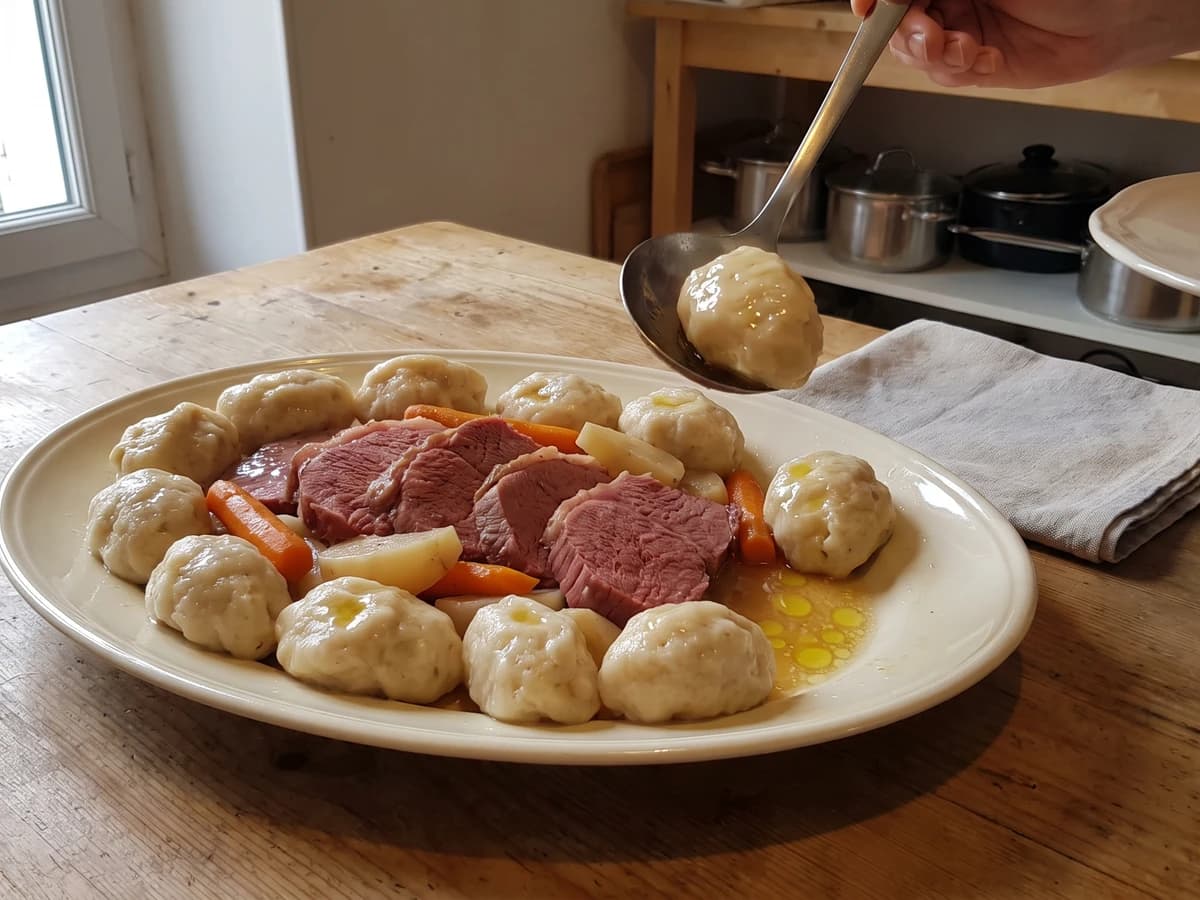
Suet Dumpling
Boulettes au suif, poached beside salt beef, turn equal weights of flour and finely chopped suet into tender, rich dumplings. Keep the beef liquor at a bare tremble and the old garnish works beautifully at home.
A cooking platform built around craft, culture, and the stories behind what we eat.
Created by Chef Juliette
Based on No. 2143, Broad Beans (Fèves), from Le Guide Culinaire (1907) by Auguste Escoffier
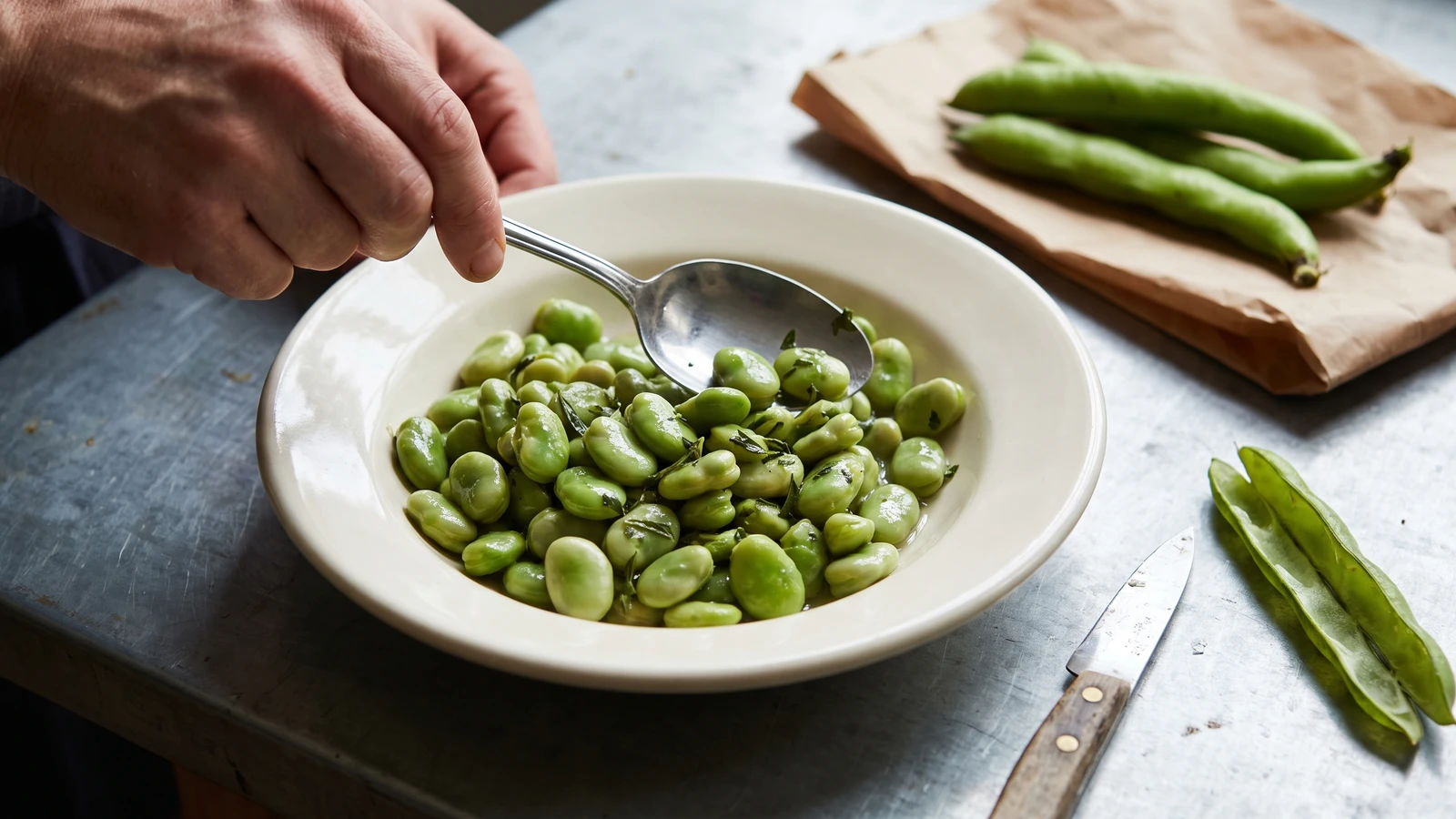
Fèves need only three acts: shell them late, peel them patiently, and boil them briefly with summer savory, whose cooked leaves return at the end. Tender, green, exact, and ready for the weeknight table.
Fèves (broad beans) teach a small but exact lesson: shelling is not peeling. The pod comes off first, then the pale inner skin around each bean. Remove both and the kernels cook green and tender; leave that second coat on and even good beans can seem leathery. That is the one true thing to know before the pot goes on.
The old entry assumed a brigade's basin of beans and enough hands to pod and peel it, but it required no saucier, stockpot never off the fire, or salamander. At home, about 450 grams of prepared beans and one small bunch of sarriette (summer savory) feed four. The brigade quantity and extra hands were scaffolding, so they are gone. Last-minute shelling, complete peeling, boiling with the herb, and chopping its cooked leaves back into the beans are the dish itself, so every one stays. One cook, one stove, one evening.
This is not a sauced vegetable and should not be made into one. Properly salted aromatic water is its foundation, and the finish should taste clean, green, and distinctly of savory. Watch the final minute of cooking closely, but give most of your attention to peeling every bean before it reaches the pot.
Fèves hold a particular place on the spring tables of Provence, where the youngest beans are eaten raw à la croque-au-sel and firmer beans are cooked once their skins toughen. The classical vegetable repertoire carried them from the southern garden table into formal service while preserving their old companion, sarriette, which perfumes the cooking water and returns as the finish. In this preparation, “peeled” means more than removing the pod: the pale skin around each individual bean comes off as well.
Quantity
About 5 quarts loosely packed (4.7 L / 1.8 kg), yielding about 3 cups (710 ml / 450 g)
shelled just before cooking, with the inner skins removed
Quantity
3 quarts (2.8 L / 2.8 kg)
Quantity
1 tablespoon (15 ml / 18 g)
Quantity
1 small bunch, about 1 loosely packed cup (240 ml / 15 g)
rinsed and tied with undyed kitchen string
| Ingredient | Quantity |
|---|---|
| fresh broad bean podsshelled just before cooking, with the inner skins removed | About 5 quarts loosely packed (4.7 L / 1.8 kg), yielding about 3 cups (710 ml / 450 g) |
| cold water | 3 quarts (2.8 L / 2.8 kg) |
| fine sea salt | 1 tablespoon (15 ml / 18 g) |
| fresh sarriette (summer savory)rinsed and tied with undyed kitchen string | 1 small bunch, about 1 loosely packed cup (240 ml / 15 g) |
Put the water and salt in a 4-quart saucepan and bring them to a full boil. Rinse the sarriette carefully, keeping its leaves attached, and tie the stems into a compact bundle so it can be lifted out intact. Set a colander beside the stove before touching the beans; once they are peeled, they should go straight into the pot.
Only when the water is nearly boiling, split the pods and remove the beans. Nick the pale skin at each bean's seam with a thumbnail or the tip of a small paring knife, cutting the skin rather than the kernel, then press gently so the bright green bean slips free. Keep any kernels that split. Ça se rattrape: set the pieces apart and add them to the pot one minute after the whole beans so they do not soften too far.
Lower the tied sarriette into the boiling salted water, add the whole beans, then add any broken pieces one minute later. Return the water quickly to a boil and cook uncovered at a lively simmer, beginning to taste after 3 minutes; small young beans may be ready then, while larger ones can need 5 to 7 minutes. A finished bean yields cleanly under the teeth but still holds its shape, with no chalky centre. If a test bean suddenly turns very soft, drain the lot at once and spread them in a wide dish. Ça se rattrape: they will remain softer than intended, but stopping the carryover heat and handling them gently keeps them from becoming a purée.
Lift out the sarriette bundle and reserve it, then drain the beans thoroughly without rinsing. As soon as the herb is cool enough to handle, remove the string, strip the cooked leaves from the stems, and chop them finely. Discard the bare stems.
Return the drained fèves to the dry, still-warm saucepan with the heat turned off. Scatter over the chopped cooked sarriette leaves and fold them through with a soft spatula, gently enough to keep every bean whole. Taste one immediately and serve while the kernels are tender and vivid. Nothing more is needed. Cooking well is not cooking fancy. À table!
1 serving (about 115g)
Culinary guides, cultural storytelling, and the editorial depth that makes cooking meaningful.
Discover Culinary ExplorerChef Juliette
Boulettes au suif, poached beside salt beef, turn equal weights of flour and finely chopped suet into tender, rich dumplings. Keep the beef liquor at a bare tremble and the old garnish works beautifully at home.

Chef Juliette
Bread, flour, frangipane, and rice become four cool, supple panades for binding forcemeats, each changing body and flavor while preserving tenderness. The finest Mousselines need none, and knowing that distinction is the lesson.

Chef Juliette
Panade au pain is bread, milk, salt, heat, and attention: stir until the paste releases cleanly, butter it against a skin, and you have the quiet binder behind tender French farces.

Chef Juliette
Panade de farine teaches the drying stroke behind pâte à choux: flour meets boiling buttered water, then stays over the fire until the paste gathers, smooths, and quits the pan cleanly.