Chef Juliette
Suet Dumpling
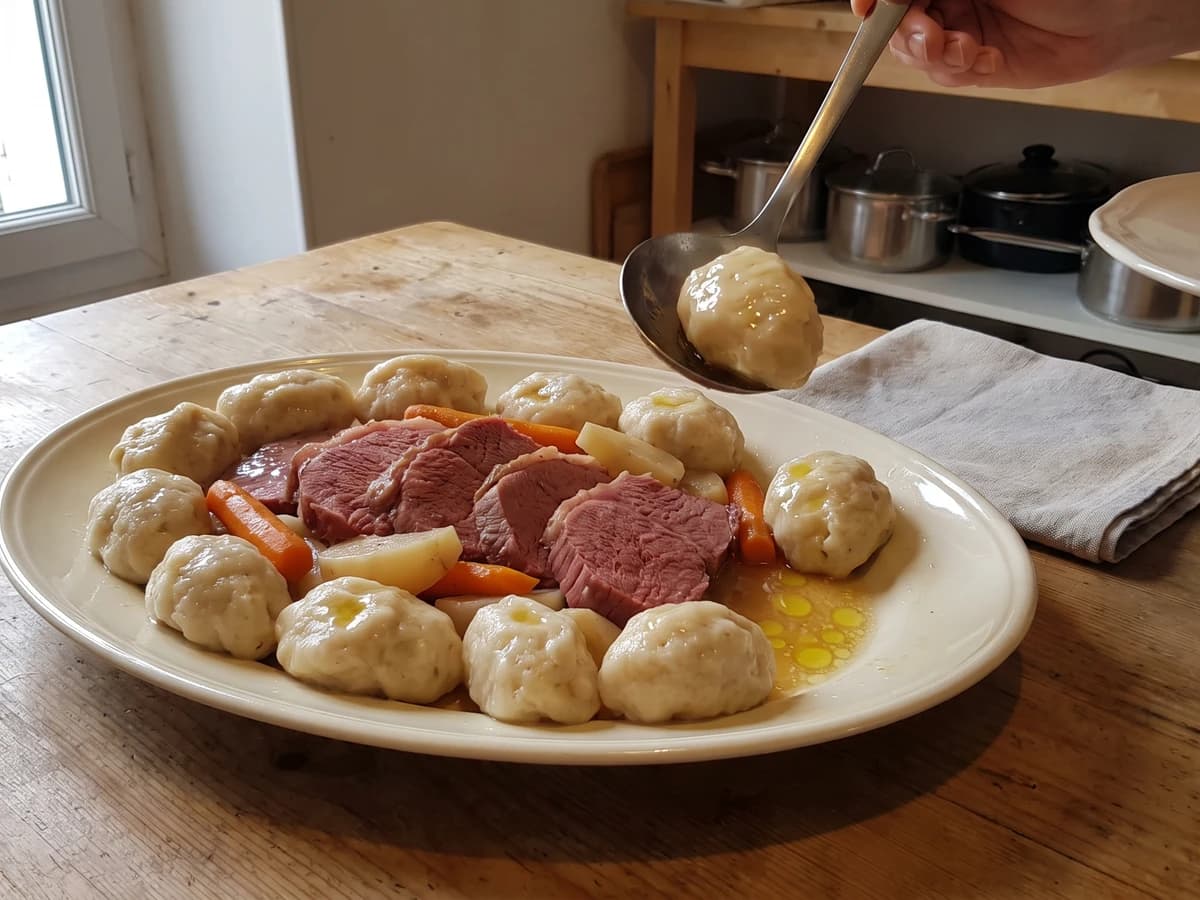
Boulettes au suif, poached beside salt beef, turn equal weights of flour and finely chopped suet into tender, rich dumplings. Keep the beef liquor at a bare tremble and the old garnish works beautifully at home.
A cooking platform built around craft, culture, and the stories behind what we eat.
Created by Chef Juliette
Based on No. 2142, Tuberous Fennel (Fenouil Tubéreux), from Le Guide Culinaire (1907) by Auguste Escoffier
Fenouil tubéreux teaches a clean classical sequence: trim without waste, parboil until nearly tender, then let butter, a hot skillet, and the vegetable’s own cooking liquor make the glaze.
Fenouil tubéreux (tuberous fennel) teaches one essential thing: parboiling prepares a vegetable for the pan, it does not finish the cooking. Stop while the thickest layers still resist a skewer, and the skillet can make the cut faces bronze while the heart becomes tender. Cook the bulb fully in the water and it will collapse before the butter has done its work.
The original entry is professional shorthand. It assumes a cook already fluent in the cardoon and marrow preparations, and it gives no quantities because a brigade could choose a finish from its standing larder. At home, the choice becomes explicit: three bulbs for four people, lightly acidulated salted water, one broad skillet, and real butter. A saucier, stock kept on the fire, and a salamander are scaffolding for finishes this entry does not require; the parboil and butter glaze are the dish, and they stay. One cook, one stove, one evening.
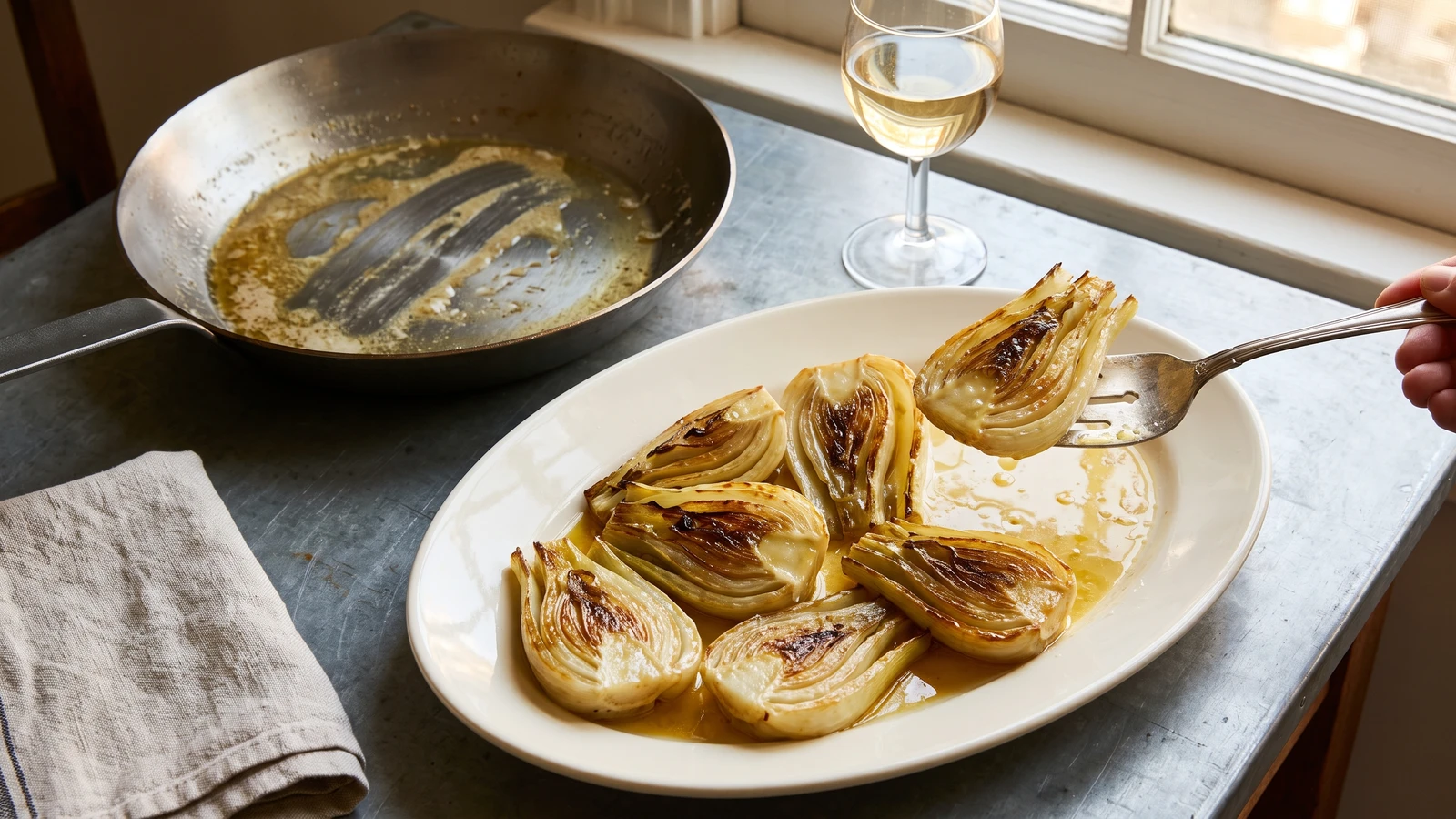
The finished wedges should hold their shape, with ivory layers beneath deeply bronzed faces and a thin butter glaze caught between them. The decisive step comes before the skillet: drain and dry the parboiled fennel thoroughly, because water makes it stew where it ought to brown.
Fenouil tubéreux entered the French classical vegetable repertory through the Mediterranean market gardens of Provence and the Côte d’Azur, then traveled north through specialist early-produce merchants. Despite its kitchen name, the white bulb is not a tuber but a swelling of overlapping leaf bases, the vegetable now commonly sold as Florence fennel or bulb fennel. Grouping it with cardoons and marrows reveals the canon’s practical logic: vegetables were classified by how they answered the knife, blanching pot, and finishing pan, not only by botany.
Quantity
3 medium bulbs (about 1¾ lb / 800 g)
stalks and fronds removed, tough outer layers trimmed
Quantity
8 cups (1.9 L / 1.9 kg)
Quantity
2 tablespoons (30 ml / 30 g)
Quantity
1 tablespoon plus ½ teaspoon (17.5 ml / 21 g)
divided
Quantity
5 tablespoons (75 ml / 70 g)
divided
Quantity
¼ teaspoon (1.25 ml / 0.6 g)
| Ingredient | Quantity |
|---|---|
| Florence fennel bulbsstalks and fronds removed, tough outer layers trimmed | 3 medium bulbs (about 1¾ lb / 800 g) |
| cold water | 8 cups (1.9 L / 1.9 kg) |
| fresh lemon juice | 2 tablespoons (30 ml / 30 g) |
| fine sea saltdivided | 1 tablespoon plus ½ teaspoon (17.5 ml / 21 g) |
| unsalted butterdivided | 5 tablespoons (75 ml / 70 g) |
| freshly ground black pepper | ¼ teaspoon (1.25 ml / 0.6 g) |
Cut the stalks close to each bulb and remove any bruised or stringy outer layer. Shave the dry end from the base without cutting away the core, which must remain intact to hold the layers together. Quarter each bulb lengthwise through that core. If the outer ribs feel fibrous beneath the knife, peel them lightly with a vegetable peeler, then place the wedges in the cold water mixed with the lemon juice while you finish trimming.
Add 1 tablespoon of the salt to the pot and bring the fennel up to a gentle boil. Lower the heat and parboil for 7 to 9 minutes, until a skewer enters the thickest part with clear but slender resistance. Do not wait for complete tenderness; the fennel still has a skillet and a short braise ahead. If a wedge begins separating or slipping from the skewer, lift every piece out immediately and spread them on a tray. Ça se rattrape: chill the fragile wedges for 10 minutes, dry them carefully, and brown them on one face only so they are handled less.
Reserve ½ cup (120 ml / 120 g) of the cooking liquor, then drain the wedges cut-side down for 5 minutes. Pat every surface dry without crushing the layers. This is the principle carried into the method: damp fennel releases water into the butter and stews, while a dry cut face takes the deep bronze that gives this plain preparation its character.
Melt 3 tablespoons (45 ml / 42 g) of the butter in a broad skillet over medium-high heat. When the foam subsides, lay in the wedges on one cut face, leaving room between them; work in two batches if the skillet is crowded. Brown without disturbing for 3 to 4 minutes, then turn onto the second cut face and cook for another 2 to 3 minutes. The fennel should be richly bronzed, not scorched. If the butter darkens too quickly, lower the heat and add 1 teaspoon of the reserved cooking liquor to arrest the browning before it turns bitter.
Return all the wedges to the skillet and add ¼ cup (60 ml / 60 g) of the reserved cooking liquor. Cover and cook gently for 3 to 4 minutes, until a knife enters the core without force. Uncover and reduce the liquid until only a glossy spoonful remains. Montez au beurre, finish with cold butter: lower the heat, add the remaining 2 tablespoons (30 ml / 28 g) of butter, and roll the skillet until the liquor and butter form a thin, shining glaze. If it separates into greasy pools, add a teaspoon of hot cooking liquor and shake the pan until it comes together. Season with the pepper, taste before adding the remaining salt, and serve at once. À table!
1 serving (about 190g)
Culinary guides, cultural storytelling, and the editorial depth that makes cooking meaningful.
Discover Culinary ExplorerChef Juliette
Boulettes au suif, poached beside salt beef, turn equal weights of flour and finely chopped suet into tender, rich dumplings. Keep the beef liquor at a bare tremble and the old garnish works beautifully at home.

Chef Juliette
Bread, flour, frangipane, and rice become four cool, supple panades for binding forcemeats, each changing body and flavor while preserving tenderness. The finest Mousselines need none, and knowing that distinction is the lesson.

Chef Juliette
Panade au pain is bread, milk, salt, heat, and attention: stir until the paste releases cleanly, butter it against a skin, and you have the quiet binder behind tender French farces.

Chef Juliette
Panade de farine teaches the drying stroke behind pâte à choux: flour meets boiling buttered water, then stays over the fire until the paste gathers, smooths, and quits the pan cleanly.