Chef Juliette
Bouillabaisse à la Marseillaise
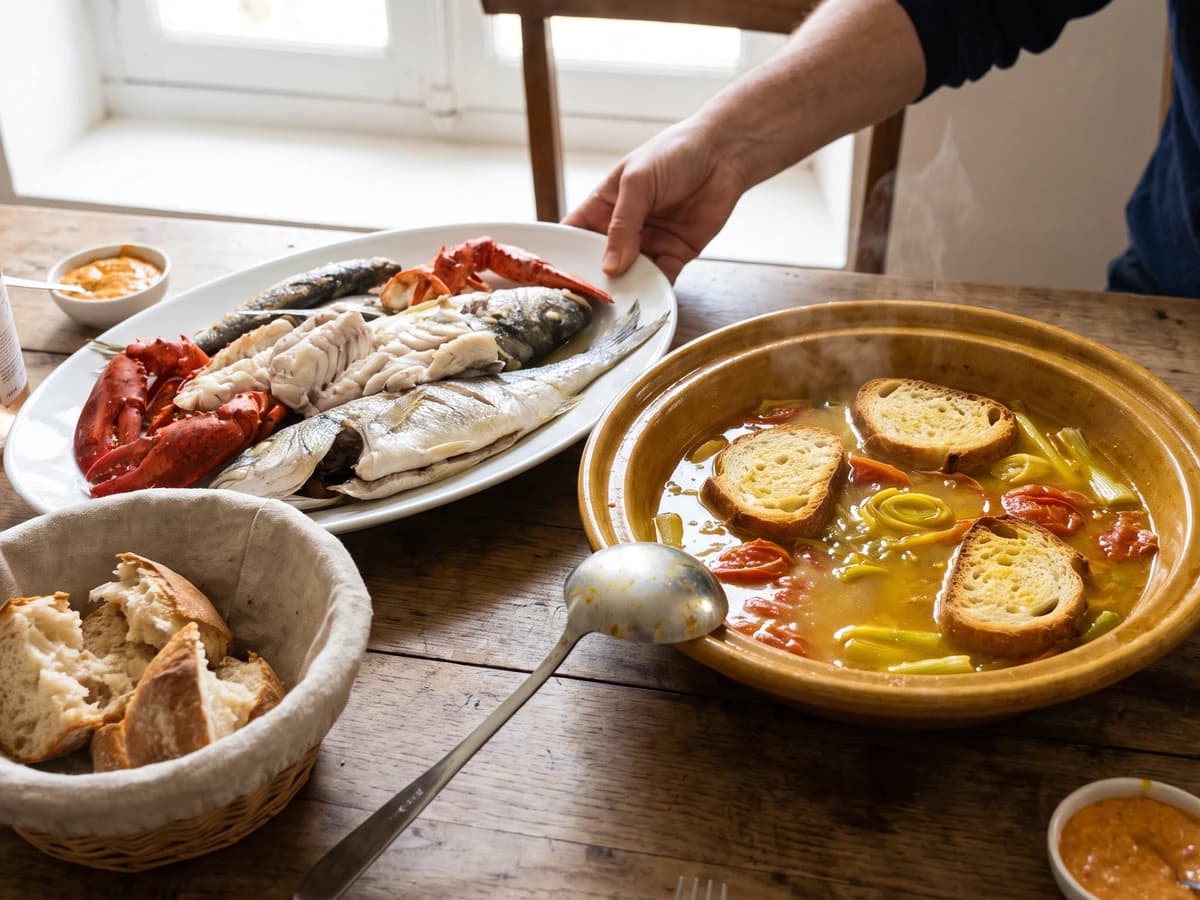
Marseille's great fish stew, saffron-gold and garlic-scented, proves that a hard boil can be the careful choice: it binds olive oil into broth before the whole pot meets bread.
A cooking platform built around craft, culture, and the stories behind what we eat.
Created by Chef Juliette
Based on No. 214, The Dividing-up of Royales, from Le Guide Culinaire (1907) by Auguste Escoffier
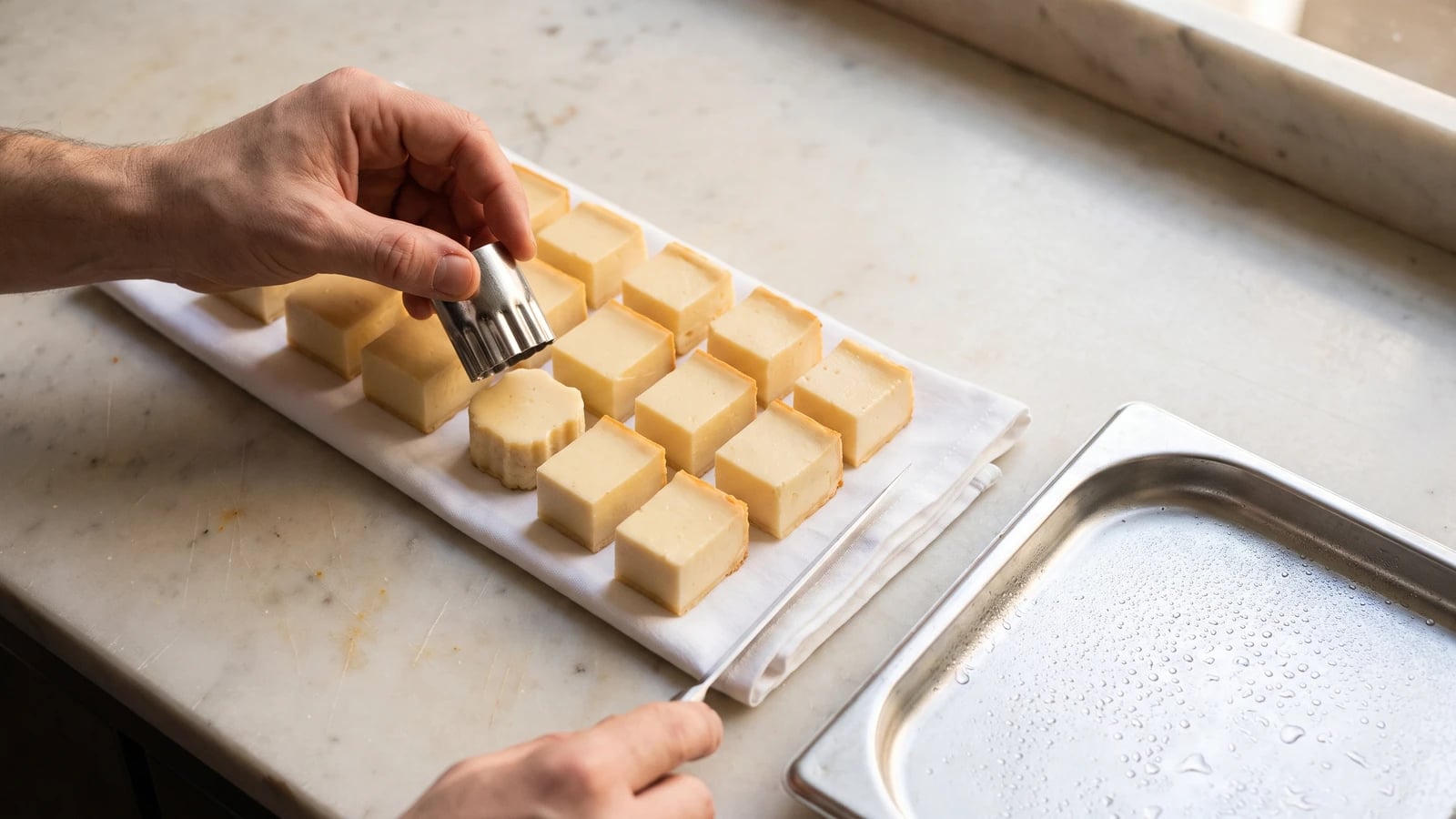
Cool the royale in its mould until the centre is firm, then trim, slice, and stamp it with exactness. Warm custard scatters; cold custard becomes the neat garnish a clear broth deserves.
Détaillage des royales (dividing savoury custards) teaches one true thing: structure is made in the cooling, not forced with the knife. A royale turned out warm will slump and scatter. Left undisturbed in its mould, it contracts, settles, and becomes firm enough to take a clean edge from the cutter.
The original kitchen assumed a stock never off the fire, a saucier close by, rows of little moulds, and spare hands to stamp garnish for a whole service. A salamander does no work here; cold, not fierce top heat, supplies the necessary firmness. For one cook, one stove, one evening, one straight-sided mould replaces the brigade's rows, the refrigerator replaces the cold room, and a few small cutters replace a drawer of specialized stamps. Those rows of moulds were service scaffolding. Complete cooling and regular cutting are the dish, and neither changes.
This preparation begins when the poaching ends, with the cooked royale still in its mould, exactly where the source begins. Let it cool all the way to the centre before you loosen so much as an edge. That waiting decides everything.
Royales belong to the formal Parisian soup service of the French classical canon, where firm savoury custards were cut into exact shapes and placed in clarified consommé just before serving. The practice passed from grand kitchens into cuisine bourgeoise because a small custard could give clear broth substance and ceremony without clouding it. The stamped forms are not merely decoration: equal thickness allows every piece to warm evenly while remaining intact.
Quantity
1, about 2 cups (475 ml / 500 g)
kept in the mould after poaching
| Ingredient | Quantity |
|---|---|
| freshly poached royale in its mouldkept in the mould after poaching | 1, about 2 cups (475 ml / 500 g) |
When the poaching is complete, lift the mould or moulds from the bain-marie (water bath) and dry their outsides. Set them upright on a rack without loosening, pressing, or turning out the royale. Leave them undisturbed for about 30 minutes, until no longer radiating strong heat.
Transfer the royale, still in its mould, to the refrigerator and chill for at least 2½ hours, preferably overnight. Press the centre very lightly through the surface: it must feel cold and firmly set, not merely cool around the edges. If you begin turning it out and a corner slumps, return it to the mould at once and chill it longer. Ça se rattrape. If it has already scattered completely, spoon the pieces into individual soup cups rather than trying to stamp them; the flavour remains, only the geometry is lost.
Run the tip of a thin knife around the upper edge without digging into the custard. Lay a serviette (clean lint-free kitchen cloth) over the mould, cover it with a flat tray, and invert both together. Lift the mould straight upward. If the royale refuses to release, wrap the mould's sides with a warm damp cloth for five seconds and try again; repeat once if necessary, but never warm the custard itself.
For a royale poached in one large mould, leave it on the serviette, trim the uneven top and square the ends, then cut it into straight ½-inch (1.25 cm) slices. For royales poached in small moulds, lightly trim each cylinder and divide it laterally into discs of the same thickness. Use a thin, very sharp knife, wiping the blade clean after every cut so crumbs do not drag across the next surface.
Stamp the slices with small plain, fluted, or indented cutters, pressing straight down and lifting straight up. Different shapes may share the tray, but every piece must have the same thickness and a clean outline. Push each royale gently from the blunt side of the cutter rather than prying at its edge. Ragged pieces are not improved by further trimming; reserve them for less formal bowls and keep the best shapes for the serving dish.
Arrange the stamped royales in a single layer on a cold, covered tray and return them to the refrigerator until needed. To serve, place several shapes in each warmed soup bowl and ladle the hot clear broth around them, not directly onto their edges. Never boil a divided royale in the broth; hard heat roughens the custard, breaks the shapes, and clouds what should remain clear. À table!
1 serving (about 63g)
Culinary guides, cultural storytelling, and the editorial depth that makes cooking meaningful.
Discover Culinary ExplorerChef Juliette
Marseille's great fish stew, saffron-gold and garlic-scented, proves that a hard boil can be the careful choice: it binds olive oil into broth before the whole pot meets bread.
Chef Juliette
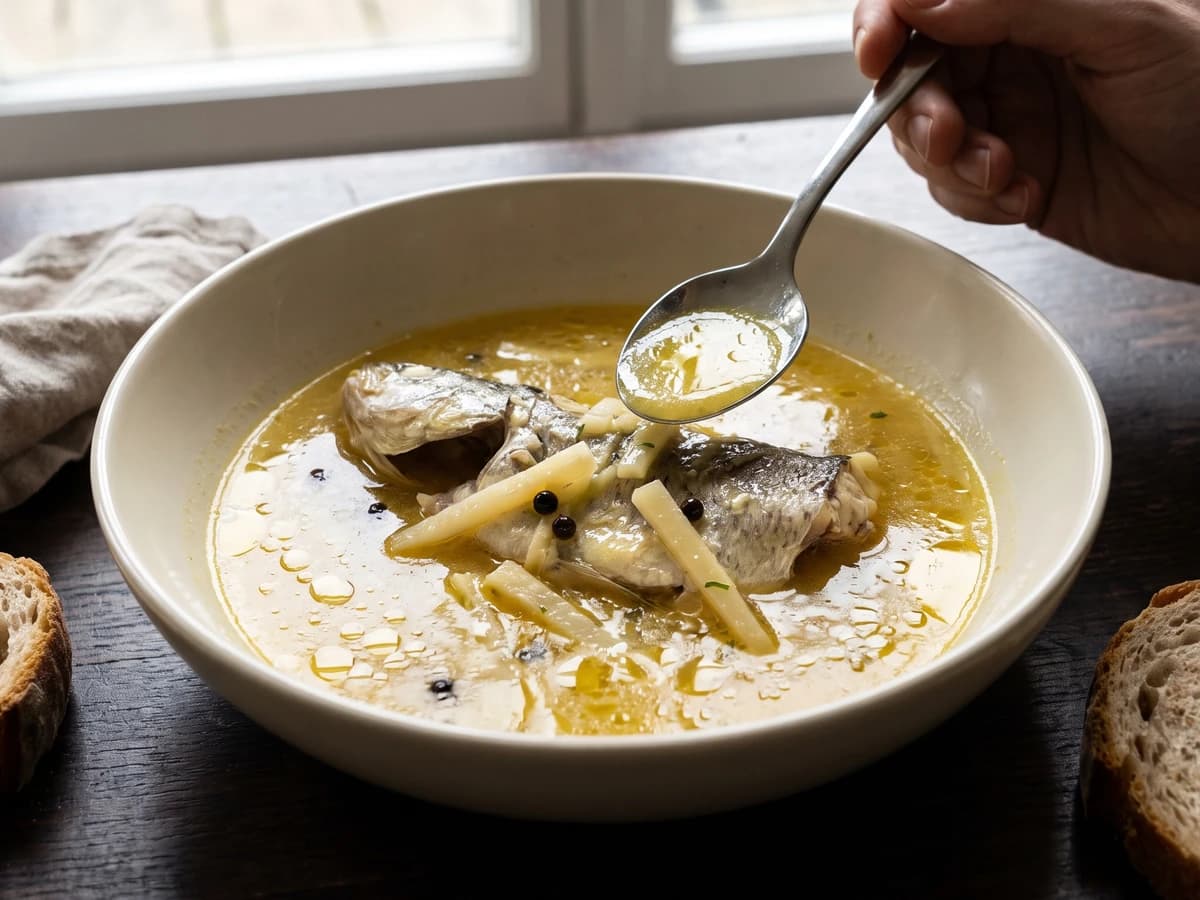
Waterzoi asks fresh, bone-in river fish to thicken its own buttery broth, with parsley root and pepper for company. No flour, no stockpot, just a brisk simmer watched closely.
Chef Juliette
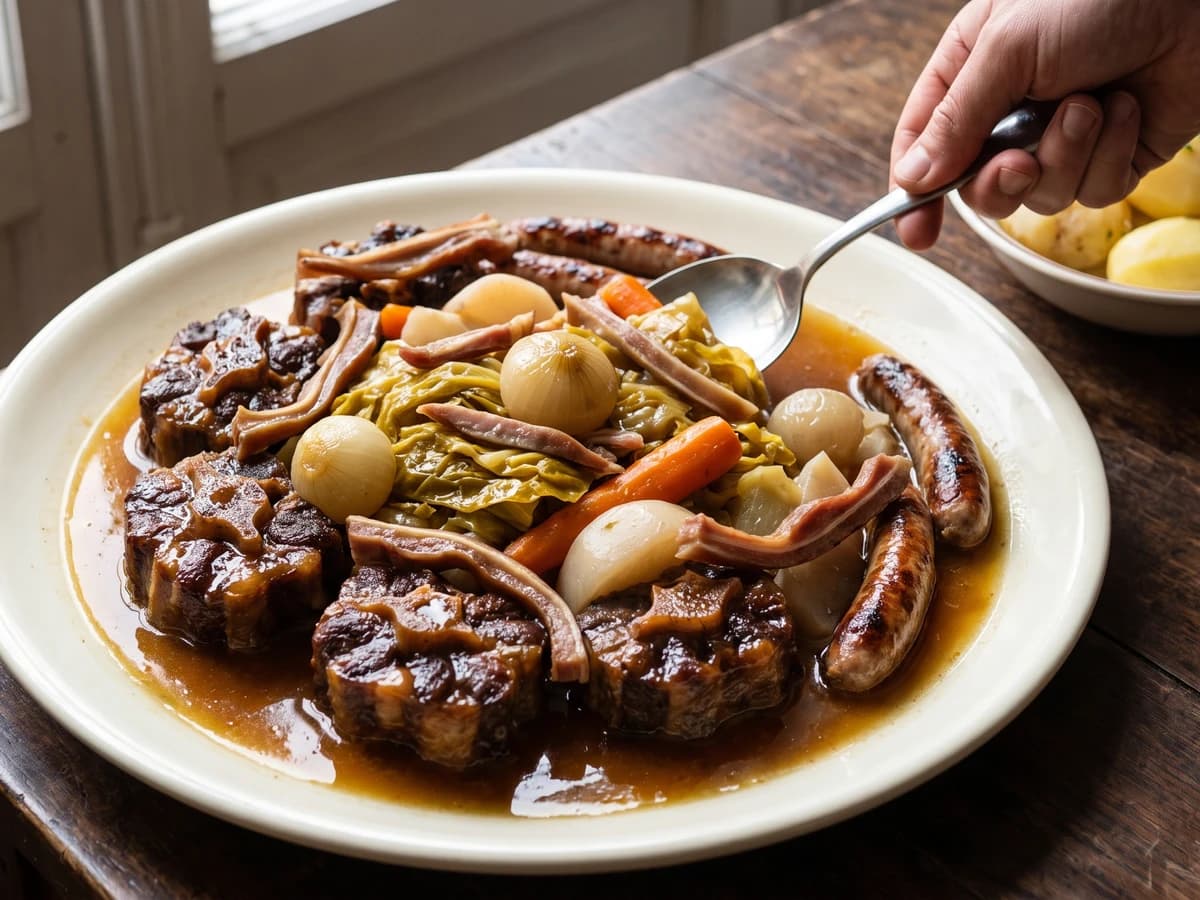
Queue de Bœuf en Hochepot gathers oxtail, pig's trotter and ear, cabbage, roots, and grilled chipolatas around a clear, gelatin-rich broth whose quiet simmer keeps every piece tender and distinct.
Chef Juliette
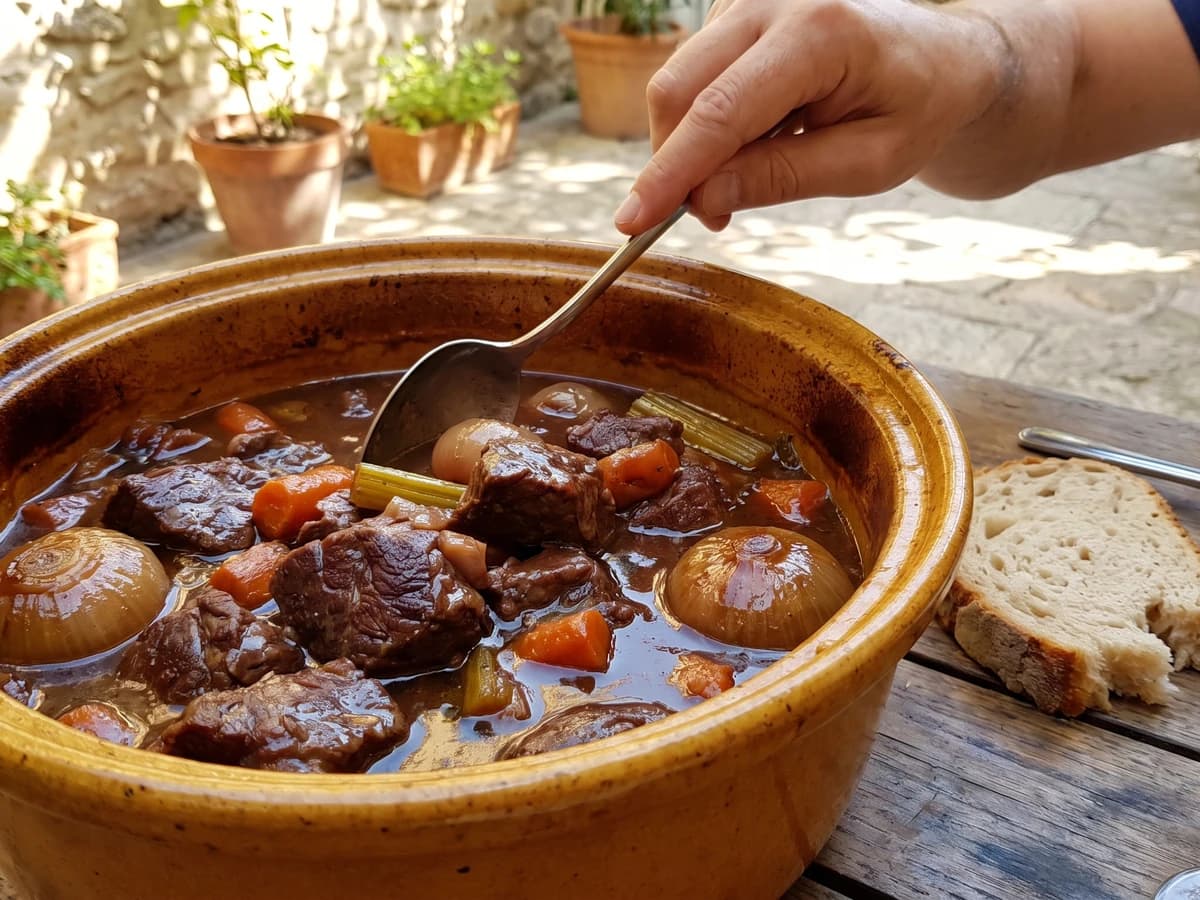
Beef shoulder larded with bacon, sharpened by red wine and vinegar, then sealed with garlic, vegetables, and dry lemon peel until the low oven turns it yielding and the gravy darkly glossy.