Chef Juliette
Suet Dumpling
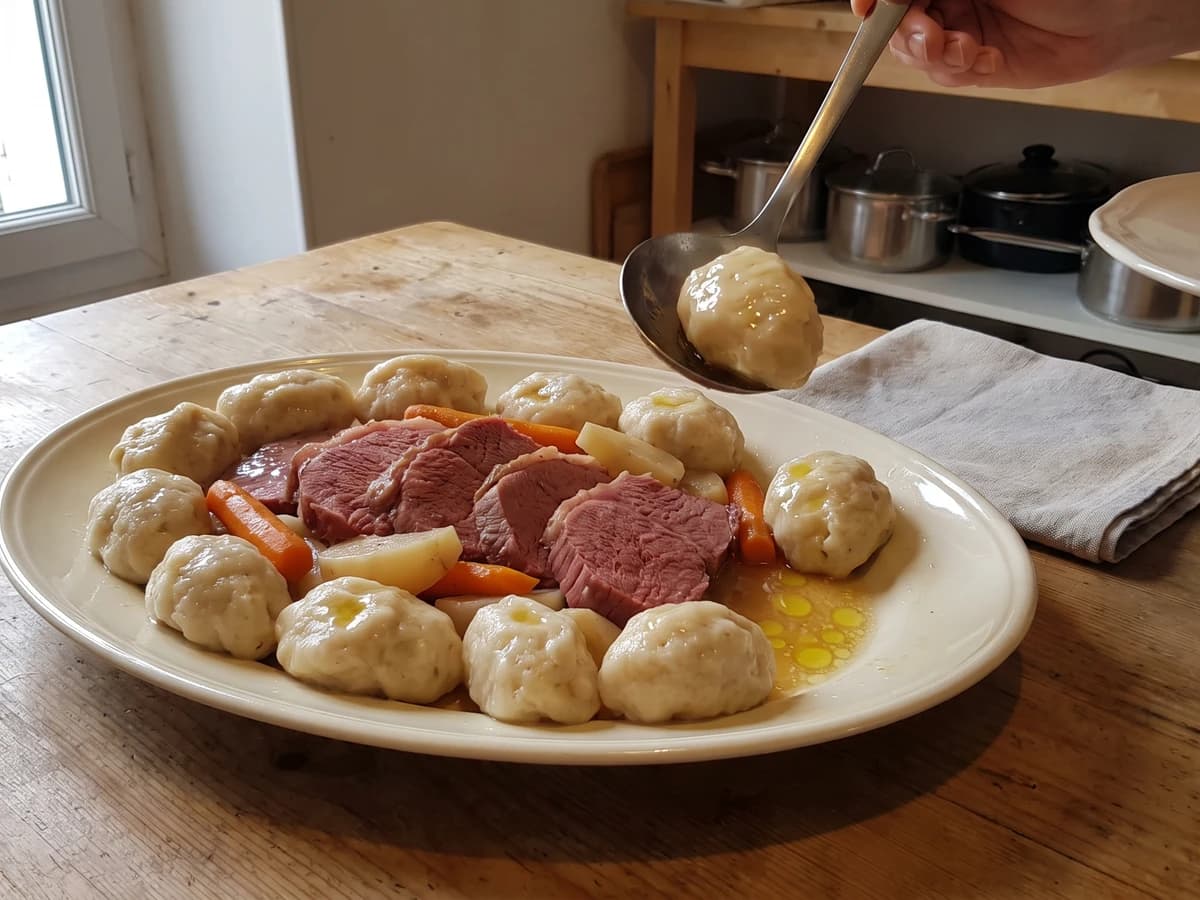
Boulettes au suif, poached beside salt beef, turn equal weights of flour and finely chopped suet into tender, rich dumplings. Keep the beef liquor at a bare tremble and the old garnish works beautifully at home.
A cooking platform built around craft, culture, and the stories behind what we eat.
Created by Chef Juliette
Based on No. 2134, Épinards à la Crème, from Le Guide Culinaire (1907) by Auguste Escoffier
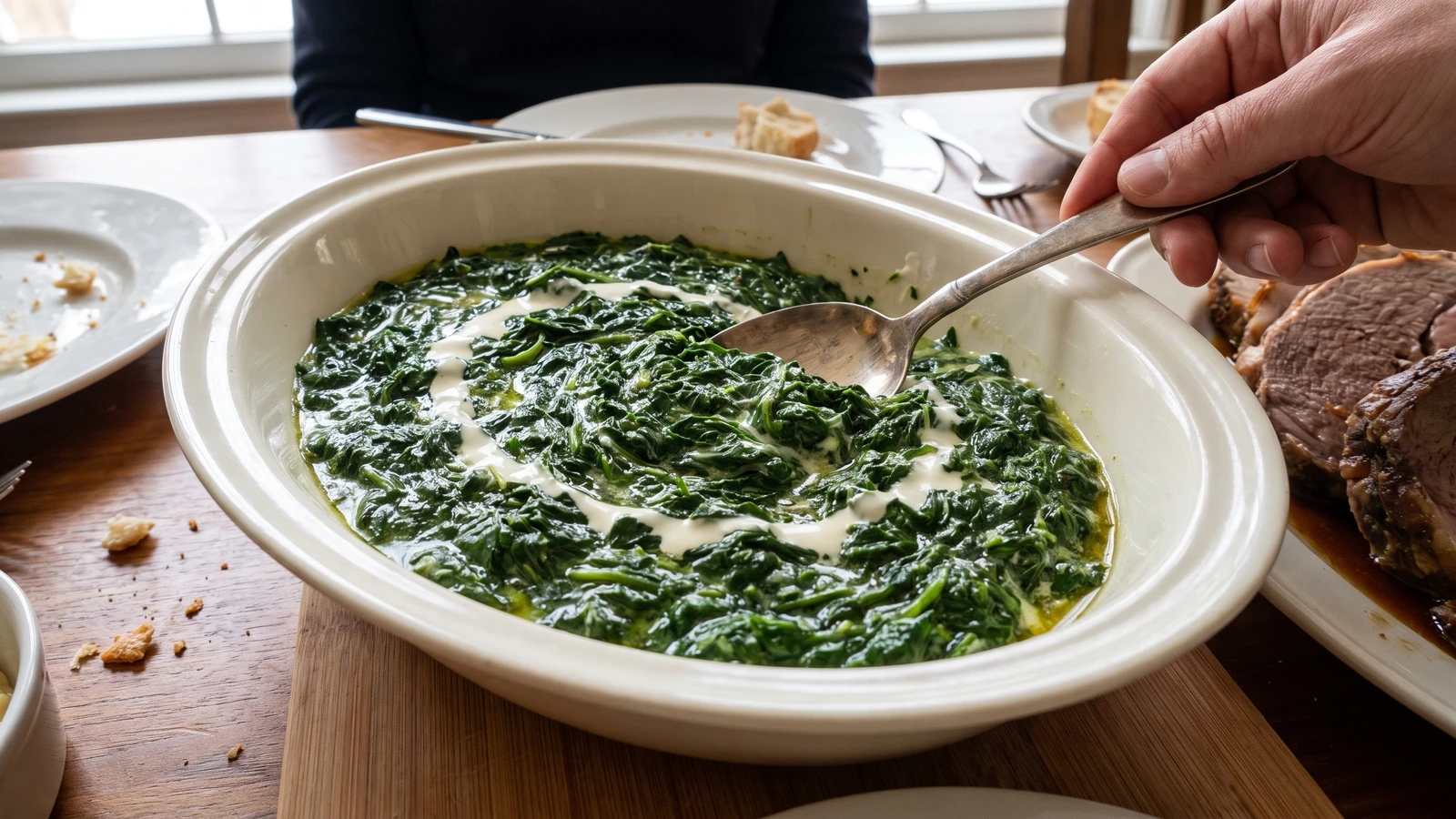
Spinach dried hard in butter, then simmered gently with cream sauce: a lesson in driving off water before richness goes in, so the colour stays green and the finish sits glossy.
Épinards à la Crème (spinach with cream) teaches one uncompromising thing: before cream can enrich spinach, the leaves must give up their water. Wet spinach dilutes the sauce, greys the green, and leaves a puddle where a gloss should be. Dry it first. That is the dish.
The original entry assumes a saucier had cream sauce ready and brigade quantities made rubbing spinach through a sieve sensible. At home, a half-cup of sauce crème (cream sauce) from one small saucepan and a sharp knife do the same work; there is no stockpot or salamander to replace because the dish asks for neither. The sieve is scaffolding and can go. The original proportions, the fierce drying in butter, and the ten-minute simmer are the dish, so they stay. One cook, one stove, one evening.
When it is right, the spinach is finely textured but still recognizably leafy, deep green beneath a butter sheen, with cream sauce clinging rather than pooling. Stand over the wide pan until the wet hiss becomes a quiet sizzle. That change in sound is the step that matters most.
Épinards à la crème belongs to France's cuisine bourgeoise table and the national classical repertoire rather than to one producing region; cream does not make the dish Norman. Household cooks and grand kitchens shared the same practice: cook the leaves, press and chop them, dry them in butter, then bind them with a prepared cream sauce. A common misconception is that cream does the work, but the canonical method places the fierce drying first.
Quantity
About 24 to 30 packed cups (5.7 to 7.1 L / 900 g to 1.1 kg)
large stems removed and leaves thoroughly washed
Quantity
1 tablespoon plus 1/2 teaspoon (17.5 ml / 21 g)
divided
Quantity
1 tablespoon (15 ml / 14 g)
Quantity
1 tablespoon (15 ml / 8 g)
Quantity
1/2 cup (120 ml / 125 g)
Quantity
1/4 cup (60 ml / 60 g)
divided equally between the sauce and the finish
Quantity
4 tablespoons (60 ml / 57 g)
Quantity
1/4 teaspoon (1.25 ml / 0.5 g)
divided
| Ingredient | Quantity |
|---|---|
| fresh mature spinachlarge stems removed and leaves thoroughly washed | About 24 to 30 packed cups (5.7 to 7.1 L / 900 g to 1.1 kg) |
| fine sea saltdivided | 1 tablespoon plus 1/2 teaspoon (17.5 ml / 21 g) |
| unsalted butter, for the sauce crème | 1 tablespoon (15 ml / 14 g) |
| plain flour | 1 tablespoon (15 ml / 8 g) |
| whole milk | 1/2 cup (120 ml / 125 g) |
| heavy creamdivided equally between the sauce and the finish | 1/4 cup (60 ml / 60 g) |
| unsalted butter, for drying the spinach | 4 tablespoons (60 ml / 57 g) |
| finely ground white pepperdivided | 1/4 teaspoon (1.25 ml / 0.5 g) |
Melt 1 tablespoon butter in the small saucepan over medium-low heat. Stir in the flour and cook for one minute without letting it colour. Whisk in the milk in three additions, making each addition smooth before pouring the next, then hold the sauce at a bare simmer for four minutes. Whisk in 2 tablespoons of the cream, 1/4 teaspoon of the salt, and half the white pepper. Simmer until the sauce is smooth, lightly thickened, and reduced to a generous 1/2 cup (120 ml / about 125 g), enough to coat the back of a spoon. If it lumps, take it off the heat and whisk firmly; if small lumps remain, pass it through a fine sieve. Ça se rattrape. Cover its surface directly with parchment and set aside.
Bring a large pot of water to a full boil and add 1 tablespoon of the salt. Add the spinach in generous batches, pressing each beneath the water until it collapses, then cook for 60 to 90 seconds, just until tender and vivid green. Lift each batch into a colander and rinse under cold water immediately. Do not leave the spinach waiting in hot water while the next batch cooks; prolonged heat dulls both its flavour and colour.
Gather the cooled spinach in a clean kitchen towel and twist firmly until no more water drips. Open the bundle, loosen the leaves, and repeat if they still feel wet. Chop the spinach finely with a knife, turning the pile and chopping again until the texture is even but not puréed. The source permits chopping or rubbing through a sieve, and the knife is the honest home choice. Aim for about 1 pound (454 g), or roughly 2 firmly packed cups (475 ml), of prepared spinach. If your yield differs, preserve the source ratio: use 2 ounces (57 g) butter per 1 pound (454 g) of prepared spinach, with sauce crème equal to one-quarter of its packed volume.
Heat the wide sauté pan over medium-high heat. Add the 4 tablespoons butter and, as soon as it foams, add the chopped spinach. Stir, spread, and turn it continuously for 5 to 7 minutes. At first it will hiss wetly; keep going until no liquid gathers when you draw the spoon across the pan and the sound settles into a quiet buttery sizzle. Do not wait for brown specks. If water pools because the pan is crowded, divide the spinach and finish drying it in two rounds. Wet spinach is the failure here, and more time in the wide pan is the rescue.
Lower the heat and stir in sauce crème equal to one-quarter of the spinach's packed volume, usually the prepared 1/2 cup. Bring it just to a simmer, then cook gently for exactly 10 minutes, stirring often so the spinach does not catch. The sauce should disappear into the leaves and bind them into a soft, cohesive spoonful. If loose liquid appears at the edges, spread the spinach across the pan and raise the heat for a minute or two until it cooks away, then return to gentle heat. Do not repair it with extra flour.
Taste and add the remaining 1/4 teaspoon salt and white pepper as needed. Spoon the spinach generously into a warmed serving bowl or timbale, keeping the surface softly mounded rather than packed flat. Trickle the reserved 2 tablespoons fresh cream over the top and serve immediately, while the butter sheen and deep green are at their best. À table!
1 serving (about 210g)
Culinary guides, cultural storytelling, and the editorial depth that makes cooking meaningful.
Discover Culinary ExplorerChef Juliette
Boulettes au suif, poached beside salt beef, turn equal weights of flour and finely chopped suet into tender, rich dumplings. Keep the beef liquor at a bare tremble and the old garnish works beautifully at home.

Chef Juliette
Bread, flour, frangipane, and rice become four cool, supple panades for binding forcemeats, each changing body and flavor while preserving tenderness. The finest Mousselines need none, and knowing that distinction is the lesson.

Chef Juliette
Panade au pain is bread, milk, salt, heat, and attention: stir until the paste releases cleanly, butter it against a skin, and you have the quiet binder behind tender French farces.

Chef Juliette
Panade de farine teaches the drying stroke behind pâte à choux: flour meets boiling buttered water, then stays over the fire until the paste gathers, smooths, and quits the pan cleanly.