Chef Juliette
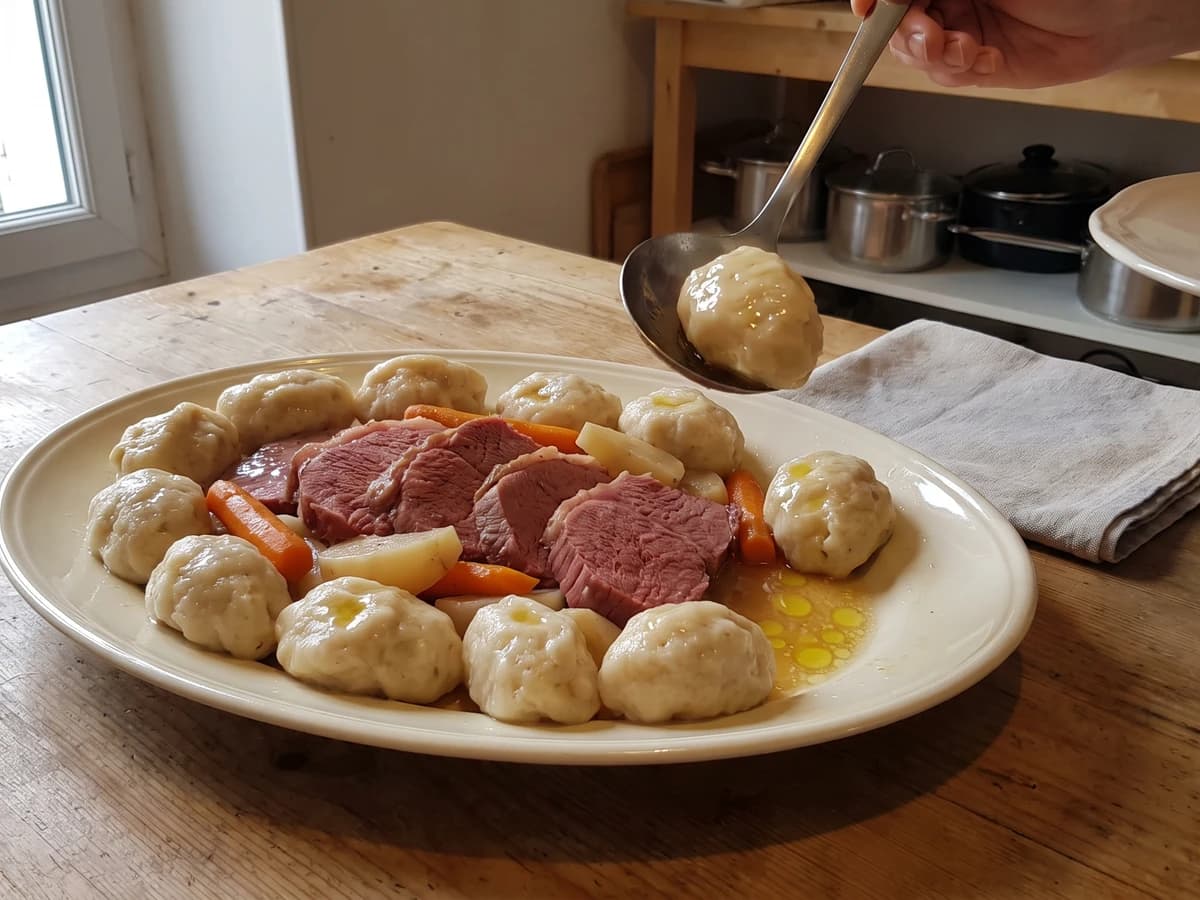
Suet Dumpling
Boulettes au suif, poached beside salt beef, turn equal weights of flour and finely chopped suet into tender, rich dumplings. Keep the beef liquor at a bare tremble and the old garnish works beautifully at home.
A cooking platform built around craft, culture, and the stories behind what we eat.
Created by Chef Juliette
Based on No. 2133, Épinards à l’Anglaise, from Le Guide Culinaire (1907) by Auguste Escoffier
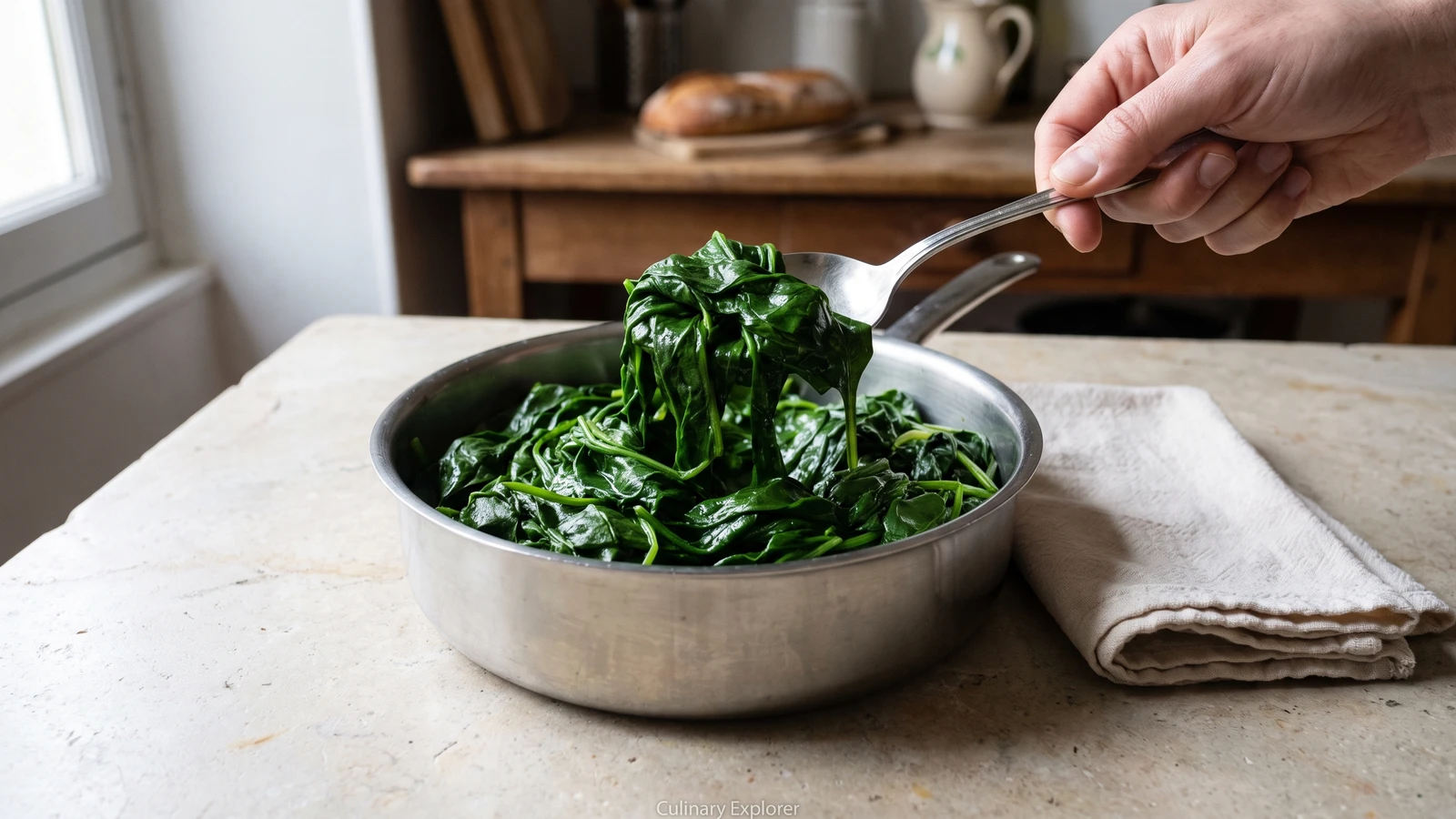
Épinards à l’Anglaise proves how much discipline can live in a plain green vegetable: shred carefully, boil quickly, drain fiercely, and carry it straight to the table.
Épinards à l’Anglaise (spinach cooked in the English manner) teaches one true thing: draining is part of the cooking. The leaves should reach the table tender, vivid, and free of standing water. Leave them wet and their clean mineral flavor disappears into a puddle.
The entry assumed a vegetable station with a broad kettle already boiling, a cook to prepare a great basket of leaves, and a warmed timbale waiting for service. Your honest equivalent is an eight-quart pot, a large colander, and a serving bowl warmed with hot water. Brigade quantities and prolonged holding are scaffolding, so they go. Careful shredding, abundant salted water, hard draining, and service without cooling are the dish, so they stay. One cook, one stove, one evening.
There is no butter, no cream, and no sauce to hide behind. The salted water seasons the spinach, while fast cooking preserves its color and character. The step that matters most comes after the pot: drain fiercely, never rinse, and serve before the leaves lose their heat.
Épinards à l’Anglaise belongs to the French classical service table, where à l’anglaise named a deliberately plain treatment of vegetables cooked in salted water and presented without a built sauce. The title records a French reading of English vegetable cookery, not a claim that every English household prepared spinach this way; other vegetables might meet butter at service, while this spinach formula stops at hard draining. Its bareness carried it easily into cuisine bourgeoise, because freshness, plentiful water, and immediate service matter more than an elaborate garnish.
Quantity
About 22 loosely packed cups (5.2 L / 680 g)
washed, coarse stems removed, and carefully shredded into broad ribbons
Quantity
4 quarts (3.8 L / 3.8 kg)
Quantity
1½ tablespoons (22 ml / 27 g)
| Ingredient | Quantity |
|---|---|
| mature spinach leaveswashed, coarse stems removed, and carefully shredded into broad ribbons | About 22 loosely packed cups (5.2 L / 680 g) |
| water | 4 quarts (3.8 L / 3.8 kg) |
| fine sea salt | 1½ tablespoons (22 ml / 27 g) |
Put the water and salt in an eight-quart pot, cover, and bring it to a vigorous rolling boil over high heat. Fill the timbale or serving bowl with the hottest tap water and leave it beside the stove. The large volume of water lets the spinach cook rapidly without pulling the temperature down for long.
Wash the spinach in several changes of cold water until no grit remains at the bottom of the bowl. Remove the coarse stalks, stack the leaves in manageable handfuls, and slice them crosswise into broad ribbons about ¾ inch (2 cm) wide. Work lightly and don't mince them; careful shredding gives an even cook while leaving enough body for the spinach to remain itself.
Add the spinach rapidly in several large handfuls, folding each beneath the water with a slotted spoon as soon as there is room. Keep the heat high. If the boil disappears completely, stop adding leaves until the water begins moving again. Once the final handful is submerged, cook for 1 to 2 minutes, turning once, until every ribbon has collapsed and become tender but remains a clear, deep green. Don't wait for the color to darken.
Set the colander securely in the sink. Lift the spinach into it immediately with a spider or slotted spoon, then carefully pour the remaining contents of the pot away from you. Press firmly and repeatedly with the back of the spoon until a flowing stream becomes only an occasional drop; toss the leaves once and press again. Never rinse them. If water collects after the spinach reaches the serving bowl, return it to the colander and press once more. Ça se rattrape.
Empty and dry the warmed timbale. Transfer the spinach while it is still hot, loosening the ribbons lightly with a fork before mounding them generously. The timbale is the serving vessel, not a mold to invert. Bring it straight to the table with no butter, cream, pepper, or decorative garnish. À table!
1 serving (about 140g)
Culinary guides, cultural storytelling, and the editorial depth that makes cooking meaningful.
Discover Culinary ExplorerChef Juliette
Boulettes au suif, poached beside salt beef, turn equal weights of flour and finely chopped suet into tender, rich dumplings. Keep the beef liquor at a bare tremble and the old garnish works beautifully at home.

Chef Juliette
Bread, flour, frangipane, and rice become four cool, supple panades for binding forcemeats, each changing body and flavor while preserving tenderness. The finest Mousselines need none, and knowing that distinction is the lesson.

Chef Juliette
Panade au pain is bread, milk, salt, heat, and attention: stir until the paste releases cleanly, butter it against a skin, and you have the quiet binder behind tender French farces.

Chef Juliette
Panade de farine teaches the drying stroke behind pâte à choux: flour meets boiling buttered water, then stays over the fire until the paste gathers, smooths, and quits the pan cleanly.