Chef Juliette
Suet Dumpling
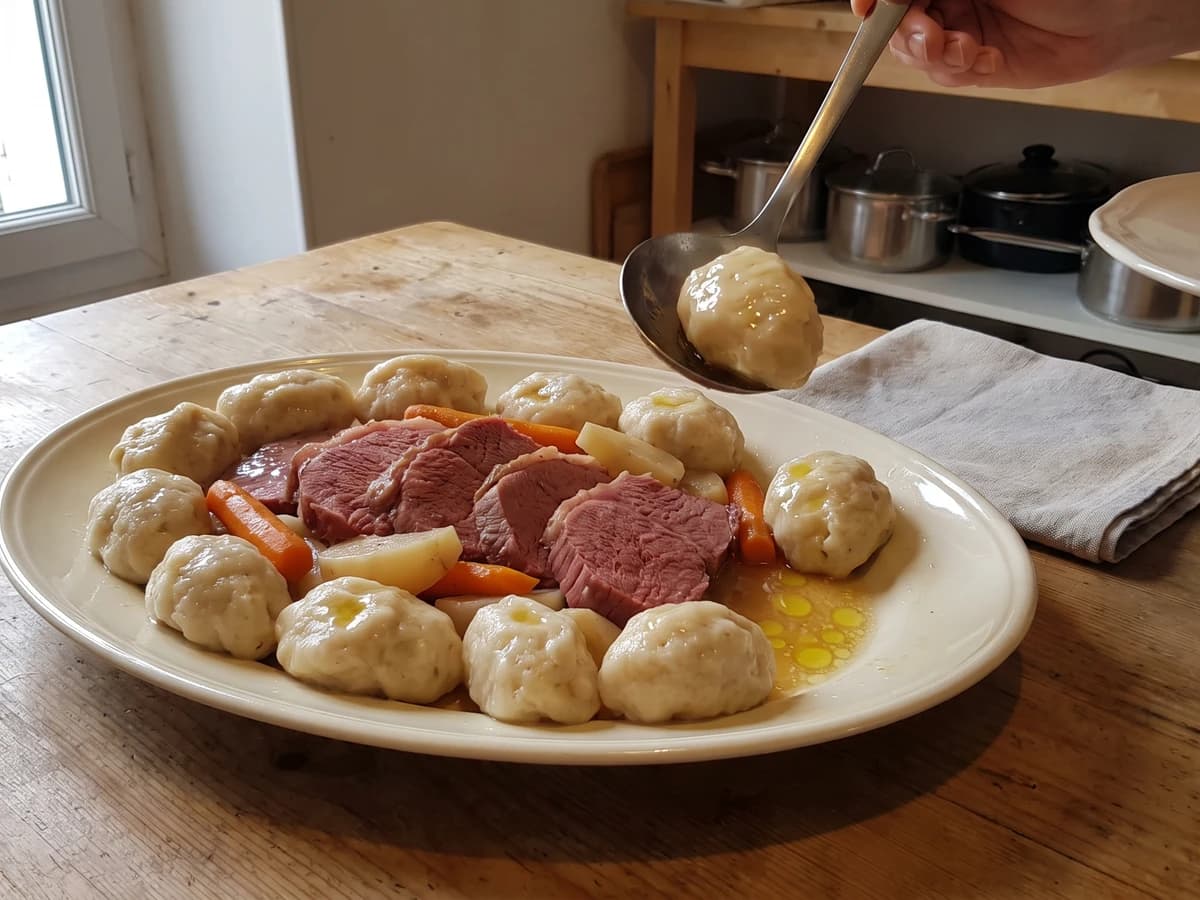
Boulettes au suif, poached beside salt beef, turn equal weights of flour and finely chopped suet into tender, rich dumplings. Keep the beef liquor at a bare tremble and the old garnish works beautifully at home.
A cooking platform built around craft, culture, and the stories behind what we eat.
Created by Chef Juliette
Based on No. 2132, Spinach (Épinards), from Le Guide Culinaire (1907) by Auguste Escoffier
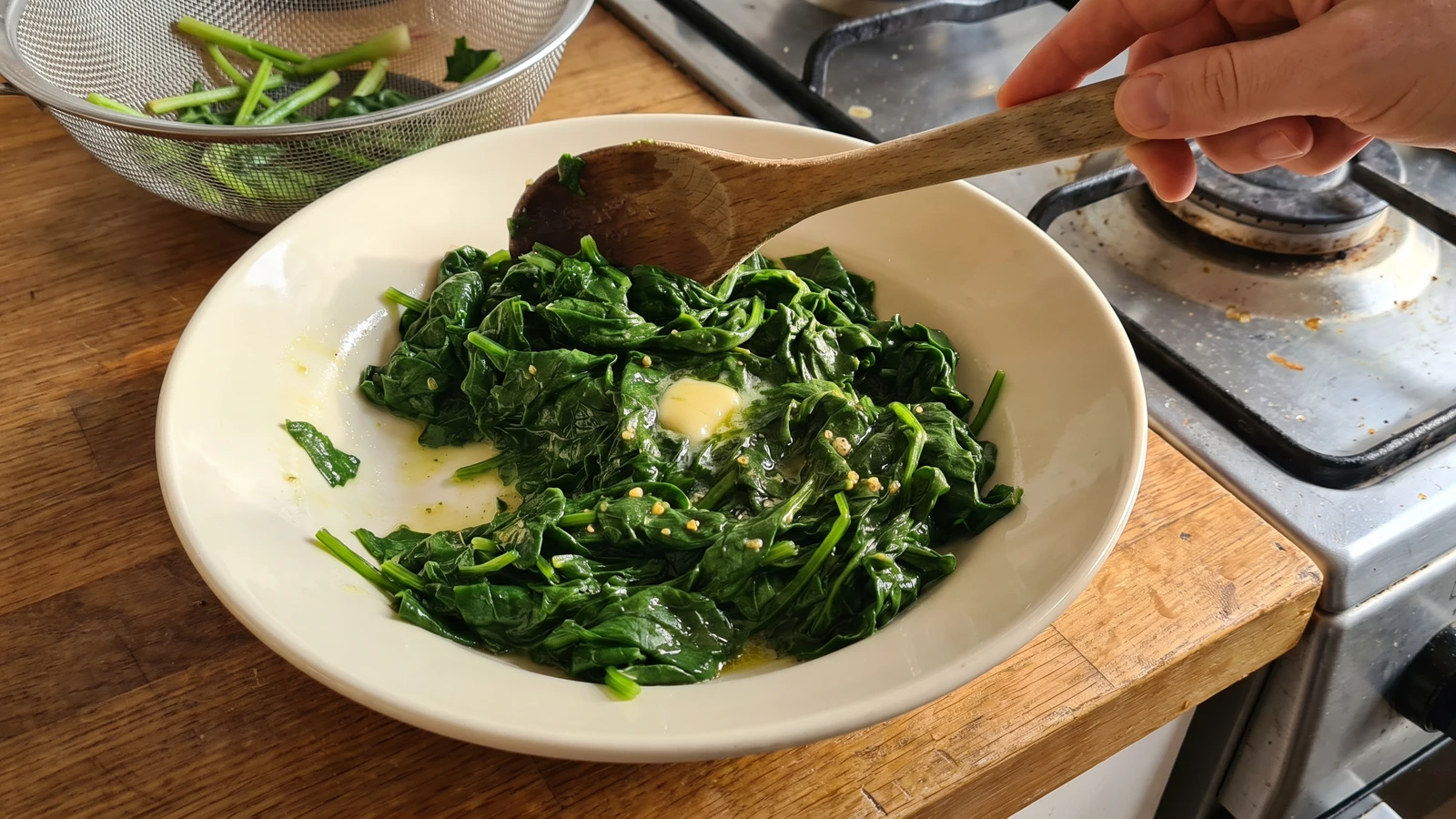
Épinards prove that the decisive work begins after parboiling: cool them fast, wring them truly dry, then turn them in butter until every tender green morsel gleams.
Épinards teach one hard, useful truth: spinach is not finished when it leaves the water. It is finished when that water has left the spinach. Parboil it quickly in plenty of salted water, cool it at once, and wring it drier than feels reasonable; only then can butter coat the leaves instead of floating in a green puddle. C'est la même grammaire for every cooked green that carries too much water.
The source entry stops at prepared spinach. To bring it to the table as a complete sautéed side for four, this home version adds only the classical last turn in real butter; nothing else masks the leaves. The professional direction assumed a great pot already boiling, a cooling sink, several sieves, and another pair of hands ready to press the spinach just before service. You have one stockpot, a bowl of cold water, a colander, and a clean towel. For this chopped version, the knife replaces the sieve because a perfectly uniform purée is service scaffolding, not the soul of the dish. The salted parboil, immediate cooling, firm pressing, and last-minute finish are the dish, and every one stays. One cook, one stove, one evening.
Press without timidity. If the spinach reaches the butter wet, it simmers in its own liquid and tastes thin; if that happens, ça se rattrape, and the skillet will dry it before the final butter goes in. The pressing is the step that decides the plate.
In the Parisian classical repertoire and at the city's bourgeois table, épinards appeared both as a vegetable in their own right and as a finely sieved garnish for eggs, fish, and roasted meats. Professional kitchens codified the order of plentiful salted water, rapid cooling, pressing, and chopping or sieving, a method that passed readily into household cooking because it required discipline rather than rare ingredients. The cooling and pressing were never universal: when the leaves were meant to remain whole, cooks drained them without either treatment so their shape survived.
Quantity
2 pounds (900 g)
washed well with tough stems removed
Quantity
4 quarts (3.8 L / 3.8 kg)
Quantity
1 tablespoon plus ¼ teaspoon (16.25 ml / 19.5 g)
divided
Quantity
4 quarts (3.8 L / 3.8 kg)
Quantity
4 tablespoons (60 ml / 57 g)
divided
| Ingredient | Quantity |
|---|---|
| fresh mature spinachwashed well with tough stems removed | 2 pounds (900 g) |
| water for parboiling | 4 quarts (3.8 L / 3.8 kg) |
| fine sea saltdivided | 1 tablespoon plus ¼ teaspoon (16.25 ml / 19.5 g) |
| very cold water for cooling | 4 quarts (3.8 L / 3.8 kg) |
| unsalted butterdivided | 4 tablespoons (60 ml / 57 g) |
Submerge the spinach in a deep basin of cold water and agitate the leaves well. Lift them out with your hands so the sand remains on the bottom, empty the basin, and repeat with fresh water until no grit remains. Trim only the tough, fibrous stems; the tender ones belong in the dish.
Bring the parboiling water to a vigorous boil in a large stockpot and add 1 tablespoon of the salt. Set the bowl of very cold water beside the stove with a colander nearby. The cooling station must be ready before the first leaf enters the pot, because spinach gives you no useful waiting time.
Add half the spinach to the boiling water and press it beneath the surface with tongs. Parboil for 60 to 90 seconds, just until every leaf has collapsed, turned vivid green, and become tender through the stem. Lift it directly into the cold water, then repeat with the remaining spinach. If crowding stops the boil completely, remove some leaves and let the water recover before continuing; a crowded lukewarm pot cooks spinach slowly and dulls its colour.
Turn the spinach through the cold water only until completely cool, then drain it thoroughly. Squeeze it firmly by the handful, gather the bundles in a clean kitchen towel, and twist until no stream of water escapes. It should hold together in a compact mass. This pressure looks severe, but it is exactly right; the leaves are being chopped, and excess water would prevent the butter from clinging.
Set the pressed spinach on a board, loosen the bundles slightly, and chop medium-fine with several passes in both directions. Stop while small pieces of leaf remain visible. A food processor turns this modest quantity into a wet paste; the knife gives a tender texture with enough body to sit properly on the plate.
Melt 3 tablespoons of the butter in a wide skillet over medium-low heat without browning it. Add the chopped spinach and turn it steadily with a wooden spoon, breaking apart every compact piece, until evenly hot and gleaming, about 2 to 3 minutes. If liquid gathers in the pan, hold back the final butter, raise the heat, and keep turning until the water has evaporated. Ça se rattrape. Lower the heat, season with up to the remaining ¼ teaspoon salt, then fold in the last tablespoon of butter off the heat. Transfer immediately to a warm serving dish. Épinards wait badly once finished, so call everyone now. À table!
1 serving (about 105g)
Culinary guides, cultural storytelling, and the editorial depth that makes cooking meaningful.
Discover Culinary ExplorerChef Juliette
Boulettes au suif, poached beside salt beef, turn equal weights of flour and finely chopped suet into tender, rich dumplings. Keep the beef liquor at a bare tremble and the old garnish works beautifully at home.

Chef Juliette
Bread, flour, frangipane, and rice become four cool, supple panades for binding forcemeats, each changing body and flavor while preserving tenderness. The finest Mousselines need none, and knowing that distinction is the lesson.

Chef Juliette
Panade au pain is bread, milk, salt, heat, and attention: stir until the paste releases cleanly, butter it against a skin, and you have the quiet binder behind tender French farces.

Chef Juliette
Panade de farine teaches the drying stroke behind pâte à choux: flour meets boiling buttered water, then stays over the fire until the paste gathers, smooths, and quits the pan cleanly.