Chef Juliette
Suet Dumpling
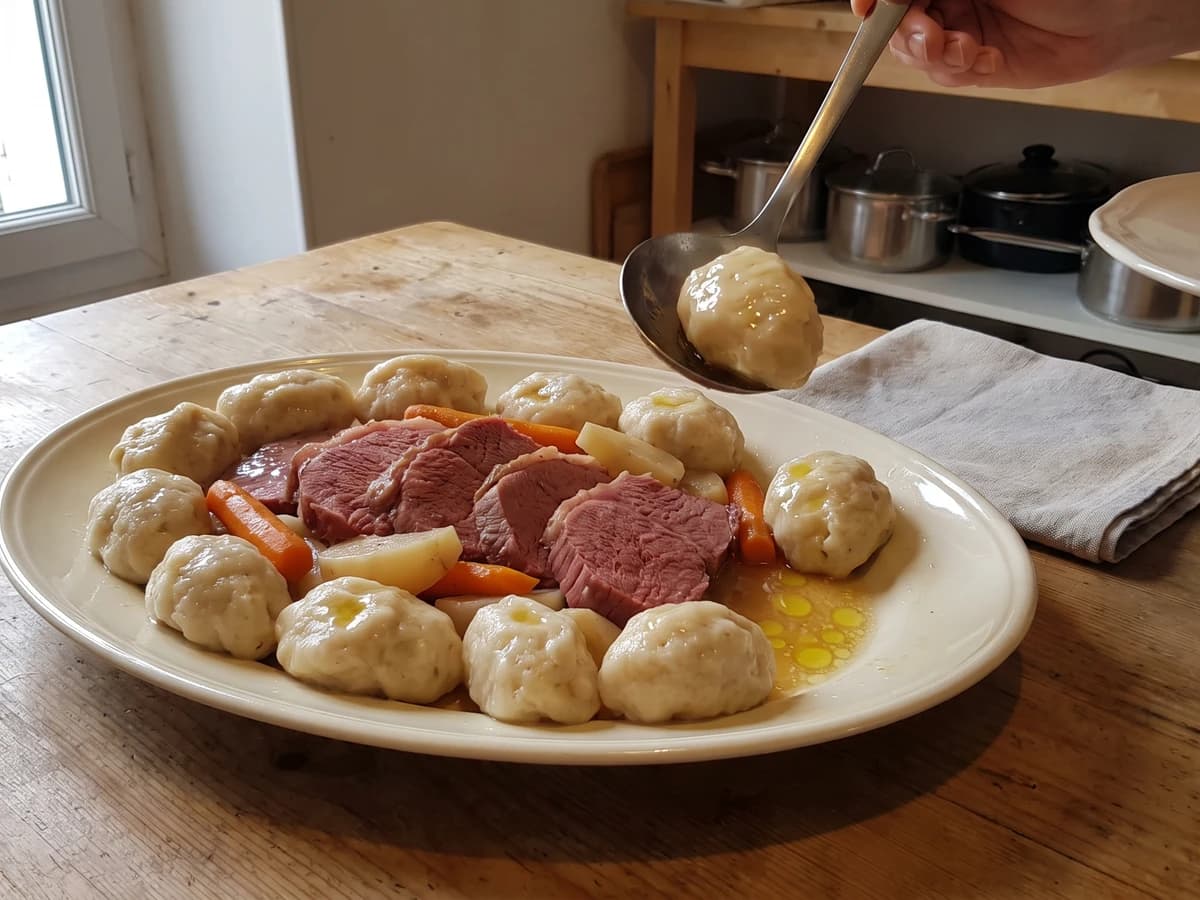
Boulettes au suif, poached beside salt beef, turn equal weights of flour and finely chopped suet into tender, rich dumplings. Keep the beef liquor at a bare tremble and the old garnish works beautifully at home.
A cooking platform built around craft, culture, and the stories behind what we eat.
Created by Chef Juliette
Based on No. 2131, Purée de Crosnes, from Le Guide Culinaire (1907) by Auguste Escoffier
Crosnes and potato become one pale, supple purée, but only after the hot sieve and a fierce pan have driven off their water before milk and butter return.
Purée de crosnes (Chinese artichoke purée) teaches the discipline behind every fine vegetable purée: water must leave before richness can enter. Crosnes hold more moisture than their pearly little tubers suggest, and one part potato to four parts crosnes gives body without stealing their sweet, nutty character. The one true thing to know before touching the pan is this: drying the sieved purée is not a tidying step. It is the dish.
This entry needs neither a stockpot nor a salamander, but it did assume a brigade cook free to press a large hot batch through a tamis (drum sieve), dry it over a fierce range, and send it out at once in a timbale. At home, 600 grams of crosnes with 150 grams of potato preserves the exact ratio; a sturdy fine-mesh sieve replaces the tamis, medium-high heat under a broad saucepan supplies fierce evaporation without scorching the smaller batch, and a warm serving bowl replaces the formal timbale. The extra hand and formal vessel are scaffolding. The hot sieve and decisive drying stay. One cook, one stove, one evening.
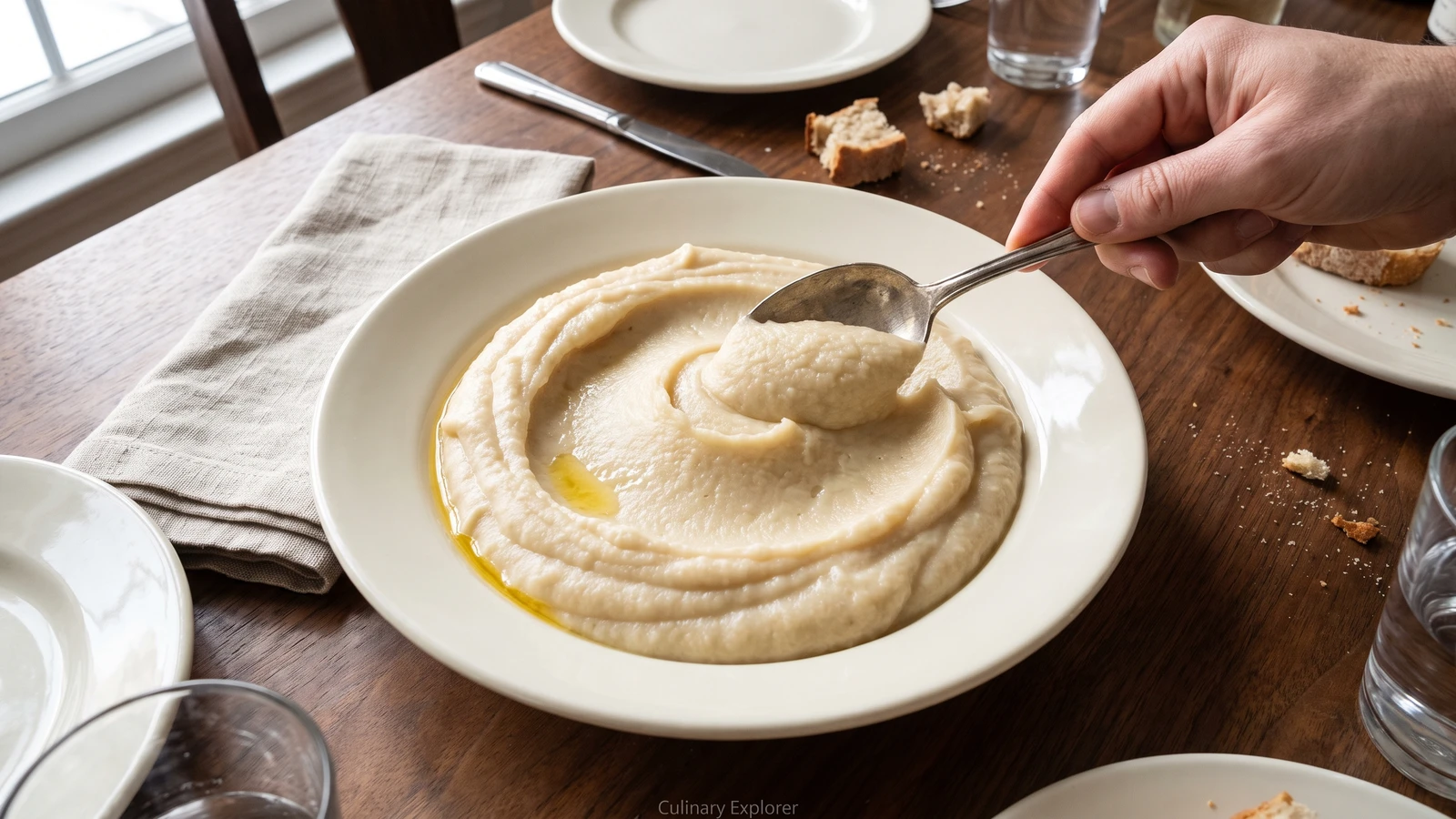
When it is right, the purée sits in a pale, supple mound with a satin butter sheen, neither runny nor stiff. Press the vegetables through the sieve while they are hot, then dry the purée until a spoon stroke exposes the pan cleanly before adding a drop of milk. That is the step that matters most.
Crosnes took their French name from Crosne, southeast of Paris, where the East Asian tuber was cultivated for French markets before passing into Parisian bourgeois cooking. Despite the English name Chinese artichoke, it is not an artichoke but the crisp, knobbled tuber of a plant in the mint family, prized for a flavor recalling artichoke heart, salsify, and fresh hazelnut. Classical kitchens served crosnes sautéed, as garnishes, and in purées such as this one, where potato supplies structure rather than disguise.
Quantity
about 4 cups (1⅓ lb / 600 g)
scrubbed very clean
Quantity
1 small, about 1 cup quartered (5⅓ oz / 150 g)
peeled and quartered
Quantity
8 cups (1.9 L / 1.9 kg)
Quantity
1 tablespoon (15 ml / 18 g)
Quantity
up to ½ cup (120 ml / 124 g)
at room temperature
Quantity
3 tablespoons (45 ml / 42 g)
cut into small pieces
| Ingredient | Quantity |
|---|---|
| fresh crosnesscrubbed very clean | about 4 cups (1⅓ lb / 600 g) |
| floury potatopeeled and quartered | 1 small, about 1 cup quartered (5⅓ oz / 150 g) |
| water | 8 cups (1.9 L / 1.9 kg) |
| fine sea salt | 1 tablespoon (15 ml / 18 g) |
| whole milkat room temperature | up to ½ cup (120 ml / 124 g) |
| unsalted buttercut into small pieces | 3 tablespoons (45 ml / 42 g) |
Rinse the crosnes, soak them in cold water for five minutes to soften any earth caught between their rings, then scrub each one under running water. Trim only any dry tips or damaged spots. Do not peel them; their shape makes peeling wasteful, and the sieve will hold back the fibrous skin.
Put the crosnes and quartered potato into a roomy saucepan with the water and salt. Bring to a boil, then lower the heat to a lively simmer and cook for 12 to 18 minutes. Begin testing early: the potato should offer no hard centre, while a crosne should yield to a knife but retain the faintest firmness. If the crosnes finish first, lift them out with a slotted spoon and let the potato continue alone. Overcooked crosnes drink in water, and water is precisely what the next step must remove.
Drain the vegetables thoroughly and let them stand in the colander for one minute, no longer. Working while they are still very hot, press the crosnes and potato together through a sturdy fine-mesh sieve with a flexible scraper or the back of a ladle. Scrape the smooth purée from beneath the sieve and discard the fibrous residue. Do not add milk to make the passing easier, and do not use a blender; milk traps the excess moisture, while a fast blade turns the potato elastic.
Transfer the sieved purée to a broad, heavy saucepan and set it over medium-high heat. Stir, fold, and press it constantly against the pan for 3 to 5 minutes. At first it will smear wetly; as it dries, it gathers into a lighter mass, and a stroke of the spoon leaves the pan bottom clean for two heartbeats. Do not look for browning. If a tan film begins to form, immediately lift the unmarked purée into a clean pan without scraping up the caught layer, lower the heat one notch, and continue. Ça se rattrape.
Add ¼ cup (60 ml) of the milk and beat it in over medium heat until the purée is completely smooth and hot. Add more milk one tablespoon at a time, using only enough to make a soft, spoonable purée that holds a broad ridge rather than flowing flat. The exact quantity depends on how much water the crosnes carried. If it becomes loose, keep stirring over medium-low heat until the excess moisture leaves and the ridge returns.
Take the pan completely off the heat. Monter au beurre (finish by beating in butter off the heat): add the butter a few pieces at a time, beating until each addition disappears before adding the next. The purée should become satin-smooth and glossy without a greasy pool. If the butter separates into beads, let the pan rest off the heat for 30 seconds, then beat in a teaspoon of milk to bring it together. Spoon the purée generously into a warmed deep serving bowl and serve at once. À table!
1 serving (about 200g)
Culinary guides, cultural storytelling, and the editorial depth that makes cooking meaningful.
Discover Culinary ExplorerChef Juliette
Boulettes au suif, poached beside salt beef, turn equal weights of flour and finely chopped suet into tender, rich dumplings. Keep the beef liquor at a bare tremble and the old garnish works beautifully at home.

Chef Juliette
Bread, flour, frangipane, and rice become four cool, supple panades for binding forcemeats, each changing body and flavor while preserving tenderness. The finest Mousselines need none, and knowing that distinction is the lesson.

Chef Juliette
Panade au pain is bread, milk, salt, heat, and attention: stir until the paste releases cleanly, butter it against a skin, and you have the quiet binder behind tender French farces.

Chef Juliette
Panade de farine teaches the drying stroke behind pâte à choux: flour meets boiling buttered water, then stays over the fire until the paste gathers, smooths, and quits the pan cleanly.