Chef Juliette
Bouillabaisse à la Marseillaise
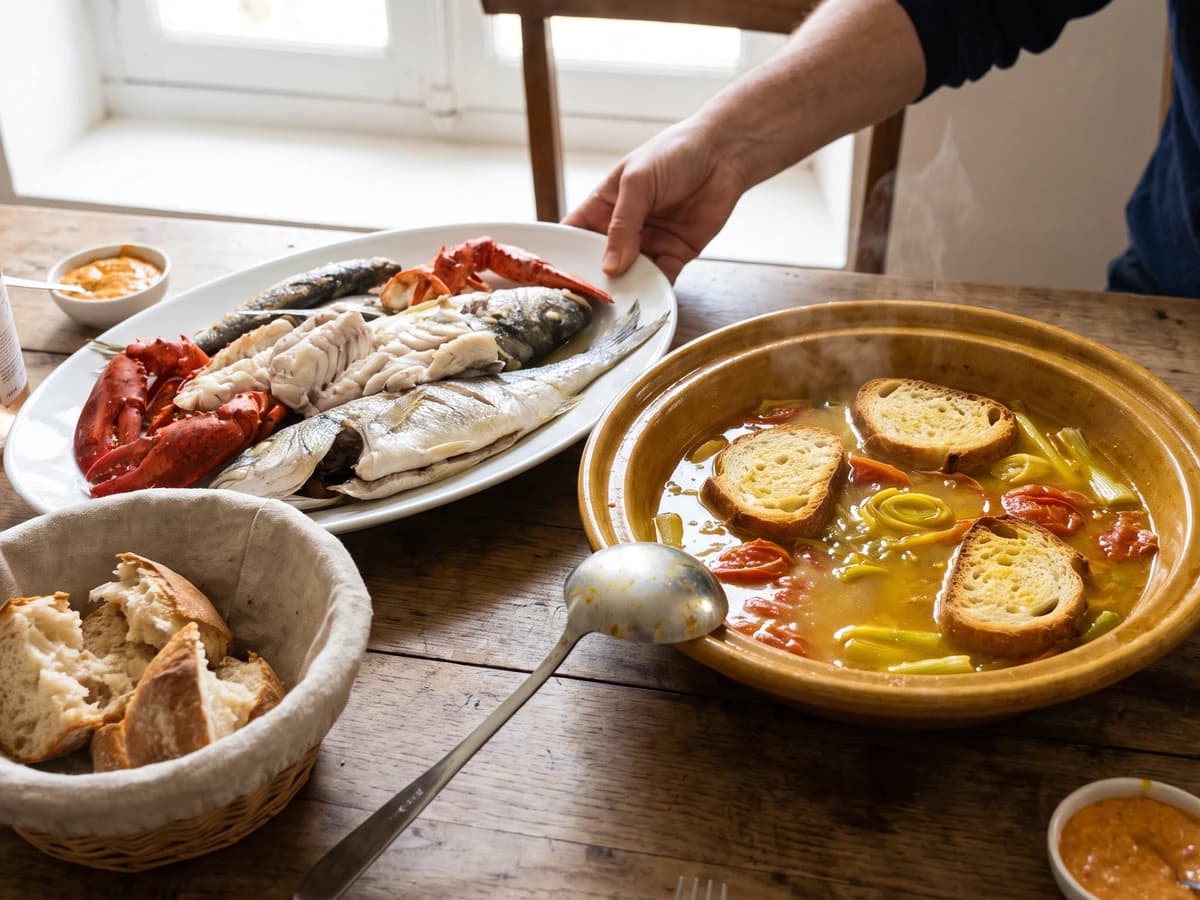
Marseille's great fish stew, saffron-gold and garlic-scented, proves that a hard boil can be the careful choice: it binds olive oil into broth before the whole pot meets bread.
A cooking platform built around craft, culture, and the stories behind what we eat.
Created by Chef Juliette
Based on No. 213, Various Royales, from Le Guide Culinaire (1907) by Auguste Escoffier
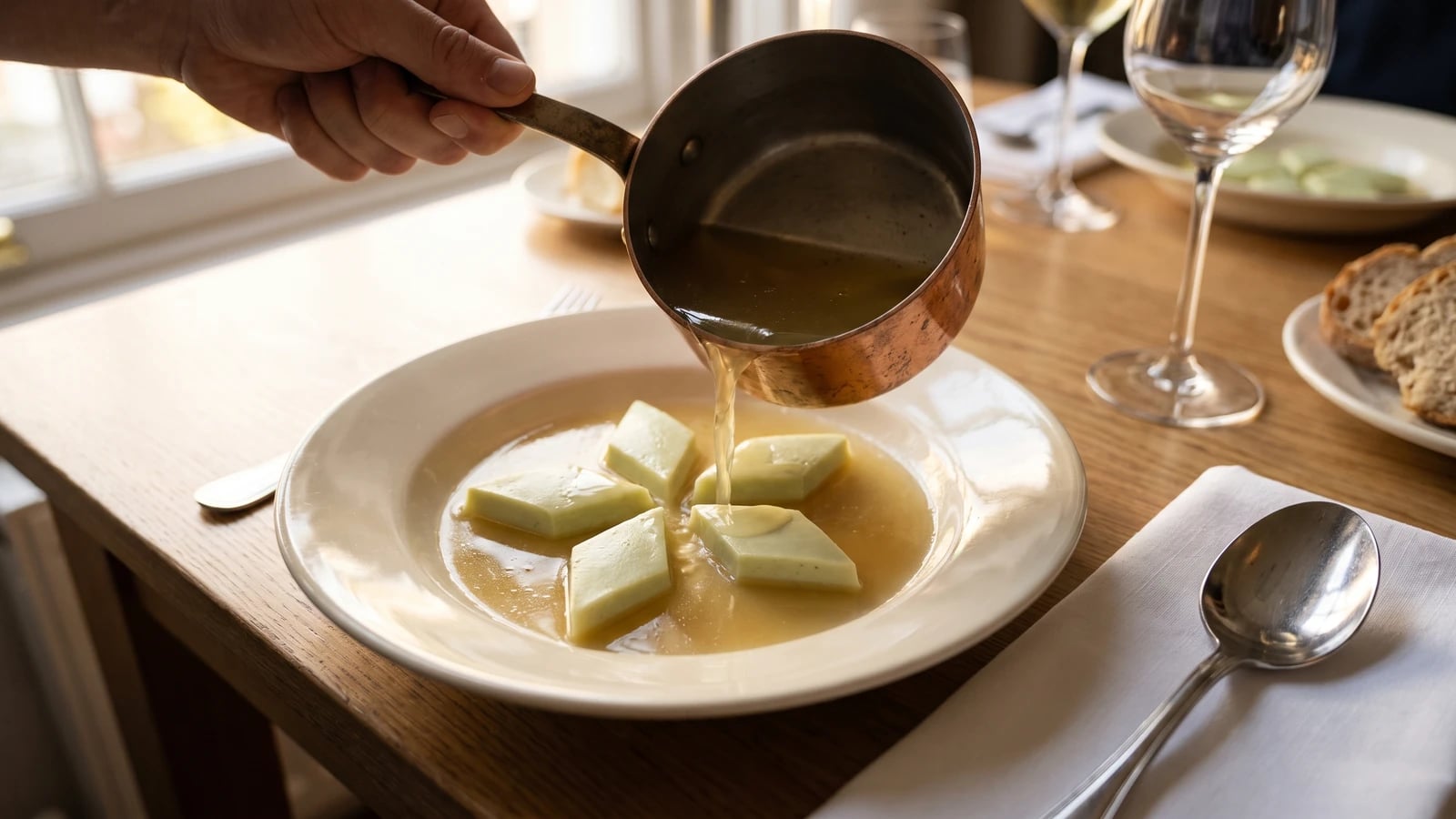
Leek or celery, butter, Béchamel, cream, and the exact restraint of egg: these delicate poached royales turn a clear soup into a composed first course without ever becoming firm.
Royales variées (delicate vegetable custards) teach restraint. The eggs are measured to set the purée, never to dominate it, and adding one more for reassurance turns a tender royale into rubber. Keep the prescribed two eggs and four yolks. They are exactly enough.
The original assumed a saucier with Béchamel ready, a tammy cloth, and rows of molds for service. Your kitchen needs a measured spoonful of finished Béchamel, a sturdy fine-mesh sieve, and one shallow mold set in a quiet bain-marie. It needs neither a stockpot kept on the fire nor a salamander. The book's formula is already a sensible home batch, enough to garnish about two quarts of soup, so I have kept every ratio rather than divide an egg into nonsense. Only the equipment and service format change. One cook, one stove, one evening.
Leek gives the royale a pale green sweetness; celery brings a clearer, more herbal character. Either should emerge satin-smooth, tender beneath the spoon yet firm enough to hold a neat diamond in hot soup. The poach decides it: the water must remain calm while the custard sets.
Royale belongs to the classical Parisian service of clear soups, where a smooth savory custard was poached, cut into diamonds or cubes, and placed in each bowl before the soup was ladled around it. Despite the singular name, royale is a family of garnishes rather than one fixed flavor; grand kitchens made it from poultry, foie gras, shellfish, and vegetables, while leek and celery carried the same delicate structure into bourgeois dining rooms.
Quantity
1¾ cups (440 ml / 185 g)
finely minced
Quantity
2 tablespoons (30 ml / 28 g)
Quantity
1 tablespoon (15 ml / 15 g)
Quantity
3 tablespoons (45 ml / 45 g)
Quantity
scant ½ cup (115 ml / 115 g)
Quantity
2
Quantity
4
Quantity
¼ teaspoon (1.25 ml / 1.5 g), divided, plus only if needed
Quantity
1 teaspoon (5 ml / 5 g)
for the mold
| Ingredient | Quantity |
|---|---|
| leek whites and pale green parts, or tender inner celery ribsfinely minced | 1¾ cups (440 ml / 185 g) |
| unsalted butter | 2 tablespoons (30 ml / 28 g) |
| water (optional) | 1 tablespoon (15 ml / 15 g) |
| finished Béchamel | 3 tablespoons (45 ml / 45 g) |
| heavy cream | scant ½ cup (115 ml / 115 g) |
| large eggs | 2 |
| large egg yolks | 4 |
| fine salt | ¼ teaspoon (1.25 ml / 1.5 g), divided, plus only if needed |
| softened unsalted butterfor the mold | 1 teaspoon (5 ml / 5 g) |
Heat the oven to 300°F (150°C). Butter one shallow 6-inch (15 cm) round mold or six 4-fluid-ounce (120 ml) ramekins, coating the corners carefully but leaving no thick patches. Set the mold on a folded kitchen towel inside a deep roasting pan; the towel steadies it and softens the heat reaching the custard.
If using leek, split and rinse it thoroughly before mincing; grit has nowhere to hide in a smooth custard. If using celery, pull away any tough outer strings. Melt the 2 tablespoons butter in a heavy saucepan over low heat, add the vegetable and half the salt, then cover. Étuver means to stew gently under cover in the vegetable's own moisture. Cook for 20 to 30 minutes, stirring often, until the pieces collapse beneath a spoon without taking color. If the pan dries before the vegetable softens, add the measured water and lower the heat. If one spot catches, transfer the pale vegetables to a clean pan and leave the browned patch behind. Ça se rattrape.
Press the hot vegetable and its butter through a sturdy fine-mesh sieve with the back of a ladle, then scrape the smooth purée from the underside. This replaces the tammy cloth without changing its purpose; a blender alone leaves leek threads or celery fibers and whips in air. If the vegetable refuses to pass through, it is undercooked. Return it to the pan with a teaspoon of water, cover for another five minutes, and try again. Let the purée cool until merely lukewarm.
Whisk the finished Béchamel and cream into the vegetable purée until perfectly smooth. Taste this base and add the remaining salt only if it needs it. In another bowl, stir the whole eggs and yolks just until uniform, without raising a foam, then gradually whisk in the lukewarm vegetable mixture. Do not add another egg or yolk. The prescribed quantity supplies exactly the density required, and more makes the royale coarse and firm. Pass the mixture once more through the clean sieve into a pitcher. If a few egg flecks appear because the purée was too warm, strain immediately into a cool bowl; it can still be saved before the eggs set throughout.
Pour the mixture into the prepared mold and skim away any surface bubbles with a spoon. Cover loosely with buttered parchment or foil. Pour very hot water into the roasting pan until it reaches halfway up the mold, then bake until the edges are set and the center trembles as one soft mass, 20 to 25 minutes for ramekins or 30 to 40 minutes for the single mold. The center should reach about 170°F (77°C), but never puff or boil. If the water begins bubbling, add a little cool water to the bath and lower the oven to 275°F (135°C). A quiet bath restores the gentle poach before holes form.
Lift the royale from the bain-marie and rest it for 15 minutes. For cut garnishes, chill until firm enough to handle, then trace the rim with a thin knife and invert it onto a board. If it clings, dip the base of the mold in warm water for five seconds and try again. Cut the royale into ½-inch (1.25 cm) diamonds or cubes, place several in each warmed soup bowl, and ladle hot clear soup around them. Never boil the pieces in the soup; its heat will warm them gently while preserving their tender set. À table!
1 serving (about 70g)
Culinary guides, cultural storytelling, and the editorial depth that makes cooking meaningful.
Discover Culinary ExplorerChef Juliette
Marseille's great fish stew, saffron-gold and garlic-scented, proves that a hard boil can be the careful choice: it binds olive oil into broth before the whole pot meets bread.
Chef Juliette
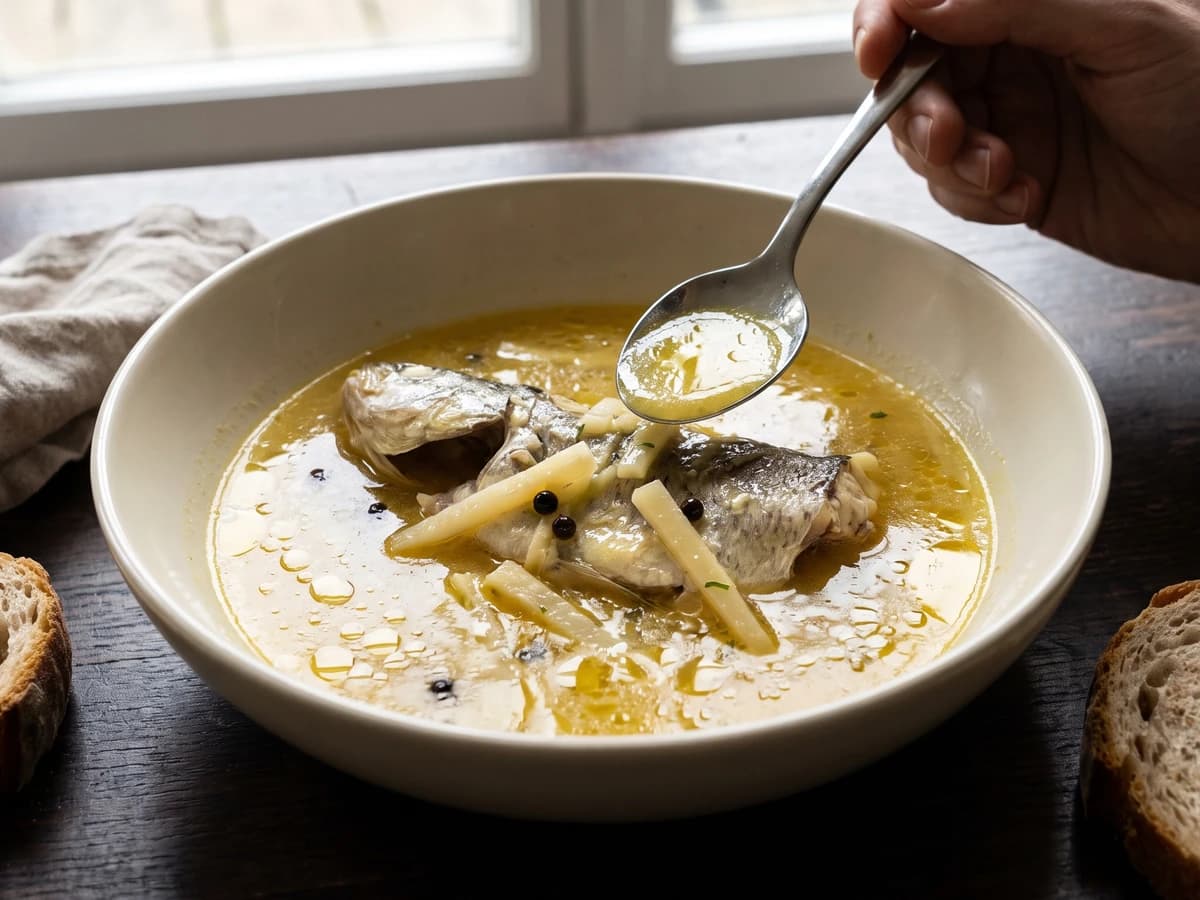
Waterzoi asks fresh, bone-in river fish to thicken its own buttery broth, with parsley root and pepper for company. No flour, no stockpot, just a brisk simmer watched closely.
Chef Juliette
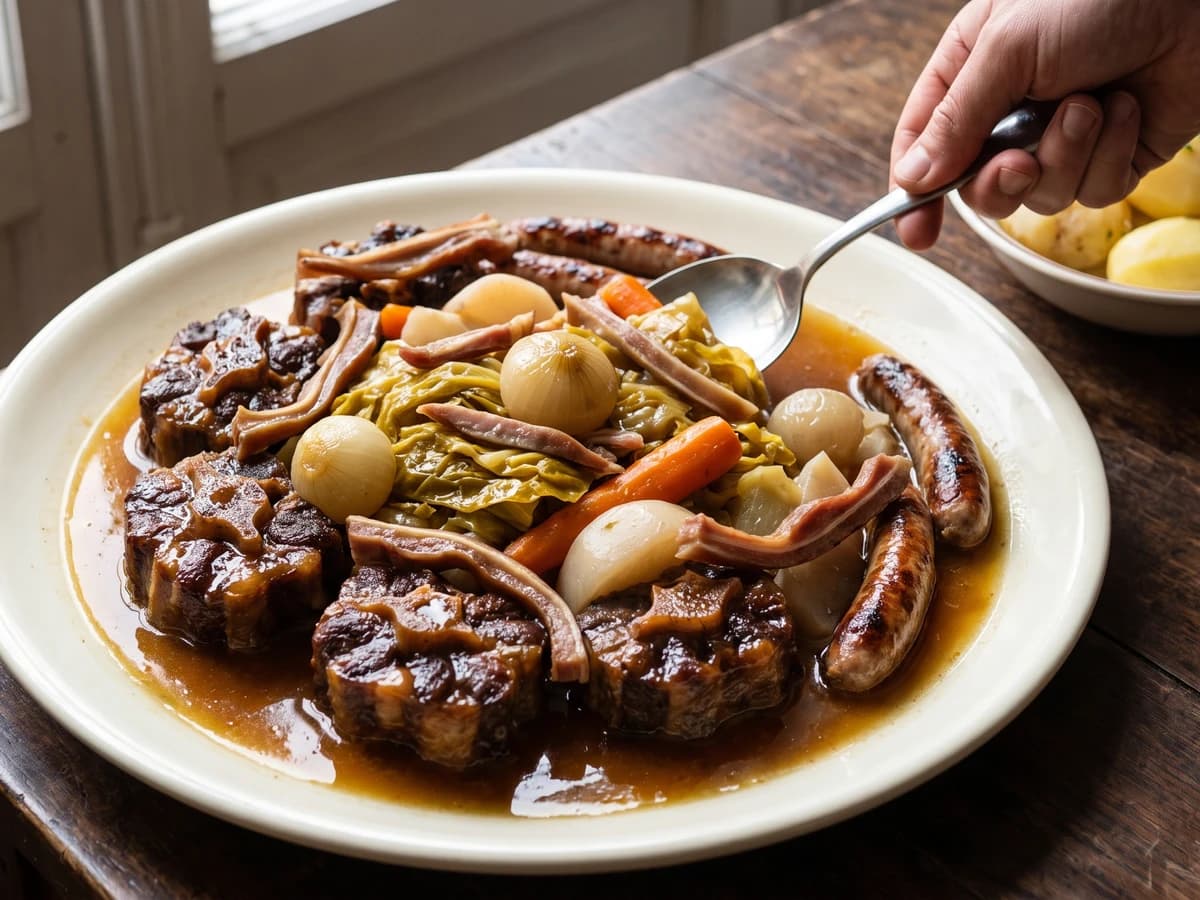
Queue de Bœuf en Hochepot gathers oxtail, pig's trotter and ear, cabbage, roots, and grilled chipolatas around a clear, gelatin-rich broth whose quiet simmer keeps every piece tender and distinct.
Chef Juliette
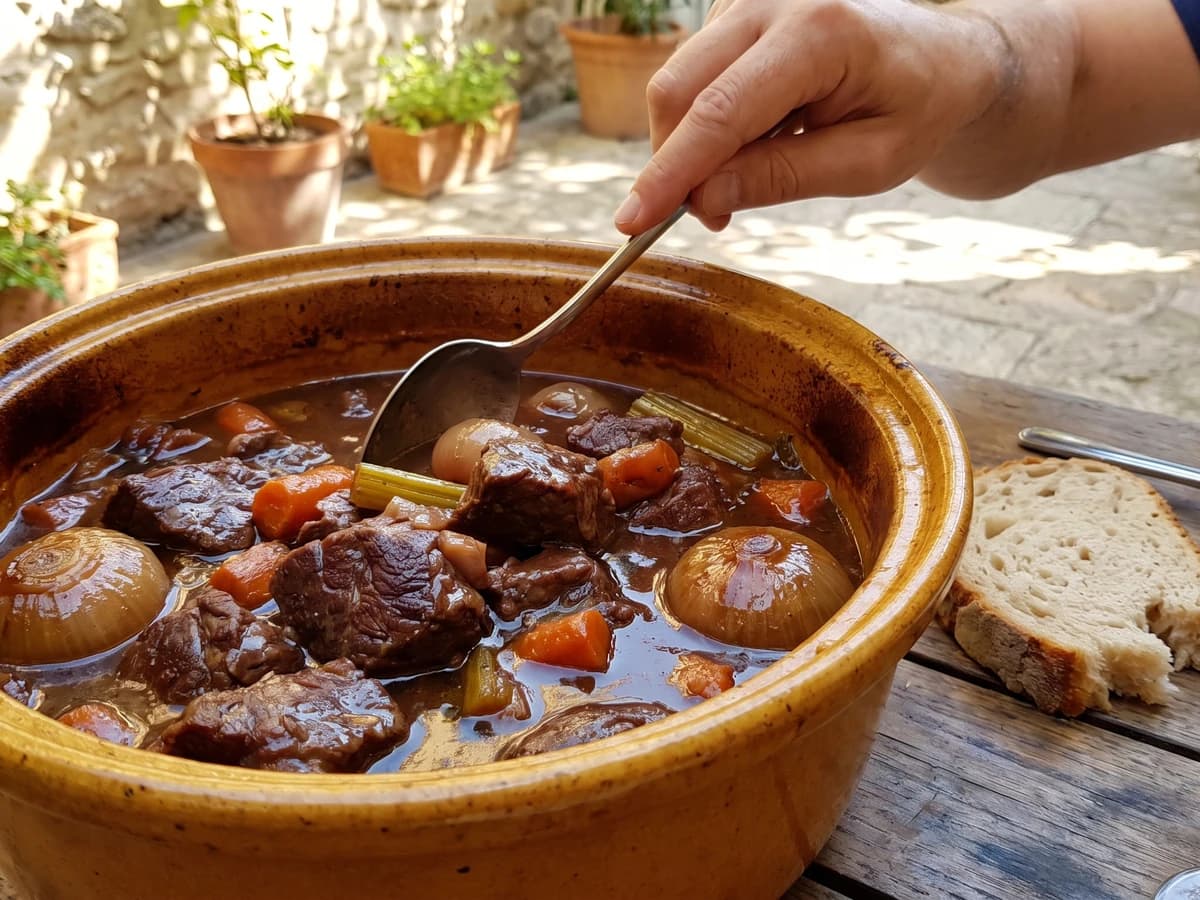
Beef shoulder larded with bacon, sharpened by red wine and vinegar, then sealed with garlic, vegetables, and dry lemon peel until the low oven turns it yielding and the gravy darkly glossy.