Chef Juliette
Suet Dumpling
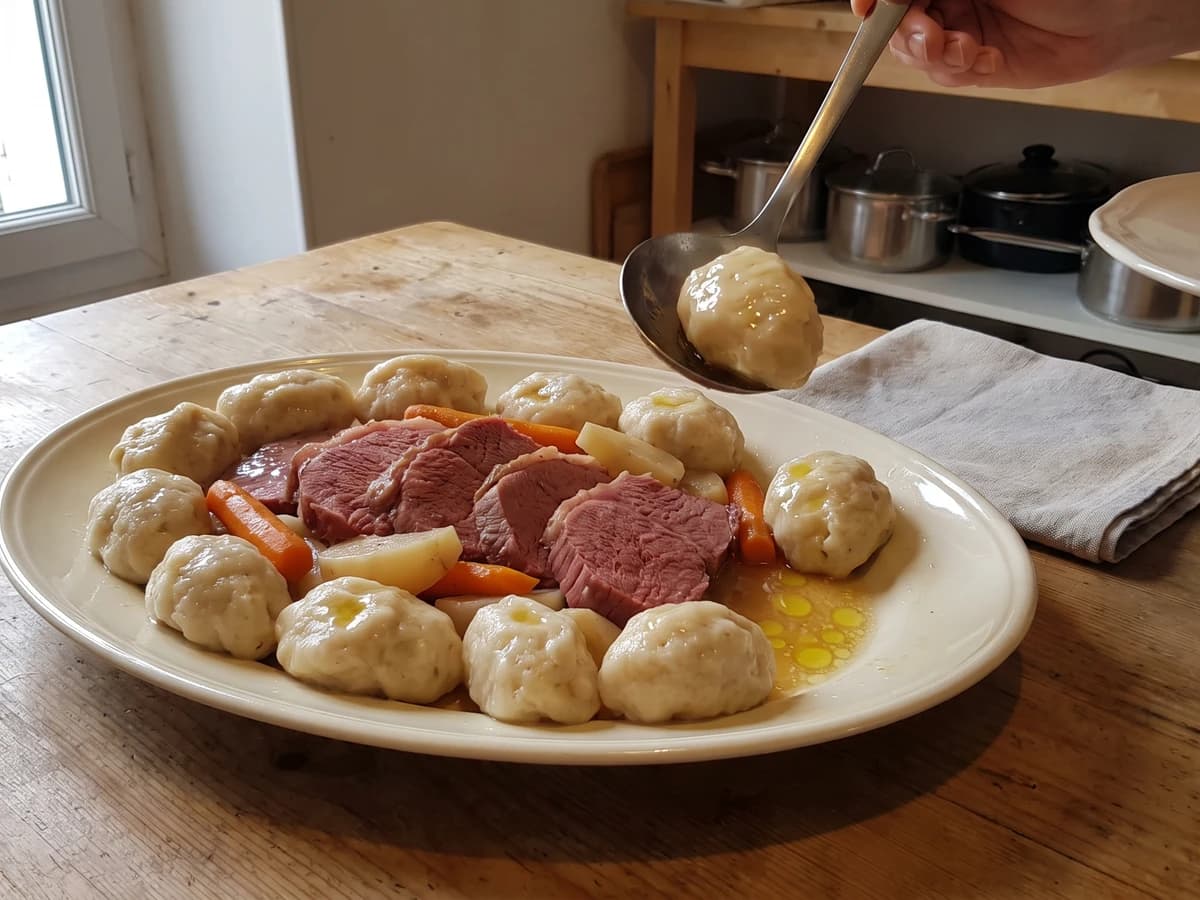
Boulettes au suif, poached beside salt beef, turn equal weights of flour and finely chopped suet into tender, rich dumplings. Keep the beef liquor at a bare tremble and the old garnish works beautifully at home.
A cooking platform built around craft, culture, and the stories behind what we eat.
Created by Chef Juliette
Based on No. 2128, Crosnes Sautés au Beurre, from Le Guide Culinaire (1907) by Auguste Escoffier
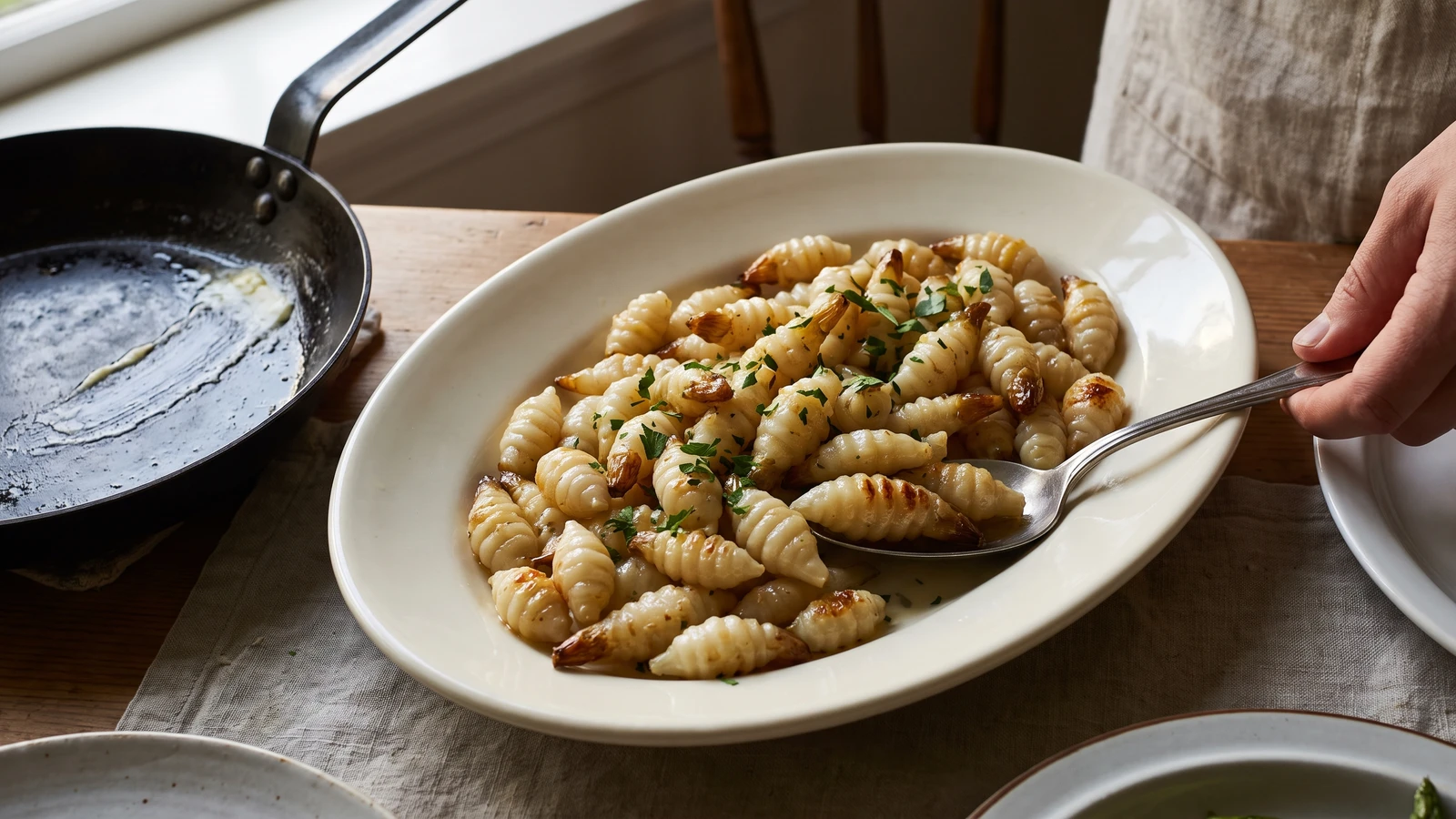
Crosnes frizzled in fiercely hot butter prove that browning begins before the pan: parboil briefly, dry without mercy, then toss until their ridges turn butter-gold and bronze.
Crosnes Sautés au Beurre (butter-sautéed Chinese artichokes) teach the first law of the sauté pan: browning begins with dryness. Their little rings are charming and treacherous because each one carries water out of the saucepan. Put them into butter wet and you get pale, soft crosnes no matter how fiercely you shake the pan.
The original entry assumes the stachys arrive at the stove already parboiled, drained, and dried, with an omelet pan over a fierce range and another pair of hands ready to carry the timbale. This dish never needed a saucier, a stockpot kept always on the fire, or a salamander. Its brigade scaffolding was the handoff and the service-sized pan. The home equivalent is a 12-inch heavy skillet and two quick batches; the portion is set at 1½ pounds for four so one cook can keep the heat fierce. One cook, one stove, one evening.
Parboiling stays because it cooks the knotted centers before the butter can scorch, and the very hot butter stays because its bronzed milk solids give the crosnes their nutty edge. The separate prep hand can go. The drying cannot. Dry them until the towel comes away clean and every corrugated ring feels dry, because that is the one step that decides the dish before the skillet is touched.
Crosnes take their French name from Crosne, a commune in Essonne southeast of Paris, where market gardeners raised this East Asian tuber for the capital's tables. Despite the common English name Chinese artichoke, it is the tuber of Stachys affinis, a member of the mint family prized for a crisp, faintly nutty bite rather than any relation to artichokes. It passed from market gardens into Parisian bourgeois kitchens and the classical repertoire as a winter vegetable, commonly parboiled and finished quickly in butter so its delicate rings stayed distinct.
Quantity
About 5 cups (1½ lb / 680 g)
scrubbed and any dark ends trimmed
Quantity
8 cups (2 L / 2 kg)
Quantity
1 tablespoon plus ½ teaspoon (17.5 ml / 21 g)
divided
Quantity
4 tablespoons (60 ml / 57 g)
divided
Quantity
2 tablespoons (30 ml / 8 g)
finely chopped
| Ingredient | Quantity |
|---|---|
| crosnes (Stachys affinis)scrubbed and any dark ends trimmed | About 5 cups (1½ lb / 680 g) |
| water | 8 cups (2 L / 2 kg) |
| fine sea saltdivided | 1 tablespoon plus ½ teaspoon (17.5 ml / 21 g) |
| unsalted butterdivided | 4 tablespoons (60 ml / 57 g) |
| flat-leaf parsleyfinely chopped | 2 tablespoons (30 ml / 8 g) |
Rinse the crosnes in a large bowl of cold water, agitating them with your hands so grit falls from their rings. Scrub gently with a vegetable brush and trim only dark or dried ends. Do not peel them; their pale skin is tender, and chasing it through every groove wastes both time and vegetable.
Bring the 8 cups of water and 1 tablespoon of the salt to a full boil in a large saucepan. Add the crosnes, let the water return to the boil, then cook for 3 to 5 minutes according to their size. Test one at 3 minutes: a knife tip should enter the thickest ring with slight resistance, while the tuber remains firm enough to hold its shape. Drain immediately. Soft crosnes cannot be made crisp again, so stop while they are still a little firmer than you want at the table.
Spread the drained crosnes in a single layer over a clean cotton towel. Cover with a second towel, roll them gently beneath your palms, then uncover and leave them for 10 minutes. Blot once more, paying attention to the water caught between their rings. Wet crosnes steam and never brown; the surface must feel dry before the butter is heated.
Heat a 12-inch heavy skillet over high heat for 1 minute. Add 2 tablespoons of the butter; when it foams vigorously and the foam begins to thin, add half the crosnes in one layer. Toss them frequently over fierce heat for 5 to 6 minutes, until their ridges look lightly frizzled, their tips are bronze, and the butter smells nutty without turning black. If liquid gathers and the crosnes begin to steam, stop tossing and spread them out so the water can boil away. If the pan is crowded, lift out half and brown it separately once the pan recovers. Ça se rattrape. Transfer the first batch to a warm dish, then repeat with the remaining butter and crosnes.
Return the first batch to the skillet and toss everything together for 30 seconds, just long enough to restore its butter sheen. Taste and season with up to the remaining ½ teaspoon salt. Turn the crosnes into a warmed timbale or deep serving bowl, then sprinkle moderately with the chopped parsley, keeping the book's sequence intact. Serve immediately while the ridges are crisp and the centers remain tender. À table!
1 serving (about 180g)
Culinary guides, cultural storytelling, and the editorial depth that makes cooking meaningful.
Discover Culinary ExplorerChef Juliette
Boulettes au suif, poached beside salt beef, turn equal weights of flour and finely chopped suet into tender, rich dumplings. Keep the beef liquor at a bare tremble and the old garnish works beautifully at home.

Chef Juliette
Bread, flour, frangipane, and rice become four cool, supple panades for binding forcemeats, each changing body and flavor while preserving tenderness. The finest Mousselines need none, and knowing that distinction is the lesson.

Chef Juliette
Panade au pain is bread, milk, salt, heat, and attention: stir until the paste releases cleanly, butter it against a skin, and you have the quiet binder behind tender French farces.

Chef Juliette
Panade de farine teaches the drying stroke behind pâte à choux: flour meets boiling buttered water, then stays over the fire until the paste gathers, smooths, and quits the pan cleanly.