Chef Juliette
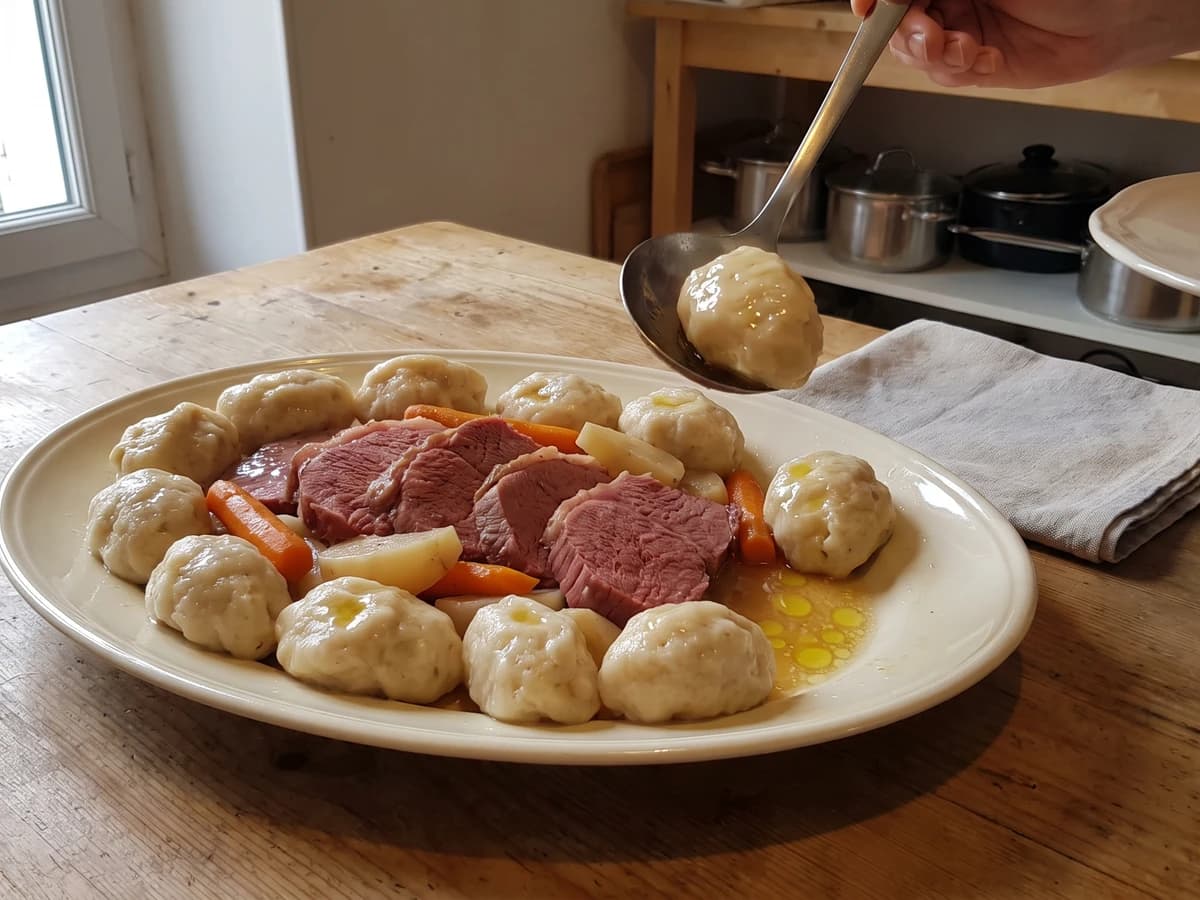
Suet Dumpling
Boulettes au suif, poached beside salt beef, turn equal weights of flour and finely chopped suet into tender, rich dumplings. Keep the beef liquor at a bare tremble and the old garnish works beautifully at home.
A cooking platform built around craft, culture, and the stories behind what we eat.

Created by Chef Juliette
Based on No. 2127, Crosnes à la Crème, from Le Guide Culinaire (1907) by Auguste Escoffier
A small lesson in reduction: pearly crosnes parboiled, cooked gently in butter, and finished in cream until each crisp-tender curl wears a sauce kept supple with one last spoonful.
Crosnes à la Crème (Chinese artichokes in cream) teaches the discipline of staged cooking. The one true thing to know before touching a pan is that cream cannot be asked to tenderize a raw tuber: parboiling starts the work, butter carries it three-parts of the way, and only then does boiling cream become both cooking liquid and sauce.
The original entry assumed a vegetable cook at the range, a second pan of cream already boiling, and a hot timbale ready at service. It did not need a stock kept on the fire or a salamander; its professional advantage was timing. At home, a small saucepan beside a wide sauté pan and a warmed serving bowl do the same work. The separate holding ritual is brigade scaffolding and goes. The sequence is the dish, and it stays, scaled to four.
Keep your eye on the reduction. The crosnes should remain pearly and gently crisp under the teeth while the cream becomes nappant, thick enough to coat a spoon, then a little thin fresh cream loosens it at the last moment. Stop while the sauce still flows. It will tighten on the walk to the table, and that final spoonful is the rescue built into the recipe. One cook, one stove, one evening.
Crosnes came to French tables from China through the market gardens of Crosne, a town in Essonne in Île-de-France, whose name the tuber adopted in French. Growers sent the small, pearly tubers into Paris, where their curious shape and delicate, nutty flavor carried them from market cooking into the classical vegetable repertoire. Despite the English nickname, the plant is a member of the mint family, not an artichoke, and the cream finish belongs to classical cookery rather than to Normandy in particular.
Quantity
4 cups (600 g / 21 oz)
Quantity
2 tablespoons (30 ml / 36 g)
for cleaning
Quantity
8½ cups (2 L / 2 kg)
Quantity
2 teaspoons (10 ml / 12 g)
divided
Quantity
3 tablespoons (45 ml / 42 g)
Quantity
¾ cup (180 ml / 180 g)
Quantity
2 tablespoons (30 ml / 30 g)
cold, for finishing
| Ingredient | Quantity |
|---|---|
| fresh crosnes | 4 cups (600 g / 21 oz) |
| coarse sea saltfor cleaning | 2 tablespoons (30 ml / 36 g) |
| water | 8½ cups (2 L / 2 kg) |
| fine sea saltdivided | 2 teaspoons (10 ml / 12 g) |
| unsalted butter | 3 tablespoons (45 ml / 42 g) |
| heavy cream, at least 35% fat | ¾ cup (180 ml / 180 g) |
| light cream, 18 to 20% fatcold, for finishing | 2 tablespoons (30 ml / 30 g) |
Place the crosnes and coarse sea salt in the center of a sturdy, clean kitchen towel. Gather the towel around them and rub briskly for 2 to 3 minutes, rolling the little tubers against one another so the salt loosens soil and papery skin from their rings. Rinse under cold water, trim away any threadlike roots, and inspect the grooves. Do not peel them smooth; their delicate skin and curious shape belong to the dish.
Bring the water to a full boil in a medium saucepan and add 1½ teaspoons of the fine sea salt. Drop in the crosnes and parboil for 4 to 5 minutes. They should yield slightly at the outside but remain plainly firm at the center. Reserve ½ cup of the cooking water, then drain the crosnes and dry them well on a towel. Wet crosnes dilute the butter instead of cooking in it.
Melt the butter in a wide sauté pan over medium-low heat. When it foams, add the crosnes in a single layer and cook for 8 to 10 minutes, rolling and turning them frequently so the butter coats every ridge. Keep them pale. The book's instruction to cook them three-parts means a small knife should enter with resistance only at the center. If the butter begins to color quickly, lift the pan from the heat, lower the flame, and add a teaspoon of the reserved cooking water. The butter should taste sweet, not scorched.
During the final minutes of the butter cooking, bring the heavy cream to a full boil in the small saucepan. Pour the boiling cream over the crosnes and bring the pan to a controlled simmer. Cook uncovered for 5 to 7 minutes, shaking the pan and turning the crosnes gently, until they are tender with a faint bite and the cream is nappant, coating the back of a spoon while still flowing. If the cream tightens before the crosnes are tender, add the reserved cooking water 1 tablespoon at a time and continue gently. Ça se rattrape.
Take the pan from the heat and stir in 1 tablespoon of the cold light cream. Add the second tablespoon if needed, stopping when the sauce gleams, coats each crosne, and pools softly at the bottom of the pan. Taste and use the remaining fine salt only as needed. If the sauce stands stiffly around the crosnes, add a teaspoon of reserved cooking water and shake the pan until the gloss returns. Do not boil after the final cream; its work is to keep the reduction supple. Spoon everything into a warmed deep serving bowl and carry it straight to the table. À table!
1 serving (about 200g)
Culinary guides, cultural storytelling, and the editorial depth that makes cooking meaningful.
Discover Culinary ExplorerChef Juliette
Boulettes au suif, poached beside salt beef, turn equal weights of flour and finely chopped suet into tender, rich dumplings. Keep the beef liquor at a bare tremble and the old garnish works beautifully at home.

Chef Juliette
Bread, flour, frangipane, and rice become four cool, supple panades for binding forcemeats, each changing body and flavor while preserving tenderness. The finest Mousselines need none, and knowing that distinction is the lesson.

Chef Juliette
Panade au pain is bread, milk, salt, heat, and attention: stir until the paste releases cleanly, butter it against a skin, and you have the quiet binder behind tender French farces.

Chef Juliette
Panade de farine teaches the drying stroke behind pâte à choux: flour meets boiling buttered water, then stays over the fire until the paste gathers, smooths, and quits the pan cleanly.