Chef Juliette
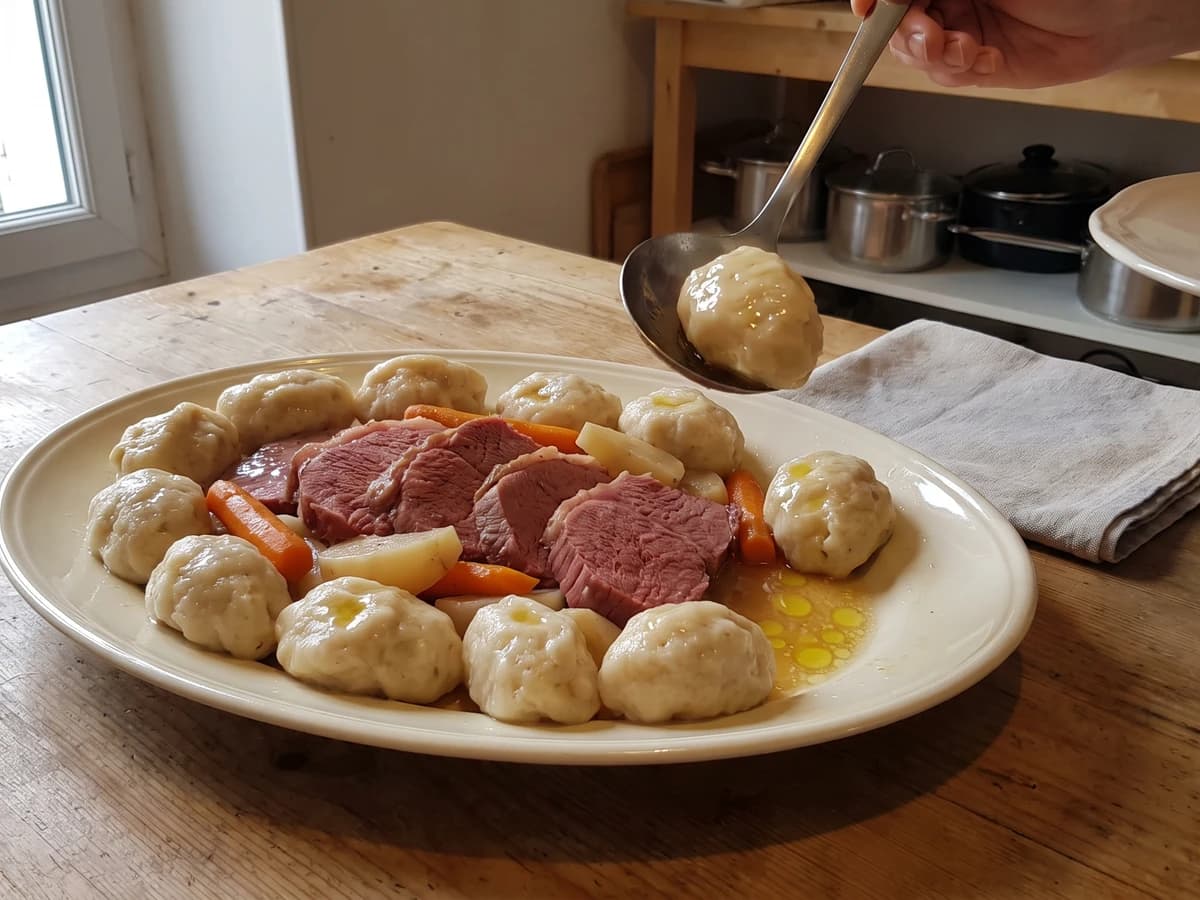
Suet Dumpling
Boulettes au suif, poached beside salt beef, turn equal weights of flour and finely chopped suet into tender, rich dumplings. Keep the beef liquor at a bare tremble and the old garnish works beautifully at home.
A cooking platform built around craft, culture, and the stories behind what we eat.

Created by Chef Juliette
Based on No. 2126, Stachys (Crosnes du Japon), from Le Guide Culinaire (1907) by Auguste Escoffier
Stachys, ou crosnes, teach the discipline of gentle cooking: scrubbed clean, parboiled only to firmness, then rolled in real butter until glossy, hot, and pale.
Stachys, ou Crosnes du Japon au beurre (Chinese artichokes in butter), teach a quiet discipline: cook a pale vegetable without asking it to brown. Their charm is a clean, juicy crunch somewhere between a water chestnut and a young potato, carried by butter rather than buried under it. Before you touch the pan, know the one true thing: the parboil decides the dish. The crosnes must enter the butter nearly tender but still firm.
The source entry gave the professional kitchen a rule rather than a full garnish formula: clean, parboil, keep firm, and cook in butter without colouration. A brigade could hand the knobbly cleaning to a commis and finish many small pans to order. At home, a coarse-salt rub inside a towel replaces tedious individual scraping, one saucepan handles the parboil, and a 25 cm skillet finishes four servings. The extra hands were scaffolding and can go; the sequence is the dish and must stay. It needs neither a saucier, a standing stockpot, nor a salamander. One cook, one stove, one evening.
Pull the crosnes from the water while their centres still resist the point of a knife, then dry them completely before they meet the butter. That firmness is what separates a lively little vegetable from a pan of soft, pale commas.
Crosnes take their French name from Crosne, a village southeast of Paris where market gardeners established the tuber for French tables. Despite the name crosnes du Japon, Stachys affinis is native to China and reached France through Japan; it is not an artichoke, but a knobbly tuber from the mint family. Parisian cooks carried it from the market garden into the classical garnish repertoire, preserving the rule that still defines it: clean thoroughly, parboil firm, and finish in butter without colour.
Quantity
4 cups (950 ml / 600 g)
Quantity
3 tablespoons (45 ml / 55 g)
for cleaning
Quantity
8 cups (1.9 liters / 1.9 kg)
for parboiling
Quantity
1 tablespoon (15 ml / 18 g)
for the parboiling water
Quantity
1/4 teaspoon (1.25 ml / 1.5 g)
for finishing
Quantity
3 tablespoons (45 ml / 42 g)
Quantity
1 tablespoon (15 ml / 14 g)
reserved only if the cooking butter browns
| Ingredient | Quantity |
|---|---|
| fresh crosnes (Stachys affinis) | 4 cups (950 ml / 600 g) |
| coarse saltfor cleaning | 3 tablespoons (45 ml / 55 g) |
| cold waterfor parboiling | 8 cups (1.9 liters / 1.9 kg) |
| fine sea saltfor the parboiling water | 1 tablespoon (15 ml / 18 g) |
| fine sea saltfor finishing | 1/4 teaspoon (1.25 ml / 1.5 g) |
| unsalted butter | 3 tablespoons (45 ml / 42 g) |
| unsalted butter (optional)reserved only if the cooking butter browns | 1 tablespoon (15 ml / 14 g) |
Pick through the crosnes and discard any that are soft, shrivelled, or darkened through. Put the sound ones on a clean, damp kitchen towel, scatter over the coarse salt, fold the towel around them, and rub firmly for 2 to 3 minutes. The salt scours soil and loose skin from the little rings without cutting away the flesh. Rinse in several changes of cold water, then trim only dried tips or stubborn dark marks with a paring knife. Do not peel them.
Bring the measured water and the tablespoon of fine salt to a full boil. Add the crosnes, let the water return to a gentle boil, and cook for 4 to 6 minutes, testing the smallest after 4. A knife point should enter the outer flesh easily but meet a clear resistance at the centre. Drain immediately and rinse briefly under cold water to stop the cooking. If one test piece has already softened too far, spread the rest in a single layer and cool them at once; shorten the butter finish to 2 minutes and toss them very gently.
Spread the crosnes over a dry towel and pat them carefully, working between the ridges where water hides. Leave them uncovered for 5 minutes while the skillet warms. A wet crosne dilutes the butter and makes the pan spit; a dry one takes on an even, clear sheen.
Melt the 3 tablespoons of butter in a 25 cm skillet over medium-low heat. Add the crosnes while the butter is still pale and foaming, then cook for 4 to 5 minutes, rolling and tossing them frequently until hot through, tender at the edges, and glossy all over. Keep the heat gentle. Neither the butter nor the crosnes should develop brown freckles. If the butter begins to brown, lift the crosnes out immediately with a slotted spoon, discard the darkened butter, wipe the skillet, and restart over low heat with the reserved tablespoon. Ça se rattrape.
Sprinkle over the finishing salt and toss for another 20 seconds, just long enough to distribute it. Taste one: it should be tender around the ridges, firm at the centre, and unmistakably buttery without tasting fried. Tip the crosnes, along with every drop of pale butter, into a warm serving dish and bring them straight to the table. À table!
1 serving (about 150g)
Culinary guides, cultural storytelling, and the editorial depth that makes cooking meaningful.
Discover Culinary ExplorerChef Juliette
Boulettes au suif, poached beside salt beef, turn equal weights of flour and finely chopped suet into tender, rich dumplings. Keep the beef liquor at a bare tremble and the old garnish works beautifully at home.

Chef Juliette
Bread, flour, frangipane, and rice become four cool, supple panades for binding forcemeats, each changing body and flavor while preserving tenderness. The finest Mousselines need none, and knowing that distinction is the lesson.

Chef Juliette
Panade au pain is bread, milk, salt, heat, and attention: stir until the paste releases cleanly, butter it against a skin, and you have the quiet binder behind tender French farces.

Chef Juliette
Panade de farine teaches the drying stroke behind pâte à choux: flour meets boiling buttered water, then stays over the fire until the paste gathers, smooths, and quits the pan cleanly.