Chef Juliette
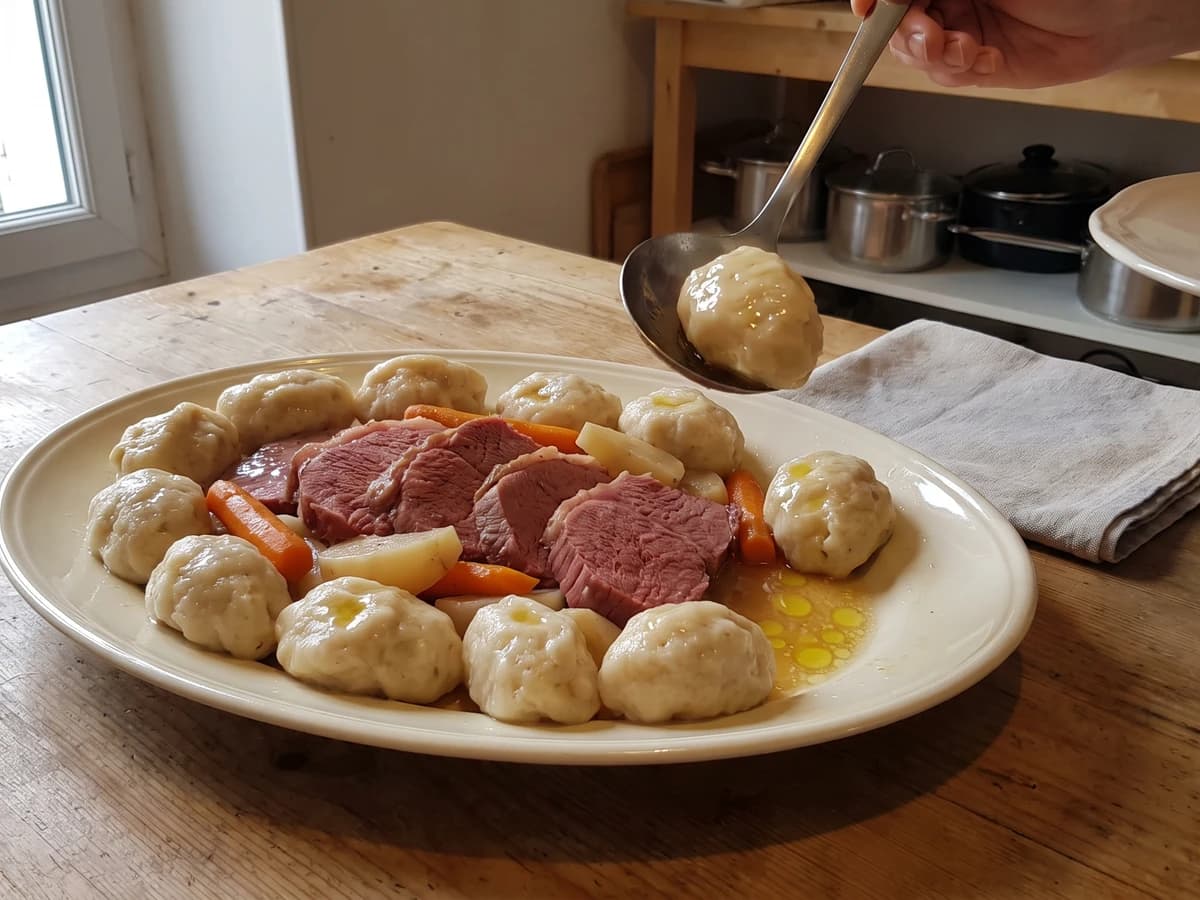
Suet Dumpling
Boulettes au suif, poached beside salt beef, turn equal weights of flour and finely chopped suet into tender, rich dumplings. Keep the beef liquor at a bare tremble and the old garnish works beautifully at home.
A cooking platform built around craft, culture, and the stories behind what we eat.
Created by Chef Juliette
Based on No. 2123, Concombres Glacés, from Le Guide Culinaire (1907) by Auguste Escoffier
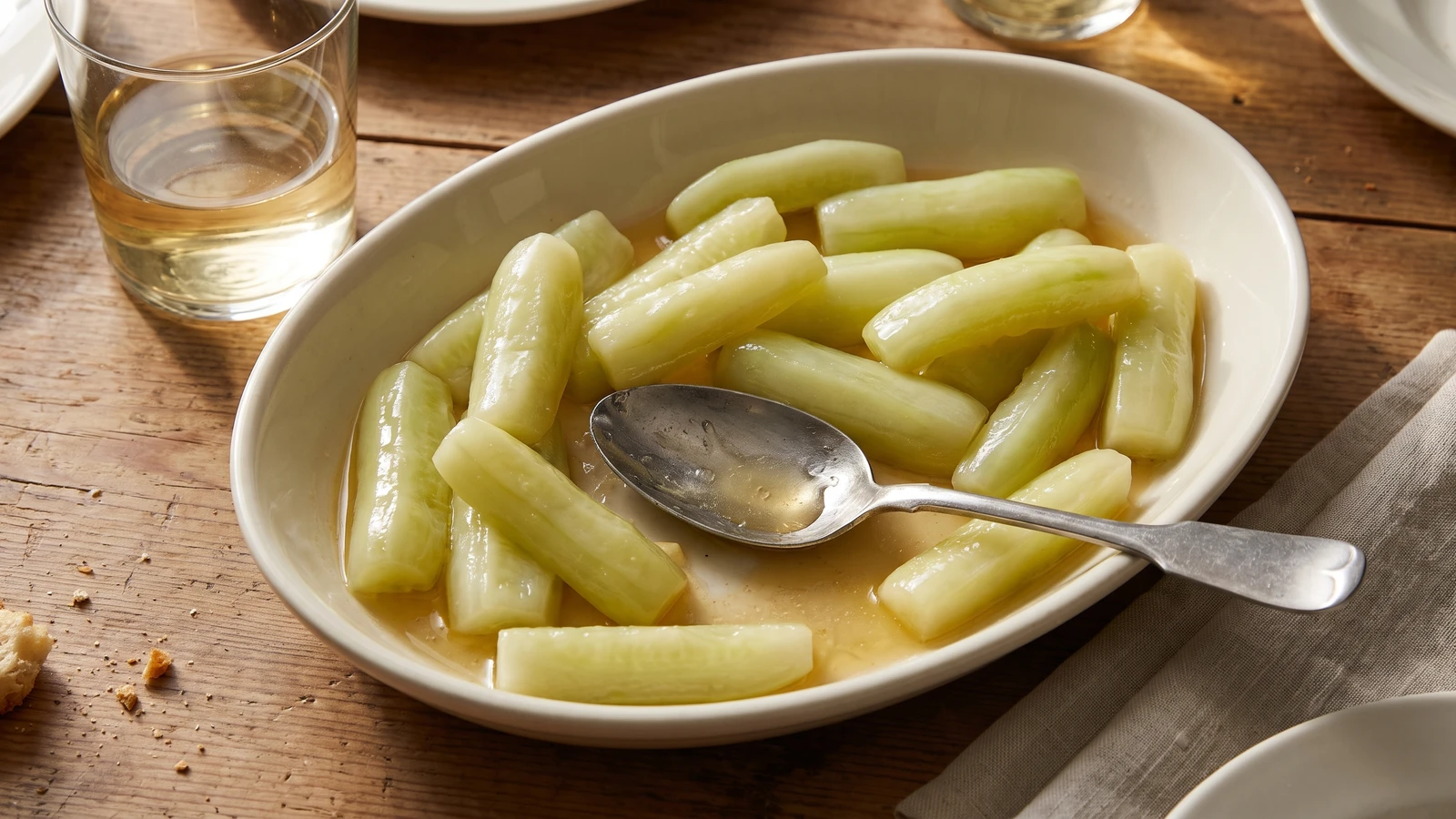
Cucumber carved into plump garlic-clove shapes, parboiled just enough, then rolled through butter and its own reduced liquor until every piece shines. The gloss is not decoration here; the gloss is the technique.
Concombres glacés (butter-glazed cucumbers) teaches the distinction between cooking in liquid and finishing with it. The cucumber is only done when the same liquor that softened it has reduced to a thick syrup and clings in a clear, buttery film. The gloss is the point of a glaze.
The original entry is terse because it assumed an entremetier, the vegetable cook, who already knew Carottes glacées (glazed carrots), had a broad copper sautoir ready, and could judge syrup by sight. What changes here is scale and exposition: two cucumbers for four people, one measured cup of water, and the visual cues the old instruction expected the cook to know. The staffed station and copper pan are scaffolding and can go; the quick parboil, real butter, reduction, and final rolling are the dish and must stay. One cook, one stove, one evening.
The final minute matters most. Roll the cucumbers rather than stirring them, and watch the bubbles change from loose and watery to small, slow, and syrupy before you stop.
Concombres glacés belongs not to a single province but to the Paris-centered classical repertoire of vegetable garnitures, where carrots, turnips, onions, and cucumbers shared a grammar of butter, sugar, and reduction. The name is often misread: glacés here means lacquered with concentrated cooking liquor, not chilled, and the cucumbers are served warm. The preparation passed from staffed grand kitchens to bourgeois dinner tables because its finish looks formal while its means are plain, a paring knife, a wide pan, and close attention to the last spoonful of liquid.
Quantity
2 large (about 1½ lb / 680 g)
peeled, seeded, and shaped like large garlic cloves
Quantity
8 cups (1.9 L / 1.9 kg)
for parboiling
Quantity
1 tablespoon (15 ml / 18 g)
for parboiling
Quantity
1 cup (240 ml / 240 g)
for glazing
Quantity
3 tablespoons (45 ml / 42 g)
cut into pieces
Quantity
2 teaspoons (10 ml / 8 g)
Quantity
¼ teaspoon (1.25 ml / 1.5 g)
for glazing
| Ingredient | Quantity |
|---|---|
| large English cucumberspeeled, seeded, and shaped like large garlic cloves | 2 large (about 1½ lb / 680 g) |
| waterfor parboiling | 8 cups (1.9 L / 1.9 kg) |
| fine sea saltfor parboiling | 1 tablespoon (15 ml / 18 g) |
| waterfor glazing | 1 cup (240 ml / 240 g) |
| unsalted buttercut into pieces | 3 tablespoons (45 ml / 42 g) |
| granulated sugar | 2 teaspoons (10 ml / 8 g) |
| fine sea saltfor glazing | ¼ teaspoon (1.25 ml / 1.5 g) |
Peel the cucumbers and cut them crosswise into 2-inch (5 cm) lengths, then quarter each lengthwise. Slice away the watery seed channel. Tourner, meaning to trim into an even rounded shape, each piece with a small paring knife: round the shoulders and taper one end until it resembles a plump garlic clove. Aim for 20 to 24 pieces of similar thickness. Uniform size matters more than perfect sculpture.
Bring the parboiling water and its tablespoon of salt to a full boil. Add the cucumbers and cook for 60 to 90 seconds after the water returns to the boil, just until the edges look slightly translucent while the centers remain firm. Drain immediately, refresh briefly under cold running water, and dry them thoroughly. This parboil sets the surface; it must not soften the pieces through.
Arrange the cucumbers in one layer in a 12-inch (30 cm) sauté pan. Add the glazing water, butter, sugar, and remaining salt. The liquid will come only partway up the pieces, which is right; the cucumbers surrender more liquor as they cook. Bring it to a brisk simmer, then cover the surface with a cartouche, a round of parchment with a small hole in its center. Cook for 3 to 4 minutes, rolling the pan once so the pieces turn without being bruised.
Remove the cartouche and raise the heat to medium-high. Boil steadily for 5 to 8 minutes, rolling the pan often, until the cucumbers yield to the point of a knife but still hold their shape and the cooking liquor has reduced to small, slow bubbles. If the cucumbers become tender before the liquor is syrupy, lift them out with a slotted spoon, reduce the liquor alone, then return them. If the syrup catches or the butter separates into an oily slick, pull the pan from the heat, add 1 tablespoon of hot water, and roll gently until it comes together. Ça se rattrape.
Lower the heat and return any lifted cucumbers to the pan. Move the pan in short circular motions for 30 to 60 seconds, rolling every piece through the thickened cooking liquor until all sides are coated. The finished glaze should be clear, pale gold, and syrupy enough to cling, never browned or sticky like caramel. Transfer the cucumbers immediately to a warm serving dish and scrape every spoonful of glaze over them. Serve at once. À table!
1 serving (about 140g)
Culinary guides, cultural storytelling, and the editorial depth that makes cooking meaningful.
Discover Culinary ExplorerChef Juliette
Boulettes au suif, poached beside salt beef, turn equal weights of flour and finely chopped suet into tender, rich dumplings. Keep the beef liquor at a bare tremble and the old garnish works beautifully at home.

Chef Juliette
Bread, flour, frangipane, and rice become four cool, supple panades for binding forcemeats, each changing body and flavor while preserving tenderness. The finest Mousselines need none, and knowing that distinction is the lesson.

Chef Juliette
Panade au pain is bread, milk, salt, heat, and attention: stir until the paste releases cleanly, butter it against a skin, and you have the quiet binder behind tender French farces.

Chef Juliette
Panade de farine teaches the drying stroke behind pâte à choux: flour meets boiling buttered water, then stays over the fire until the paste gathers, smooths, and quits the pan cleanly.