Chef Juliette
Suet Dumpling
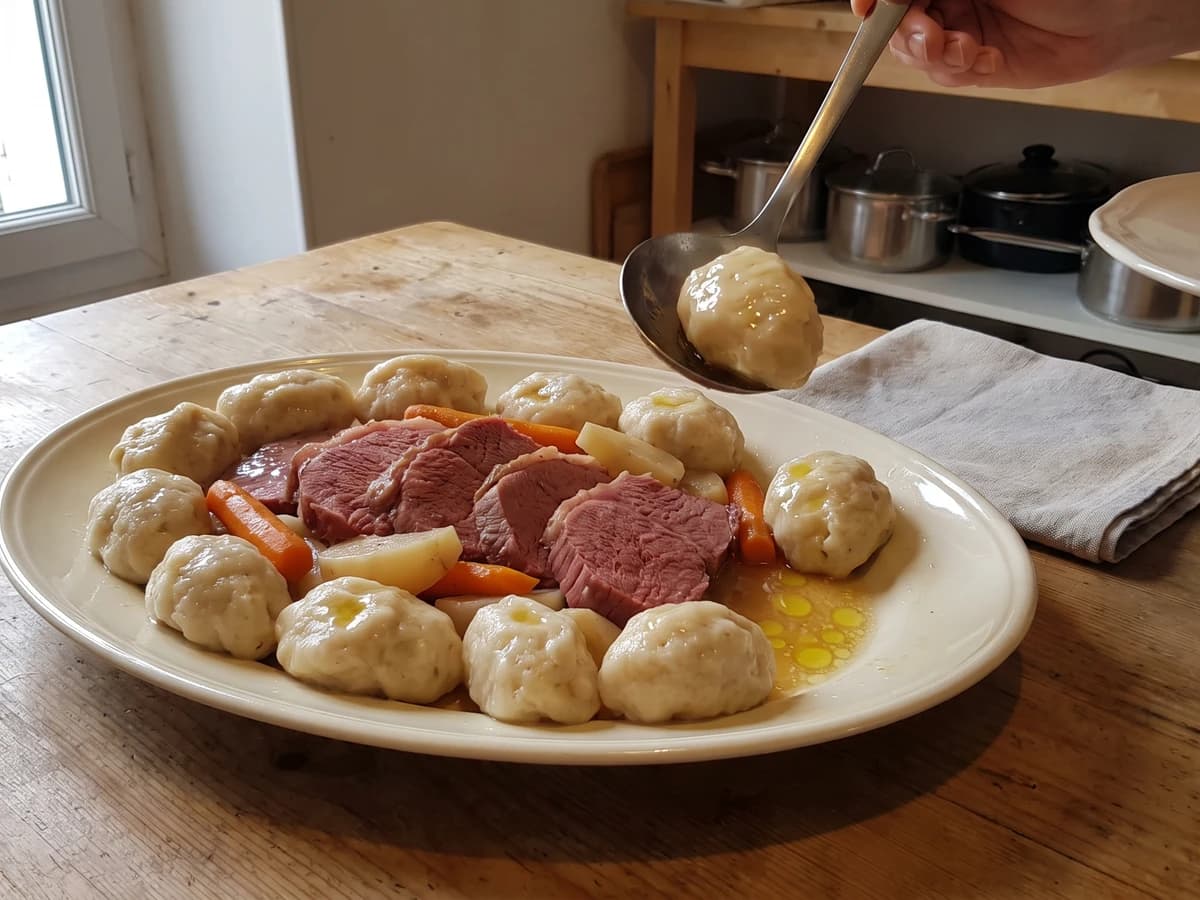
Boulettes au suif, poached beside salt beef, turn equal weights of flour and finely chopped suet into tender, rich dumplings. Keep the beef liquor at a bare tremble and the old garnish works beautifully at home.
A cooking platform built around craft, culture, and the stories behind what we eat.

Created by Chef Juliette
Based on No. 2122, Concombres à la Crème, from Le Guide Culinaire (1907) by Auguste Escoffier
Firm cucumber turned into little olives, parboiled, cooked three-quarters in butter, and finished in cream reduced to a shining coat. One final spoonful of Béchamel makes the sauce hold.
Concombres à la Crème (cucumbers in cream) teaches a small but essential piece of sauce grammar: before cream can cling to a watery vegetable, the vegetable must surrender its excess water. Parboiling, thorough draining, and partial cooking in butter are not preliminaries to skip. They are the dish. Get them right and the cream reduces to a satin coat instead of a pale puddle.
The original entry assumed a vegetable cook with time to turn dozens of perfect olive shapes and a saucier on staff who could send over finished Béchamel at the last moment. For the home pan, that brigade quantity becomes three cucumbers and four generous side portions; a small paring knife makes neat approximate olives, one tablespoon of prepared Béchamel does the saucier's work, and a warmed deep bowl replaces the service timbale. Perfect tournage is brigade scaffolding and may go. Even sizing must stay, because the pieces need to finish together. One cook, one stove, one evening.
The moment that decides the dish comes before the cream: the cucumber and pan must be free of loose water. If the pieces weep in the butter, cook that liquid away before proceeding. Once the boiling cream goes in, reduce it until it visibly coats each olive, then use the Béchamel only to make that coating hold.
Concombres à la Crème belongs to the Parisian grand-kitchen and bourgeois table, not to Normandy simply because cream appears in the pan. From formal vegetable service it passed into household repertoires, retaining the turned shape because equal pieces cook evenly and present neatly. The little Béchamel is not the sauce itself but a last liaison for cream already reduced around cucumber, which distinguishes this hot garnish from the cold cucumber salads often given the same English gloss.
Quantity
3 (about 2 lb / 900 g total)
peeled, seeded, and turned into olive shapes
Quantity
2 quarts (1.9 L / 1.9 kg)
Quantity
1 tablespoon plus ¼ teaspoon (16 ml / 19 g)
divided
Quantity
3 tablespoons (45 ml / 42 g)
Quantity
1 cup (240 ml / 240 g)
Quantity
1 tablespoon (15 ml / 15 g)
| Ingredient | Quantity |
|---|---|
| large firm cucumberspeeled, seeded, and turned into olive shapes | 3 (about 2 lb / 900 g total) |
| water | 2 quarts (1.9 L / 1.9 kg) |
| fine saltdivided | 1 tablespoon plus ¼ teaspoon (16 ml / 19 g) |
| unsalted butter | 3 tablespoons (45 ml / 42 g) |
| heavy cream, at least 35% fat | 1 cup (240 ml / 240 g) |
| prepared Béchamel sauce | 1 tablespoon (15 ml / 15 g) |
Peel the cucumbers and cut them crosswise into 2-inch (5 cm) lengths. Halve each length, scoop away the soft seed channel, and cut the firm flesh into thick wedges. With a small sharp paring knife, round each wedge into an olive shape about 1½ inches (4 cm) long. Aim for equal thickness rather than perfect symmetry. This tournage, the classical trimming of vegetables into even shapes, matters because pieces of one size finish cooking together.
Bring the water and 1 tablespoon of the salt to a full boil. Add the cucumber pieces and parboil for 2 to 3 minutes, just until their edges look faintly translucent while the centres remain firm. Drain immediately, spread them over a clean towel, and blot them thoroughly. Leave them uncovered for 5 minutes so their surface moisture can escape; wet cucumber dilutes the butter and leaves the cream swimming.
Melt the butter in a wide sauté pan over medium heat. When it foams gently, add the cucumber in one layer with the remaining ¼ teaspoon salt. Cook for 6 to 8 minutes, rolling the pieces carefully, until they are about three-quarters tender and a knife meets distinct resistance at the centre. Keep them pale. If liquid collects in the pan, raise the heat and let it evaporate completely before proceeding. Ça se rattrape, but cream poured over cucumber water will never reduce cleanly.
While the cucumber cooks in butter, bring the heavy cream just to a boil in a small saucepan. Pour the boiling cream over the three-quarters-cooked cucumber. Keep this detail from the original method: hot cream maintains the cooking and begins reducing at once, while cold cream encourages the cucumber to shed more water.
Hold the pan at a lively but controlled simmer for 5 to 7 minutes, shaking it occasionally and turning the cucumber without crushing it. The pieces are ready when tender throughout, and the cream should reduce until it clings in a glossy ivory coat rather than pooling thinly underneath. If the sauce becomes greasy from reducing too far, remove the pan from the heat and stir in cool water 1 teaspoon at a time until the gloss returns.
Put the prepared Béchamel sauce in a small bowl and stir in a spoonful of hot reduced cream from the pan until smooth. Lower the heat, fold the loosened Béchamel into the cucumbers, and cook for no more than 30 seconds. Do not boil it hard now; the Béchamel is a final liaison, not the principal sauce. If the coating becomes too thick, loosen it with a teaspoon of hot water. Taste, spoon everything into a warmed deep serving bowl, and serve at once. À table!
1 serving (about 205g)
Culinary guides, cultural storytelling, and the editorial depth that makes cooking meaningful.
Discover Culinary ExplorerChef Juliette
Boulettes au suif, poached beside salt beef, turn equal weights of flour and finely chopped suet into tender, rich dumplings. Keep the beef liquor at a bare tremble and the old garnish works beautifully at home.

Chef Juliette
Bread, flour, frangipane, and rice become four cool, supple panades for binding forcemeats, each changing body and flavor while preserving tenderness. The finest Mousselines need none, and knowing that distinction is the lesson.

Chef Juliette
Panade au pain is bread, milk, salt, heat, and attention: stir until the paste releases cleanly, butter it against a skin, and you have the quiet binder behind tender French farces.

Chef Juliette
Panade de farine teaches the drying stroke behind pâte à choux: flour meets boiling buttered water, then stays over the fire until the paste gathers, smooths, and quits the pan cleanly.