
Chef Juliette
Choux Rouges à la Flamande
Fine-cut red cabbage, russet apples, butter, sugar, nutmeg, and vinegar share one covered cocotte, cooking gently until the leaves gleam garnet and the apples soften without disappearing.
A cooking platform built around craft, culture, and the stories behind what we eat.
Created by Chef Juliette
Based on No. 2120, Sea Kale (Chou Marin), from Le Guide Culinaire (1907) by Auguste Escoffier
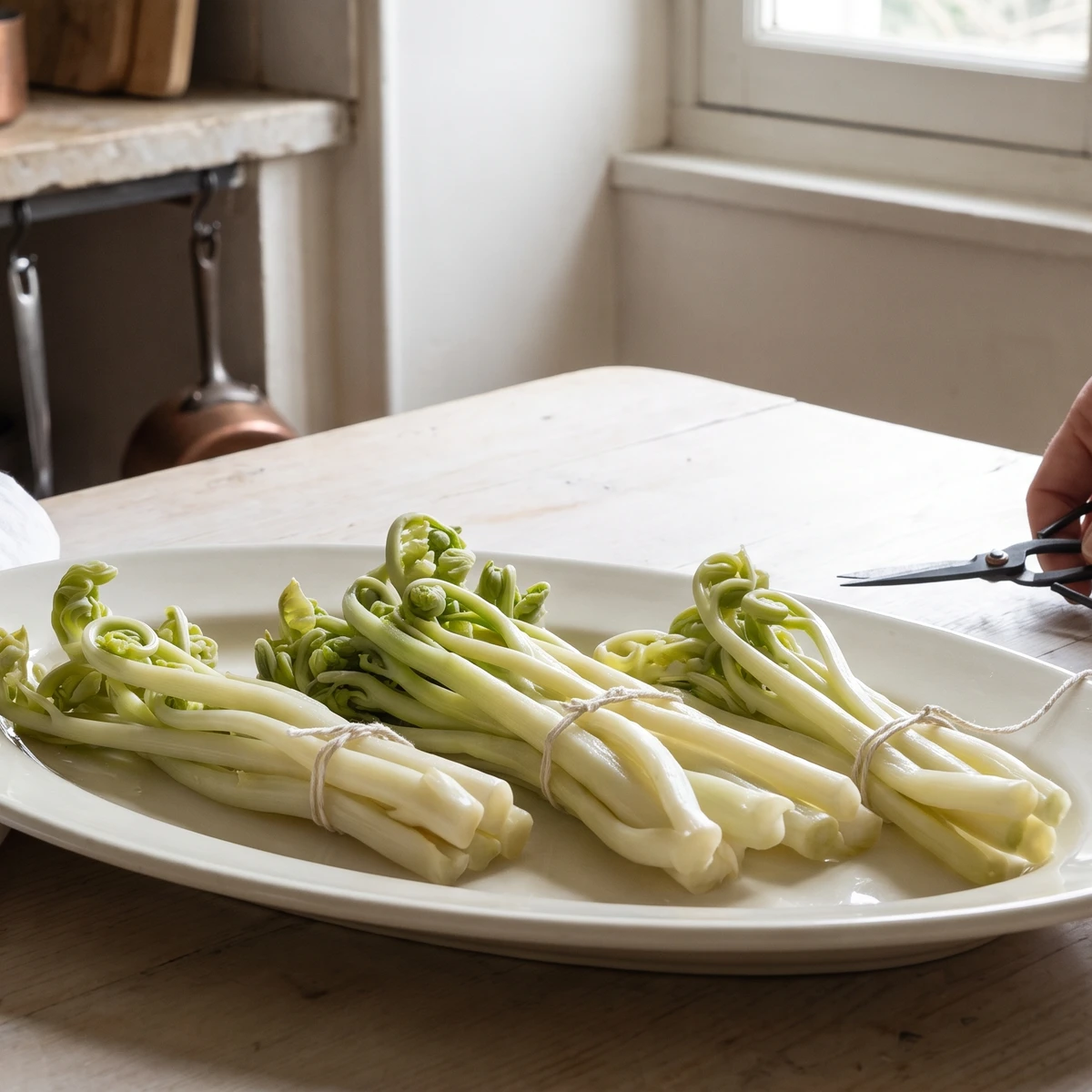
Chou Marin turns a rare English coastal shoot into a French lesson in restraint: trim carefully, bind five or six together, and boil just until ivory stems surrender to the knife.
Chou Marin (Sea Kale) teaches restraint before it teaches boiling. The one true thing to know is that it must be trimmed more carefully than it is cooked: preserve every tender ivory shoot, remove every stubborn fibre, then let well-salted water reveal its clean sweetness.
The classical entry assumed baskets of whole forced plants, brigade hands to prepare repeated bunches, and a saucier able to provide the cardoon treatments or asparagus sauces it permits. A home market is more likely to sell individual shoots. So the scale changes to twenty or twenty-four shoots, four serving bunches, and one wide pan; any sauce remains a separate choice rather than being invented inside this plain preparation.
Repeated brigade batches are scaffolding and can go. The bundle of five or six cannot, because it protects the tips and lets shoots of equal thickness enter and leave the water together. One cook, one stove, one evening. Before the pan, pare the fibrous bases without wounding the curled heads; that careful trimming decides the dish.
Sea kale belongs first to the coasts and kitchen gardens of Britain, particularly England, where this maritime brassica was forced beneath covers so its spring shoots emerged pale, mild, and tender. French classical kitchens adopted it as chou marin and placed it within the service grammar of asparagus and cardoon: boiled in salted water, then served plain or with a compatible sauce. Despite its name, it is not leafy kale for chopping; the prized part is the blanched shoot, which explains both the careful trimming and the small tied bunches.
Quantity
2 lb (900 g), about 20 to 24 shoots
carefully trimmed and washed
Quantity
2½ qt (2.4 L / 2.4 kg), or enough to cover by 1 in (2.5 cm)
Quantity
2 tbsp (30 ml / 36 g)
| Ingredient | Quantity |
|---|---|
| forced sea kalecarefully trimmed and washed | 2 lb (900 g), about 20 to 24 shoots |
| water | 2½ qt (2.4 L / 2.4 kg), or enough to cover by 1 in (2.5 cm) |
| fine sea salt | 2 tbsp (30 ml / 36 g) |
Swish the sea kale gently in a basin of cold water, lift it out so any grit remains behind, and repeat until the water stays clear. Cut away only the dry root ends, bruised scales, and any stringy skin around the lowest 1 in (2.5 cm) of thick shoots. Keep the curled tips intact. Sort the shoots by thickness so each bunch will cook at the same pace.
Divide the shoots into four groups of five or six, preserving the source entry's small bunches. Align their bases and bind each group loosely with untreated cotton twine, once near the base and once below the tips. The twine should hold the shoots together without biting into them. This lets you lower and lift each serving at once while protecting the tender heads.
Bring the water to a full boil in a wide pan and dissolve the salt in it. The pan must be broad enough for the bunches to lie flat without bending, and the water should taste distinctly salted because it is the vegetable's only seasoning. Wait for a proper boil before adding the chou marin; tepid water lengthens the cooking and dulls its clean flavour.
Lower the bunches into the water and make certain they are submerged. Let the water return to the boil, then regulate it to a lively simmer that moves the shoots without battering their tips. Begin testing after 10 minutes; most bunches need 12 to 18 minutes. A small knife should enter the thickest base with slight resistance, while the heads remain whole. If the outside shoots soften before the middle ones, lift the bunch, snip its twine, reserve the tender shoots on a warm plate, and return only the firm ones to the pan. Ça se rattrape.
Lift each bunch with a wide slotted spoon, hold it above the pan until the rush of water stops, then rest it on a folded clean towel for 30 seconds. Do not press or rinse it. Clip away the twine and slide the shoots onto a warmed platter, keeping the four groups loosely together. Serve immediately and plainly, exactly as the entry directs; any chosen asparagus sauce belongs alongside rather than masking the chou marin in the kitchen. À table!
1 serving (about 210g)
Culinary guides, cultural storytelling, and the editorial depth that makes cooking meaningful.
Discover Culinary Explorer
Chef Juliette
Fine-cut red cabbage, russet apples, butter, sugar, nutmeg, and vinegar share one covered cocotte, cooking gently until the leaves gleam garnet and the apples soften without disappearing.

Chef Juliette
A cold-larder lesson in patience: fine red cabbage salted for two days until crisp-tender, then steeped with vinegar, garlic, peppercorns, and bay for the sharp spoonful boiled beef needs.

Chef Juliette
Parboiled cabbage settles between bacon and aromatic vegetables, then braises for two quiet hours in consommé until sweet, tender, and glossy, with none of the rankness that hurried cabbage brings.

Chef Juliette
Plain cabbage, cooked tender, pressed absolutely dry, and cut into lozenges: a strict little classical lesson in water control that protects every sauce sharing the plate.