Chef Juliette
Bouillabaisse à la Marseillaise
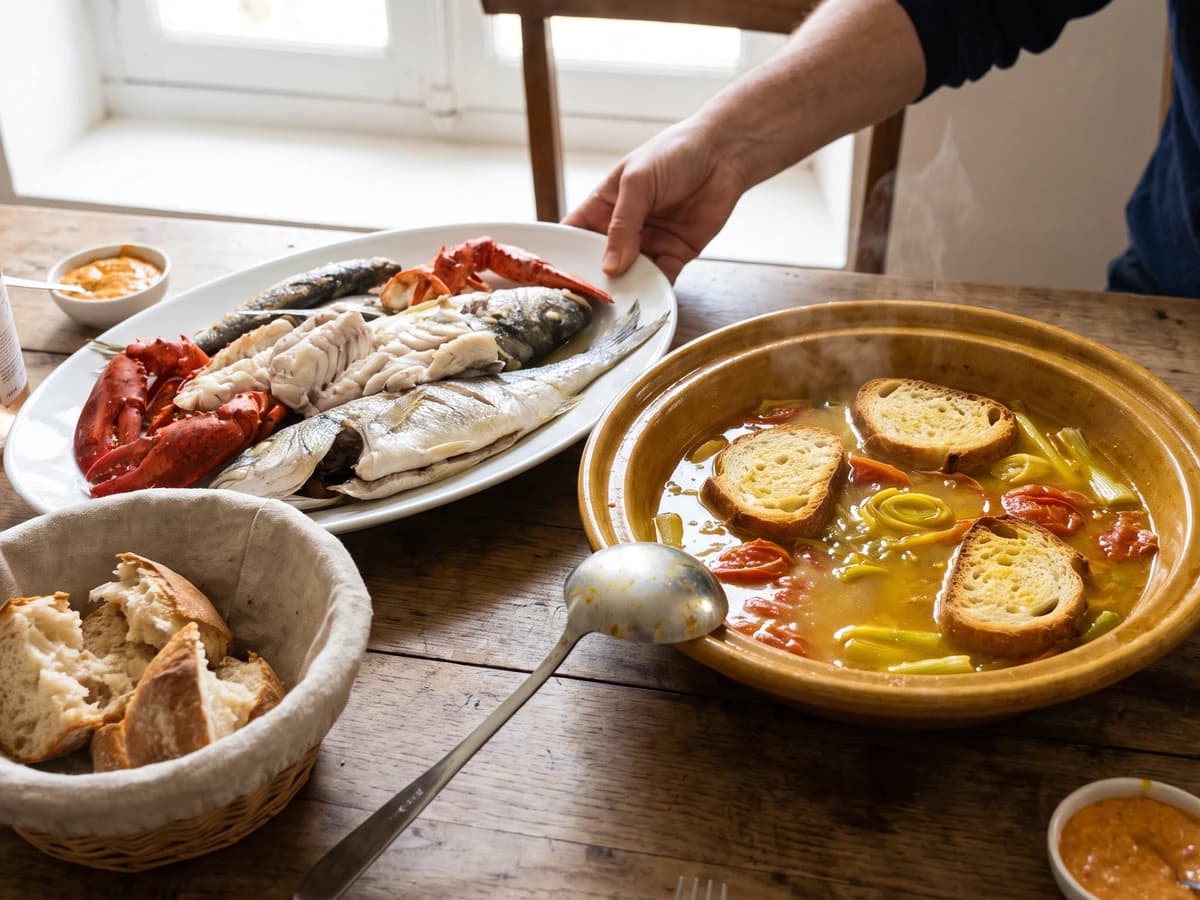
Marseille's great fish stew, saffron-gold and garlic-scented, proves that a hard boil can be the careful choice: it binds olive oil into broth before the whole pot meets bread.
A cooking platform built around craft, culture, and the stories behind what we eat.
Created by Chef Juliette
Based on No. 212, Fresh Peas or St. Germain Royale, from Le Guide Culinaire (1907) by Auguste Escoffier
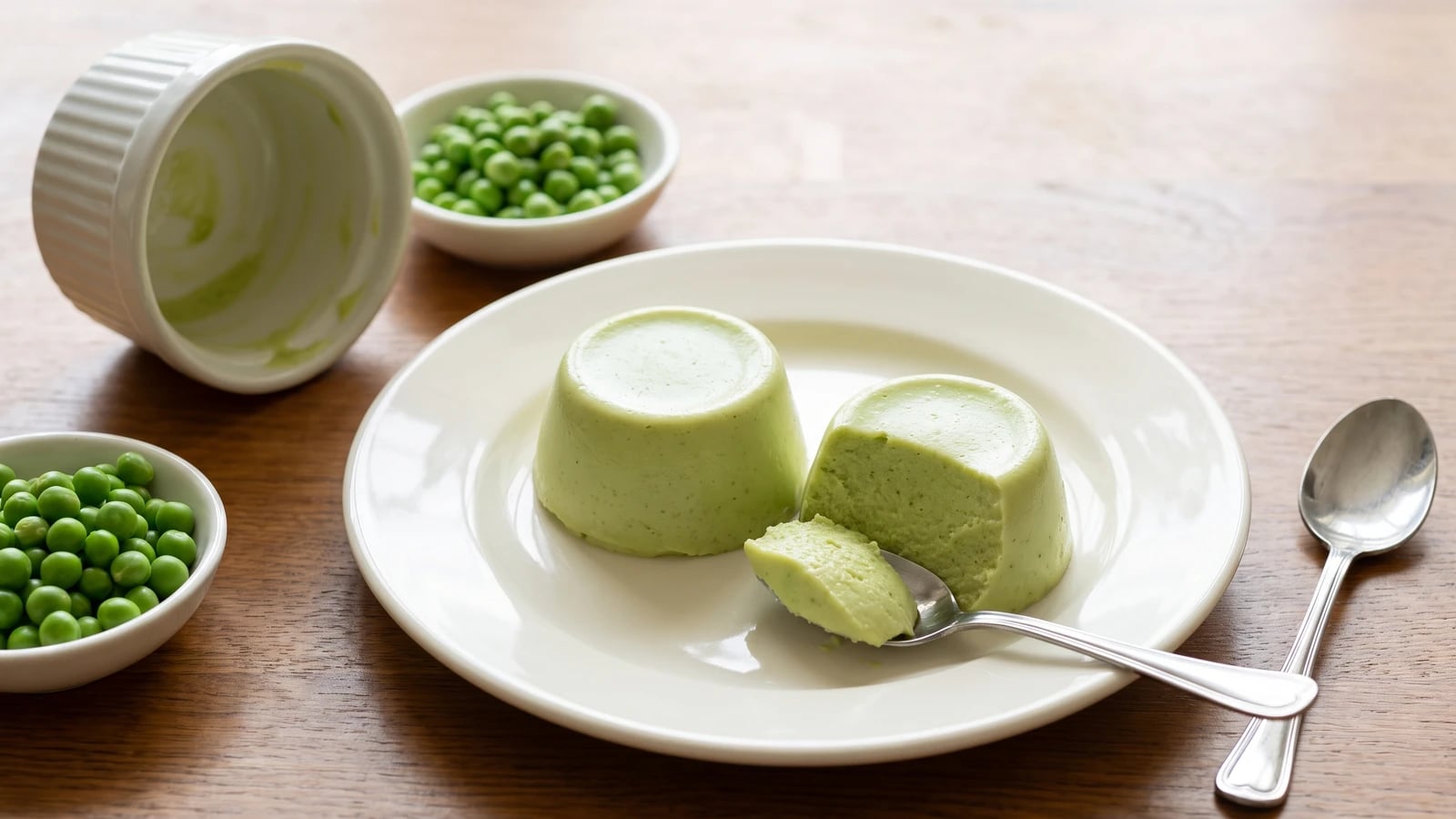
Fresh peas, chervil, and mint become Royale Saint-Germain through exact dilution, fine sieving, and a poach so gentle the green custard settles without a bubble.
Royale Saint-Germain (poached fresh-pea custard) teaches the whole discipline of a royale: concentrate the flavor before the eggs arrive, then set them so gently that no bubble scars the custard. The one true thing to know before touching a pan is this: a royale is poached, even when the oven supplies the heat. Let the water boil and you get holes and weeping; hold it below a simmer and the custard comes out smooth, green, and tender.
This entry needs neither stock forever on the fire nor a salamander. What the old formula assumed was a kitchen hand to pound the peas through a tamis (drum sieve), ranks of identical metal molds, and a poaching bath watched through service. At home, a small processor begins the purée, a fine-mesh sieve finishes it, and four ramekins replace the regiment. The processor is brigade scaffolding we can dismiss. The sieving, the exact dilution of two-fifths cooking liquor and one-fifth cream, and the binding of one egg with two yolks are the dish, so they stay untouched.
The finished royale should yield under the spoon without slumping, tasting first of sweet peas and then, quietly, of chervil, mint, and cream. One cook, one stove, one evening. Watch the water around the molds more closely than the clock; that gentle poach decides everything.
Royale Saint-Germain belongs to the classical Parisian repertoire, where Saint-Germain names preparations built around green peas and recalls the market gardens associated with Saint-Germain west of Paris. A royale is not merely a grand title attached to soup; it is a savory egg custard traditionally poached, cut into neat shapes, and used to garnish clear soups. This formula makes the pea purée the body of the royale itself, carrying a formal soup garnish comfortably onto the home table.
Quantity
½ pound (1½ cups / 355 ml / 225 g)
shelled
Quantity
6 cups (1.4 L / 1.4 kg)
for cooking the peas
Quantity
1 small bunch (about 1 loosely packed cup / 240 ml / 10 g)
stems included
Quantity
5 leaves
Quantity
Exactly two-fifths of the measured purée volume (about a scant ½ cup / 96 ml / 96 g)
Quantity
Exactly one-fifth of the measured purée volume (about 3 tablespoons plus ½ teaspoon / 48 ml / 49 g)
Quantity
¼ teaspoon (1.25 ml / 1 g)
Quantity
½ teaspoon (2.5 ml / 3 g), plus more if needed
Quantity
1
Quantity
2
Quantity
1 tablespoon (15 ml / 14 g)
softened, for the molds
Quantity
About 4 cups (950 ml / 950 g), or enough to reach halfway up the molds
for the bain-marie
| Ingredient | Quantity |
|---|---|
| fresh small peasshelled | ½ pound (1½ cups / 355 ml / 225 g) |
| waterfor cooking the peas | 6 cups (1.4 L / 1.4 kg) |
| fresh chervilstems included | 1 small bunch (about 1 loosely packed cup / 240 ml / 10 g) |
| fresh mint | 5 leaves |
| reserved pea cooking liquor | Exactly two-fifths of the measured purée volume (about a scant ½ cup / 96 ml / 96 g) |
| heavy cream | Exactly one-fifth of the measured purée volume (about 3 tablespoons plus ½ teaspoon / 48 ml / 49 g) |
| granulated sugar | ¼ teaspoon (1.25 ml / 1 g) |
| fine sea salt | ½ teaspoon (2.5 ml / 3 g), plus more if needed |
| large egg | 1 |
| large egg yolks | 2 |
| unsalted buttersoftened, for the molds | 1 tablespoon (15 ml / 14 g) |
| hot waterfor the bain-marie | About 4 cups (950 ml / 950 g), or enough to reach halfway up the molds |
Heat the oven to 275°F (140°C). Butter four 4-ounce (120 ml) dariole molds or ramekins thoroughly, covering the bases, sides, and the corners where custard likes to cling. Set them in a deep roasting pan lined with a folded kitchen towel; the towel keeps the molds steady and softens the oven's heat.
Bring the 6 cups (1.4 L) water to a full boil. Add the peas, chervil, and mint, then cook uncovered for 4 to 6 minutes, until a pea crushes into a creamy paste between two fingers. Tenderness matters more than the clock because a firm pea leaves a gritty purée. Drain immediately, keeping the herbs with the peas, and reserve at least 1 cup (240 ml) of the cooking liquor.
Process the drained peas and herbs without added liquid until they form a thick paste. Press that paste through a fine-mesh sieve with a flexible scraper, working until only dry skins and fibers remain, then scrape the smooth purée from the underside. The processor replaces the brigade's pounding, but the sieve stays. Pea skins cannot be blended into silk, and silk is the point. Measure the finished purée by volume.
Put the measured purée in a saucepan off the heat. For every 1 cup (240 ml) of purée, stir in a scant ½ cup (96 ml) reserved cooking liquor and 3 tablespoons plus ½ teaspoon (48 ml) heavy cream. Add the sugar and salt. This two-fifths liquor and one-fifth cream dilution is the book's structure, not an approximation. Let the mixture cool until merely lukewarm before the eggs go in; if it feels hot against your finger, wait.
Whisk the whole egg and two yolks just until combined, without raising a foam. Whisk in a spoonful of the lukewarm pea mixture, then another, and finally stir the tempered eggs back into the saucepan. Pass everything through a clean fine strainer into a jug. If the purée was too warm and you see a few fine egg threads, strain at once into a cool bowl. Ça se rattrape. A mixture that has become grainy throughout was overheated and must be remade.
Divide the mixture among the buttered molds and skim away any surface bubbles with a spoon. Place the roasting pan on the oven rack, pour in enough hot water to reach halfway up the molds, and tent the pan loosely with foil. Poach for 25 to 35 minutes, until the edges are set and the centers tremble slightly without sloshing. The water must remain below a simmer. If bubbles begin breaking around the molds, pull out the pan, replace 1 cup (240 ml) of the hot water with cool water, and lower the oven to 250°F (120°C). Ça se rattrape before the custards curdle.
Lift the molds from the bain-marie (water bath) and rest them for 8 to 10 minutes. Run a thin knife around each edge, place a warm plate over the mold, and invert in one confident motion. If a royale refuses to release, dip the base of its mold in hot water for 5 seconds and try again. Serve warm as a small first course, or chill before cutting into neat diamonds for a clear soup. À table!
1 serving (about 120g)
Culinary guides, cultural storytelling, and the editorial depth that makes cooking meaningful.
Discover Culinary ExplorerChef Juliette
Marseille's great fish stew, saffron-gold and garlic-scented, proves that a hard boil can be the careful choice: it binds olive oil into broth before the whole pot meets bread.
Chef Juliette
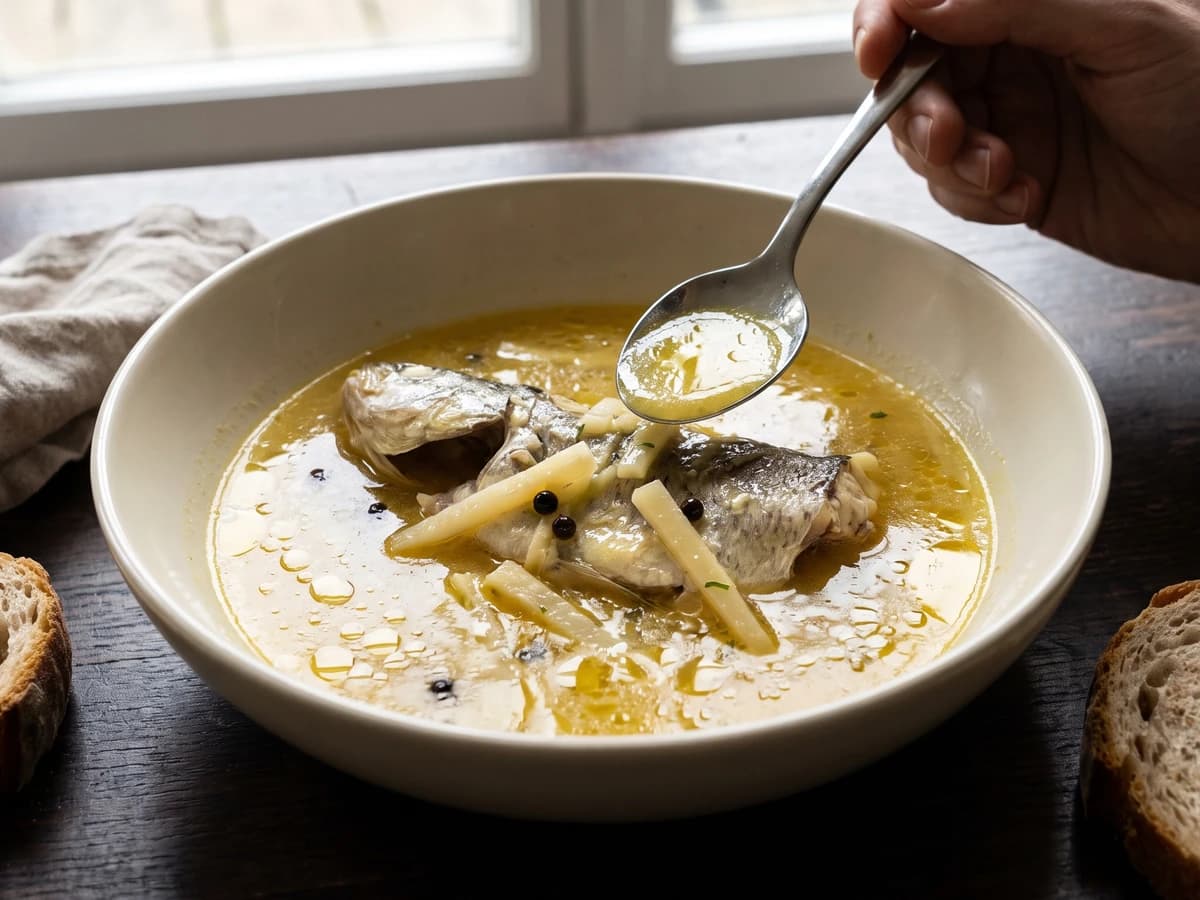
Waterzoi asks fresh, bone-in river fish to thicken its own buttery broth, with parsley root and pepper for company. No flour, no stockpot, just a brisk simmer watched closely.
Chef Juliette
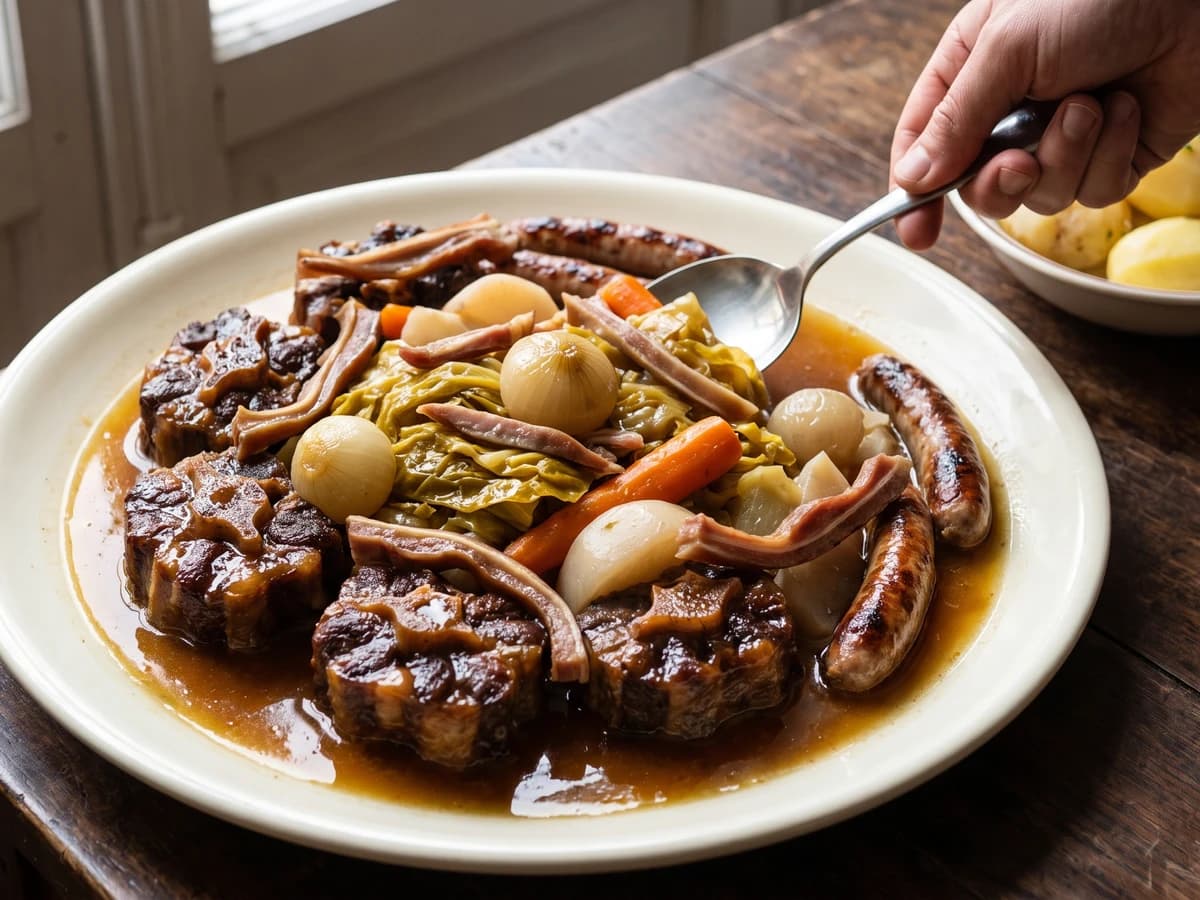
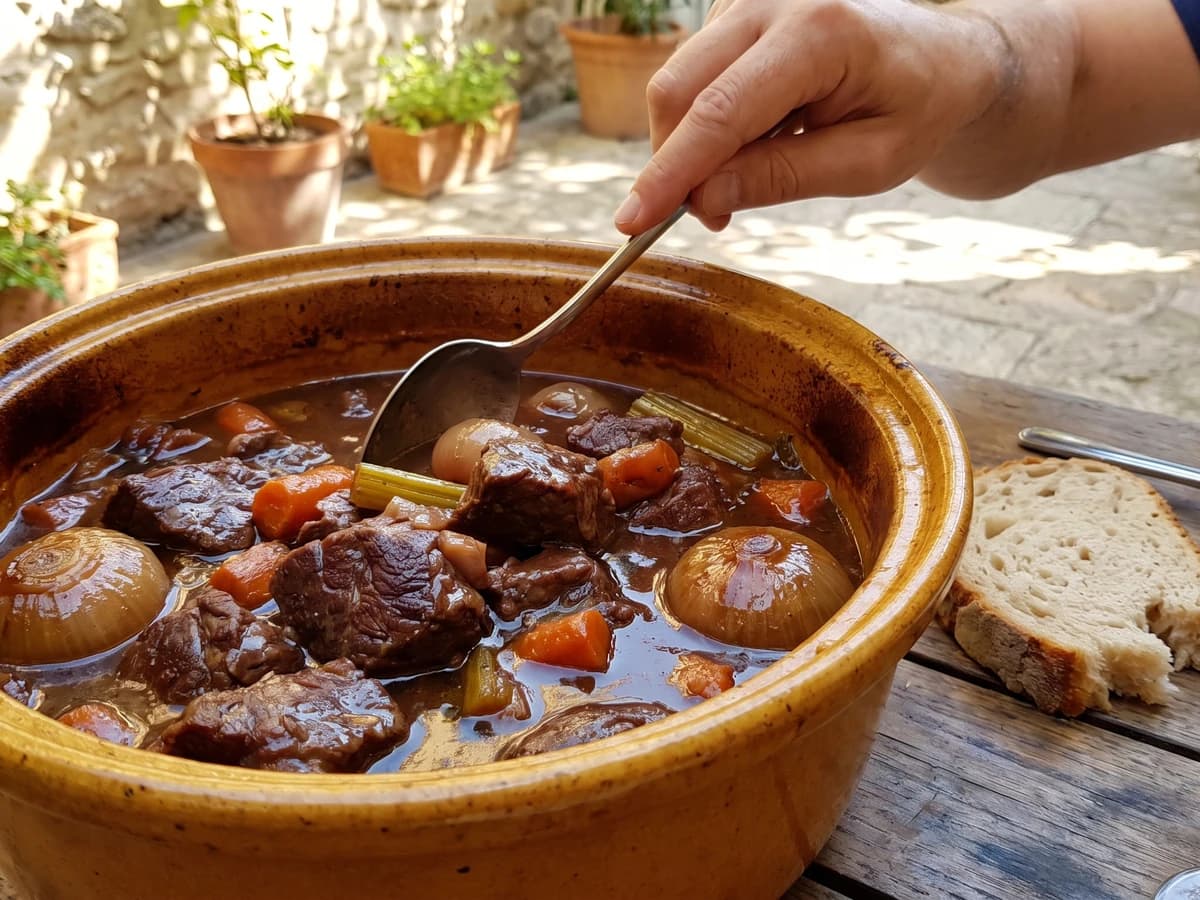
Queue de Bœuf en Hochepot gathers oxtail, pig's trotter and ear, cabbage, roots, and grilled chipolatas around a clear, gelatin-rich broth whose quiet simmer keeps every piece tender and distinct.
Chef Juliette
Beef shoulder larded with bacon, sharpened by red wine and vinegar, then sealed with garlic, vegetables, and dry lemon peel until the low oven turns it yielding and the gravy darkly glossy.