Chef Juliette
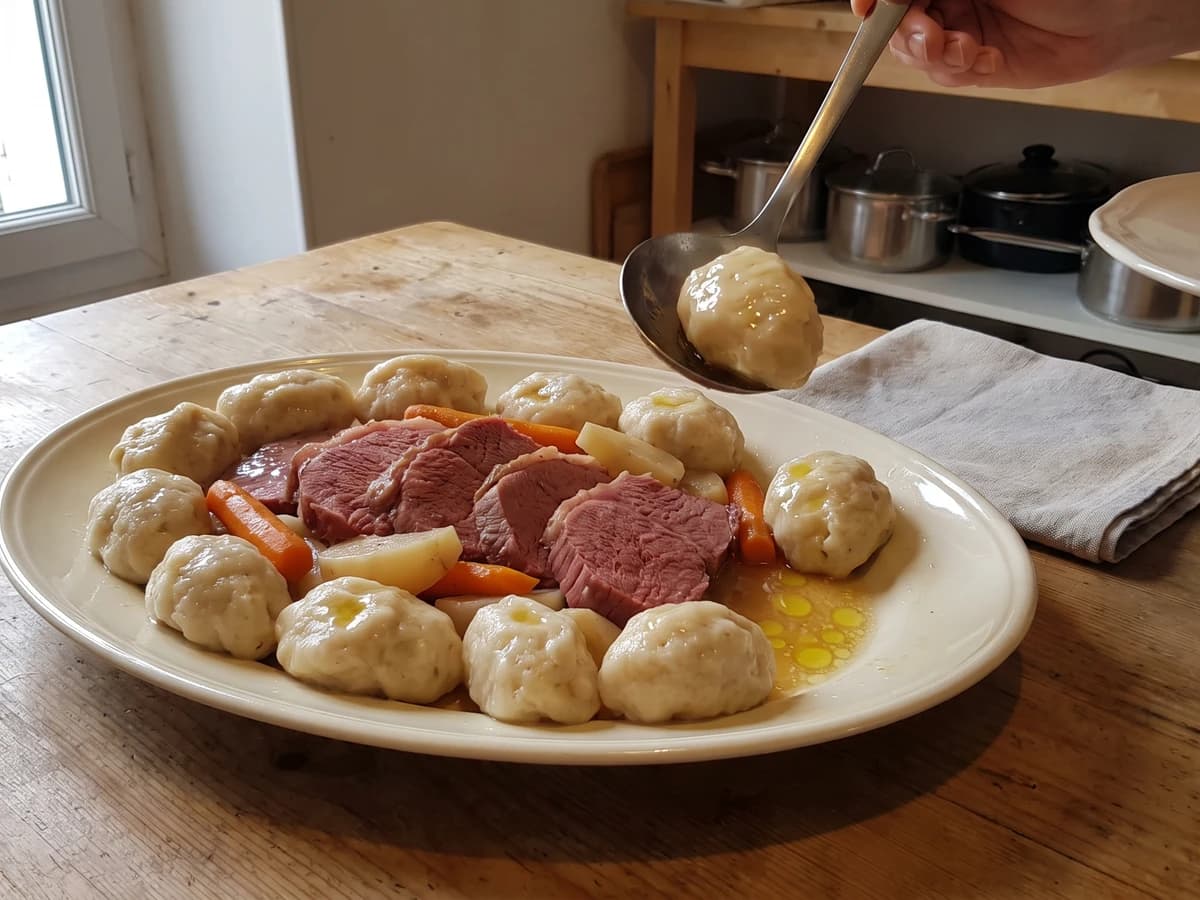
Suet Dumpling
Boulettes au suif, poached beside salt beef, turn equal weights of flour and finely chopped suet into tender, rich dumplings. Keep the beef liquor at a bare tremble and the old garnish works beautifully at home.
A cooking platform built around craft, culture, and the stories behind what we eat.

Created by Chef Juliette
Based on No. 2118, Choux de Bruxelles au Beurre, from Le Guide Culinaire (1907) by Auguste Escoffier
Choux de Bruxelles finished under a lid with their full measure of butter, firm at the center and glossy outside: a modest vegetable dish that teaches why blanching is only the beginning.
Choux de Bruxelles au beurre (Brussels sprouts with butter) teaches the discipline of two-stage cookery. The water begins the cooking, but it must not finish it. Drain the sprouts while their centers still resist the knife, then let butter and enclosed oven heat carry them to tenderness without reducing them to little cabbages of surrender.
The original entry assumed a professional rhythm: a boiling pot ready, a sauté pan beside it, an oven free, and several hands moving vegetables through service. For one cook, one stove, one evening, a lidded ovenproof skillet does the same work. I have set the quantity at 1½ pounds for four people and kept the book's exact proportion of two ounces of butter per pound. The brigade's hand-offs are scaffolding and can go. The firm blanch, the hot drain, the full measure of butter, and the covered fifteen-minute finish are the dish itself and must stay.
Done properly, the choux arrive deep green, gently sweet, and gleaming, with butter caught between their leaves rather than floating uselessly beneath them. The one step that decides everything is the first cooking: take them from the water while the core is still distinctly firm.
Brussels sprouts belong by name and cultivation to the market gardens around Brussels, but French kitchens adopted them into the classical vegetable repertory as choux de Bruxelles, most often blanched and finished generously with butter. Au beurre is not a regional sauce but a method shared by bourgeois tables and grand kitchens, where vegetables were cooked in stages so their texture could be controlled precisely. This covered oven finish corrects a common misconception: the sprouts are not boiled until done, because the water begins their cooking and the butter completes it.
Quantity
6 cups (1½ pounds / 680 g)
trimmed
Quantity
1 tablespoon (18 g)
Quantity
½ teaspoon (3 g)
Quantity
¼ teaspoon (0.6 g)
Quantity
6 tablespoons (3 ounces / 85 g)
cut into small pieces
| Ingredient | Quantity |
|---|---|
| small, firm Brussels sproutstrimmed | 6 cups (1½ pounds / 680 g) |
| fine sea salt for the blanching water | 1 tablespoon (18 g) |
| fine sea salt for seasoning | ½ teaspoon (3 g) |
| freshly ground black pepper | ¼ teaspoon (0.6 g) |
| cold unsalted buttercut into small pieces | 6 tablespoons (3 ounces / 85 g) |
Heat the oven to 375°F (190°C) with a rack in the middle. Set a 12-inch (30 cm) ovenproof sauté pan and its lid beside the stove, with a colander close at hand. The transfer from water to pan should be immediate, because the sprouts must remain hot.
Remove any yellow or damaged outer leaves and shave only the dry end from each stalk. Keep the cores intact so the sprouts hold together. Choose evenly sized sprouts when possible; if a few are much larger, put those into the water one minute before the smaller ones rather than cutting everything apart.
Bring 3 quarts (2.8 liters) of water to a vigorous boil and add the tablespoon of salt. Add the sprouts and cook uncovered until the outer leaves yield to a paring knife but the center still offers clear resistance, usually 5 to 7 minutes after the water returns to the boil. Test one through the stalk end. If you're uncertain, take them out; the oven can finish a firm sprout, but no pan can restore one already boiled soft.
Tip the sprouts straight into the colander and shake firmly for 30 seconds. Do not rinse or cool them. Let the surface water escape, but do not leave them standing until cold; their retained heat helps melt the butter evenly and continues the controlled cooking the moment they enter the pan.
Transfer the hot sprouts to the ovenproof sauté pan. Season evenly with the ½ teaspoon of salt and the pepper, then scatter the cold butter pieces across and between the sprouts rather than leaving one large lump on top. Cover tightly and place in the oven for 15 minutes. After about 8 minutes, hold the lid securely with a folded towel and roll the pan once so the melting butter reaches every sprout.
Uncover and roll the sprouts gently through the butter. They are ready when a knife enters without force but still meets a slight resistance at the core, and their leaves wear a clear butter sheen. If thin, watery butter collects in the bottom, set the uncovered pan over medium heat and roll it for 60 to 90 seconds until the excess moisture leaves and the butter clings. Ça se rattrape. Taste, correct the salt and pepper if needed, and serve immediately with the butter from the pan spooned over the top. À table!
1 serving (about 180g)
Culinary guides, cultural storytelling, and the editorial depth that makes cooking meaningful.
Discover Culinary ExplorerChef Juliette
Boulettes au suif, poached beside salt beef, turn equal weights of flour and finely chopped suet into tender, rich dumplings. Keep the beef liquor at a bare tremble and the old garnish works beautifully at home.

Chef Juliette
Bread, flour, frangipane, and rice become four cool, supple panades for binding forcemeats, each changing body and flavor while preserving tenderness. The finest Mousselines need none, and knowing that distinction is the lesson.

Chef Juliette
Panade au pain is bread, milk, salt, heat, and attention: stir until the paste releases cleanly, butter it against a skin, and you have the quiet binder behind tender French farces.

Chef Juliette
Panade de farine teaches the drying stroke behind pâte à choux: flour meets boiling buttered water, then stays over the fire until the paste gathers, smooths, and quits the pan cleanly.