Chef Juliette
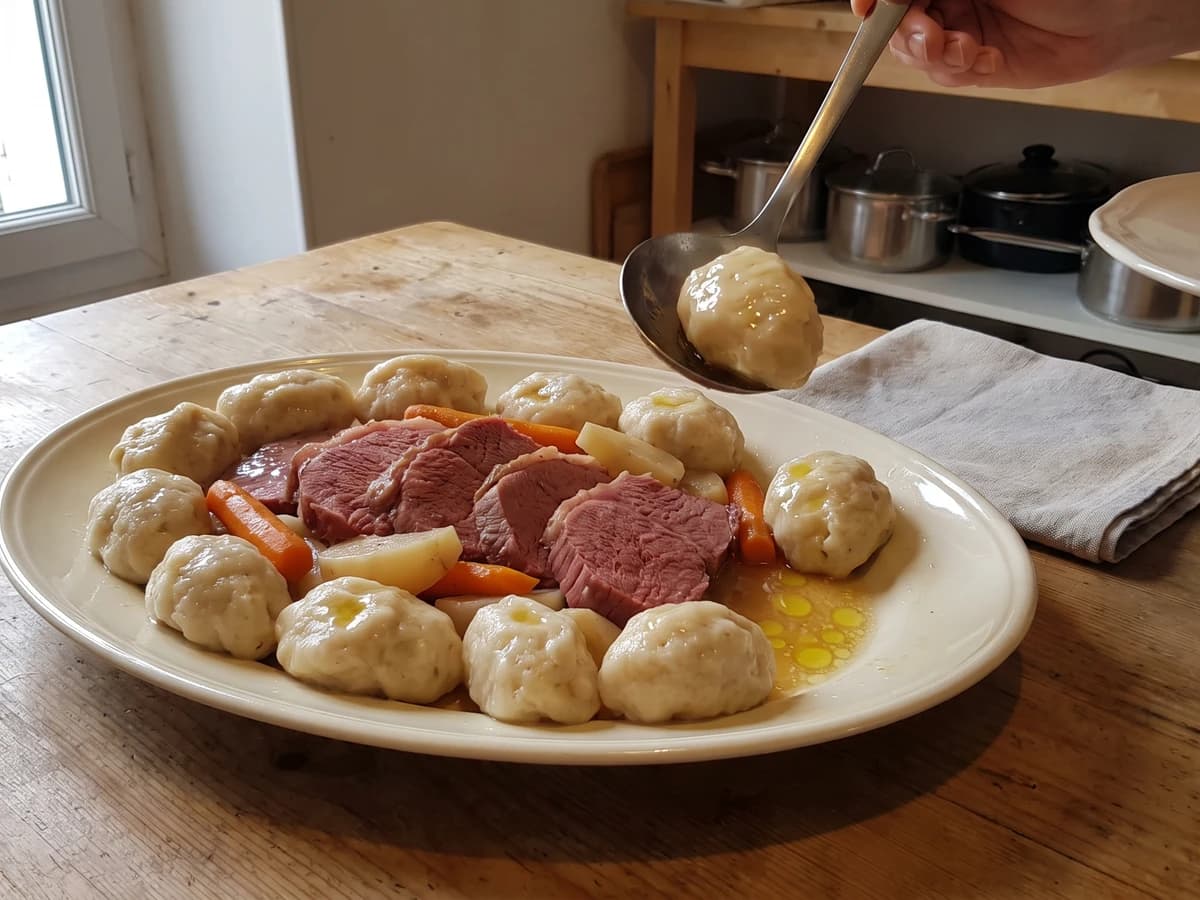
Suet Dumpling
Boulettes au suif, poached beside salt beef, turn equal weights of flour and finely chopped suet into tender, rich dumplings. Keep the beef liquor at a bare tremble and the old garnish works beautifully at home.
A cooking platform built around craft, culture, and the stories behind what we eat.
Created by Chef Juliette
Based on No. 2116, Choux de Bruxelles à la Crème, from Le Guide Culinaire (1907) by Auguste Escoffier
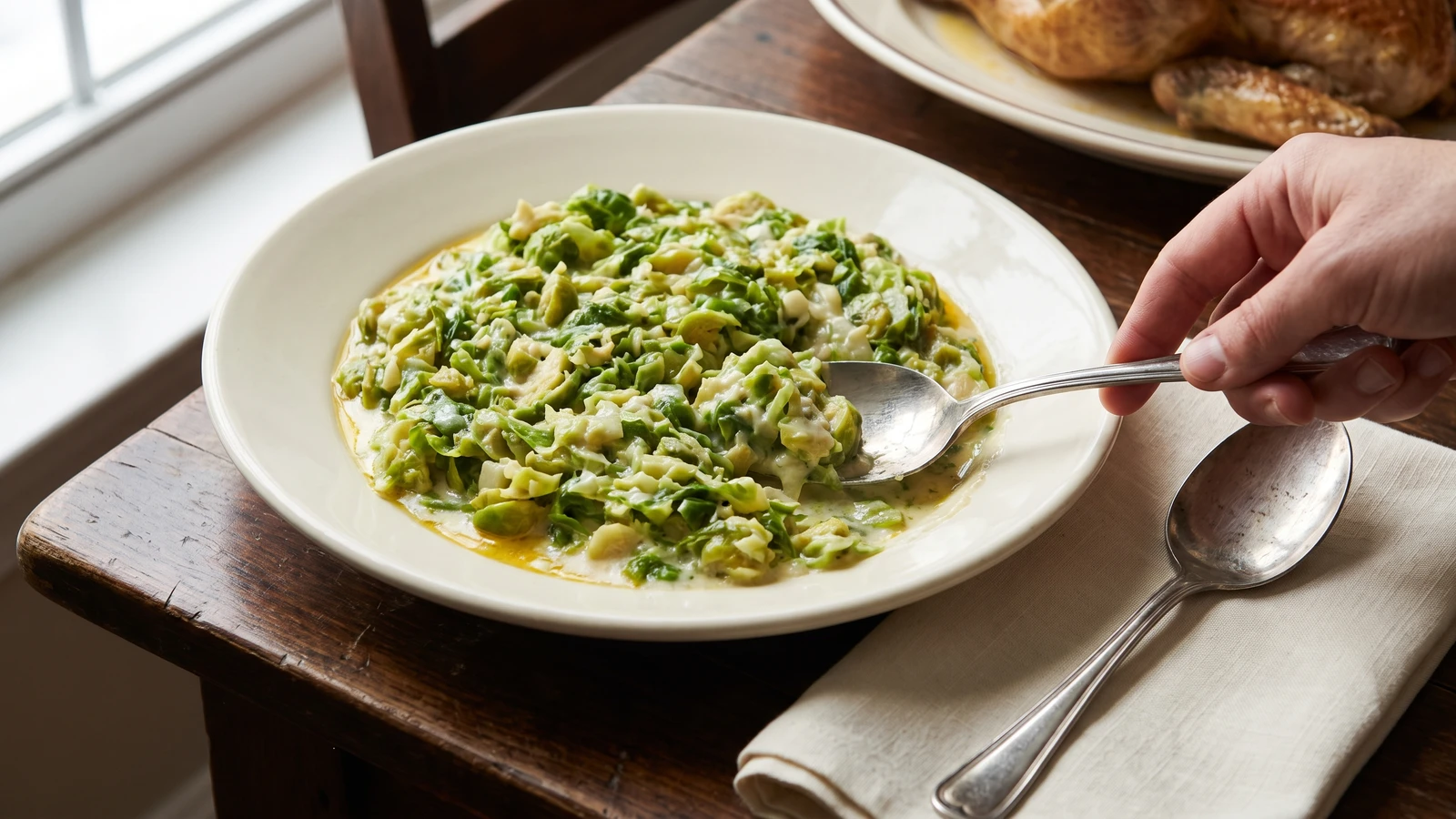
Choux de Bruxelles à la Crème turns a plain winter vegetable into a generous side: hot sprouts drink butter and cream, then reach the table glossy, tender, and ready for a roast.
Choux de Bruxelles à la Crème (Brussels sprouts with cream) teaches a quiet rule of vegetable cookery: temperature can be an ingredient. Warm sprouts drink cream; cold sprouts merely sit in it. Before touching a pan, know that the journey from boiling water to butter to cream must remain unbroken.
The original entry assumed a vegetable station able to move the sprouts, still hot, from boiling pot to butter pan, chopping board, and immediate service. Unlike many preparations around it, this one needs neither a saucier on staff nor a stockpot always on the fire, and it has no use for a salamander. At home, one saucepan, one wide skillet, and a knife do the work. The extra holding pans and separate hands were brigade scaffolding, so they go; cooking the sprouts through, draining them hot, stewing them in butter, chopping them, and feeding in the cream are the dish, so they stay.
The result is soft but not collapsed, richly green, and bound by ivory cream that clings instead of pooling. Do not cool the sprouts between colander and cream. That unbroken warmth decides the dish.
Choux de Bruxelles carry their birthplace in their French name: the vegetable traveled from Brussels and the Low Countries into the winter repertory of French kitchens. On the Parisian bourgeois table and in grand-kitchen garniture work, cooks treated the sprouts like other small cabbages, boiling them tender and finishing them in butter or cream beside roasted meats. À la crème is not a Norman claim here; it is a classical finishing instruction, and chopping the hot sprouts lets the cream enter the vegetable rather than merely coat it.
Quantity
about 8 cups (1½ pounds / 680 g)
trimmed, with loose leaves removed
Quantity
3 quarts (2.8 L / 2.8 kg)
for boiling
Quantity
1 tablespoon plus ¼ teaspoon (16.25 ml / 19.5 g), plus more to taste
divided
Quantity
3 tablespoons (45 ml / 42 g)
Quantity
1 cup (240 ml / 240 g)
| Ingredient | Quantity |
|---|---|
| Brussels sproutstrimmed, with loose leaves removed | about 8 cups (1½ pounds / 680 g) |
| waterfor boiling | 3 quarts (2.8 L / 2.8 kg) |
| fine sea saltdivided | 1 tablespoon plus ¼ teaspoon (16.25 ml / 19.5 g), plus more to taste |
| unsalted butter | 3 tablespoons (45 ml / 42 g) |
| fresh heavy cream, at least 35% fat | 1 cup (240 ml / 240 g) |
Bring the water and 1 tablespoon of the salt to a strong boil in a large saucepan. Trim only the dry end from each sprout and remove any bruised outer leaves. Keep small and medium sprouts whole; halve only the obvious giants through their cores so everything becomes tender at the same moment.
Lower the sprouts into the boiling water and let the water return promptly to a boil. Cook uncovered for 8 to 11 minutes, depending on size, until a small knife slips through a core with only the faintest resistance. The classical texture is properly tender, not crunchy, but the sprouts should remain green and hold their shape. Drain them for 2 full minutes, shaking the colander well, and do not rinse or cool them.
Melt the butter in a wide heavy skillet over medium heat. Étuver means to stew gently in butter without browning, and that is the work here. Add the hot sprouts and the remaining ¼ teaspoon salt, toss until every surface shines, then cover and cook over medium-low heat for 4 minutes. Uncover and continue for 2 to 3 minutes, tossing occasionally, until the butter clings and no water remains on the pan floor. If a puddle appears, raise the heat briefly and cook it away before proceeding; cream added to a wet pan can only become thin.
Tip the buttered sprouts immediately onto a cutting board and chop them briskly into pieces about ¼ inch (6 mm) across. Keep some texture; this is chopped vegetable, not purée. Scrape everything, including the butter left on the board, back into the warm skillet. If the sprouts have cooled because chopping took longer than expected, add 1 tablespoon of the measured cream, cover, and warm them gently for 1 to 2 minutes. Ça se rattrape.
Reserve 1 tablespoon of the cream, then set the skillet over medium-low heat. Add the remaining cream about ¼ cup (60 ml / 60 g) at a time, stirring slowly and allowing each addition to reach a faint simmer, thicken, and disappear into the chopped sprouts before adding more. Warm sprouts drink cream; cold ones sit in it. Continue for 5 to 7 minutes, until the sprouts have taken nearly all the cream and a spoon drawn through the pan leaves a furrow that closes slowly. If cream pools, stop pouring and simmer gently until it binds. If high heat makes the edge look oily, remove the pan from the heat and stir in the reserved cold cream until smooth. Add that final spoonful normally if no rescue was needed.
Taste and add only as much salt as the cream requires. Spoon the sprouts into a warm shallow serving dish, scraping every trace of butter and thickened cream from the skillet. Serve at once, with no garnish and no distraction. À table!
1 serving (about 225g)
Culinary guides, cultural storytelling, and the editorial depth that makes cooking meaningful.
Discover Culinary ExplorerChef Juliette
Boulettes au suif, poached beside salt beef, turn equal weights of flour and finely chopped suet into tender, rich dumplings. Keep the beef liquor at a bare tremble and the old garnish works beautifully at home.

Chef Juliette
Bread, flour, frangipane, and rice become four cool, supple panades for binding forcemeats, each changing body and flavor while preserving tenderness. The finest Mousselines need none, and knowing that distinction is the lesson.

Chef Juliette
Panade au pain is bread, milk, salt, heat, and attention: stir until the paste releases cleanly, butter it against a skin, and you have the quiet binder behind tender French farces.

Chef Juliette
Panade de farine teaches the drying stroke behind pâte à choux: flour meets boiling buttered water, then stays over the fire until the paste gathers, smooths, and quits the pan cleanly.