Chef Juliette
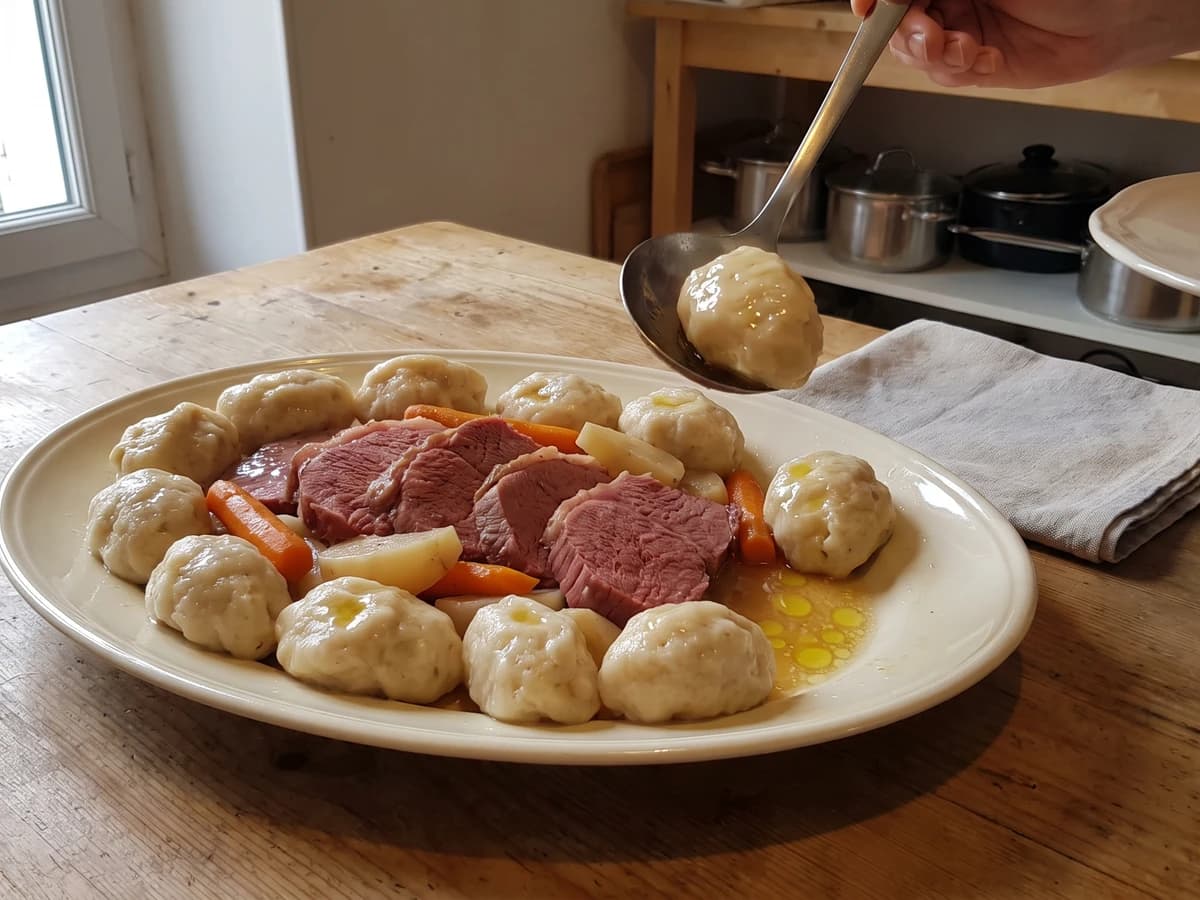
Suet Dumpling
Boulettes au suif, poached beside salt beef, turn equal weights of flour and finely chopped suet into tender, rich dumplings. Keep the beef liquor at a bare tremble and the old garnish works beautifully at home.
A cooking platform built around craft, culture, and the stories behind what we eat.

Created by Chef Juliette
Based on No. 2115, Choux de Bruxelles à l’Anglaise, from Le Guide Culinaire (1907) by Auguste Escoffier
The green-vegetable lesson in its clearest form: Brussels sprouts boiled fast, uncovered, in properly salted water, then drained without mercy so they reach the table bright, firm, and entirely themselves.
Choux de Bruxelles à l’Anglaise (Brussels sprouts cooked in the English manner) teaches control through simplicity. The one true thing to know before touching the pan is this: they must enter plenty of vigorously boiling salted water, cook uncovered, and leave while the cores still offer a little resistance. Once they soften completely, their green and character go with them.
The source assumed a vegetable cook watching the pot and a perforated silver drainer waiting at service. Neither a saucier, stockpot, nor salamander had any work here. For one cook, one stove, one evening, the honest equivalents are a large saucepan, an ordinary colander, and a warmed deep serving bowl. The drainer itself is brigade scaffolding; thorough drainage is the intent and must stay. The quantity has been brought down to four generous side portions, but the ingredients and method remain exactly themselves: sprouts, salted water, nothing more.
Properly cooked, each sprout is vivid green, hot to its center, and firm enough that its leaves remain distinct beneath the teeth. Watch the tenderness, not the clock, and drain the instant a knife enters the core with slight resistance. That is the step that decides the dish.
Brussels sprouts belong first to the market gardens around Brussels, where their compact buds became a cold-weather vegetable carried into neighboring French kitchens. In the French classical vocabulary, à l’anglaise described green vegetables boiled in salted water and presented plainly, so the title names the cooking manner, not a claim that the sprout is English. The perforated drainer used at bourgeois and grand tables kept the last cooking water from pooling beneath the vegetable, a practical purpose that survives perfectly well in the home colander.
Quantity
8 cups (1½ pounds / 680 g)
trimmed and sorted by size
Quantity
3 quarts (2.8 L / 2.8 kg)
Quantity
1½ tablespoons (22 ml / 27 g)
| Ingredient | Quantity |
|---|---|
| fresh Brussels sproutstrimmed and sorted by size | 8 cups (1½ pounds / 680 g) |
| water | 3 quarts (2.8 L / 2.8 kg) |
| fine sea salt | 1½ tablespoons (22 ml / 27 g) |
Pull away any yellow or bruised outer leaves, then cut only the dry end from each stem, leaving enough core to hold the sprout together. Keep small and medium sprouts whole. If a few are much larger than the rest, halve them lengthwise through the core so everything finishes together. Rinse briefly under cold water and drain.
Put the water and fine sea salt in a large pot and bring them to a full rolling boil. A lid may hurry the water along, but remove it before the sprouts go in. The large volume matters because it returns to the boil quickly, shortening the time the vegetables spend softening in merely hot water.
Lower the sprouts carefully into the boiling water and keep the pot uncovered over high heat. Stir once so they cook evenly, then boil for 6 to 8 minutes, beginning to test at 5 minutes. They are ready when a small knife enters the stem end with slight resistance and the outer leaves remain firm and vividly green. If smaller sprouts finish first, lift them out with a slotted spoon while the larger ones cook another minute. Once every sprout is soft, no rescue can restore its bite, so act early.
Pour the sprouts immediately into a large colander. Shake firmly several times and leave them for 30 seconds, uncovered, so water trapped between the leaves can escape. If they still look wet enough to make a puddle, ça se rattrape: return them to the emptied hot pot over the lowest heat and toss for 15 to 20 seconds, just until the clinging water evaporates. Don't let them brown.
Transfer the sprouts to a warmed deep serving bowl, the home equivalent of the classical timbale, or present them directly in a clean vegetable drainer nested over a shallow dish. Serve immediately and uncovered. No butter, sauce, pepper, or garnish belongs to this particular entry; its point is the clear taste of a properly cooked sprout. À table!
1 serving (about 160g)
Culinary guides, cultural storytelling, and the editorial depth that makes cooking meaningful.
Discover Culinary ExplorerChef Juliette
Boulettes au suif, poached beside salt beef, turn equal weights of flour and finely chopped suet into tender, rich dumplings. Keep the beef liquor at a bare tremble and the old garnish works beautifully at home.

Chef Juliette
Bread, flour, frangipane, and rice become four cool, supple panades for binding forcemeats, each changing body and flavor while preserving tenderness. The finest Mousselines need none, and knowing that distinction is the lesson.

Chef Juliette
Panade au pain is bread, milk, salt, heat, and attention: stir until the paste releases cleanly, butter it against a skin, and you have the quiet binder behind tender French farces.

Chef Juliette
Panade de farine teaches the drying stroke behind pâte à choux: flour meets boiling buttered water, then stays over the fire until the paste gathers, smooths, and quits the pan cleanly.