Chef Juliette
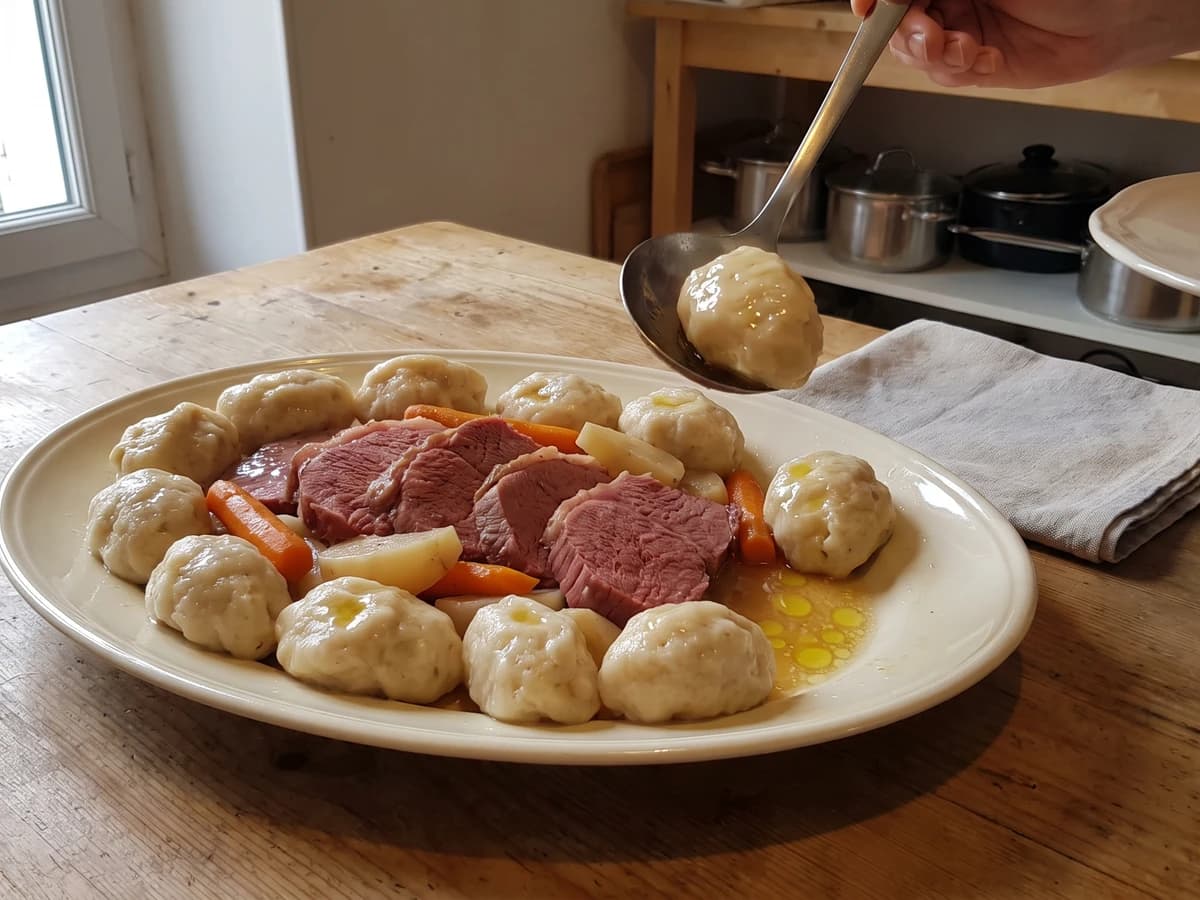
Suet Dumpling
Boulettes au suif, poached beside salt beef, turn equal weights of flour and finely chopped suet into tender, rich dumplings. Keep the beef liquor at a bare tremble and the old garnish works beautifully at home.
A cooking platform built around craft, culture, and the stories behind what we eat.

Created by Chef Juliette
Based on No. 2112, Chou-fleur à la Polonaise, from Le Guide Culinaire (1907) by Auguste Escoffier
Chou-fleur à la Polonaise turns a modest cauliflower into a proper French side: tender florets, yolk and parsley, crisp crumbs, and beurre noisette stopped precisely at the scent and colour of hazelnuts.
Chou-fleur à la Polonaise (cauliflower Polish-style) teaches the discipline of a last-minute finish. The cauliflower should be tender but still hold its proud round shape, the yolk and parsley should remain distinct, and the crumbs should arrive crisp in beurre noisette, hazelnut-browned butter. One true thing governs the pan: brown the butter to hazelnut, never past it.
The book's entry assumes a vegetable cook has already boiled and thoroughly drained the cauliflower, hard-cooked yolks wait chopped, and a saucier on staff can send the butter at the instant of service. No stockpot or salamander belongs here. At home, you cook the eggs and cauliflower explicitly, then use one small, light-coloured skillet as the saucier's pan. Separate holding pans and extra hands are brigade scaffolding; the thorough draining, the book's six-to-one weight ratio of butter to crumbs, and the final-minute finish are the dish itself and must stay.
What reaches the table is generous and direct: ivory cauliflower under yellow yolk and green parsley, with butter-gold crumbs caught in every crevice. One cook, one stove, one evening. Watch the butter at the finish, because the few seconds between noisette and burnt decide everything.
Chou-fleur à la Polonaise belongs to the French classical table, particularly the Parisian repertoire of named garnishes, where à la polonaise denotes a finish of hard-cooked egg, parsley, breadcrumbs, and butter for plainly cooked vegetables. The name records a Polish association filtered through French service, not a claim that every Polish cauliflower dish follows this formula; French cooks applied the same treatment to asparagus and other boiled vegetables. It always traveled from kitchen to dining room at the last moment, because waiting softens the crumbs and dulls the beurre noisette.
Quantity
1 head (about 1¾ lb / 800 g)
leaves removed and base trimmed while keeping the head intact
Quantity
2
hard-boiled; yolks finely chopped and whites reserved for another use
Quantity
2 tablespoons (30 ml / 8 g)
finely chopped
Quantity
1 teaspoon (5 ml / 5 g)
Quantity
6 tablespoons (90 ml / 85 g)
Quantity
2 tablespoons (30 ml / 14 g)
Quantity
1 tablespoon (15 ml / 18 g)
for the cooking water
| Ingredient | Quantity |
|---|---|
| medium cauliflowerleaves removed and base trimmed while keeping the head intact | 1 head (about 1¾ lb / 800 g) |
| large eggshard-boiled; yolks finely chopped and whites reserved for another use | 2 |
| fresh parsleyfinely chopped | 2 tablespoons (30 ml / 8 g) |
| unsalted butter for the serving dish | 1 teaspoon (5 ml / 5 g) |
| unsalted butter for the beurre noisette | 6 tablespoons (90 ml / 85 g) |
| very fine dry breadcrumbs | 2 tablespoons (30 ml / 14 g) |
| fine sea saltfor the cooking water | 1 tablespoon (15 ml / 18 g) |
Lower the eggs into a small saucepan of gently boiling water and cook for 10 minutes. Cool them promptly in cold water, peel, and separate the yolks from the whites. Chop the yolks finely with a knife, stopping before they become a paste; the little yellow grains should remain visible on the cauliflower. Reserve the whites for another meal.
Bring a pot of water large enough to hold the whole cauliflower to a full boil and add the salt. Lower in the cauliflower stem-side down. When the water returns to a boil, reduce it to a lively simmer and cook for 12 to 16 minutes, turning the head once if it is not fully submerged. Test through the thickest part of the stem with a slender knife; it should enter easily but meet a whisper of resistance. If the florets begin loosening from the head, lift it out immediately. Tender, not collapsing.
Lift the cauliflower carefully with a broad slotted spoon or two spatulas and place it upside down in a colander for 5 to 8 minutes. Water hides between the florets, and any left behind will dilute the butter and soften the crumbs. Turn the head upright and blot the surface gently. If it seems wet, give it another minute upside down; this is patience, not fuss.
Rub the warm serving dish with the teaspoon of butter, then settle the drained cauliflower in the centre. Mix the chopped yolks and parsley lightly with your fingertips and scatter them evenly over the crown, letting some fall between the florets. Keep the dish close to the stove. The butter must go over it the instant it is ready.
Melt the 6 tablespoons of butter in a small, light-coloured skillet over medium heat. When it foams evenly, add the breadcrumbs and stir continuously as the crumbs fry and the milk solids beneath them pass from yellow to amber, about 2 to 3 minutes. Tilt the pan so you can see the butter clearly. The instant it smells of toasted hazelnuts and the crumbs are crisp and golden, take it off the heat and spoon every drop over the cauliflower. If the colour begins racing toward dark brown but still smells sweet, scrape everything immediately into a cool heatproof bowl to stop the cooking; ça se rattrape. If it smells acrid or carries black specks, begin the butter again. Serve at once. À table!
1 serving (about 240g)
Culinary guides, cultural storytelling, and the editorial depth that makes cooking meaningful.
Discover Culinary ExplorerChef Juliette
Boulettes au suif, poached beside salt beef, turn equal weights of flour and finely chopped suet into tender, rich dumplings. Keep the beef liquor at a bare tremble and the old garnish works beautifully at home.

Chef Juliette
Bread, flour, frangipane, and rice become four cool, supple panades for binding forcemeats, each changing body and flavor while preserving tenderness. The finest Mousselines need none, and knowing that distinction is the lesson.

Chef Juliette
Panade au pain is bread, milk, salt, heat, and attention: stir until the paste releases cleanly, butter it against a skin, and you have the quiet binder behind tender French farces.

Chef Juliette
Panade de farine teaches the drying stroke behind pâte à choux: flour meets boiling buttered water, then stays over the fire until the paste gathers, smooths, and quits the pan cleanly.