Chef Juliette
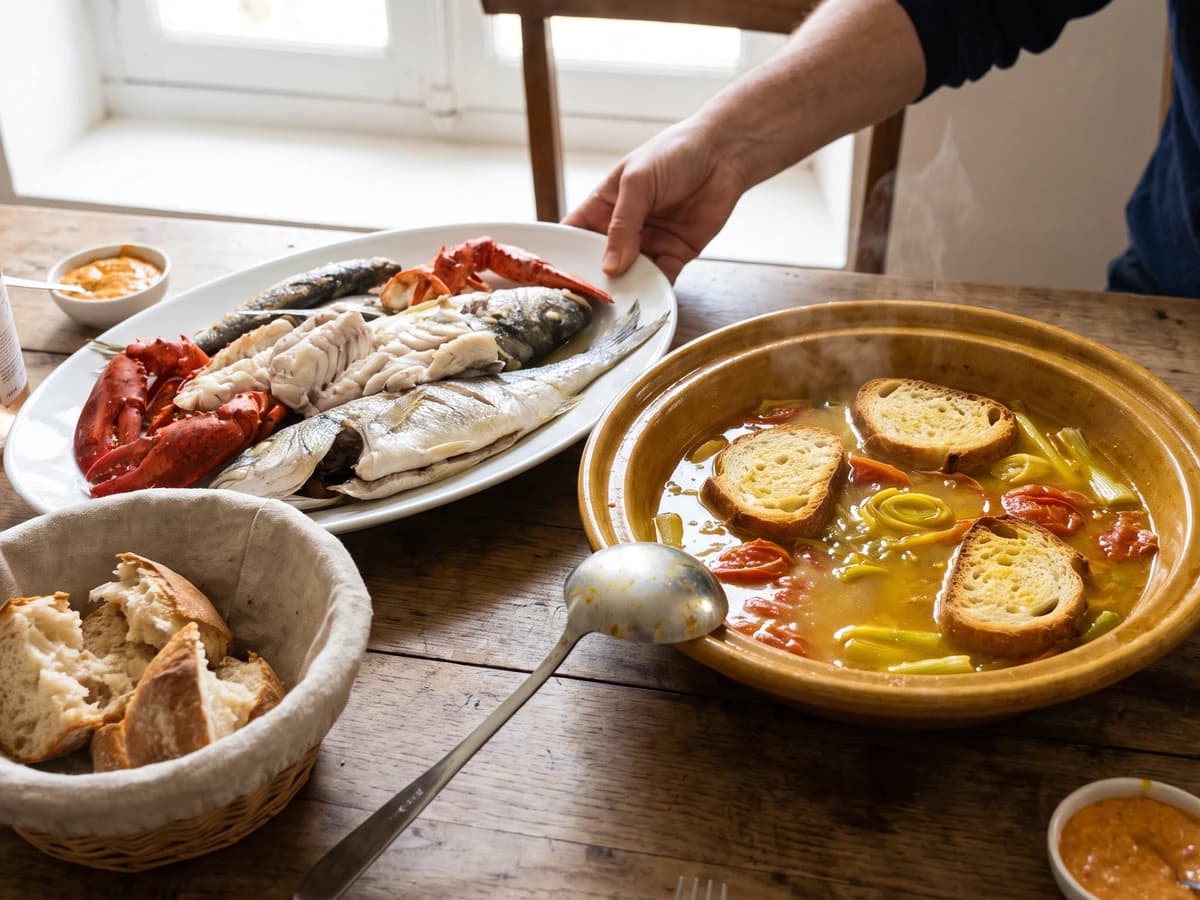
Bouillabaisse à la Marseillaise
Marseille's great fish stew, saffron-gold and garlic-scented, proves that a hard boil can be the careful choice: it binds olive oil into broth before the whole pot meets bread.
A cooking platform built around craft, culture, and the stories behind what we eat.
Created by Chef Juliette
Based on No. 211, Carrot or Crécy Royale, from Le Guide Culinaire (1907) by Auguste Escoffier
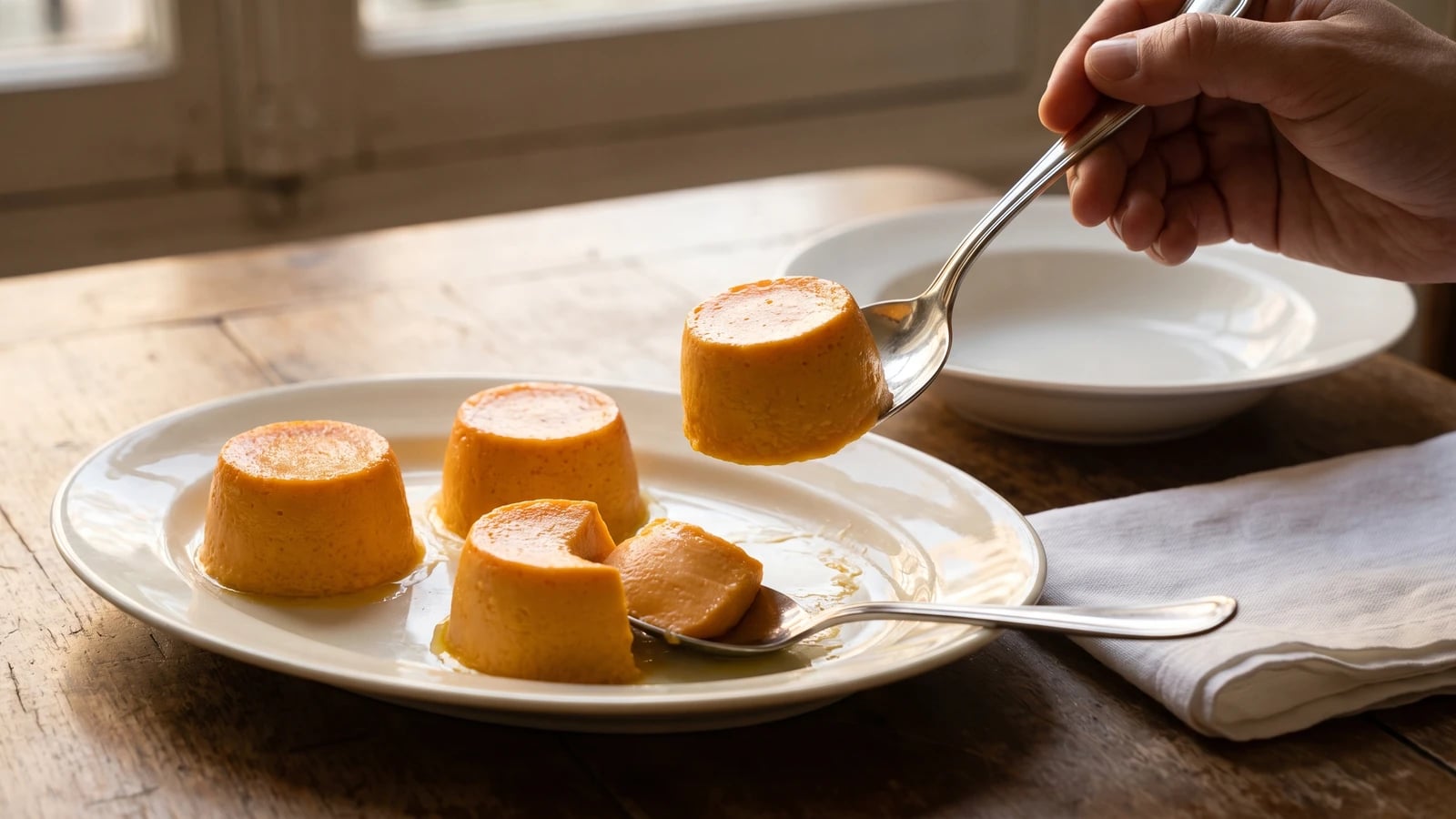
A carrot royale teaches the gentlest lesson in the canon: build sweetness in butter, pass it perfectly smooth, then poach the egg-rich custard until set without bubbles or browned edges.
Royale Crécy (carrot custard garnish) teaches the quiet discipline of a savory custard: draw sweetness from carrots in butter, make the purée perfectly smooth, then let egg set it without bubbling. The one true thing to know before touching the pan is this: the poaching water must stay gentle. Boiling turns silk into sponge.
The source formula assumed a saucier with finished Béchamel waiting, a mortar and tammy on the bench, and enough hands to tend a rank of molds. At home, use finished Béchamel, a small blender, a fine sieve, and four ramekins in a bain-marie (water bath). I halve the formula exactly for four bowls, even measuring half a beaten egg by weight, because the egg-to-cream ratio is the dish. The mortar and tammy are brigade scaffolding; the butter stew, the passing through a sieve, and the low poach must stay. One cook, one stove, one evening.
Done properly, each royale slips from its mold in a clear carrot-orange round, satin-smooth at the edge and tender enough to yield to a spoon. Watch the water, not merely the clock. A tremble is right, a boil is trouble. The poach decides everything.
Crécy is the classical French kitchen word for carrot, generally linked to Crécy-en-Ponthieu in Picardy, a district long associated with carrot cultivation; stories tying every Crécy preparation to the nearby battlefield are more romance than firm kitchen history. A royale is an egg-rich savory custard poached in a mold and used to garnish consommés and refined potages, a form shaped in the grand kitchens of Paris and carried into bourgeois dining rooms. This version joins the place-name and the service term: carrot cooked in butter, softened with Béchamel and cream, then set tenderly enough to cut or unmold without becoming spongy.
Quantity
about 2/3 cup (160 ml / 2 1/2 oz / 71 g)
peeled, pale cores removed, and thinly sliced
Quantity
1 tbsp (15 ml / 14 g)
divided
Quantity
1 tbsp (15 ml / 15 g)
Quantity
scant 1/4 cup (57 ml / 57 g)
Quantity
1/8 tsp (0.6 ml / 0.75 g)
Quantity
1 tiny pinch (about 1/32 tsp / 0.15 ml / 0.15 g)
Quantity
1 to 2 drops (about 0.05 to 0.1 ml / 0.05 to 0.1 g)
Quantity
1 1/2 tbsp (22 ml / 25 g)
Quantity
2 (about 2 tbsp / 30 ml / 34 g)
| Ingredient | Quantity |
|---|---|
| deep-orange outer carrot fleshpeeled, pale cores removed, and thinly sliced | about 2/3 cup (160 ml / 2 1/2 oz / 71 g) |
| unsalted butterdivided | 1 tbsp (15 ml / 14 g) |
| finished Béchamel (white sauce) | 1 tbsp (15 ml / 15 g) |
| rich heavy cream | scant 1/4 cup (57 ml / 57 g) |
| fine table salt | 1/8 tsp (0.6 ml / 0.75 g) |
| caster sugar | 1 tiny pinch (about 1/32 tsp / 0.15 ml / 0.15 g) |
| food-grade vegetable red coloring | 1 to 2 drops (about 0.05 to 0.1 ml / 0.05 to 0.1 g) |
| beaten large whole egg | 1 1/2 tbsp (22 ml / 25 g) |
| large egg yolks | 2 (about 2 tbsp / 30 ml / 34 g) |
If the carrots have pale, fibrous cores, quarter them lengthwise and cut those cores away; weigh the deep-orange flesh after trimming, then slice it about 1/8 inch (3 mm) thick. Melt 2 teaspoons of the butter in a small heavy saucepan over low heat, add the carrots, and cover closely. Stew for 15 to 20 minutes, stirring occasionally, until they crush completely beneath a spoon but have taken no brown color. If the butter begins coloring before the carrots soften, lift the pan from the heat, add a teaspoon of water, and lower the flame. Ça se rattrape. Let that water evaporate before continuing.
Spread the carrots on a plate and let them cool for 10 minutes. Crush them in a small food processor or blender until no pieces remain, then add the finished Béchamel a little at a time, followed gradually by the cream. Blend in the salt, caster sugar, and one drop of vegetable red coloring. Add the second drop only if the mixture still looks pale; the color should deepen the natural carrot orange, never turn it pink.
Force the carrot mixture through a fine-mesh sieve with a flexible scraper. This passing is not decoration; it removes the fibers that would interrupt the custard's fine texture. Stir the measured beaten egg and the two yolks together without whipping, then fold them into the passed carrot base in three additions. If foam gathers on top, let the mixture stand for 5 minutes and skim it away. Trapped air becomes holes during poaching.
Heat the oven to 300°F (150°C). Brush four 2 fl oz (60 ml) molds or straight-sided ramekins with the remaining teaspoon of butter, then divide the custard among them and cover each loosely with foil. Set the molds in a small roasting pan and pour in hot, not boiling, water to reach halfway up their sides. Poach for 20 to 25 minutes, until the edges are set, the centers tremble slightly, and the internal temperature reaches 160 to 165°F (71 to 74°C). The bath must never boil. If bubbles appear, remove the pan, replace a mugful of the bath with cool water, lower the oven by 25°F (15°C), and continue gently. If the custards have already puffed, cool them, trim the porous rims, and dice the tender centers for soup garnish.
Lift the molds from the bain-marie and rest them for 8 minutes. Run a thin knife around each edge and invert onto a plate; if one clings, hold the base in warm water for 10 seconds and try again without prying. Set one royale in each warmed soup bowl, or cut them into neat diamonds when a smaller garnish suits the soup, then ladle the finished soup around them. Never boil the royale after poaching. À table!
1 serving (about 50g)
Culinary guides, cultural storytelling, and the editorial depth that makes cooking meaningful.
Discover Culinary ExplorerChef Juliette
Marseille's great fish stew, saffron-gold and garlic-scented, proves that a hard boil can be the careful choice: it binds olive oil into broth before the whole pot meets bread.
Chef Juliette
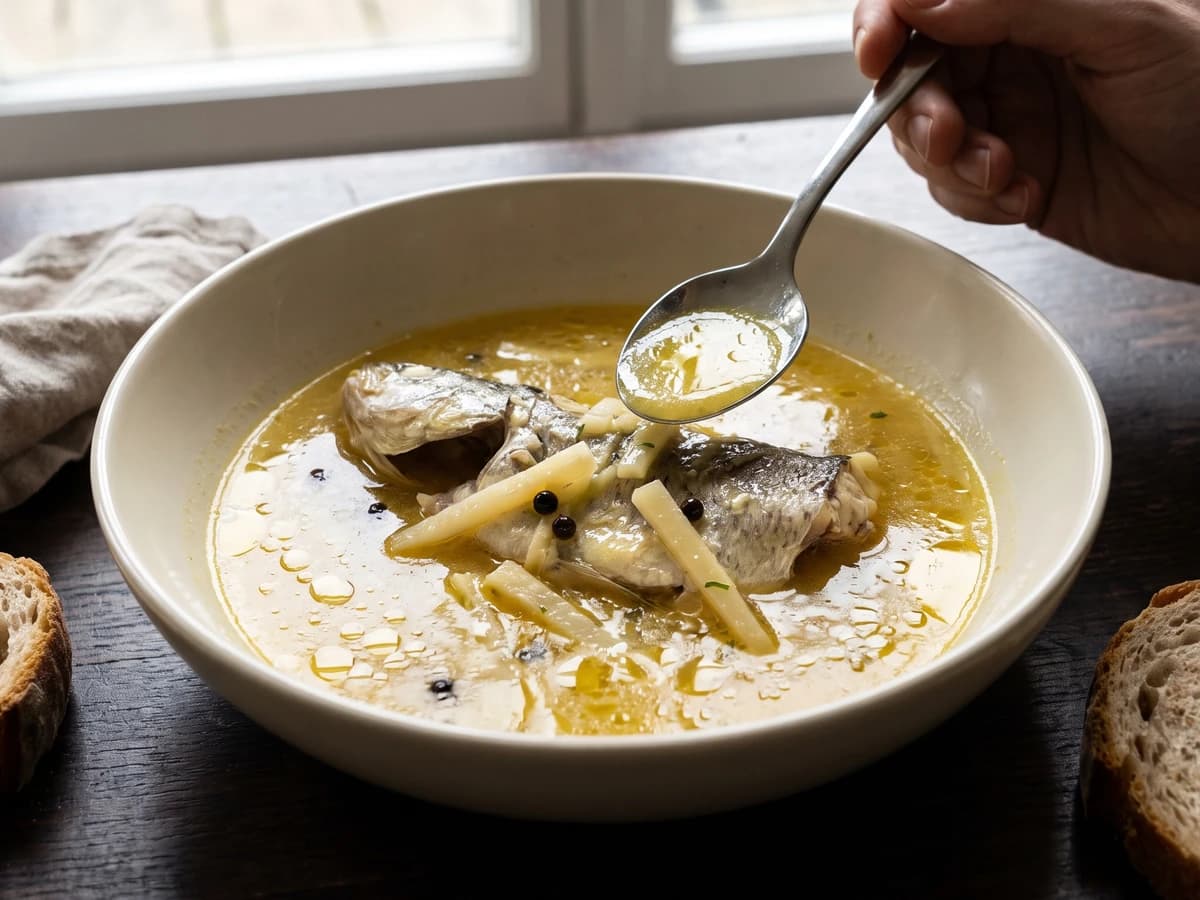
Waterzoi asks fresh, bone-in river fish to thicken its own buttery broth, with parsley root and pepper for company. No flour, no stockpot, just a brisk simmer watched closely.
Chef Juliette
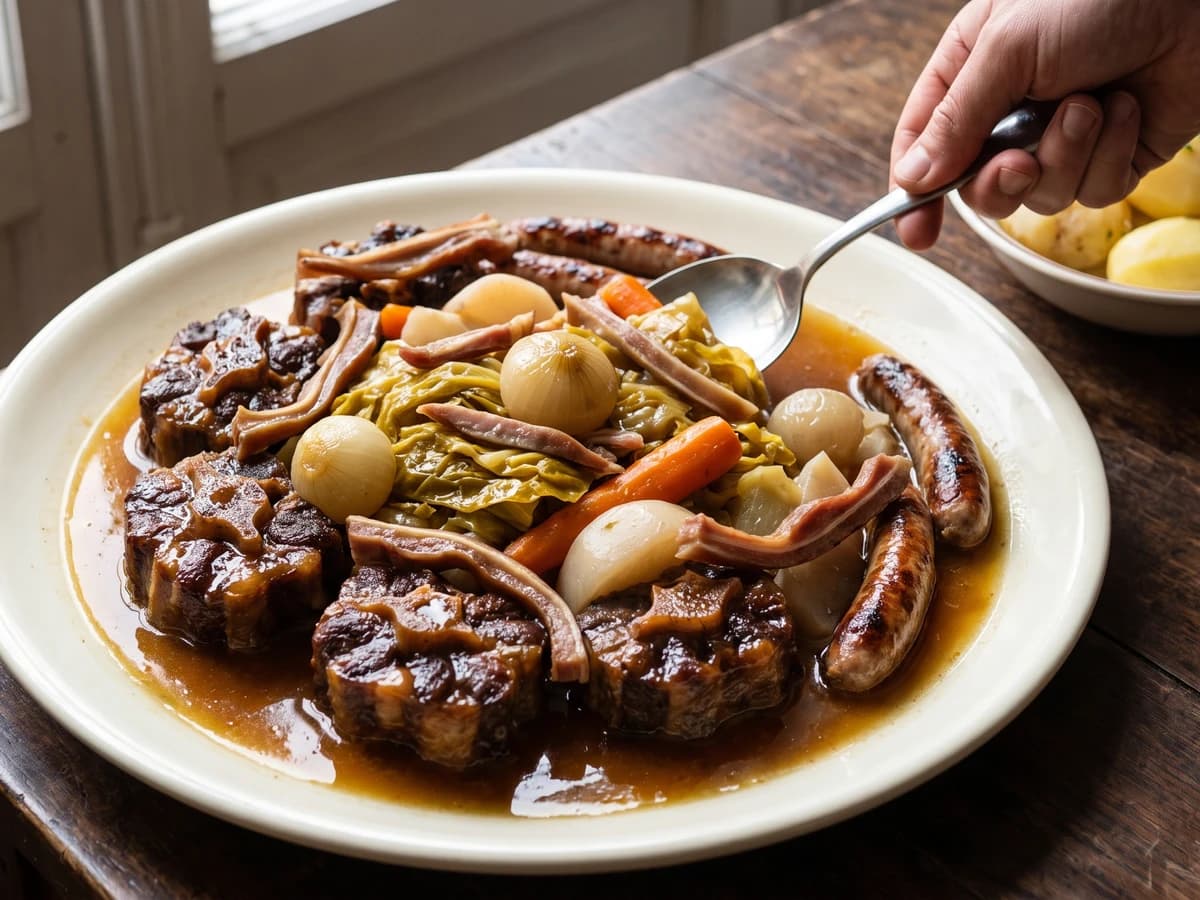
Queue de Bœuf en Hochepot gathers oxtail, pig's trotter and ear, cabbage, roots, and grilled chipolatas around a clear, gelatin-rich broth whose quiet simmer keeps every piece tender and distinct.
Chef Juliette
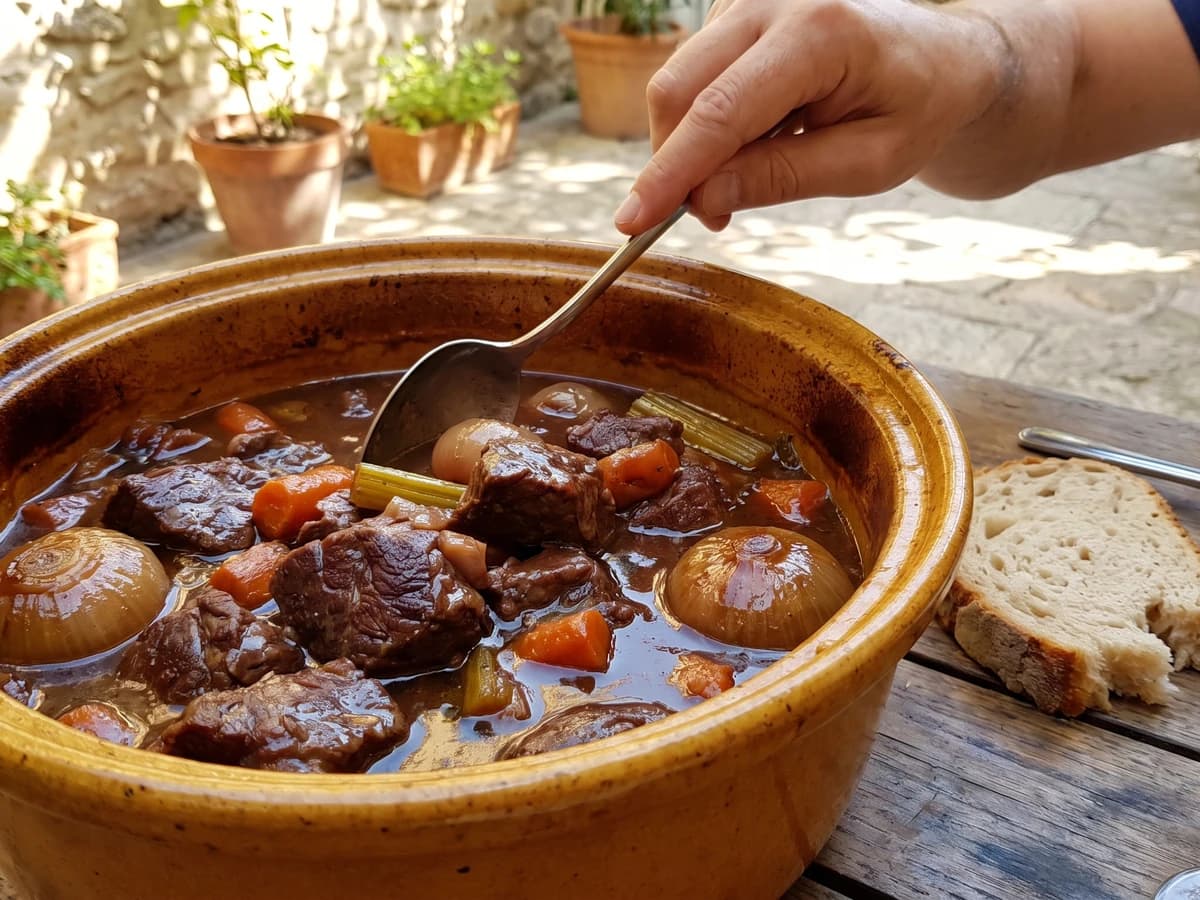
Beef shoulder larded with bacon, sharpened by red wine and vinegar, then sealed with garlic, vegetables, and dry lemon peel until the low oven turns it yielding and the gravy darkly glossy.