Chef Juliette
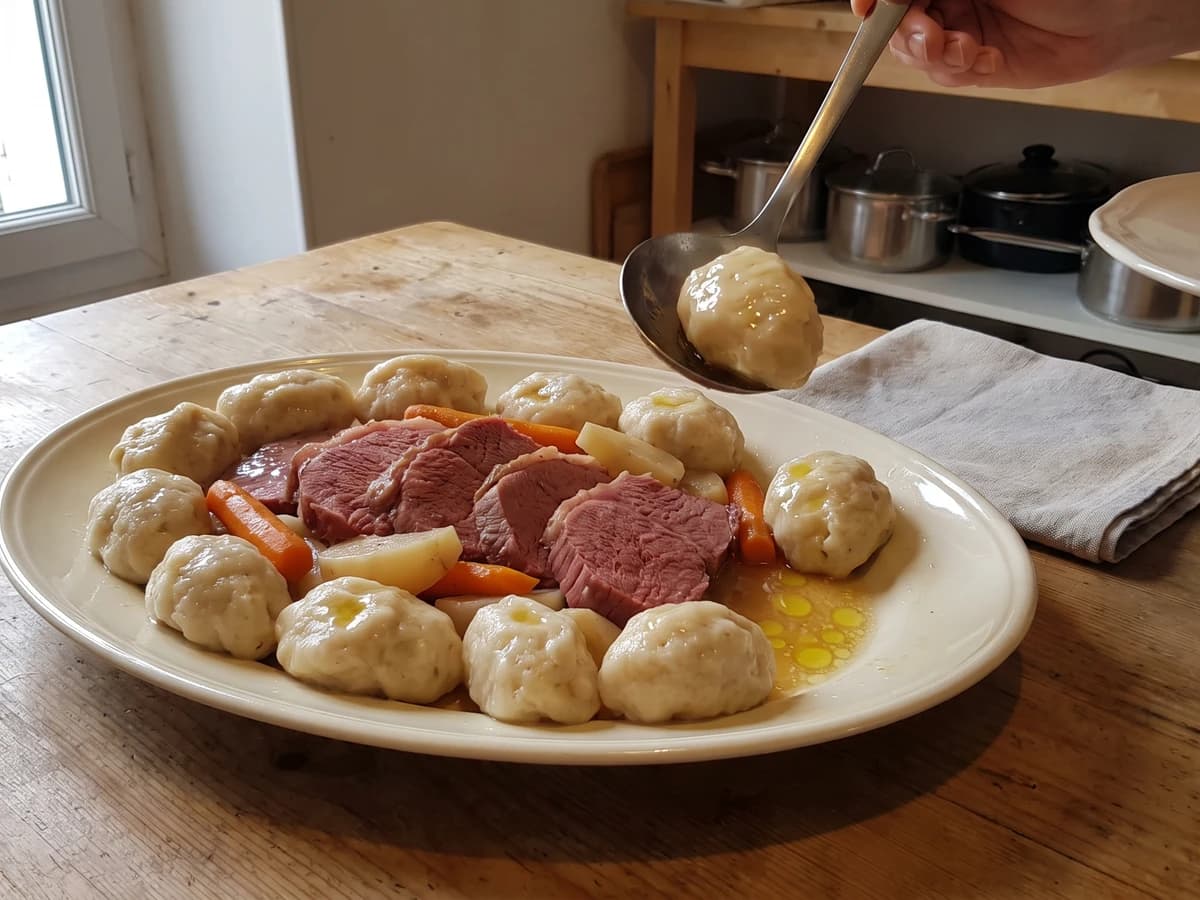
Suet Dumpling
Boulettes au suif, poached beside salt beef, turn equal weights of flour and finely chopped suet into tender, rich dumplings. Keep the beef liquor at a bare tremble and the old garnish works beautifully at home.
A cooking platform built around craft, culture, and the stories behind what we eat.

Created by Chef Juliette
Based on No. 2109, Chou-fleur à la Crème, from Le Guide Culinaire (1907) by Auguste Escoffier
Cauliflower cooked in generous bunches, drained until dry, then rebuilt into its crown and carried to the table with glossy sauce crème apart: a quiet lesson in how water decides a sauce.
Chou-fleur à la crème (cauliflower with cream sauce) teaches one true thing before you touch a pan: cauliflower keeps water between its branches, and that hidden water can undo a careful sauce. Cook it tender, then drain it past the point that seems reasonable. Dry bunches take the sauce cleanly; wet ones leave a pale moat around it.
The classical entry assumed a saucier with sauce crème (classical cream sauce) already hot, several cauliflowers for service, and a proper timbale at hand. It needed neither the stockpot nor the salamander. For one cook, one stove, one evening, we make a small roux-built sauce, use one generous head, and warm a deep serving bowl as the timbale. The separate member of staff and folded-napkin presentation are brigade scaffolding, so they can go. Cutting the head into bunches, draining it hard, rebuilding its form, and serving the sauce apart are the dish, so they stay.
The result is quiet and generous: tender ivory cauliflower gathered into a rounded crown, with enough glossy sauce crème for every person to spoon as they please. Cooking well is not cooking fancy. Watch the draining, because that is the step that decides the whole plate.
Chou-fleur à la crème belongs to the French bourgeois and classical table, particularly the Parisian repertoire, while the cauliflower itself became closely associated with the market gardens of northern Brittany around Saint-Pol-de-Léon. The preparation passed easily between home dining rooms and grand kitchens: cooks divided the head for even cooking, then rebuilt it in a timbale so it reached the table with its familiar form intact. Cream in the title does not make the dish Norman; here à la crème names the finishing sauce, served apart to preserve both the cauliflower's contours and the sauce's body.
Quantity
1 large head, about 2 lb (900 g)
Quantity
3 qt (2.8 L / 2.8 kg)
Quantity
1 1/2 tablespoons (22 ml / 27 g)
for the cooking water
Quantity
3 tablespoons (45 ml / 42 g)
divided
Quantity
2 tablespoons (30 ml / 16 g)
Quantity
1 cup plus 2 tablespoons (270 ml / 276 g)
divided
Quantity
3/4 cup (180 ml / 178 g)
divided
Quantity
1/2 teaspoon (2.5 ml / 3 g)
for the sauce
Quantity
1/8 teaspoon (0.6 ml / 0.3 g)
| Ingredient | Quantity |
|---|---|
| large cauliflower | 1 large head, about 2 lb (900 g) |
| water | 3 qt (2.8 L / 2.8 kg) |
| fine sea saltfor the cooking water | 1 1/2 tablespoons (22 ml / 27 g) |
| unsalted butterdivided | 3 tablespoons (45 ml / 42 g) |
| all-purpose flour | 2 tablespoons (30 ml / 16 g) |
| whole milkdivided | 1 cup plus 2 tablespoons (270 ml / 276 g) |
| heavy creamdivided | 3/4 cup (180 ml / 178 g) |
| fine sea saltfor the sauce | 1/2 teaspoon (2.5 ml / 3 g) |
| ground white pepper | 1/8 teaspoon (0.6 ml / 0.3 g) |
Pull away the large outer leaves, then remove every small leaf tucked between the branches, exactly as the preparation requires. Trim the base without cutting away the branching core. Divide the cauliflower through the stem into 6 to 8 generous bunches, keeping each one broad and rounded enough to help reconstruct the head later. Rinse them under cold water and inspect between the branches. Tiny florets cook unevenly and cannot be rebuilt, so resist chopping further.
Melt 2 tablespoons (30 ml / 28 g) of the butter in a 2-quart saucepan over medium-low heat. Stir in the flour and cook for 2 minutes, letting it bubble gently without taking colour. This roux (butter-and-flour base) gives the sauce its body, and cooking it now removes the raw flour taste. Whisk in 1 cup (240 ml / 245 g) of the milk a little at a time, smoothing each addition before adding the next. Bring it to the gentlest simmer and cook for 5 minutes, whisking along the bottom and corners.
Whisk 1/2 cup (120 ml / 119 g) of the cream into the sauce and simmer gently for 5 to 7 minutes, stirring often, until it nappes the back of a spoon, meaning it leaves an even coating that holds a clean line drawn through it. Take the pan off the heat and whisk in the remaining 1/4 cup (60 ml / 59 g) cream, the remaining 1 tablespoon (15 ml / 14 g) butter, the sauce salt, and the white pepper. If it is thin, return it to a quiet simmer rather than adding more flour. Cover and hold it off the heat while the cauliflower cooks.
Bring the water to a full boil in a large pot and dissolve the cooking salt in it. Lower in the cauliflower bunches and let the water return to a steady boil, then cook uncovered for 7 to 10 minutes. Test the thickest stem with the point of a small knife; it should enter easily but meet a faint resistance at the centre. Lift smaller bunches as soon as they are ready. If you boil everything until the largest piece collapses, there will be no cauliflower left to reconstruct.
Lift the bunches into a colander and shake it gently. Leave them for 2 minutes with the stems pointing upward so water can escape from the branches, then arrange them cut-side down on a thick, clean kitchen towel for another 5 minutes. This is not waiting for its own sake; it is the dish. If droplets still collect underneath, return the bunches to the empty, still-warm pot for 30 seconds off the heat, rolling them carefully so the residual warmth dries them without colouring.
Fill a 1 1/2-quart deep serving bowl or timbale with hot tap water, empty it, and dry it thoroughly. Set the largest curved bunches around the wall with their flowered sides upward and their stems pointing inward. Fill the centre with the smaller bunches, fitting them together into a rounded crown without crushing them. The aim is the recognizable form of a whole cauliflower, generously reconstructed rather than forced into perfect geometry.
Return the sauce crème to low heat and whisk until smooth and glossy. If holding has made it too thick, add the reserved milk a teaspoon at a time; if butter beads at the edge, take the pan off the heat and whisk in one teaspoon of that milk until the sauce gathers again. Taste for seasoning, pour the sauce into a warmed sauce boat, and carry it beside the timbale rather than coating the cauliflower in advance. Each person spoons the sauce over their own serving, while both cauliflower and sauce keep their proper texture. À table!
1 serving (about 340g)
Culinary guides, cultural storytelling, and the editorial depth that makes cooking meaningful.
Discover Culinary ExplorerChef Juliette
Boulettes au suif, poached beside salt beef, turn equal weights of flour and finely chopped suet into tender, rich dumplings. Keep the beef liquor at a bare tremble and the old garnish works beautifully at home.

Chef Juliette
Bread, flour, frangipane, and rice become four cool, supple panades for binding forcemeats, each changing body and flavor while preserving tenderness. The finest Mousselines need none, and knowing that distinction is the lesson.

Chef Juliette
Panade au pain is bread, milk, salt, heat, and attention: stir until the paste releases cleanly, butter it against a skin, and you have the quiet binder behind tender French farces.

Chef Juliette
Panade de farine teaches the drying stroke behind pâte à choux: flour meets boiling buttered water, then stays over the fire until the paste gathers, smooths, and quits the pan cleanly.