Chef Juliette
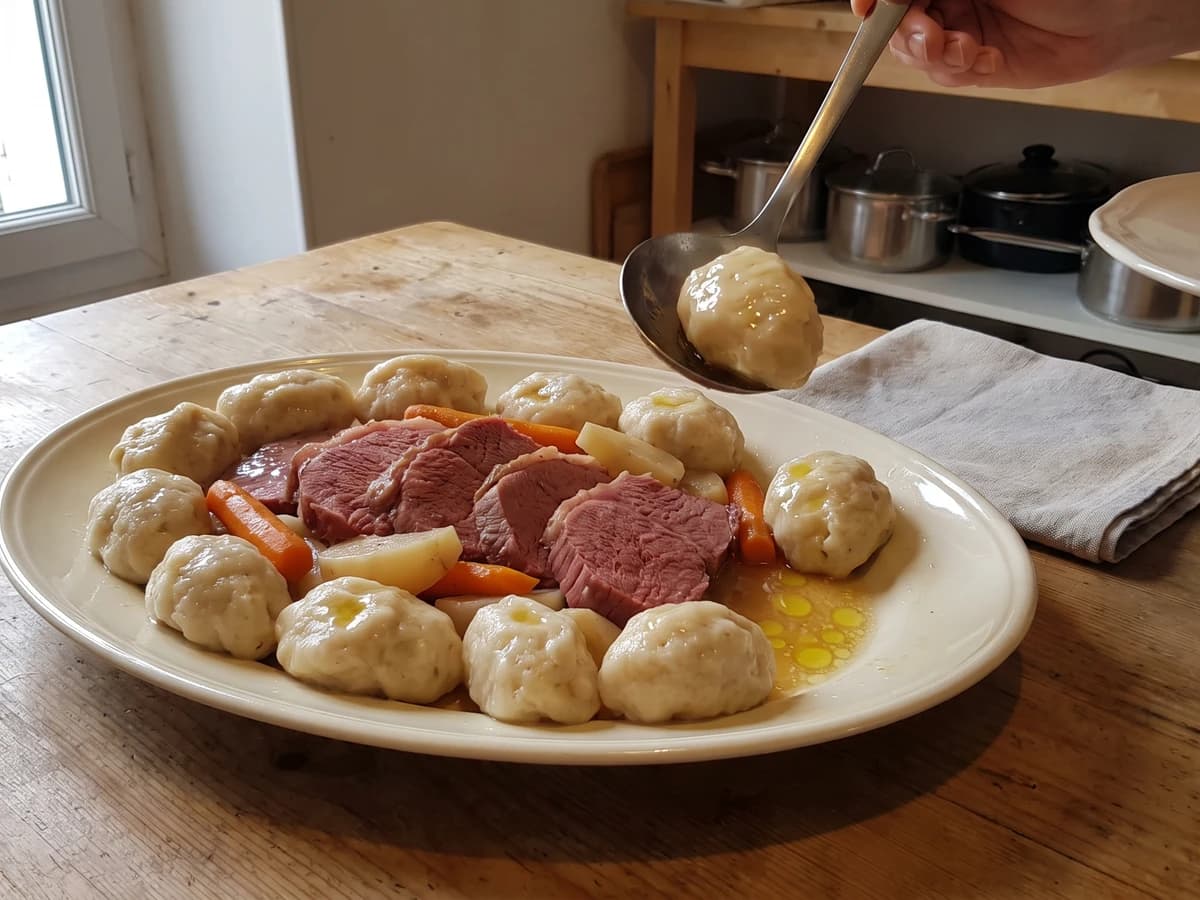
Suet Dumpling
Boulettes au suif, poached beside salt beef, turn equal weights of flour and finely chopped suet into tender, rich dumplings. Keep the beef liquor at a bare tremble and the old garnish works beautifully at home.
A cooking platform built around craft, culture, and the stories behind what we eat.

Created by Chef Juliette
Based on No. 2108, Cauliflower and Broccoli (Chou-fleur et Broccoli), from Le Guide Culinaire (1907) by Auguste Escoffier
Blanch first, dry completely, then let real butter and a wide pan do their work: ivory cauliflower, green-violet broccoli, bronzed at the edges and glossed for the weeknight table.
Chou-fleur et brocoli (cauliflower and broccoli) teaches the cleanest rule in vegetable cookery: water cooks the center, butter finishes the surface. The one true thing to know before touching the skillet is that blanched vegetables must be dry. Leave water clinging to them and they simmer in diluted butter; dry them well and the butter can bronze their edges before settling into a fine gloss.
The source entry assumed a brigade blanching vegetables in volume and a cook who already understood that a large, firmly headed broccoli could follow cauliflower's treatment. For this sautéed preparation, no saucier, stockpot, or salamander is called for; the honest home equivalent is one saucepan, one wide skillet, and four servings. Holding great batches for service is brigade scaffolding and goes. Blanching to the right resistance, drying thoroughly, and finishing in real butter are the dish, so they stay.
At the table, the cauliflower should remain ivory with small bronze faces, while the broccoli keeps its green or violet color and a little firmness beneath the teeth. The butter gathers around both without drowning either. Before the vegetables meet the pan, dry every cut surface until it looks matte. That is the step that decides everything.
Chou-fleur et brocoli belongs to French classical vegetable service rather than to one regional table. In the Mediterranean market gardens of southern France, headed broccoli was described as growing far larger than English plants, whose deep-violet flowers could remain scattered among the leaves instead of closing into a single head. Classical cooks therefore treated large headed broccoli as cauliflower's kitchen cousin, carrying both through the same blanching and butter finishes while adjusting only for tenderness.
Quantity
1 small head (about 1 lb / 450 g)
cut into 1½-inch (4 cm) florets with the tender core sliced
Quantity
1 large head (about 12 oz / 340 g)
cut into 2-inch (5 cm) florets with the peeled stem sliced
Quantity
3 qt (2.8 L / 2.8 kg)
Quantity
1 tbsp plus ½ tsp (17.5 ml / 21 g)
divided
Quantity
4 tbsp (60 ml / 57 g)
divided, with 1 tablespoon kept cold
| Ingredient | Quantity |
|---|---|
| cauliflowercut into 1½-inch (4 cm) florets with the tender core sliced | 1 small head (about 1 lb / 450 g) |
| broccoli, green or violetcut into 2-inch (5 cm) florets with the peeled stem sliced | 1 large head (about 12 oz / 340 g) |
| water | 3 qt (2.8 L / 2.8 kg) |
| fine sea saltdivided | 1 tbsp plus ½ tsp (17.5 ml / 21 g) |
| unsalted butterdivided, with 1 tablespoon kept cold | 4 tbsp (60 ml / 57 g) |
Trim away damaged leaves but keep the tender cauliflower core and broccoli stem. Cut the cauliflower into 1½-inch (4 cm) florets. Make the broccoli florets slightly larger, about 2 inches (5 cm), because their crowns cook more quickly; peel the fibrous skin from the stem and slice its tender center. Even pieces finish together, which matters more than making them look identical.
Bring the water to a full boil in a large saucepan and add 1 tablespoon of the salt. Add the cauliflower and its sliced core, then blanch for 3 to 4 minutes, until a knife enters a stem with firm resistance. Lift it onto a towel-lined tray. Return the water to a boil, add the broccoli and its stem, and blanch for about 2 minutes, until vivid and barely tender. Reserve ¼ cup (60 ml / 60 g) of the cooking water, then lift out the broccoli. If either vegetable has softened more than intended, spread it out immediately and shorten its time in the skillet; gentle handling will preserve the florets.
Spread both vegetables in a single layer and leave them for 3 minutes so their trapped heat can carry off moisture. Turn them gently and blot every surface with a clean towel. They are ready when the crowns and cut stems look matte rather than wet. This isn't fussy work: water left on the florets turns the butter finish thin and prevents browning.
Melt 2 tablespoons of the butter in a 12-inch (30 cm) skillet over medium-high heat. When it foams, arrange the cauliflower with several cut faces against the pan and leave it undisturbed for 2 minutes, then turn and cook for 1 minute more. Transfer it to the tray. Add 1 tablespoon butter, sauté the broccoli for about 2 minutes, then return the cauliflower. If moisture collects and the pan begins boiling instead of sizzling, stop tossing and let the liquid evaporate before continuing. If the butter darkens too quickly, add a teaspoon of the reserved cooking water and lower the heat.
Add 2 tablespoons (30 ml / 30 g) of the reserved cooking water and scrape up the light brown film from the skillet. Toss over high heat for 20 to 30 seconds, until only a spoonful of liquid remains, then take the pan off the heat. Montez au beurre (finish by tossing in cold butter) with the remaining tablespoon of butter until the liquid and butter join into a thin, glossy coating. If the finish looks oily, add a teaspoon of hot cooking water and toss again off the heat. Ça se rattrape. Taste, add as much of the remaining salt as the vegetables need, and serve at once. À table!
1 serving (about 195g)
Culinary guides, cultural storytelling, and the editorial depth that makes cooking meaningful.
Discover Culinary ExplorerChef Juliette
Boulettes au suif, poached beside salt beef, turn equal weights of flour and finely chopped suet into tender, rich dumplings. Keep the beef liquor at a bare tremble and the old garnish works beautifully at home.

Chef Juliette
Bread, flour, frangipane, and rice become four cool, supple panades for binding forcemeats, each changing body and flavor while preserving tenderness. The finest Mousselines need none, and knowing that distinction is the lesson.

Chef Juliette
Panade au pain is bread, milk, salt, heat, and attention: stir until the paste releases cleanly, butter it against a skin, and you have the quiet binder behind tender French farces.

Chef Juliette
Panade de farine teaches the drying stroke behind pâte à choux: flour meets boiling buttered water, then stays over the fire until the paste gathers, smooths, and quits the pan cleanly.