Chef Juliette
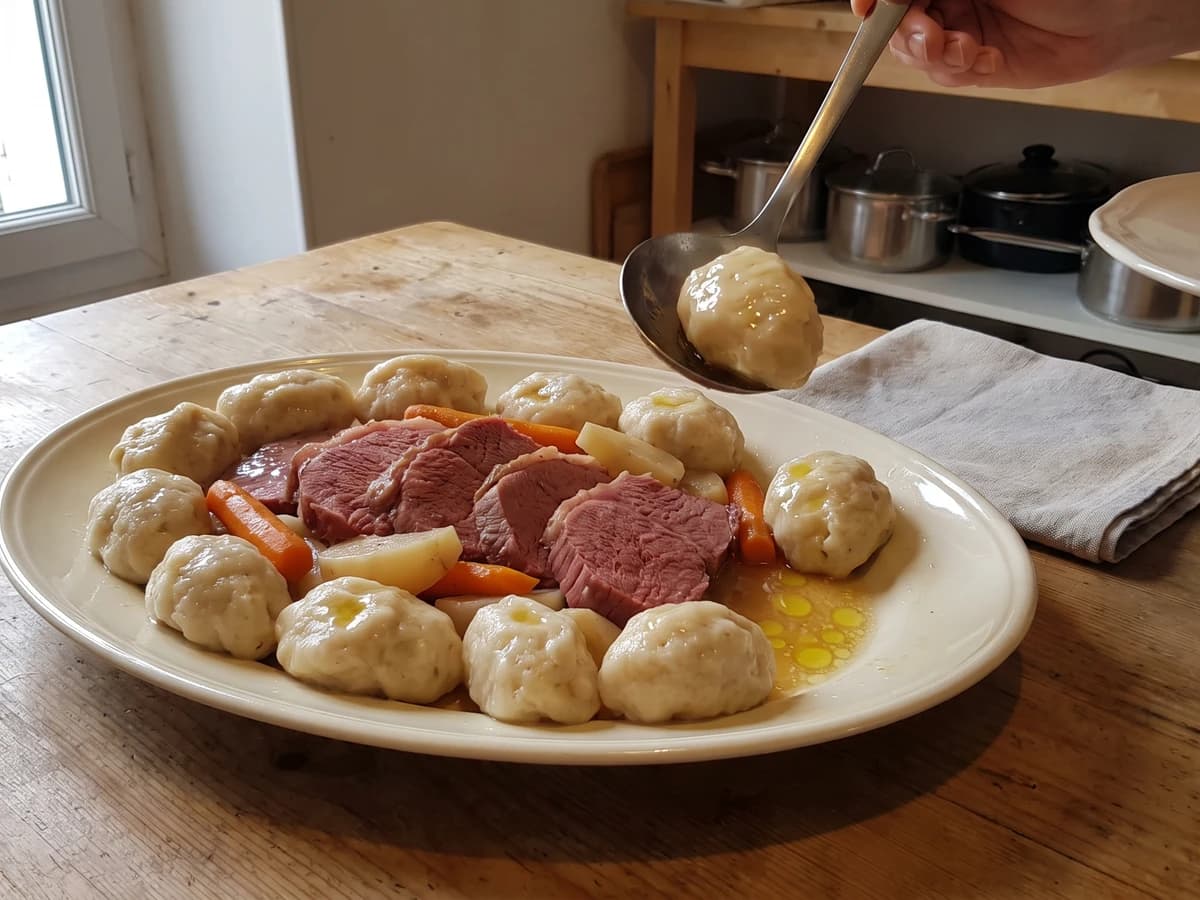
Suet Dumpling
Boulettes au suif, poached beside salt beef, turn equal weights of flour and finely chopped suet into tender, rich dumplings. Keep the beef liquor at a bare tremble and the old garnish works beautifully at home.
A cooking platform built around craft, culture, and the stories behind what we eat.
Created by Chef Juliette
Based on No. 2100, Braised Cabbage, from Le Guide Culinaire (1907) by Auguste Escoffier
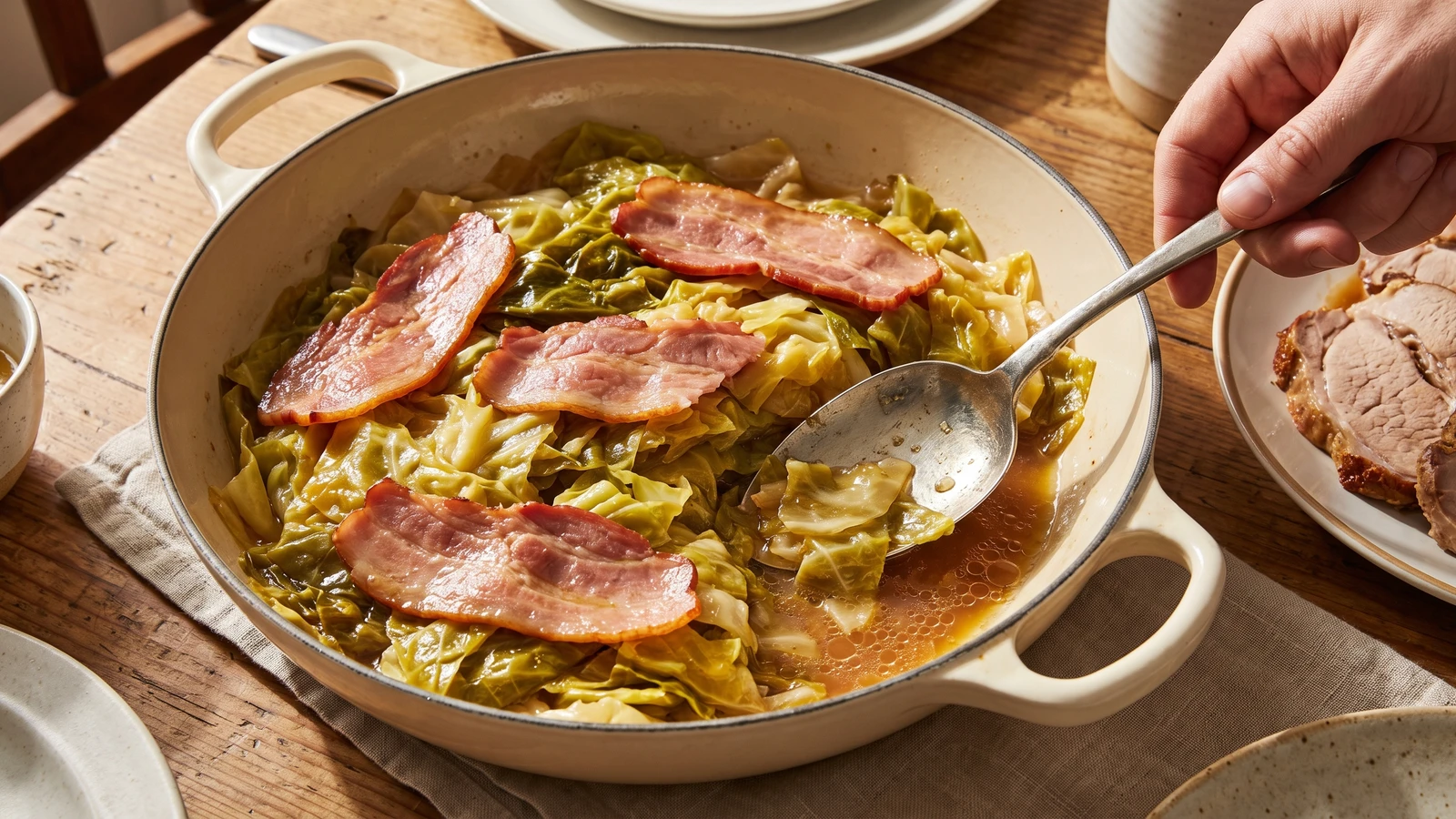
Parboiled cabbage settles between bacon and aromatic vegetables, then braises for two quiet hours in consommé until sweet, tender, and glossy, with none of the rankness that hurried cabbage brings.
Chou braisé teaches that a long braise begins with what you remove. Parboiling draws out the cabbage's rank, sulfurous edge before the leaves meet bacon and consommé. Skip that step, or hurry it, and two hours in a covered pot concentrate the very flavor you meant to soften.
The original assumed a marmite, the stockpot never off the fire, with clear consommé and graisse de marmite (stock fat) ready beside the stove. A 2-pound cabbage gives four generous side portions, so this home translation keeps the book's consommé and fat ratios intact. Good prepared consommé replaces the daily stockpot, while unsalted butter replaces skimmed stock fat only when you have none saved. Those supporting preparations are brigade scaffolding. The trimmed leaves, bacon lining, and full two-hour braise are the dish and must stay. One cook, one stove, one evening.
What emerges is humble and magnificent: soft folds of cabbage carrying the savor of bacon, the sweetness of carrot and onion, and just enough glossy liquor to moisten the plate. Before you touch the braising pot, give the parboil its full time and cool the cabbage promptly. That is the step that decides the dish.
Chou braisé belongs to the cuisine bourgeoise and bistro tables of northern and central France, where fresh cabbage, cured pork, and broth naturally shared the cold-weather pot. Classical kitchens refined that household practice by separating the leaves, trimming every coarse rib, and laying bacon above and below so the cabbage basted as it softened. It is not choucroute: Alsace's cabbage is fermented before cooking, while chou braisé begins fresh and is deliberately mellowed in boiling water.
Quantity
1 medium head (about 2 pounds / 900 g)
Quantity
8 ounces (225 g / about 8 to 10 slices)
Quantity
1 medium (about 4 ounces / 115 g)
quartered lengthwise
Quantity
1 medium (about 5 ounces / 140 g)
peeled
Quantity
1 clove
Quantity
1
2 parsley stems, 1 thyme sprig, and 1 bay leaf tied together
Quantity
1½ cups plus 1 tablespoon (375 ml / 375 g)
Quantity
3 tablespoons (45 ml / 42 g)
Quantity
½ teaspoon (2.5 ml / 3 g), or less if the bacon and consommé are salty
Quantity
½ teaspoon (2.5 ml / 1 g)
| Ingredient | Quantity |
|---|---|
| firm green cabbage | 1 medium head (about 2 pounds / 900 g) |
| thick-cut bacon, preferably unsmoked | 8 ounces (225 g / about 8 to 10 slices) |
| carrotquartered lengthwise | 1 medium (about 4 ounces / 115 g) |
| yellow onionpeeled | 1 medium (about 5 ounces / 140 g) |
| garlic | 1 clove |
| bouquet garni2 parsley stems, 1 thyme sprig, and 1 bay leaf tied together | 1 |
| beef consommé, preferably low-sodium | 1½ cups plus 1 tablespoon (375 ml / 375 g) |
| stock fat, or unsalted butter as the home equivalent | 3 tablespoons (45 ml / 42 g) |
| fine salt | ½ teaspoon (2.5 ml / 3 g), or less if the bacon and consommé are salty |
| freshly ground black pepper | ½ teaspoon (2.5 ml / 1 g) |
Bring a large pot of water to a full boil. Quarter the cabbage through its core so the wedges hold together, then lower them into the water. Once the water returns to a boil, parboil for 8 to 10 minutes, turning the wedges once, until the outer leaves bend easily and the raw, sulfurous smell has softened. Drain immediately and cool under cold running water or in a bowl of cold water, then drain again. Taste a small piece from an outer leaf. If it remains sharply rank, return the wedges to fresh boiling water for 2 minutes and cool them once more. Ça se rattrape. This first water carries away the rankness, so discard it.
Separate the cooled quarters into individual leaves. Discard the coarse outside leaves, then cut a narrow V around the thick central midrib of each remaining leaf and remove it. Pat the leaves dry without wringing them, since excess water would dilute the consommé. Taste the bacon and consommé before seasoning, then distribute the salt and pepper lightly over the leaves. Use less salt if either is already assertive.
Heat the oven to 300°F (150°C). Line the bottom of a 4-quart heavy lidded casserole with half the bacon. Fold the cabbage leaves loosely and pack them over the bacon without crushing them. Pierce the onion with the tip of a small knife and push the garlic clove into the opening, then tuck the onion, carrot quarters, and bouquet garni among the cabbage. Pour in the consommé, dot the surface with the stock fat or butter, and cover the cabbage completely with the remaining bacon. The old tied herb bundle is simply a bouquet garni here; only the name has changed.
Cover the casserole and set it over medium heat until the consommé reaches a definite boil. Transfer it immediately to the oven and braise gently for 2 hours. Look once after the first hour and spoon the liquor over any exposed leaves. The pot should show only an occasional quiet bubble. If it is boiling hard, lower the oven to 275°F (135°C); if the bottom is nearly dry, add ¼ cup (60 ml / 60 g) hot water or additional consommé. At the end, a spoon should pass through the cabbage without resistance, while the leaves remain gathered rather than dissolving.
Remove and discard the bouquet garni, onion, garlic, and carrot; they have given the pot what it needed. Lift out the upper bacon slices, transfer the cabbage to a warm shallow serving dish, and arrange the bacon over it. Spoon on enough braising liquor to leave the leaves glossy, not flooded. If the liquor is watery, boil it gently for 2 or 3 minutes before spooning it over; if it tastes salty, do not reduce it, simply use less. Finish with black pepper and bring the dish to the table while the edges still glisten. À table!
1 serving (about 365g)
Culinary guides, cultural storytelling, and the editorial depth that makes cooking meaningful.
Discover Culinary ExplorerChef Juliette
Boulettes au suif, poached beside salt beef, turn equal weights of flour and finely chopped suet into tender, rich dumplings. Keep the beef liquor at a bare tremble and the old garnish works beautifully at home.

Chef Juliette
Bread, flour, frangipane, and rice become four cool, supple panades for binding forcemeats, each changing body and flavor while preserving tenderness. The finest Mousselines need none, and knowing that distinction is the lesson.

Chef Juliette
Panade au pain is bread, milk, salt, heat, and attention: stir until the paste releases cleanly, butter it against a skin, and you have the quiet binder behind tender French farces.

Chef Juliette
Panade de farine teaches the drying stroke behind pâte à choux: flour meets boiling buttered water, then stays over the fire until the paste gathers, smooths, and quits the pan cleanly.