Chef Juliette
Bouillabaisse à la Marseillaise
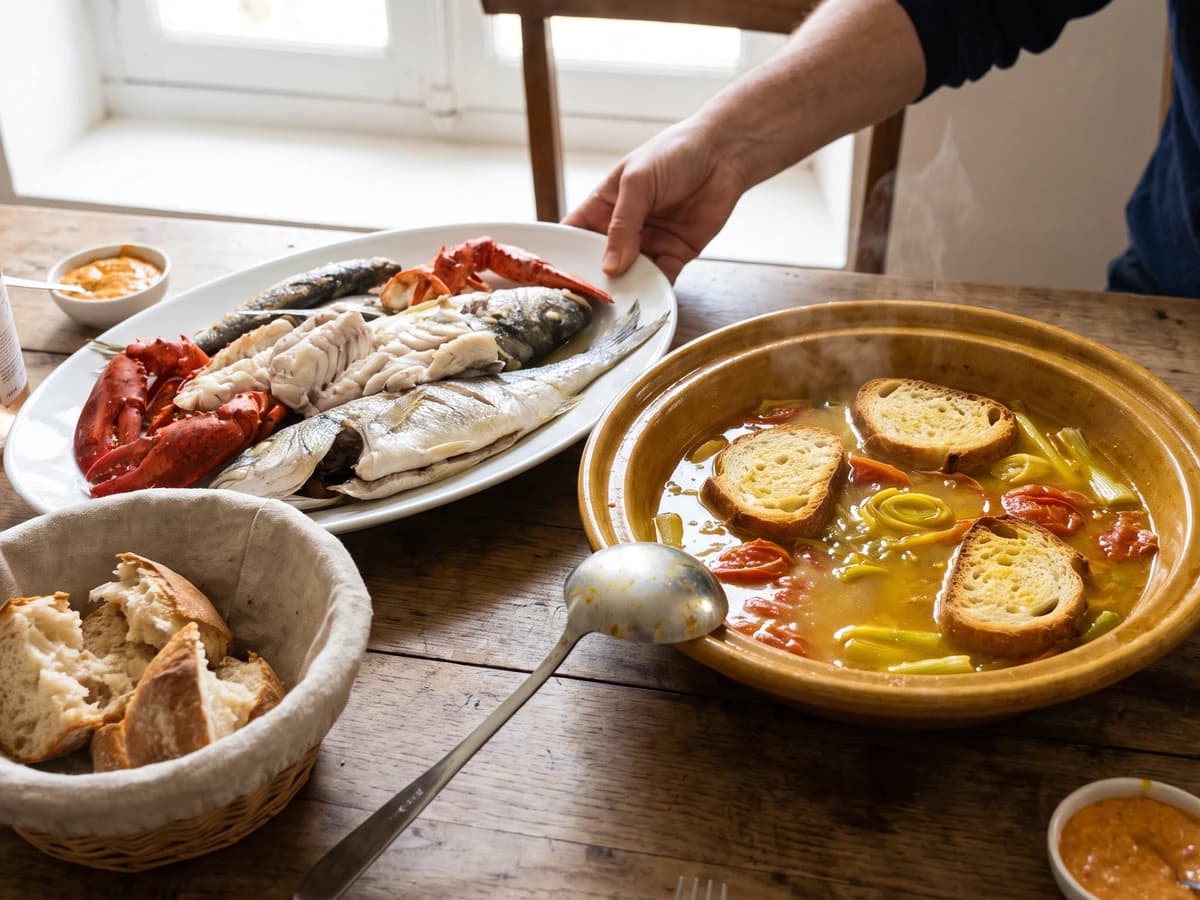
Marseille's great fish stew, saffron-gold and garlic-scented, proves that a hard boil can be the careful choice: it binds olive oil into broth before the whole pot meets bread.
A cooking platform built around craft, culture, and the stories behind what we eat.
Created by Chef Juliette
Based on No. 210, Fish Royale, from Le Guide Culinaire (1907) by Auguste Escoffier
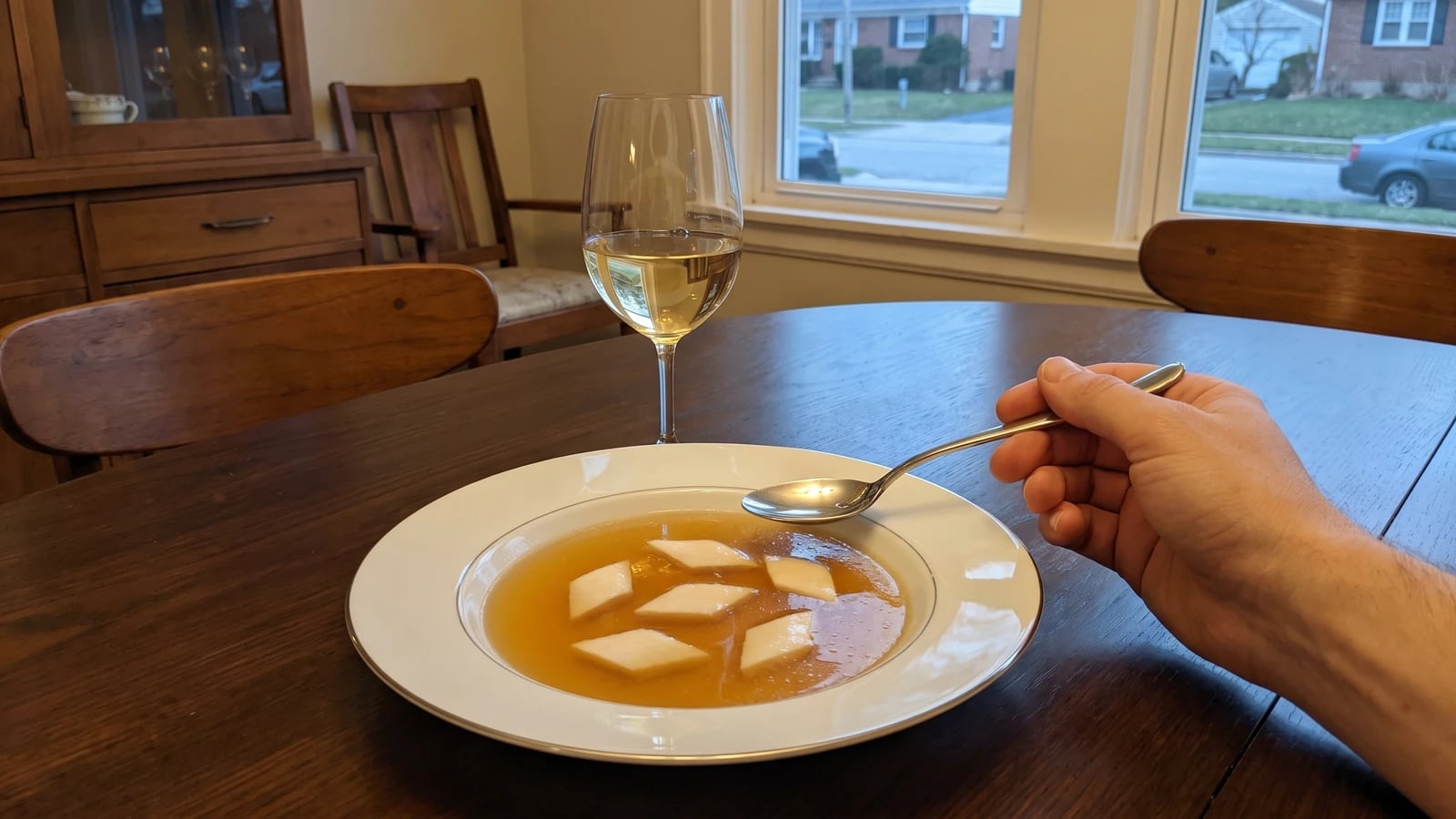
A silken royale de poisson, sole worked with cold Béchamel and cream, bound with yolks, gently poached, cut into ivory diamonds, and served beneath clear fish consommé.
Royale de poisson (fish royale) teaches the quiet discipline of liaison, binding with yolks so gently that a clear soup receives a custard as smooth as satin. The one true thing to know before touching a pan is this: heat may set the royale, but it must never bully it. Brown the sole or boil the bain-marie and the texture coarsens.
The original formula assumed a saucier with cold Béchamel ready, a fish consommé never off the fire, a cloth tammy, and shelves of moulds. At home, a mini processor replaces the pounding mortar, a fine sieve replaces the tammy, and one shallow pan replaces the brigade's moulds. A salamander would brown what must remain pale, so it has no place here. What changed is the equipment and service scale; what stayed is the book's proportion of four ounces sole, two tablespoons Béchamel, one-quarter pint cream, and five yolks, added in that exact order. One cook, one stove, one evening.
The finished royale should be ivory and tender enough to yield under the spoon, yet firm enough to cut cleanly in the brilliant consommé. Cooling the fish is essential, and passing the paste through the sieve is the dish rather than brigade scaffolding. Above all, guard the bain-marie: it should barely quiver from beginning to end.
Royale de poisson belongs to the formal soup course of Parisian grand cuisine, where royales were poached custards used to give clear consommés delicacy, contrast, and substance. From the grand kitchen the technique passed into bourgeois dining rooms, where one shallow mould and a knife replaced trays of individual shapes. Despite its cream and Béchamel, the royale is not a cream soup or bisque; it is the pale fish custard placed inside a clear consommé.
Quantity
4 ounces (113 g)
checked for bones and cut into small cubes
Quantity
1 tablespoon (15 ml / 14 g)
divided
Quantity
2 tablespoons (30 ml / 30 g)
thoroughly chilled
Quantity
½ cup plus 1 tablespoon (140 ml / 140 g)
thoroughly chilled
Quantity
¼ teaspoon (1.25 ml / 1.5 g)
Quantity
1 pinch (about 0.1 g)
freshly grated
Quantity
5 (about 90 g)
Quantity
2 quarts (8 cups / 1.9 L / about 1.9 kg)
kept hot but below a boil
| Ingredient | Quantity |
|---|---|
| skinless sole filletchecked for bones and cut into small cubes | 4 ounces (113 g) |
| unsalted butterdivided | 1 tablespoon (15 ml / 14 g) |
| prepared Béchamelthoroughly chilled | 2 tablespoons (30 ml / 30 g) |
| heavy creamthoroughly chilled | ½ cup plus 1 tablespoon (140 ml / 140 g) |
| fine salt | ¼ teaspoon (1.25 ml / 1.5 g) |
| nutmegfreshly grated | 1 pinch (about 0.1 g) |
| large egg yolks | 5 (about 90 g) |
| finished clear fish consommékept hot but below a boil | 2 quarts (8 cups / 1.9 L / about 1.9 kg) |
Heat the oven to 300°F (150°C). Use about one teaspoon of the butter to coat a shallow 6 by 8-inch (15 by 20 cm) mould, then line its base with parchment and butter the parchment lightly. Set the mould inside a deep roasting pan. Keep the Béchamel and cream in the cold until the moment they are needed.
Melt the remaining butter in a small heavy pan over low heat. Add the sole, cover, and étuver, meaning stew it gently in butter without browning, for 4 to 6 minutes. Turn the cubes once; they are ready when opaque and tender, with no golden crust. If the butter begins to colour, take the pan off the heat immediately and lower the flame. Pale is correct here.
Transfer the sole and its buttery juices to a plate, spread them out, and cool completely, chilling for about 15 minutes once the first heat has gone. Process the cold fish to a very fine paste. Add the cold Béchamel little by little, processing briefly after each addition, then work in the cream in four additions. Season with the salt and nutmeg. Keep the machine bursts short because air makes holes and warmth loosens the emulsion. If the paste turns oily around the edges, stop and set the processor bowl over ice for 5 minutes, then pulse again. Ça se rattrape.
Press the fish mixture through a sturdy fine-mesh sieve into a cold bowl, using a flexible scraper and collecting the smooth paste from the underside. This is the home equivalent of the cloth tammy. Do not skip it: processing makes the fish fine, but passing it removes the last fibres and gives the royale its seamless texture.
Whisk the five yolks only enough to loosen them, without making a foam. Stir them gently into the sieved fish base in three additions until the mixture is perfectly even. Do not return it to the processor after the yolks go in; the binding should remain dense and quiet, not whipped.
Pour the mixture into the prepared mould and tap it once against a folded towel to release large air bubbles. Cover loosely with foil. Pour hot water into the roasting pan until it reaches halfway up the mould, then bake for 25 to 35 minutes. The water should barely quiver, never bubble hard, and the royale is ready when the edges are set, the centre retains a faint tremble, and an instant-read thermometer reaches 160 to 165°F (71 to 74°C). If the water begins boiling, lift out a cupful, replace it with cool water, and lower the oven temperature. The custard can still finish smoothly.
Lift the mould from the bain-marie and let it stand for 10 minutes, then chill for at least 1 hour. Run a thin knife around the edge, invert the royale onto a board, and remove the parchment. Cut it into small diamonds or neat cubes about ½ inch (1.25 cm) across. The single shallow mould is the honest replacement for a brigade's collection of individual moulds, and it produces cleaner portions with far less handling.
Bring the fish consommé to a bare simmer and correct its seasoning. Warm eight shallow soup plates, arrange several pieces of royale in each, and ladle the hot consommé gently around them. Do not boil the royale in the broth, which would tighten the yolks and roughen its edges. Serve at once. À table!
1 serving (about 285g)
Culinary guides, cultural storytelling, and the editorial depth that makes cooking meaningful.
Discover Culinary ExplorerChef Juliette
Marseille's great fish stew, saffron-gold and garlic-scented, proves that a hard boil can be the careful choice: it binds olive oil into broth before the whole pot meets bread.
Chef Juliette
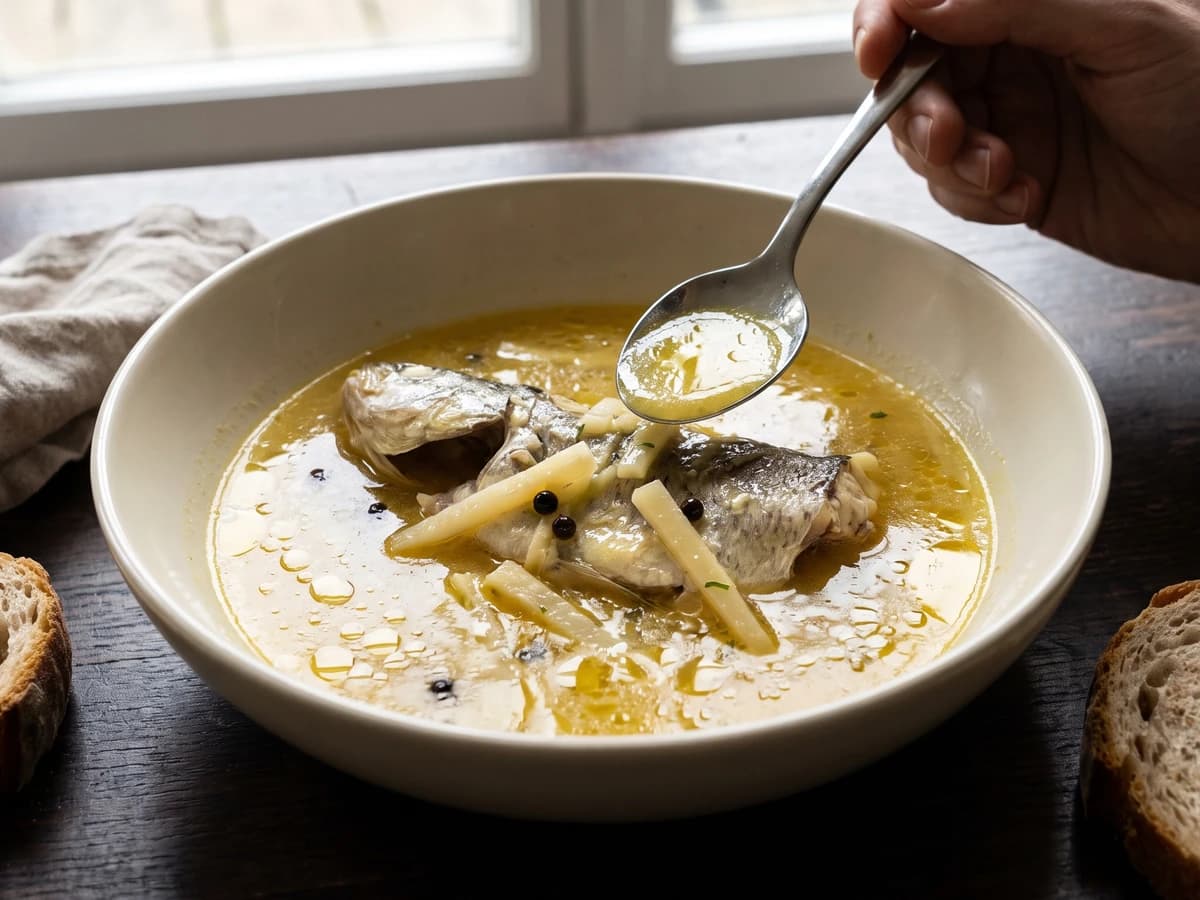
Waterzoi asks fresh, bone-in river fish to thicken its own buttery broth, with parsley root and pepper for company. No flour, no stockpot, just a brisk simmer watched closely.
Chef Juliette
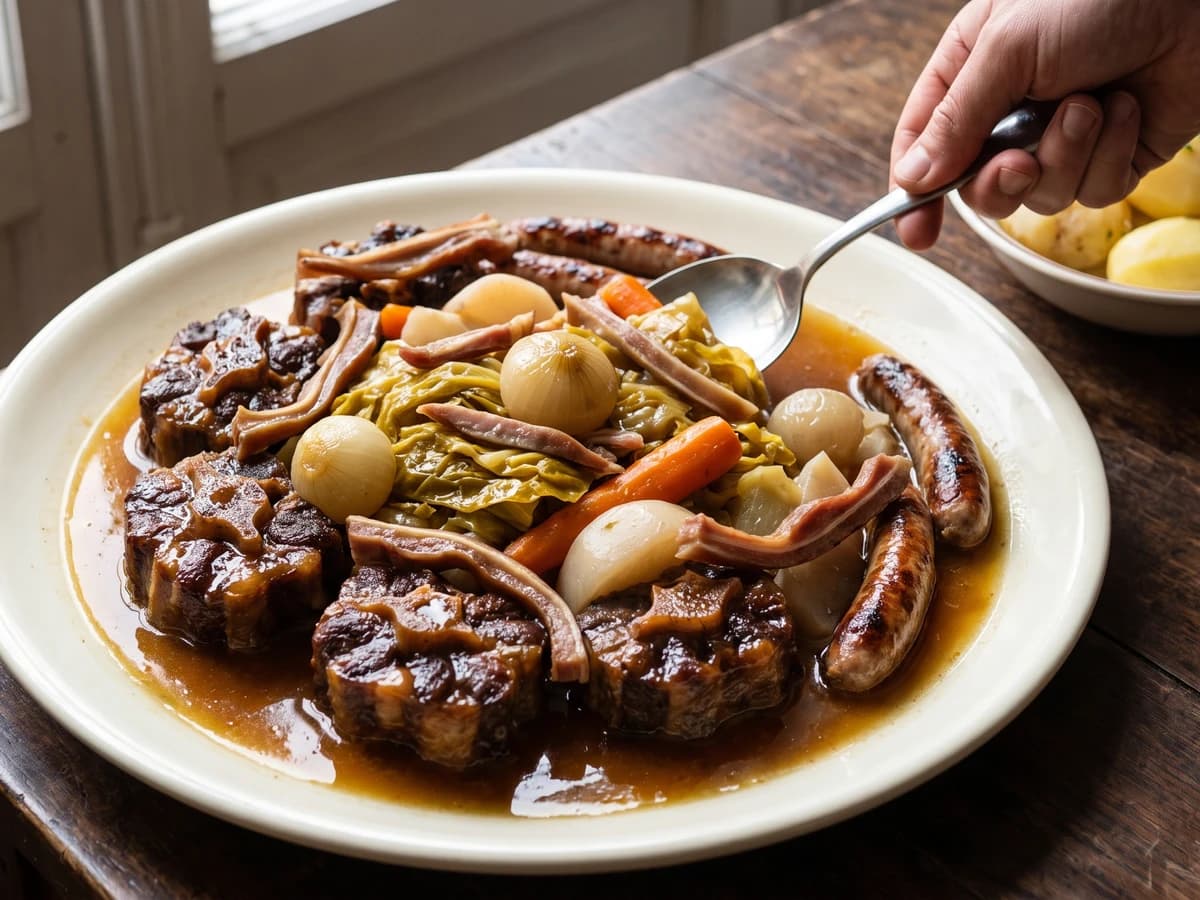
Queue de Bœuf en Hochepot gathers oxtail, pig's trotter and ear, cabbage, roots, and grilled chipolatas around a clear, gelatin-rich broth whose quiet simmer keeps every piece tender and distinct.
Chef Juliette
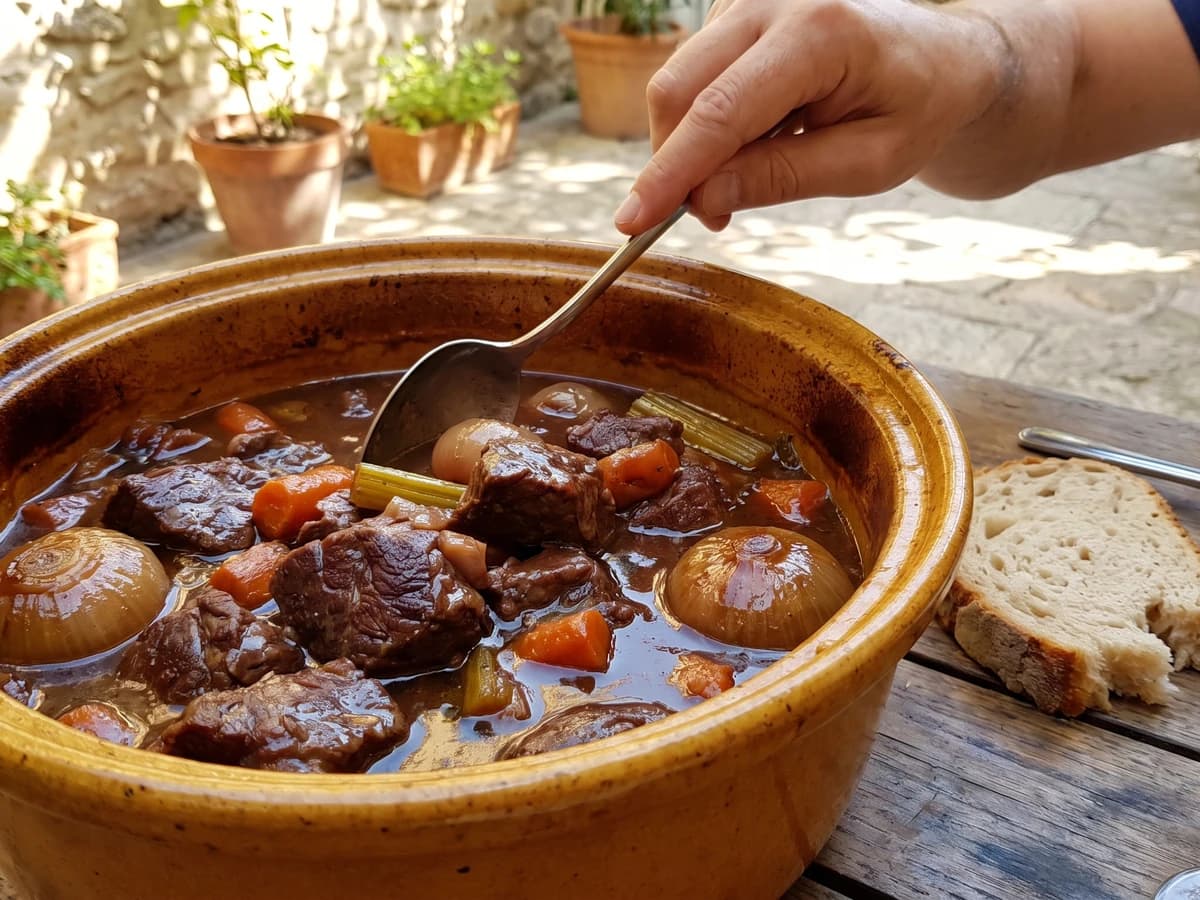
Beef shoulder larded with bacon, sharpened by red wine and vinegar, then sealed with garlic, vegetables, and dry lemon peel until the low oven turns it yielding and the gravy darkly glossy.