Chef Juliette
Suet Dumpling
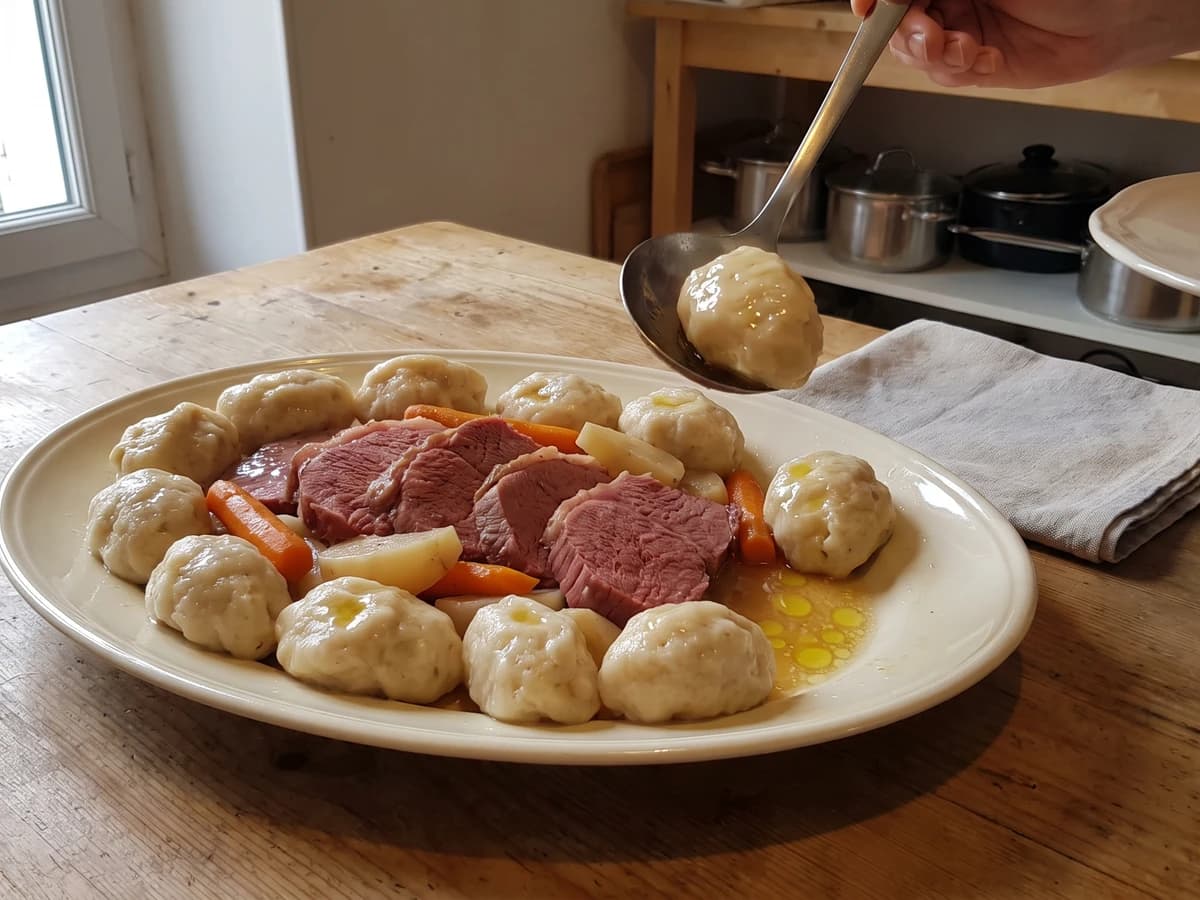
Boulettes au suif, poached beside salt beef, turn equal weights of flour and finely chopped suet into tender, rich dumplings. Keep the beef liquor at a bare tremble and the old garnish works beautifully at home.
A cooking platform built around craft, culture, and the stories behind what we eat.

Created by Chef Juliette
Based on No. 2098, Choux Rouges à la Flamande, from Le Guide Culinaire (1907) by Auguste Escoffier
Fine-cut red cabbage, russet apples, butter, sugar, nutmeg, and vinegar share one covered cocotte, cooking gently until the leaves gleam garnet and the apples soften without disappearing.
Choux Rouges à la Flamande (Flemish-style red cabbage) teaches one exact lesson: vinegar is the only moistening. The covered cabbage must surrender its own water over gentle heat, while butter, nutmeg, sugar, and russet apples turn that sharp beginning into a glossy, sweet-sour braise. Add stock or water and the flavor goes slack; raise the heat and the edges catch before the center softens.
The brigade entry assumes cabbages in the plural, four apples, and a capacious earthenware cocotte. This home translation halves that working proportion to one cabbage, two apples, and half the spoonful of sugar, in a heavy 4-quart lidded cocotte. It did not call for a saucier, a stockpot kept on the fire, or a salamander, and neither do you. The large service batch is scaffolding and can go. The fine julienne, tight cover, late addition of apples, and vinegar alone are the dish, and they stay. One cook, one stove, one evening.
Cut the leaves finely and evenly so they soften at the same pace. If an edge begins to catch, lower the oven, fold that patch toward the center, spoon the cabbage juices over it, and seal the lid more tightly. Ça se rattrape. The step to guard is the heat: keep it gentle from the first minute to the last.
Choux Rouges à la Flamande belongs to French Flanders, the northern country around Lille and the Belgian border, where sweet-sour cabbage and apples sit naturally beside pork, duck, goose, and sausages. The farmhouse combination passed into the classical canon as a vegetable garnish while retaining its covered earthenware cooking and measured balance of vinegar and sugar. Despite its place among baked casseroles, it is not a gratin: no crust should form, and the lid stays on so the cabbage cooks in its own juices.
Quantity
1 medium (about 2 lb / 900 g untrimmed; about 10 cups / 2.4 L / 700 g prepared)
coarse outer leaves and hard core removed, finely julienned
Quantity
2 medium (about 12 oz / 340 g total)
peeled, cored, and quartered
Quantity
2 tablespoons (30 ml / 28 g)
softened
Quantity
3 tablespoons plus up to 1 teaspoon (45 to 50 ml / 45 to 50 g)
reserve the additional teaspoon only for rescuing dry edges
Quantity
1¼ teaspoons (6 ml / 7 g)
Quantity
½ teaspoon (2.5 ml / 1 g)
Quantity
¼ teaspoon (1.25 ml / 0.5 g)
Quantity
1½ teaspoons (7.5 ml / 6 g)
| Ingredient | Quantity |
|---|---|
| red cabbagecoarse outer leaves and hard core removed, finely julienned | 1 medium (about 2 lb / 900 g untrimmed; about 10 cups / 2.4 L / 700 g prepared) |
| russet applespeeled, cored, and quartered | 2 medium (about 12 oz / 340 g total) |
| unsalted buttersoftened | 2 tablespoons (30 ml / 28 g) |
| red wine vinegarreserve the additional teaspoon only for rescuing dry edges | 3 tablespoons plus up to 1 teaspoon (45 to 50 ml / 45 to 50 g) |
| fine sea salt | 1¼ teaspoons (6 ml / 7 g) |
| freshly ground black pepper | ½ teaspoon (2.5 ml / 1 g) |
| freshly grated nutmeg | ¼ teaspoon (1.25 ml / 0.5 g) |
| soft light brown sugar or granulated sugar | 1½ teaspoons (7.5 ml / 6 g) |
Heat the oven to 300°F (150°C), or 285°F (140°C) with convection, with a rack in the lower-middle position. Coat the base and sides of a 4-quart (3.8 L) cocotte generously with all the softened butter. If its lid fits loosely, have a sheet of foil ready to place beneath it; the seal holds the cabbage's own moisture inside.
Quarter the cabbage through the core, pull away any coarse outside leaves, and cut out the hard central stump from each quarter. Slice the leaves crosswise into a fine julienne, about ⅛ inch (3 mm) wide. Keep the ribbons even. Thick pieces remain stubborn while fine ones soften, and this dish gives you no stock or water to cover an uneven cut.
Put the cabbage in a large bowl and scatter over the salt, pepper, and nutmeg. Sprinkle with 3 tablespoons (45 ml) of the vinegar, then turn everything thoroughly until the seasoning is distributed and the leaves carry a light gloss. Pack the cabbage into the buttered cocotte without crushing it, cover tightly, and place it in the oven. Add no water and no stock. Vinegar is the only moistening.
Cook gently for about 1 hour 15 minutes. After 45 minutes, open the cocotte once and turn the cabbage from the outside toward the center, then reseal it at once. It is three-parts cooked when the mound has collapsed, the leaves are glossy and nearly tender, and the thicker ribs retain only a little resistance. If an edge begins to brown or catch, lower the oven to 285°F (140°C), lift the darkened leaves away from the pot, spoon juices from the center over them, and seal the lid with foil beneath it. If the pot is truly dry, use no more than the reserved teaspoon of vinegar. Ça se rattrape.
Nestle the peeled apple quarters among the cabbage and sprinkle the sugar evenly over both. Cover tightly and return the cocotte to the same gentle oven for 35 to 45 minutes. The cabbage is ready when it yields completely under the spoon and the apples accept a knife without resistance while still holding their quartered shape. If the apples soften early, lift them onto a warm plate and return them for the final 5 minutes.
Rest the covered cocotte for 10 minutes, then fold the cabbage once through its buttery crimson juices, handling the apples gently. Taste for salt and pepper. The finished balance should be distinctly sweet-sour, with nutmeg behind it rather than in front, and the cabbage should be tender without dissolving. Bring the cocotte directly to the table beside roast pork, duck, goose, or sausages. À table!
1 serving (about 235g)
Culinary guides, cultural storytelling, and the editorial depth that makes cooking meaningful.
Discover Culinary ExplorerChef Juliette
Boulettes au suif, poached beside salt beef, turn equal weights of flour and finely chopped suet into tender, rich dumplings. Keep the beef liquor at a bare tremble and the old garnish works beautifully at home.

Chef Juliette
Bread, flour, frangipane, and rice become four cool, supple panades for binding forcemeats, each changing body and flavor while preserving tenderness. The finest Mousselines need none, and knowing that distinction is the lesson.

Chef Juliette
Panade au pain is bread, milk, salt, heat, and attention: stir until the paste releases cleanly, butter it against a skin, and you have the quiet binder behind tender French farces.

Chef Juliette
Panade de farine teaches the drying stroke behind pâte à choux: flour meets boiling buttered water, then stays over the fire until the paste gathers, smooths, and quits the pan cleanly.