Chef Juliette
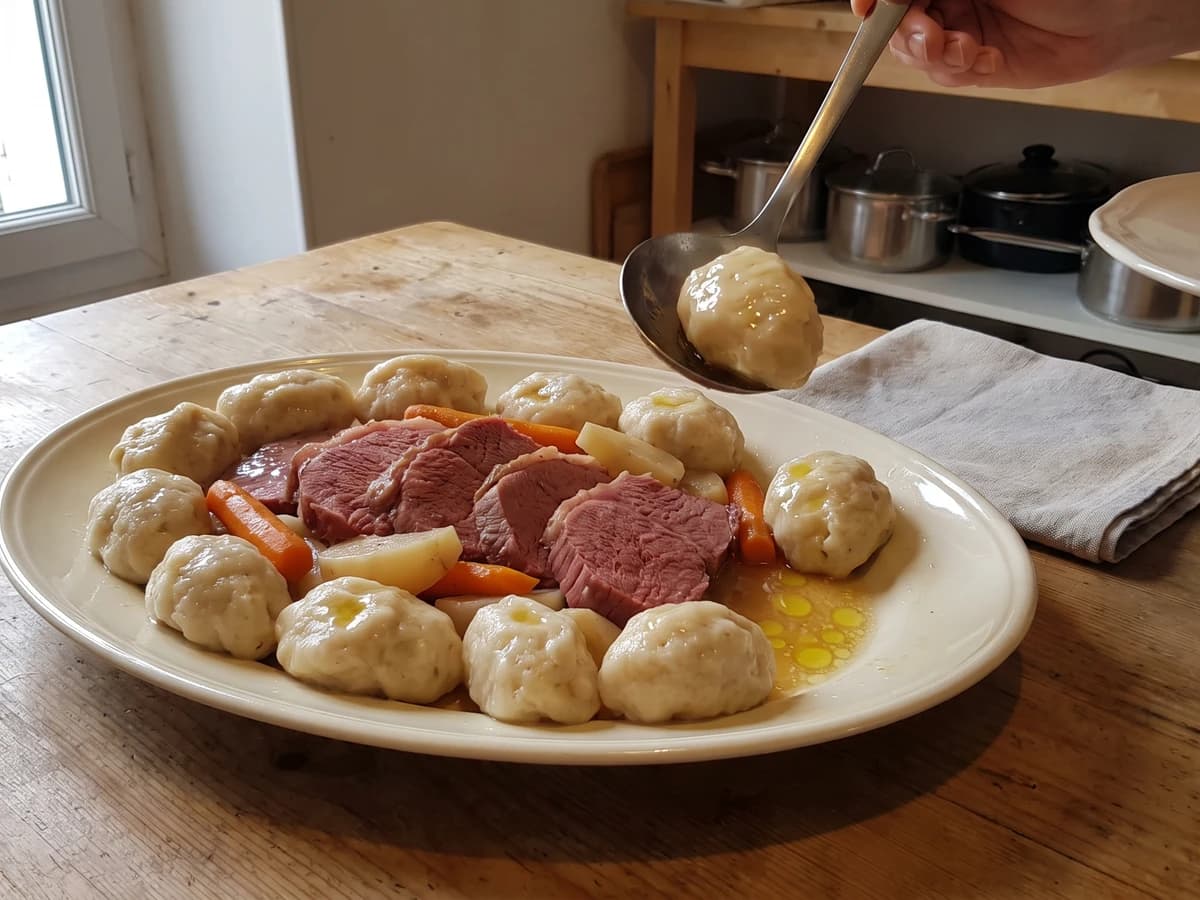
Suet Dumpling
Boulettes au suif, poached beside salt beef, turn equal weights of flour and finely chopped suet into tender, rich dumplings. Keep the beef liquor at a bare tremble and the old garnish works beautifully at home.
A cooking platform built around craft, culture, and the stories behind what we eat.
Created by Chef Juliette
Based on No. 2090, Pain de Chicorée, from Le Guide Culinaire (1907) by Auguste Escoffier
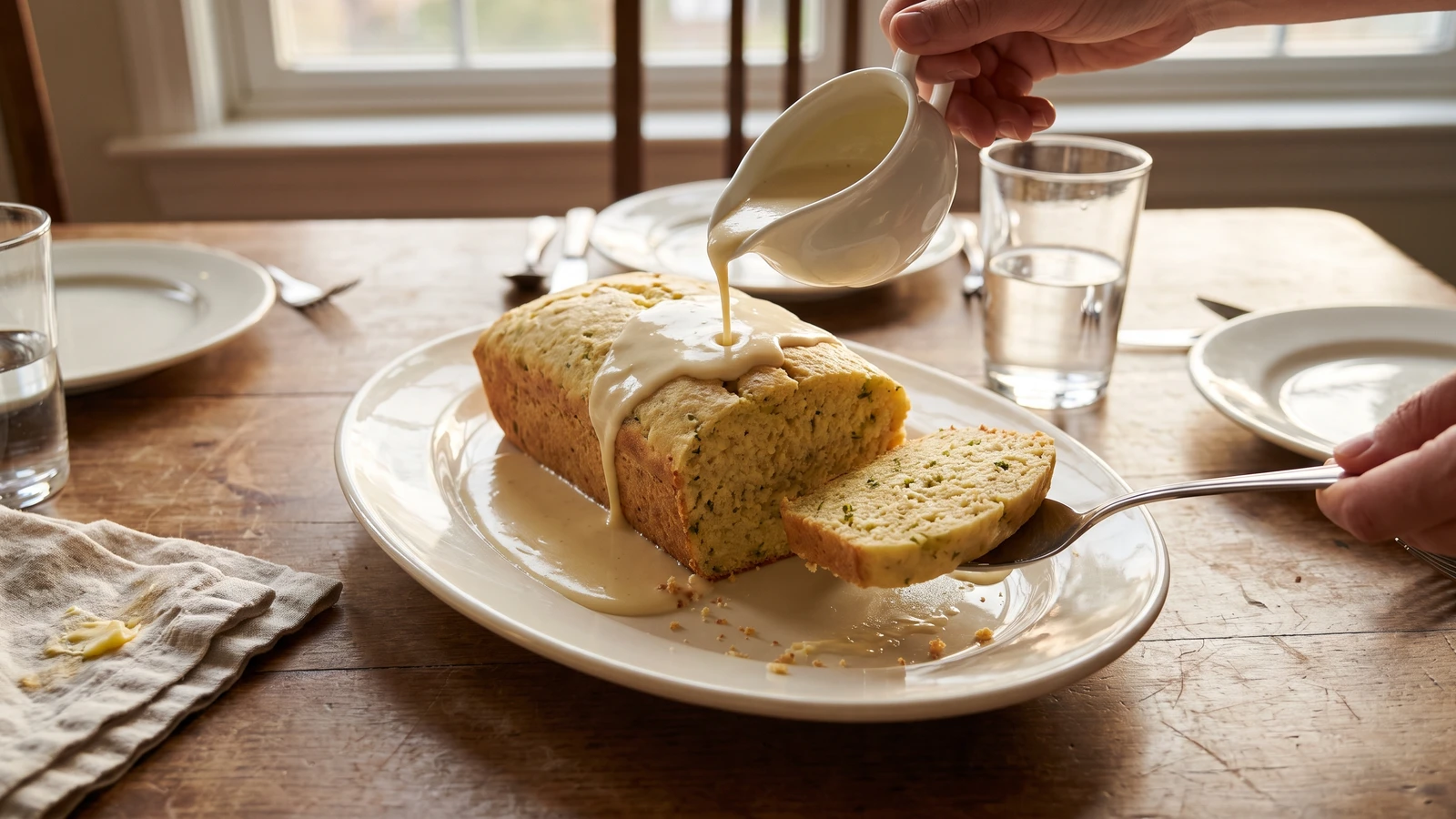
Pain de Chicorée turns braised chicory and stiffly whipped eggs into a tender moulded loaf, gently poached, allowed to settle, then covered with glossy cream sauce.
Pain de Chicorée (braised chicory loaf) teaches one quiet but decisive lesson: a poached mould is not finished when it leaves the bain-marie (hot-water bath). It is finished after it rests. Turn it out at once and the still-loose middle follows gravity; give it fifteen minutes and the eggs settle around the chicory into a tender loaf that holds beneath its cream sauce.
The original entry assumed braised chicory arrived ready from one station, a saucier sent the sauce at precisely the right moment, and an even metal mould held a brigade portion. Here, one pound of finished chicory fits a smooth one-quart loaf pan, and a small roux-based cream sauce comes together while the loaf poaches. The separate stations and great quantities are scaffolding, so they go. The five stiffly beaten eggs per pound of chicory, the gentle bain-marie, and the settling rest are the dish, so they stay. One cook, one stove, one evening.
The finished pain de chicorée should be pale gold and green at the cut face, moist rather than airy, with ivory sauce gleaming over the top and pooling at its base. Let the loaf rest before you unmould it. That is the step that decides whether it reaches the table standing proudly.
Pain de chicorée belongs to the classical Parisian table, where cooks took the braised chicory of northern France, especially French Flanders and Picardy, and recast it in smooth moulds for formal service. These vegetable pains passed naturally into cuisine bourgeoise because a familiar vegetable could be prepared ahead, served neatly, and made generous with sauce. Pain refers to the loaf shape, not bread; whipped eggs and gentle poaching provide all its structure.
Quantity
about 1½ pounds (680 g), yielding 1 pound (454 g) after braising and pressing
trimmed
Quantity
2 tablespoons (30 ml / 28 g)
Quantity
1 tablespoon (15 ml / 14 g)
softened
Quantity
1 tablespoon (15 ml / 15 g)
Quantity
¼ cup (60 ml / 60 g)
Quantity
1 teaspoon (5 ml / 6 g)
divided
Quantity
¼ teaspoon (1.25 ml / 0.6 g)
divided
Quantity
5
at room temperature
Quantity
2 tablespoons (30 ml / 28 g)
Quantity
2 tablespoons (30 ml / 16 g)
Quantity
1 cup (240 ml / 245 g)
Quantity
½ cup (120 ml / 120 g)
| Ingredient | Quantity |
|---|---|
| Belgian endive (chicory)trimmed | about 1½ pounds (680 g), yielding 1 pound (454 g) after braising and pressing |
| unsalted butter for braising | 2 tablespoons (30 ml / 28 g) |
| unsalted butter for the mouldsoftened | 1 tablespoon (15 ml / 14 g) |
| fresh lemon juice | 1 tablespoon (15 ml / 15 g) |
| water | ¼ cup (60 ml / 60 g) |
| fine sea saltdivided | 1 teaspoon (5 ml / 6 g) |
| ground white pepperdivided | ¼ teaspoon (1.25 ml / 0.6 g) |
| large eggsat room temperature | 5 |
| unsalted butter for the cream sauce | 2 tablespoons (30 ml / 28 g) |
| plain flour | 2 tablespoons (30 ml / 16 g) |
| whole milk | 1 cup (240 ml / 245 g) |
| heavy cream | ½ cup (120 ml / 120 g) |
Heat the oven to 325°F (165°C). Butter a smooth-sided 1-quart loaf pan or charlotte mould generously with the softened butter, reaching into every corner. Trim the endives, discard damaged leaves, halve the heads lengthwise, and cut away the hard central cones. Keep enough chicory on hand to give you exactly 1 pound (454 g) after braising and pressing.
Melt the braising butter in a wide ovenproof sauté pan over medium heat. Arrange the chicory cut-side down, season with half the salt and half the white pepper, then add the lemon juice and water. Lay a round of parchment directly over the chicory, cover the pan, and braise in the oven for 40 minutes. Turn the pieces, uncover, and cook for another 10 minutes, until a knife passes through the bases without resistance and little liquid remains. If the pan dries before the chicory is tender, add a small spoonful of hot water; patience, not scorched butter. Drain the chicory in a sieve until cool enough to handle, then press firmly to expel excess liquid. Chop it finely and weigh exactly 1 pound (454 g), saving any extra for another meal. Wet chicory dilutes the eggs and leaves water beneath the loaf, so press with conviction.
Let the chopped chicory cool until warm rather than hot. Beat the whole eggs with the remaining salt and white pepper using an electric mixer for 5 to 7 minutes, until very pale, greatly increased in volume, and thick enough that a ribbon falling from the beaters remains visible for several seconds. This is the source's stiff beating translated for a home mixer. Fold one-third of the eggs into the chicory to lighten it, then fold in the remainder with broad turns of a spatula. If the eggs remain thin after several minutes of beating, set the bowl over warm water briefly and continue; room-temperature eggs gain volume more readily. Some foam will settle as you fold, which is expected. Do not beat the mixture again.
Spoon the mixture evenly into the buttered mould and smooth the surface without pressing out its air. Set the mould on a folded kitchen towel inside a deep roasting pan, then pour very hot water into the pan until it reaches halfway up the mould. Cover the mould loosely with foil and poach in the oven for 45 to 55 minutes. The pain de chicorée is ready when the centre reaches about 165°F (74°C), a thin knife comes out moist but free of liquid egg, and the middle trembles as one piece rather than sloshing. The water should barely quiver. If it begins boiling hard, lower the oven and replace a little of the bath with cool water; fierce heat curdles the eggs and leaves the loaf riddled with holes.
While the loaf poaches, melt the sauce butter in a small heavy saucepan over medium-low heat. Stir in the flour and cook this pale roux for 2 minutes without letting it colour. Whisk in the milk a little at a time, allowing each addition to become smooth before adding the next. Simmer gently for 6 to 8 minutes, stirring along the bottom, then add the cream and simmer for another 4 to 5 minutes. The sauce is ready when it is nappé, coating the back of a spoon in a smooth ivory layer. Season to taste. If it becomes lumpy, pass it through a fine sieve; if it tightens too far, loosen it with a little milk. Keep it warm over the gentlest heat, covered directly on the surface so a skin cannot form.
Lift the mould from the bain-marie and leave it upright on a rack for 15 to 20 minutes. Do not hurry this. The retained heat finishes setting the centre while the egg structure relaxes enough to release cleanly from the mould. If the centre still moves like liquid after the rest, keep the loaf in its mould and return it to the hot-water bath for another 5 to 8 minutes. Ça se rattrape. An extra few minutes of gentle poaching is far kinder than turning out an unset middle.
Warm an oval serving platter. Run a thin knife around the mould without cutting into the loaf, set the platter over it, and invert both in one confident movement. Lift the mould straight upward. If one edge clings, cover the mould with a warm towel for a minute and try again. Stir the cream sauce until glossy, then pour it over the loaf just before serving, covering the top and letting a generous ribbon pool around the base. If the loaf slumps despite its rest, settle it into a warm shallow serving dish and spoon over the sauce; the shape has changed, not the dish. Serve beside roast veal, chicken, or a plainly cooked fish. À table!
1 serving (about 280g)
Culinary guides, cultural storytelling, and the editorial depth that makes cooking meaningful.
Discover Culinary ExplorerChef Juliette
Boulettes au suif, poached beside salt beef, turn equal weights of flour and finely chopped suet into tender, rich dumplings. Keep the beef liquor at a bare tremble and the old garnish works beautifully at home.

Chef Juliette
Bread, flour, frangipane, and rice become four cool, supple panades for binding forcemeats, each changing body and flavor while preserving tenderness. The finest Mousselines need none, and knowing that distinction is the lesson.

Chef Juliette
Panade au pain is bread, milk, salt, heat, and attention: stir until the paste releases cleanly, butter it against a skin, and you have the quiet binder behind tender French farces.

Chef Juliette
Panade de farine teaches the drying stroke behind pâte à choux: flour meets boiling buttered water, then stays over the fire until the paste gathers, smooths, and quits the pan cleanly.