Chef Juliette
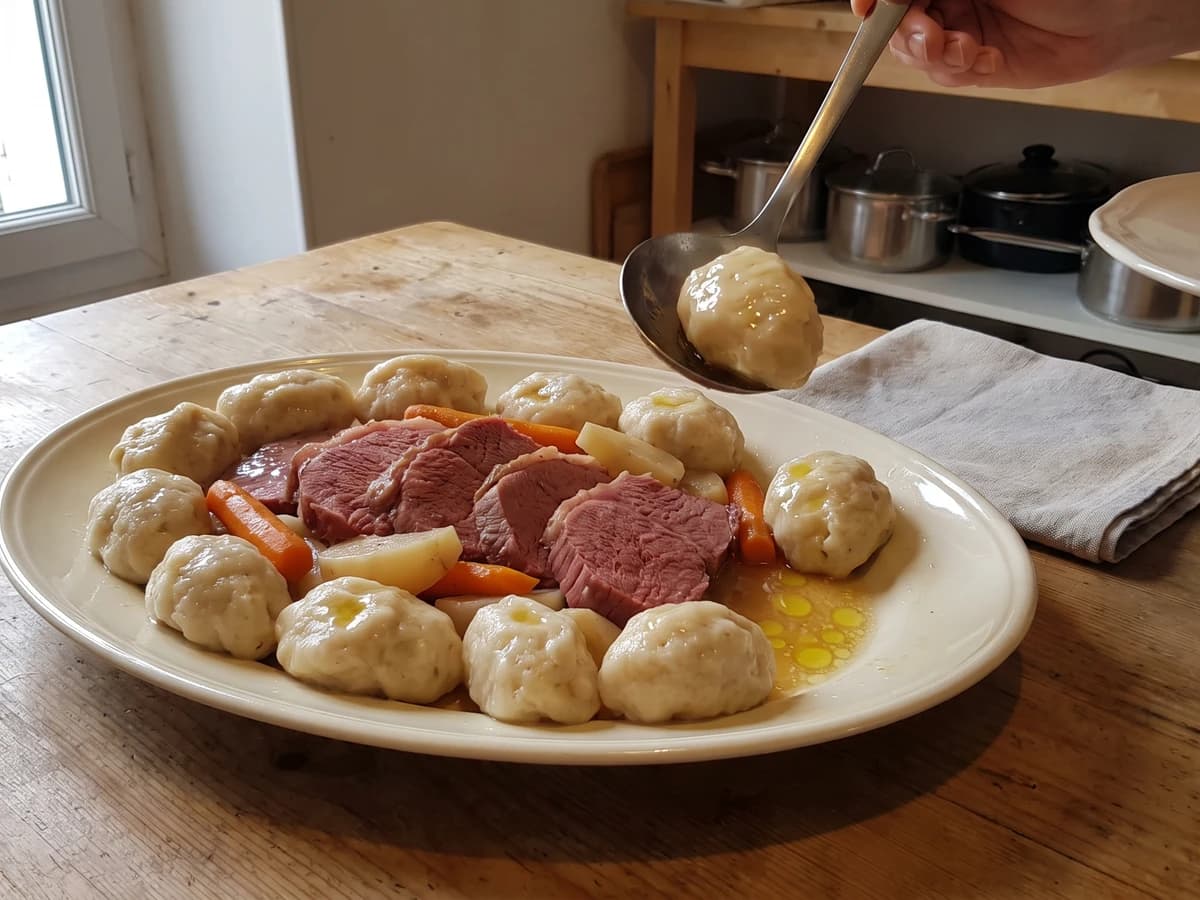
Suet Dumpling
Boulettes au suif, poached beside salt beef, turn equal weights of flour and finely chopped suet into tender, rich dumplings. Keep the beef liquor at a bare tremble and the old garnish works beautifully at home.
A cooking platform built around craft, culture, and the stories behind what we eat.
Created by Chef Juliette
Based on No. 2086, Mousserons, Oronges, Giroles, from Le Guide Culinaire (1907) by Auguste Escoffier
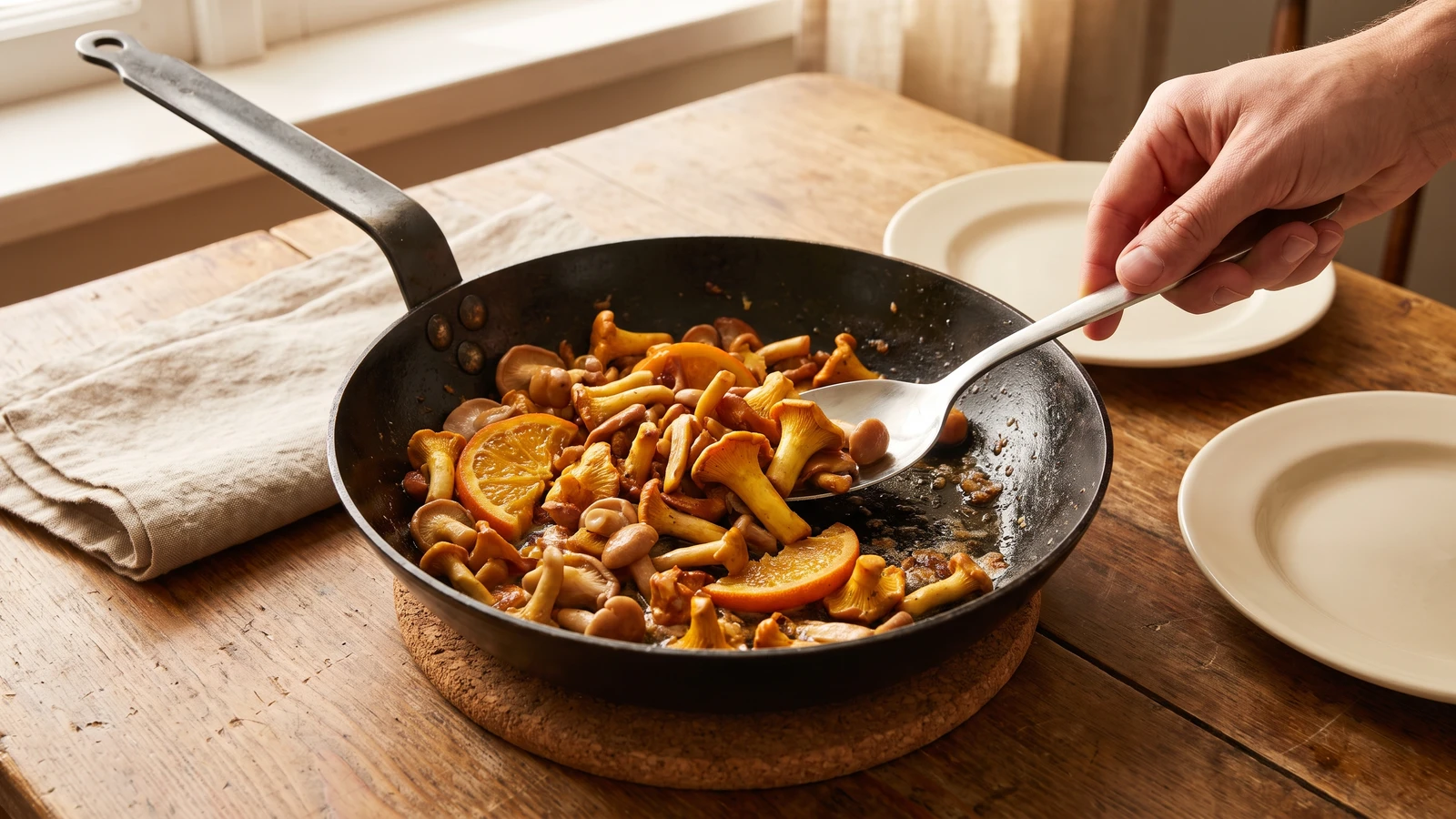
Three wild mushrooms, one hot pan, and enough butter to make them gleam. Keep them dry, cook each briefly, then bring them together while their woodland characters remain distinct.
Mousserons, Oronges, Giroles (three wild mushrooms tossed in butter) is a lesson in restraint. These mushrooms want heat, butter, and very little conversation. The one true thing to know before touching the pan is that they must be dry and uncrowded. Give them space and they bronze; heap them together and they surrender their liquor, then stew in it.
The old entry is scarcely more than a sentence because it assumed a trained cook, a daily market basket, and enough wide sauté pans to keep brigade quantities moving. It needed no saucier, stockpot, or salamander. At home, one broad skillet and three short batches accomplish the same intent. Multiple pans were brigade scaffolding and can go; dry mushrooms, real butter, and quick contact with a hot pan are the dish and must stay. One cook, one stove, one evening.
Buy these only from a specialist who can identify them with certainty, especially the oronges. Once that is settled, dry them completely before the butter goes into the skillet. That small act decides everything that follows.
Mousserons belong to meadow baskets across much of France, giroles to woodland markets, while the oronge is particularly prized in the warm oak and chestnut country of Provence, Languedoc, and Corsica. Classical kitchens treated these mushrooms less as a composed side dish than as a garniture, naming each species and preserving its character with a fast toss in butter. The source's remark that England cared little for them records a difference in foraging and market custom, not a judgment shared at the French table.
Quantity
2 loosely packed cups (475 ml / 150 g)
expertly identified, trimmed, and brushed clean
Quantity
2 loosely packed cups (475 ml / 150 g)
expertly identified, trimmed, and sliced 1 cm thick
Quantity
2 loosely packed cups (475 ml / 150 g)
expertly identified, trimmed, with larger mushrooms halved lengthwise
Quantity
4 tablespoons (60 ml / 57 g)
divided
Quantity
¾ teaspoon (4 ml / 4 g)
| Ingredient | Quantity |
|---|---|
| fresh mousseronsexpertly identified, trimmed, and brushed clean | 2 loosely packed cups (475 ml / 150 g) |
| fresh orongesexpertly identified, trimmed, and sliced 1 cm thick | 2 loosely packed cups (475 ml / 150 g) |
| fresh giroles, also sold as girolles or chanterellesexpertly identified, trimmed, with larger mushrooms halved lengthwise | 2 loosely packed cups (475 ml / 150 g) |
| unsalted butterdivided | 4 tablespoons (60 ml / 57 g) |
| fine sea salt | ¾ teaspoon (4 ml / 4 g) |
Use only mushrooms identified and sold for eating by a trusted specialist. Oronges belong to the Amanita genus and have deadly relatives, so neither a photograph nor this recipe can establish that a foraged specimen is safe. Keep the three varieties separate while you prepare them because each cooks at its own pace.
Trim away earthy stem ends and brush the mushrooms carefully. If grit refuses to move, rinse them very briefly in cold water, then spread them over clean towels and dry them completely. Do not soak them. Surface water makes the butter spit and turns the first precious minute in the pan into a boil.
Heat a wide 30 cm skillet over medium-high to high heat. Add 1 tablespoon of the butter and, when its foam is lively and beginning to clear, spread in the giroles without crowding. Toss for 3 to 4 minutes, until their moisture has disappeared and their folds are glossy with lightly bronzed edges, then move them to a tray. Repeat with another tablespoon of butter and the mousserons for 2 to 3 minutes, followed by a third tablespoon and the oronges for 1½ to 2 minutes. The pan must stay open and hot. If any batch releases a puddle, lift out the mushrooms, boil the liquid away, add a little of the reserved butter, and return them for 30 seconds. Ça se rattrape. If the butter blackens, wipe out the pan and begin that batch again with fresh butter because scorched milk solids cannot be hidden.
Return all three mushrooms to the hot skillet with the remaining butter. Sprinkle over the salt and toss for 30 to 45 seconds, just until every surface gleams and the varieties are hot together. Stop there. A longer cooking softens the oronges and erases the distinction this dish exists to preserve. Tip everything, including the butter caught in the pan, into a warm serving dish and bring it straight to the table. À table!
1 serving (about 100g)
Culinary guides, cultural storytelling, and the editorial depth that makes cooking meaningful.
Discover Culinary ExplorerChef Juliette
Boulettes au suif, poached beside salt beef, turn equal weights of flour and finely chopped suet into tender, rich dumplings. Keep the beef liquor at a bare tremble and the old garnish works beautifully at home.

Chef Juliette
Bread, flour, frangipane, and rice become four cool, supple panades for binding forcemeats, each changing body and flavor while preserving tenderness. The finest Mousselines need none, and knowing that distinction is the lesson.

Chef Juliette
Panade au pain is bread, milk, salt, heat, and attention: stir until the paste releases cleanly, butter it against a skin, and you have the quiet binder behind tender French farces.

Chef Juliette
Panade de farine teaches the drying stroke behind pâte à choux: flour meets boiling buttered water, then stays over the fire until the paste gathers, smooths, and quits the pan cleanly.