Chef Juliette
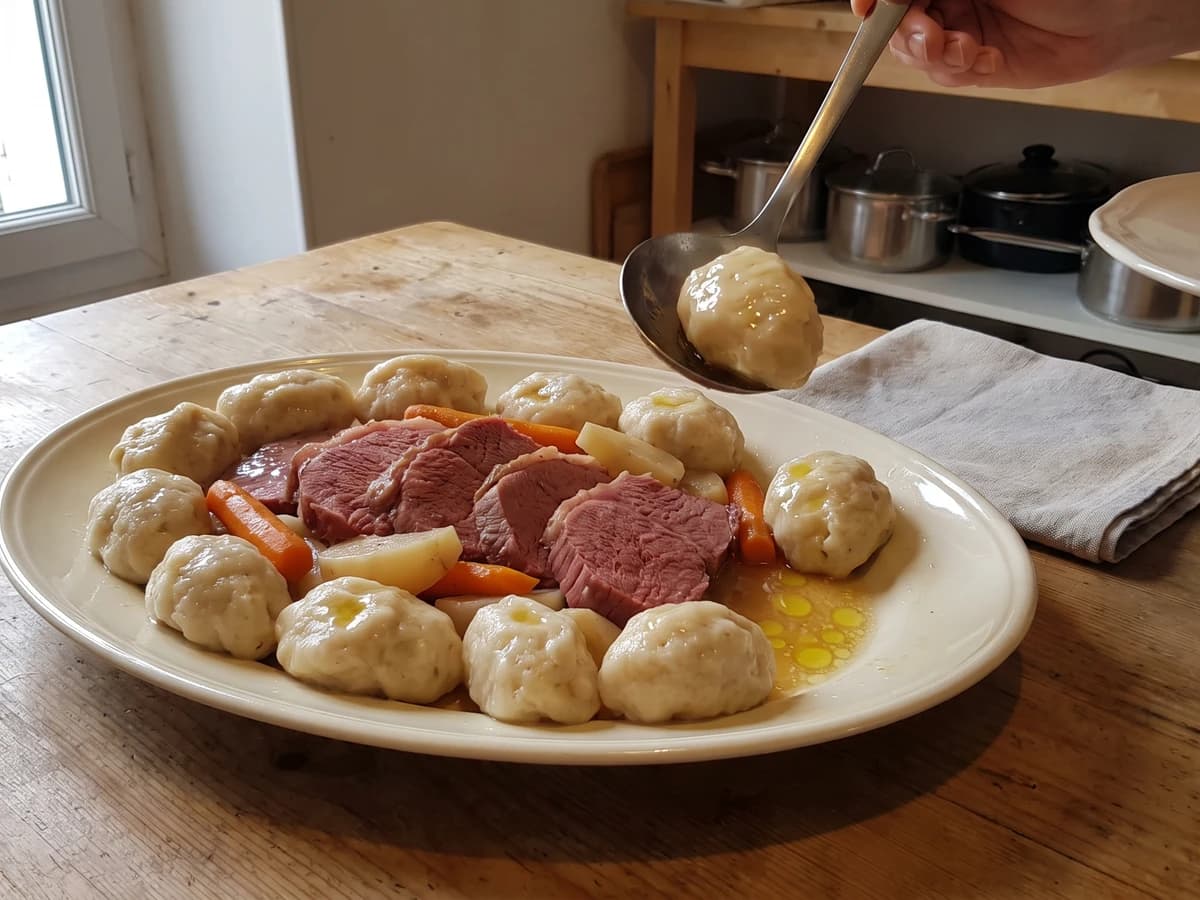
Suet Dumpling
Boulettes au suif, poached beside salt beef, turn equal weights of flour and finely chopped suet into tender, rich dumplings. Keep the beef liquor at a bare tremble and the old garnish works beautifully at home.
A cooking platform built around craft, culture, and the stories behind what we eat.
Created by Chef Juliette
Based on No. 2080, Morels (Morilles), from Le Guide Culinaire (1907) by Auguste Escoffier
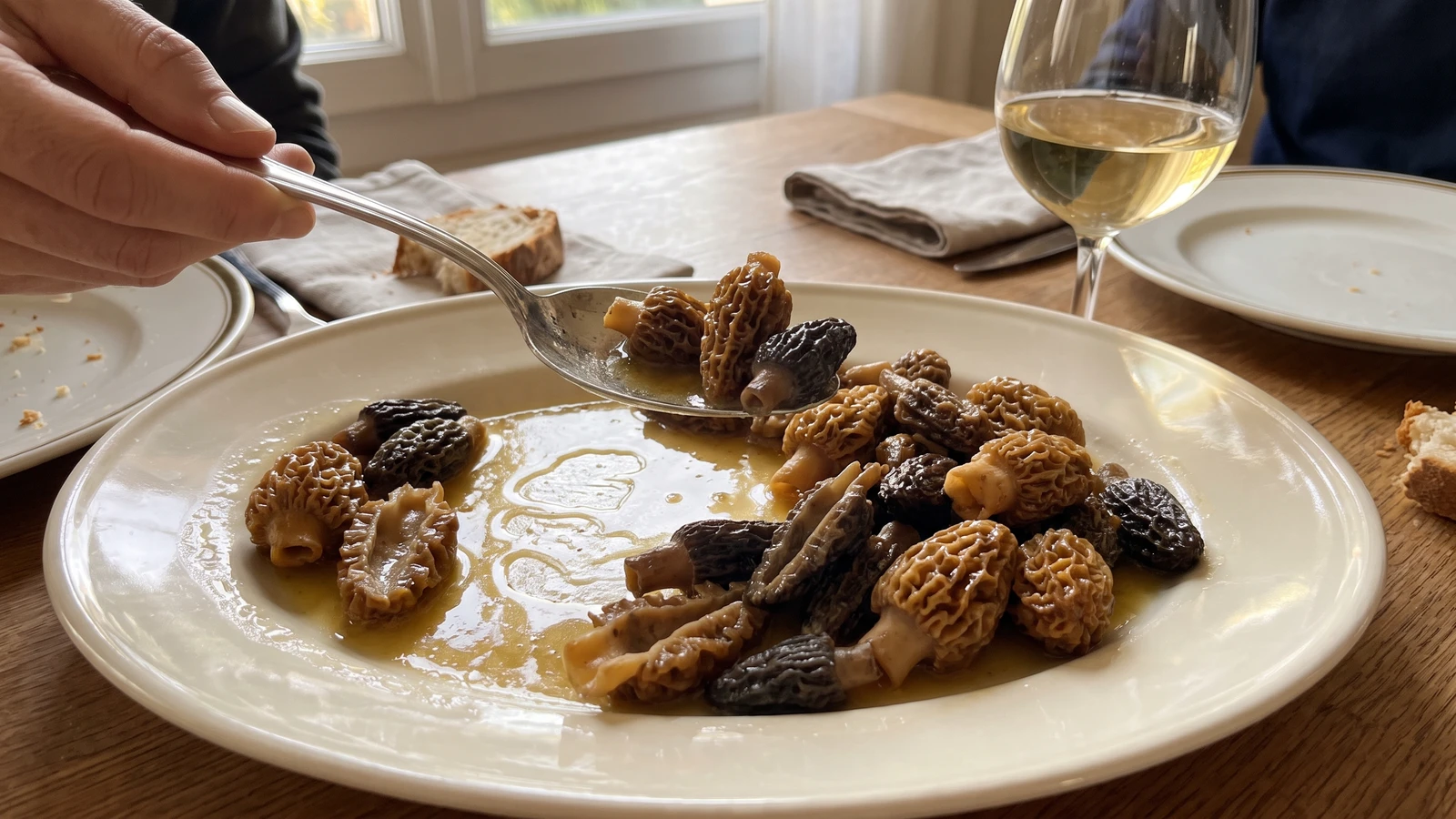
Morilles étuvées turn one careful wash and twelve gentle minutes into a spring side dish of tender honeycombed caps, bright lemon, and butter gloss, with every drop of woodland liquor reduced back around them.
Morilles étuvées teach the cleanest lesson in mushroom cookery: the liquid a mushroom releases is not waste, it is the beginning of its sauce. The one true thing to know before touching the pan is simple. Wash the morels. Their alveolate, honeycombed caps are little rooms for sand, and no dry brush can search every one.
The classical entry assumed a saucier on staff and an accompanying sauce waiting on another burner to receive the mushroom juices. At home, one wide lidded pan does both jobs. One pound serves four, and its cooking liquor is reduced in the same pan until butter, lemon, and woodland juices cling to every cap. The separate saucepot was brigade scaffolding and can go. Careful washing, the full étuvage, and the reduction of every drop are the dish and must stay. One cook, one stove, one evening.
When the morilles are right, they are tender but still themselves, darkly fragrant and lacquered with a clear butter-gold glaze. Before the pan, open every honeycombed cap under cold water and keep washing until the bowl holds no sand. That cleaning is the step that matters most.
Morilles belong especially to the spring tables of the Jura and Franche-Comté, where woodland harvests appear beside poultry, veal, and eggs. From regional kitchens they passed into the classical repertoire as a prized garnish, with their concentrated cooking liquor folded back into the sauce rather than discarded. Cooks have argued for generations about washing them, but careful rinsing answers the practical truth of the mushroom: its honeycombed cap traps sand remarkably well.
Quantity
About 8 cups loosely packed (1 lb / 454 g)
Quantity
4 tablespoons (1/4 cup / 57 g)
Quantity
1, yielding about 3 tablespoons (45 ml / 45 g) juice
juiced
Quantity
1 generous pinch, about 1/16 teaspoon (0.3 ml / 0.4 g)
Quantity
1 generous pinch, about 1/16 teaspoon (0.3 ml / 0.15 g)
| Ingredient | Quantity |
|---|---|
| fresh morels | About 8 cups loosely packed (1 lb / 454 g) |
| unsalted butter | 4 tablespoons (1/4 cup / 57 g) |
| medium lemonjuiced | 1, yielding about 3 tablespoons (45 ml / 45 g) juice |
| fine sea salt | 1 generous pinch, about 1/16 teaspoon (0.3 ml / 0.4 g) |
| freshly ground black pepper | 1 generous pinch, about 1/16 teaspoon (0.3 ml / 0.15 g) |
Trim away only the visibly gritty ends of the stems. Fill a large bowl with cold water and wash the morels a few at a time, gently opening their alveolate pockets with your fingertips so trapped sand can escape. Swish them briefly, then lift them into a second bowl rather than pouring everything through a colander, which only returns the grit to the mushrooms. Change the water and repeat until no sand remains on the bottom.
Shake the water from each morel, then drain them stem-side down in a colander. Spread them over a clean towel for 10 minutes and blot gently. Leave small morels whole; halve large ones lengthwise, or quarter the very largest. Proper draining keeps rinse water from diluting the lemon and needlessly lengthening the final reduction.
Put the drained morels into a cold 12-inch (30 cm) lidded sauté pan with the butter, lemon juice, salt, and pepper. Set the pan over medium heat, turning the mushrooms gently as the butter melts, then cover. The lemon and the morels' own moisture will form the cooking liquor. Bring it to a definite boil without browning the mushrooms; this is étuvage, gentle stewing in their own juices, not frying.
Once the liquor boils, lower the heat until it maintains a gentle simmer. Cover and stew the morels for 10 to 12 minutes, turning them once or twice without crushing the caps. They are ready when they have darkened, softened, and smell rounded rather than raw. Do not shorten this cooking: morels must be thoroughly cooked before serving.
Lift the morels into a warm bowl with a slotted spoon, leaving every drop of their liquor in the pan. Boil the liquid uncovered over medium-high heat until its bubbles grow slower and larger and the butter-gold reduction lightly coats a spoon, usually 2 to 5 minutes. If it reduces into an oily film, remove the pan from the heat and swirl in 1 teaspoon of cold water until it gathers again. Ça se rattrape. If it remains watery, keep reducing; flour and cream do not belong in this preparation.
Return the morilles to the pan and turn them through the reduction over gentle heat for 30 to 60 seconds, just until every honeycombed cap gleams. Transfer them to a warmed serving dish and scrape all the reduced juices over the top. Serve immediately, without an ornamental garnish. The mushrooms have finished their own sauce. À table!
1 serving (about 95g)
Culinary guides, cultural storytelling, and the editorial depth that makes cooking meaningful.
Discover Culinary ExplorerChef Juliette
Boulettes au suif, poached beside salt beef, turn equal weights of flour and finely chopped suet into tender, rich dumplings. Keep the beef liquor at a bare tremble and the old garnish works beautifully at home.

Chef Juliette
Bread, flour, frangipane, and rice become four cool, supple panades for binding forcemeats, each changing body and flavor while preserving tenderness. The finest Mousselines need none, and knowing that distinction is the lesson.

Chef Juliette
Panade au pain is bread, milk, salt, heat, and attention: stir until the paste releases cleanly, butter it against a skin, and you have the quiet binder behind tender French farces.

Chef Juliette
Panade de farine teaches the drying stroke behind pâte à choux: flour meets boiling buttered water, then stays over the fire until the paste gathers, smooths, and quits the pan cleanly.