Chef Juliette
Bouillabaisse à la Marseillaise
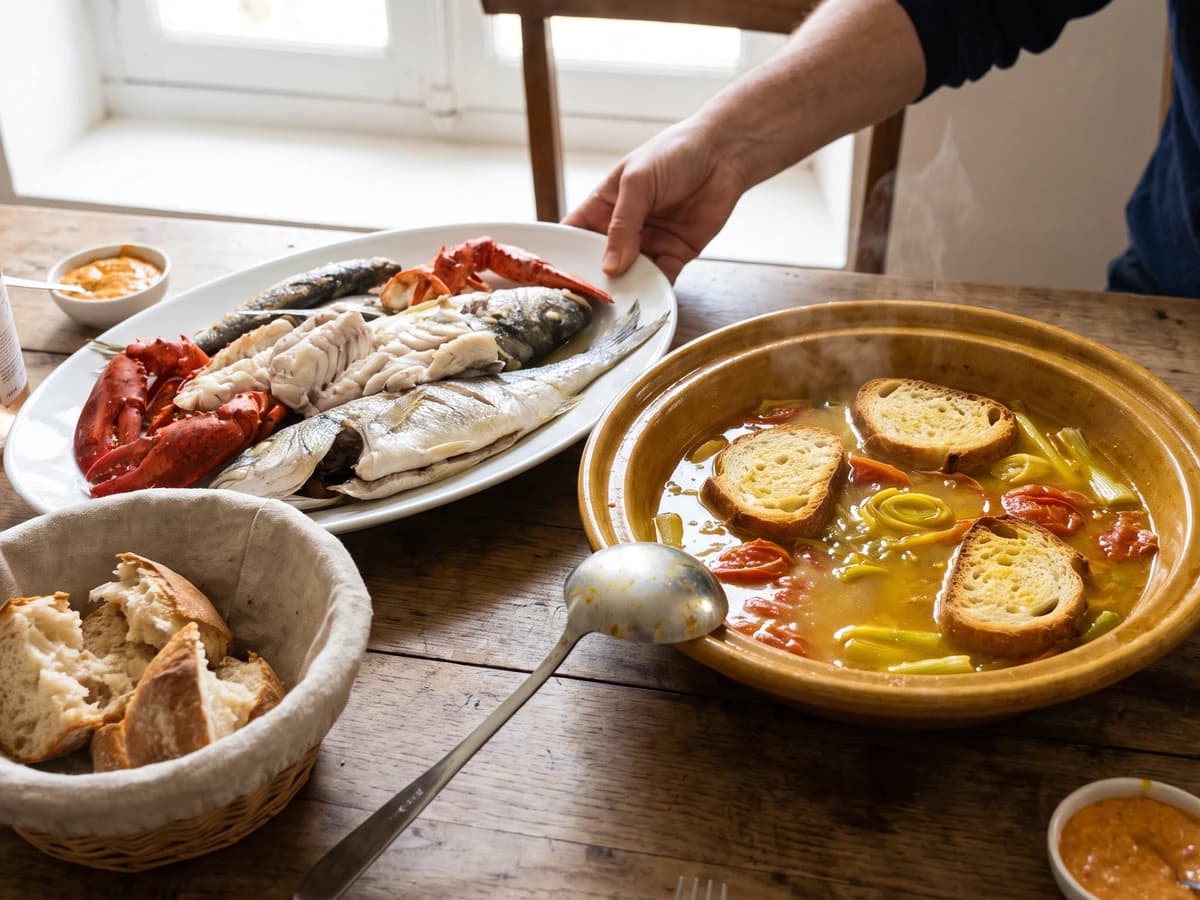
Marseille's great fish stew, saffron-gold and garlic-scented, proves that a hard boil can be the careful choice: it binds olive oil into broth before the whole pot meets bread.
A cooking platform built around craft, culture, and the stories behind what we eat.
Created by Chef Juliette
Based on No. 208, Chicken Royale, from Le Guide Culinaire (1907) by Auguste Escoffier
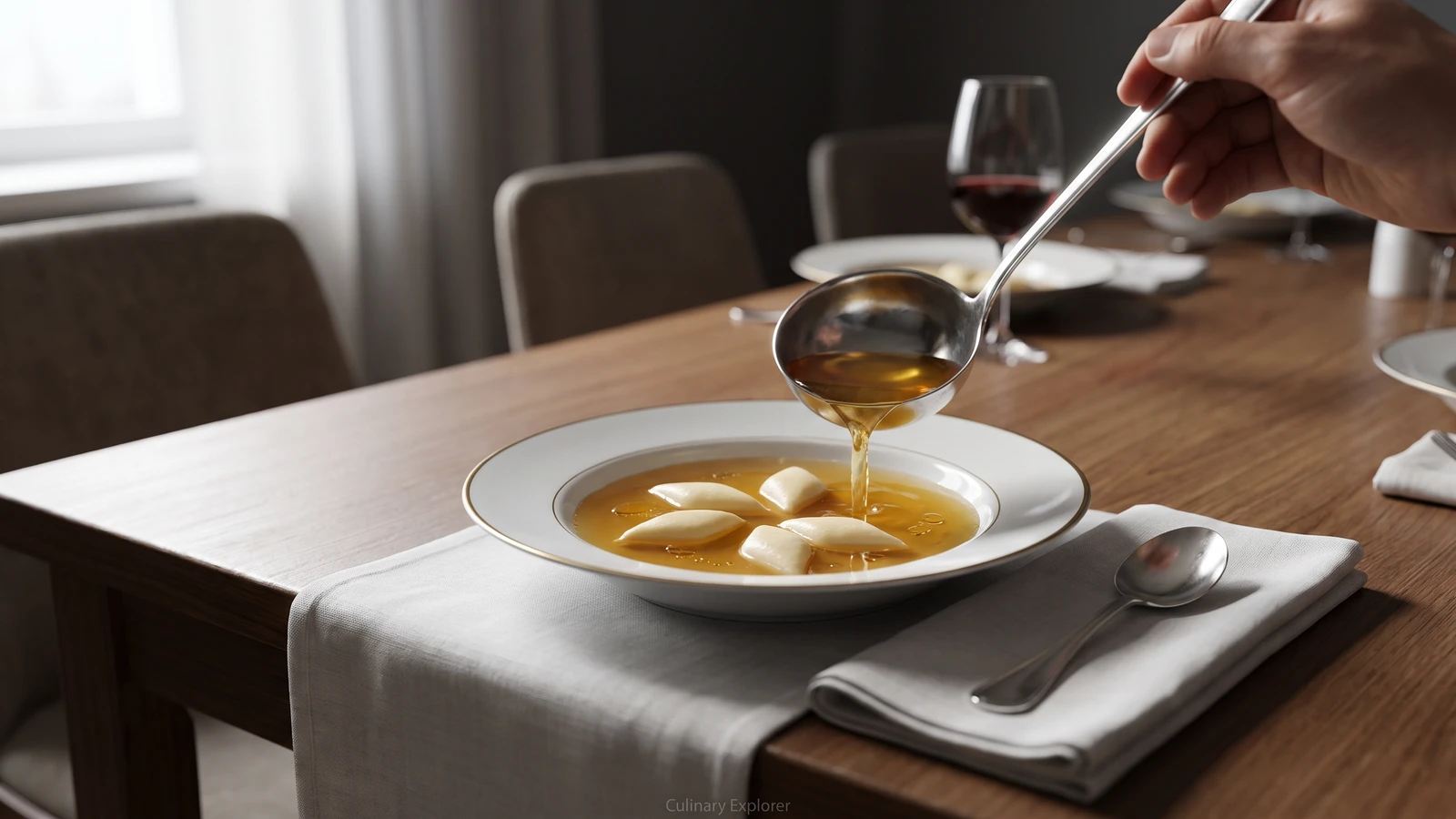
Royale de volaille turns cooked chicken, cold béchamel, cream, and eggs into a silken savory custard, gently poached, cut into pale diamonds, and floated in clear consommé.
Royale de volaille (a poached chicken custard) teaches one exact principle: an egg-thickened mixture becomes silk only under gentle heat. Before touching a pan, know this: the bain-marie must barely tremble. Boiling water makes holes and whey where a clean ivory custard should be.
The brigade entry assumed cooked white chicken at hand, cold Béchamel from the saucier, consommé from a stockpot never off the fire, a tammy sieve, and shelves of molds. At home, one small food processor replaces the pounding mortar, a fine-mesh sieve replaces the tammy, and one shallow cake pan replaces a procession of individual molds. The salamander has no job here; this royale is poached, not browned. We have removed the brigade's multiplicity of equipment, not the pounding, straining, or slow poach. Those three steps are the dish.
When it is right, the royale cuts cleanly yet yields under the spoon, pale and delicate against amber consommé. One cook, one stove, one evening. Give your full attention to the water bath, keep it below a simmer, and the custard will hold.
Royale garnishes belong to the Parisian grand-kitchen service of clear consommés, where savory custards flavored with poultry, vegetables, or game were poached in molds and cut into precise pieces. The preparation traveled from elaborate dining rooms to bourgeois tables because it gave leftover cooked meat a graceful second service without clouding the broth. Chicken royale is sometimes mistaken for a cream soup, but it is the garnish: the consommé remains clear while the pale custard supplies richness and contrast.
Quantity
½ packed cup (85 g / 3 oz)
skin and sinew removed
Quantity
3 tablespoons (45 ml / about 45 g)
Quantity
⅛ teaspoon (0.6 ml / about 0.8 g)
Quantity
1 small pinch (about 1/32 teaspoon / less than 0.1 g)
Quantity
Scant ½ cup (115 ml / about 115 g)
Quantity
1
Quantity
3
Quantity
1 teaspoon (5 ml / 5 g)
softened, for the mold
Quantity
8 cups (1.9 L / about 1.9 kg)
heated for serving
| Ingredient | Quantity |
|---|---|
| cooked white chicken meatskin and sinew removed | ½ packed cup (85 g / 3 oz) |
| cold Béchamel | 3 tablespoons (45 ml / about 45 g) |
| fine salt | ⅛ teaspoon (0.6 ml / about 0.8 g) |
| freshly grated nutmeg | 1 small pinch (about 1/32 teaspoon / less than 0.1 g) |
| cold heavy cream | Scant ½ cup (115 ml / about 115 g) |
| large egg | 1 |
| large egg yolks | 3 |
| unsalted buttersoftened, for the mold | 1 teaspoon (5 ml / 5 g) |
| clear chicken consomméheated for serving | 8 cups (1.9 L / about 1.9 kg) |
Heat the oven to 300°F (150°C). Butter a 6-inch (15 cm) shallow round cake pan or similar 2-cup mold very thinly, reaching into every corner. Place a folded kitchen towel in a roasting pan and set the mold on it; the towel steadies the mold and softens the heat beneath it. Heat enough water to come halfway up the mold, stopping just short of a boil.
Put the cooked white chicken in a small food processor and work it until very finely broken down, scraping the bowl several times. Add the cold Béchamel one tablespoon at a time and continue processing until the mixture becomes a close, even paste. Do not settle for minced chicken. Pounding the fibers into the sauce is what separates a silken royale from a crumbly chicken pudding.
Transfer the chicken paste to a bowl and add the salt and nutmeg. Work in the cold cream gradually, stirring until each addition disappears before adding the next. Force the mixture through a fine-mesh sieve with a flexible scraper. This replaces the tammy, a broad cloth sieve used by the brigade, and it is not decorative fuss; the sieve removes the last fibers that would interrupt the custard. If the mixture refuses to pass, return the coarse portion to the processor with one spoonful of the strained base, work it again, and repeat. Ça se rattrape.
Whisk the whole egg and three yolks just until blended, without beating in a foam, then stir them thoroughly into the strained chicken mixture. Pour the preparation into the buttered mold and tap it once against a folded towel to release large air pockets. Prick any surface bubbles with the point of a knife. Air whipped into the base expands into holes, so use a calm whisk and a calm hand.
Cover the mold loosely with foil and pour the hot water into the roasting pan until it reaches halfway up the sides. Bake for 30 to 35 minutes, until the edges are set, the center gives one soft quiver, and an instant-read thermometer reaches 160°F (71°C). The bain-marie should remain still or barely tremble. If the water begins bubbling or the custard puffs at the edge, pull out the roasting pan, replace a cup of hot water with cool water, and lower the oven to 275°F (135°C). Ça se rattrape if you act before the custard turns grainy.
Lift the mold from the bain-marie and let the royale cool for 20 minutes, then chill it for at least 40 minutes so it can be cut cleanly. Run a thin knife around the edge and invert it onto a board. If it clings, dip the base of the mold in warm water for five seconds and try again. Cut the royale into ½-inch (1.25 cm) diamonds or small cubes, keeping the knife clean between cuts.
Bring the clear chicken consommé to a bare simmer in a separate saucepan and warm the soup bowls. Arrange four or five pieces of royale in each bowl, then ladle the consommé gently around them and let them warm for one minute. Never boil the royale in the broth; hard heat toughens the egg and frays the clean edges. Serve at once. À table!
1 serving (about 280g)
Culinary guides, cultural storytelling, and the editorial depth that makes cooking meaningful.
Discover Culinary ExplorerChef Juliette
Marseille's great fish stew, saffron-gold and garlic-scented, proves that a hard boil can be the careful choice: it binds olive oil into broth before the whole pot meets bread.
Chef Juliette
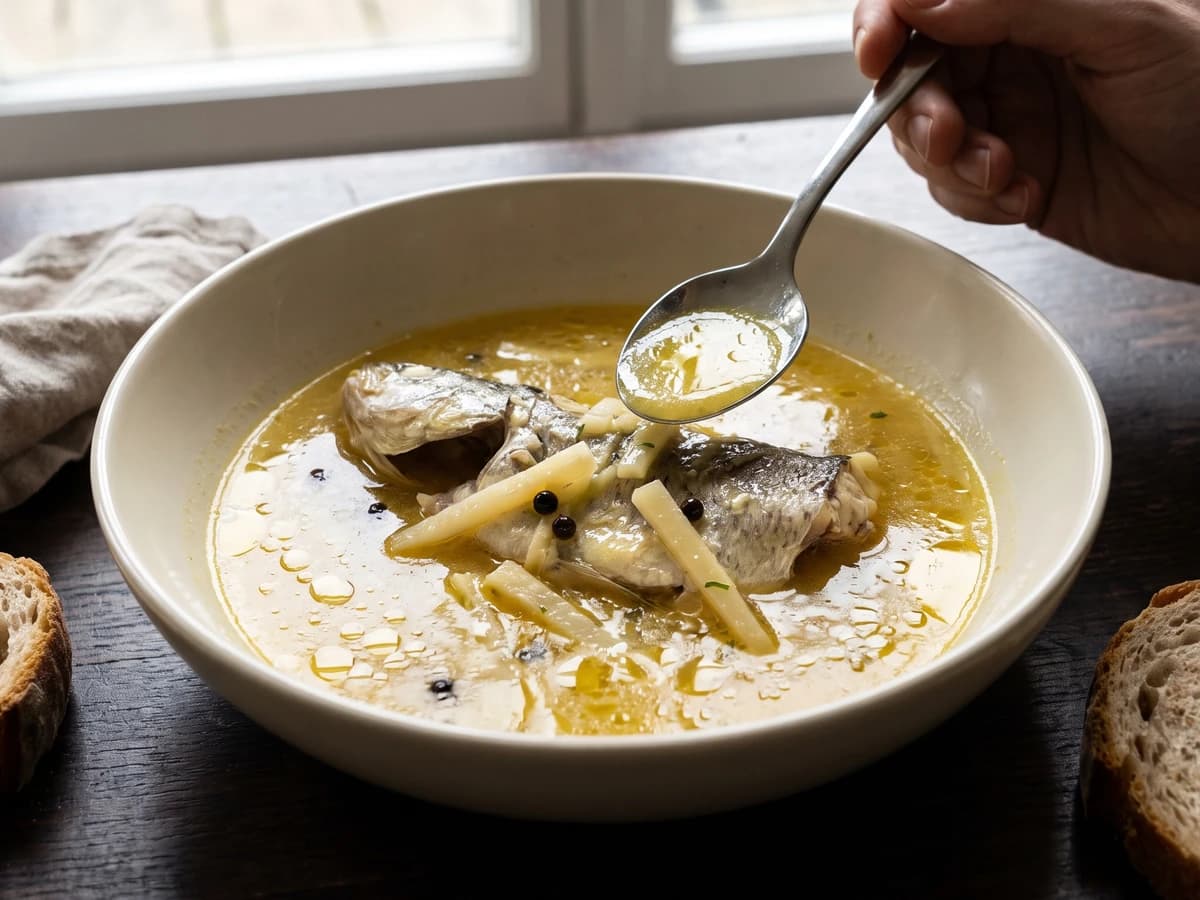
Waterzoi asks fresh, bone-in river fish to thicken its own buttery broth, with parsley root and pepper for company. No flour, no stockpot, just a brisk simmer watched closely.
Chef Juliette
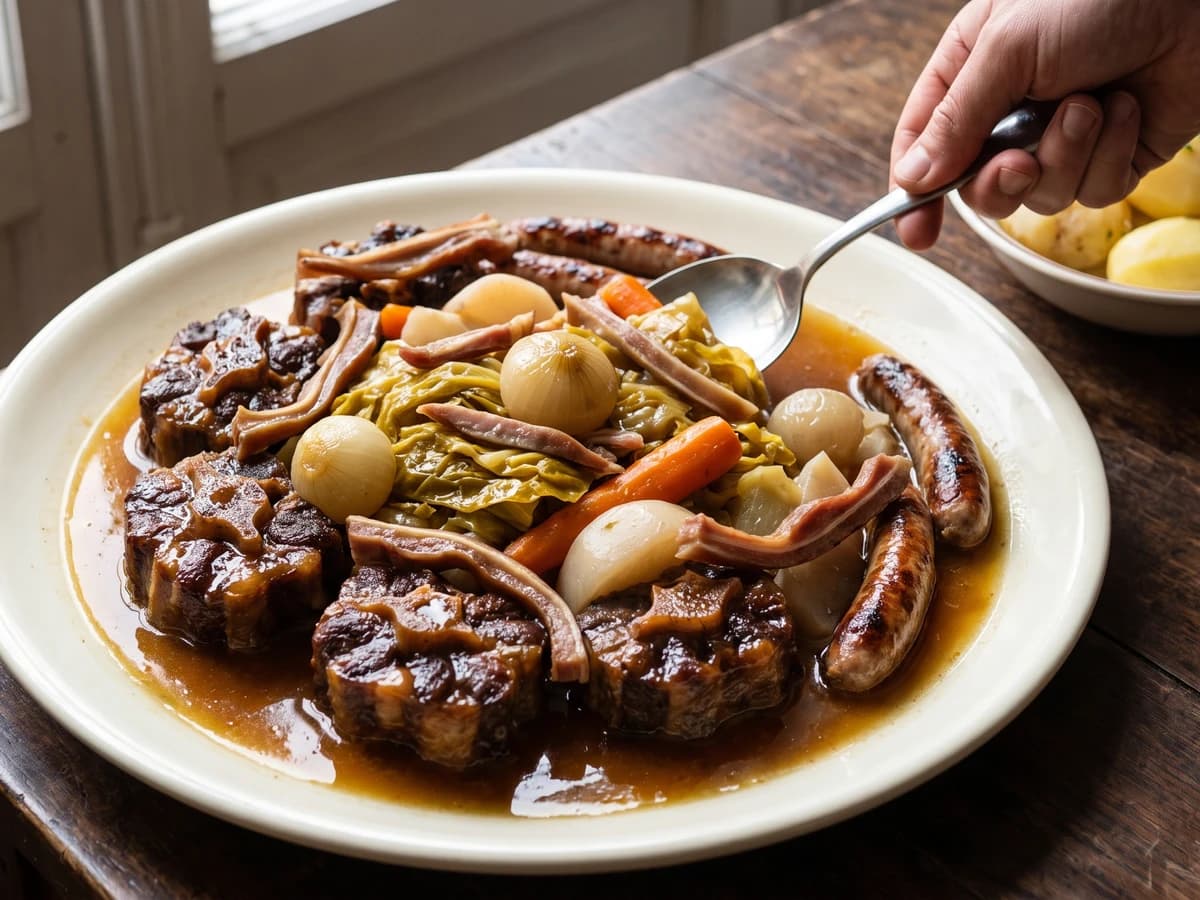
Queue de Bœuf en Hochepot gathers oxtail, pig's trotter and ear, cabbage, roots, and grilled chipolatas around a clear, gelatin-rich broth whose quiet simmer keeps every piece tender and distinct.
Chef Juliette
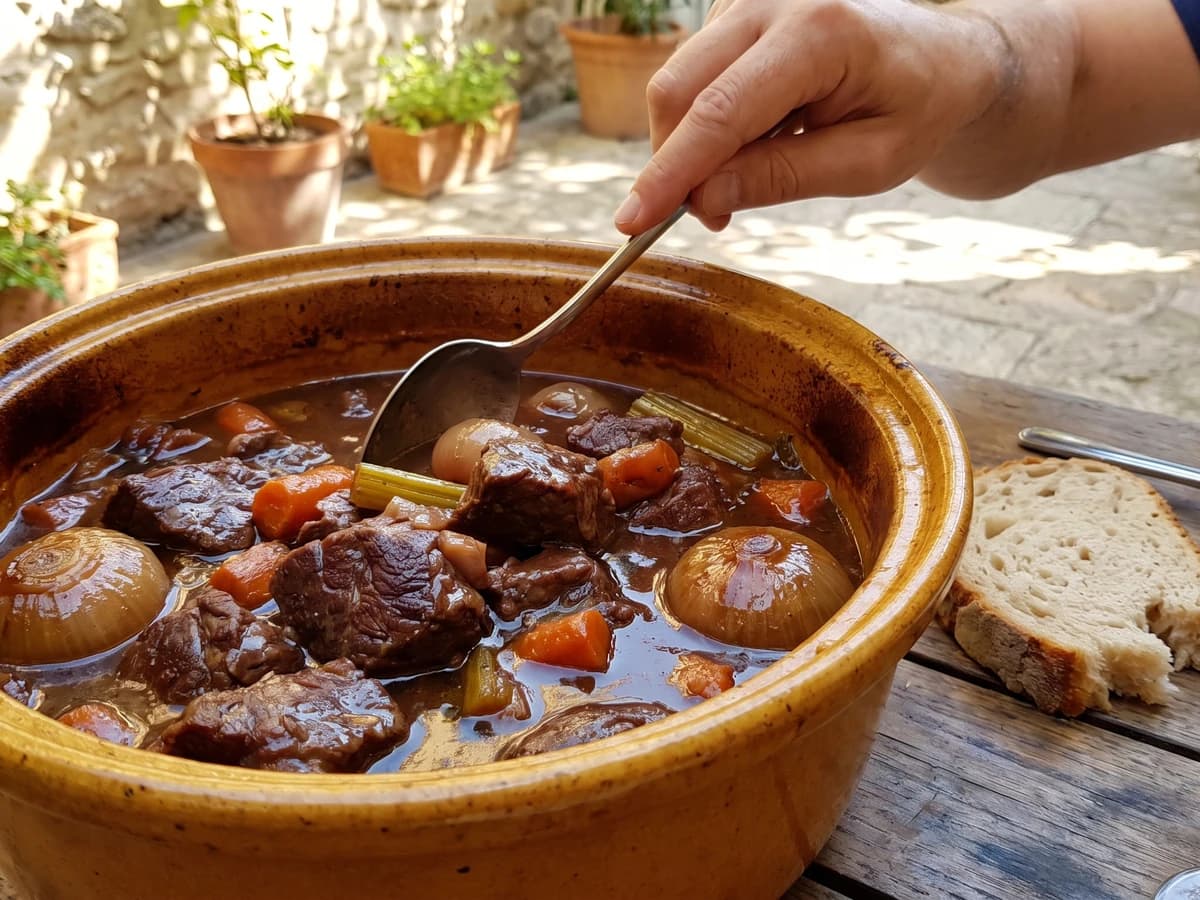
Beef shoulder larded with bacon, sharpened by red wine and vinegar, then sealed with garlic, vegetables, and dry lemon peel until the low oven turns it yielding and the gravy darkly glossy.