Chef Juliette
Suet Dumpling
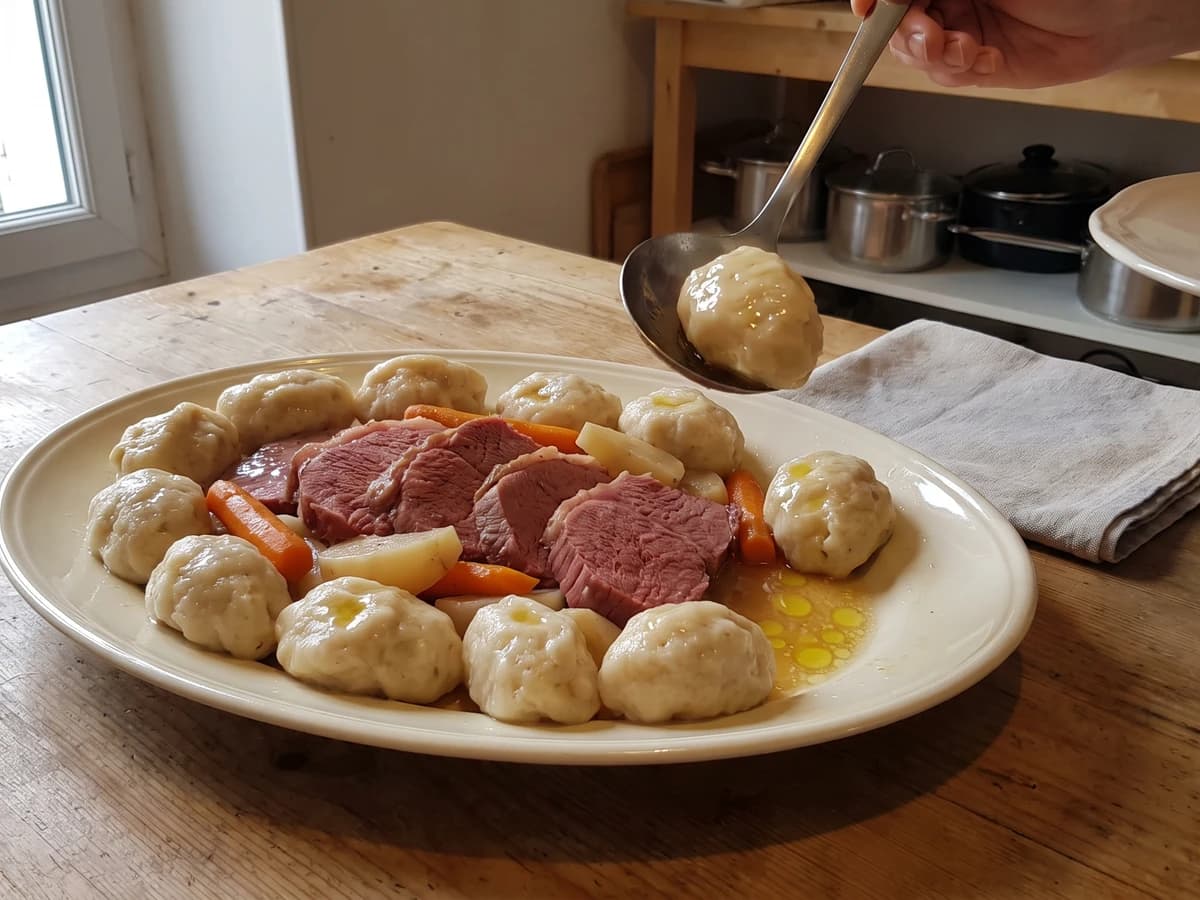
Boulettes au suif, poached beside salt beef, turn equal weights of flour and finely chopped suet into tender, rich dumplings. Keep the beef liquor at a bare tremble and the old garnish works beautifully at home.
A cooking platform built around craft, culture, and the stories behind what we eat.
Created by Chef Juliette
Based on No. 2074, Champignons Grillés, from Le Guide Culinaire (1907) by Auguste Escoffier
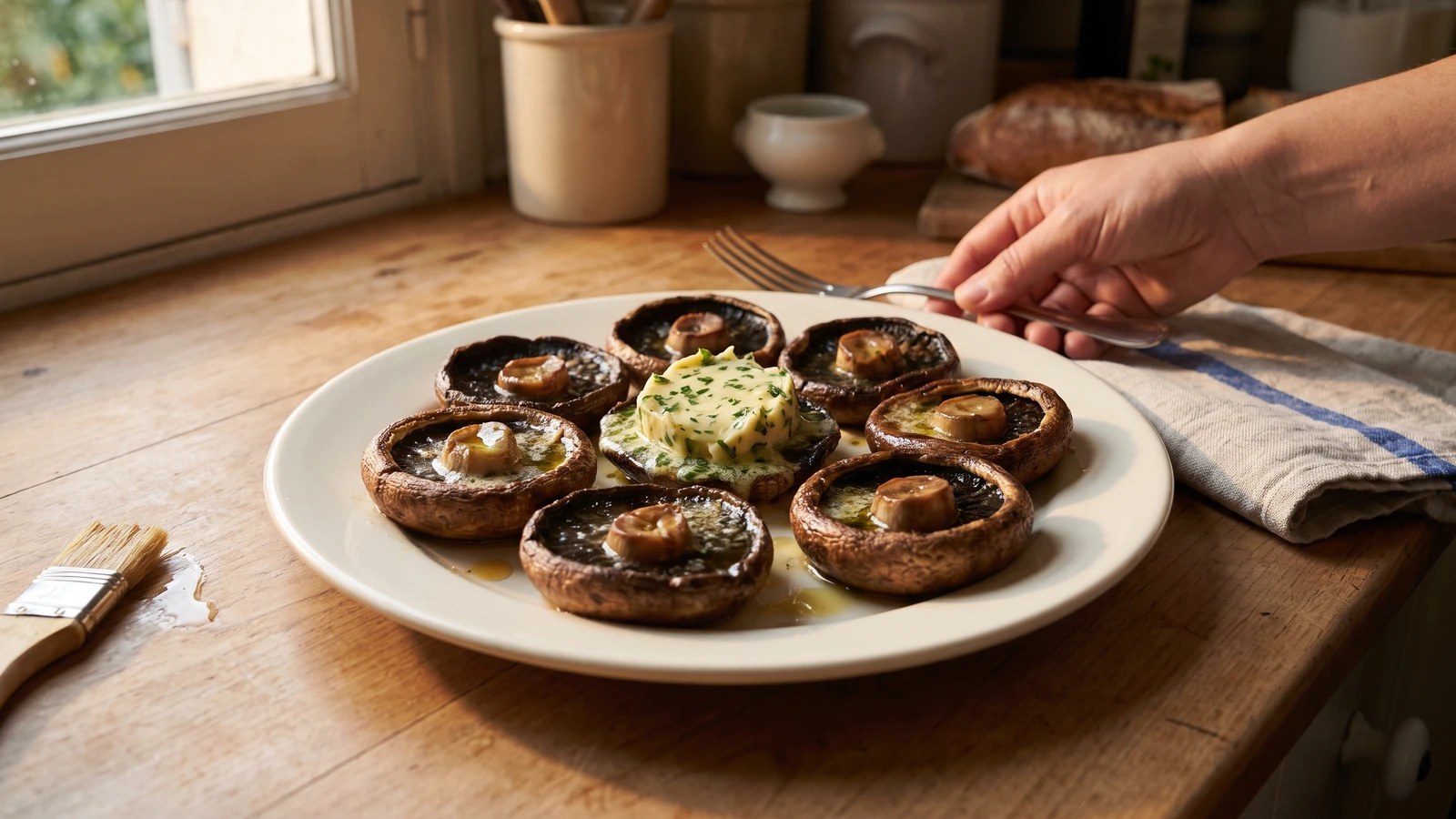
Eight bronzed mushroom caps, grilled gently so they stay tender, circle a mound of lemon-parsley maître d'hôtel butter: a quick side that proves heat control matters more than complication.
Champignons Grillés (gently grilled mushroom caps) teach one true thing before you touch the pan: mushrooms need measured heat. Grill them patiently and they become supple, bronze, and glossy with their own juices; rush them under a fierce flame and the edges toughen before the thick centers are tender.
The old entry asked nothing of a saucier and nothing from the stockpot. It assumed a salamander glowing overhead, a pantry holding maître d'hôtel butter ready for service, and brigade quantities arranged on a round dish. Your broiler supplies the overhead heat, distance from the element makes it gentle, and six tablespoons of freshly mixed butter are enough for four. The brigade mise en place was scaffolding and can go. Peeled caps, a brush of oil, patient grilling, and softened butter at the center are the dish, so those stay.
The finished caps should yield easily under a knife while keeping their shape, with maître d'hôtel butter beginning to slump at the edge of the warm platter. Set the rack far enough from the broiler before you begin. That distance decides everything.
Champignons de Paris take their name from the cultivated mushrooms raised for generations in the cool limestone workings beneath and around Paris, which supplied the city's markets beyond the brief season of meadow fungi. Grilling the largest caps and serving them with maître d'hôtel butter passed readily between Parisian cuisine bourgeoise and the grand kitchen, where this spare preparation appeared as either a vegetable dish or a garnish.
Quantity
8 caps, about 1½ pounds (680 g)
stems removed and caps carefully peeled
Quantity
1½ tablespoons (22 ml / 20 g)
Quantity
6 tablespoons (90 ml / 85 g)
very soft but not melted
Quantity
2 tablespoons (30 ml / 8 g)
finely chopped
Quantity
2 teaspoons (10 ml / 10 g)
Quantity
1 teaspoon (5 ml / 6 g)
divided
Quantity
½ teaspoon (2.5 ml / 1 g)
divided
| Ingredient | Quantity |
|---|---|
| large Paris mushroom capsstems removed and caps carefully peeled | 8 caps, about 1½ pounds (680 g) |
| neutral oil, such as grapeseed oil | 1½ tablespoons (22 ml / 20 g) |
| unsalted buttervery soft but not melted | 6 tablespoons (90 ml / 85 g) |
| flat-leaf parsleyfinely chopped | 2 tablespoons (30 ml / 8 g) |
| fresh lemon juice | 2 teaspoons (10 ml / 10 g) |
| fine sea saltdivided | 1 teaspoon (5 ml / 6 g) |
| freshly ground black pepperdivided | ½ teaspoon (2.5 ml / 1 g) |
Beat the softened butter with the parsley, lemon juice, ¼ teaspoon of the salt, and ⅛ teaspoon of the pepper until evenly flecked and pliable. Maître d'hôtel butter is a compound butter, not a separate cooked sauce, and it should hold a soft mound without running. If it becomes greasy or sheds liquid, the butter has grown too warm. Ça se rattrape: chill the bowl for 5 minutes, then beat again until smooth. Keep it at cool room temperature.
Place an oven rack about 8 inches (20 cm) beneath the broiler and heat the broiler for 10 minutes. This distance is the home equivalent of a gently managed salamander: close enough to bronze the caps, far enough to cook their thick flesh before the surface hardens. Set a bare rimmed metal sheet pan beside the stove.
Wipe the mushrooms free of grit. Pinch the thin skin at the rim of each cap and pull it toward the center, removing only the skin and not gouging the flesh. Season both sides just before cooking with the remaining salt and pepper, then use a pastry brush to coat them thinly and evenly with the oil. Brushing matters: a heavy pour leaves the caps greasy while bare patches dry under the broiler.
Arrange the caps on the sheet pan with their rounded sides facing the heat. Broil for 6 to 8 minutes, until lightly bronzed, then turn them hollow-side up and cook for another 5 to 7 minutes. They are ready when a small knife enters the thickest part with little resistance and the edges remain plump. If the surfaces darken before the centers soften, don't leave them under the fierce heat. Ça se rattrape: move the tray to the middle rack, switch the oven to 375°F (190°C), and finish them for 4 to 6 minutes.
Set the mushrooms on a slightly warmed round platter, rounded sides up, overlapping them loosely in a ring. Mound the well-softened maître d'hôtel butter in their midst exactly as the original preparation intends. Bring the platter to the table at once, while the butter is still shaped but beginning to soften against the warm caps. À table!
1 serving (about 150g)
Culinary guides, cultural storytelling, and the editorial depth that makes cooking meaningful.
Discover Culinary ExplorerChef Juliette
Boulettes au suif, poached beside salt beef, turn equal weights of flour and finely chopped suet into tender, rich dumplings. Keep the beef liquor at a bare tremble and the old garnish works beautifully at home.

Chef Juliette
Bread, flour, frangipane, and rice become four cool, supple panades for binding forcemeats, each changing body and flavor while preserving tenderness. The finest Mousselines need none, and knowing that distinction is the lesson.

Chef Juliette
Panade au pain is bread, milk, salt, heat, and attention: stir until the paste releases cleanly, butter it against a skin, and you have the quiet binder behind tender French farces.

Chef Juliette
Panade de farine teaches the drying stroke behind pâte à choux: flour meets boiling buttered water, then stays over the fire until the paste gathers, smooths, and quits the pan cleanly.