Chef Juliette
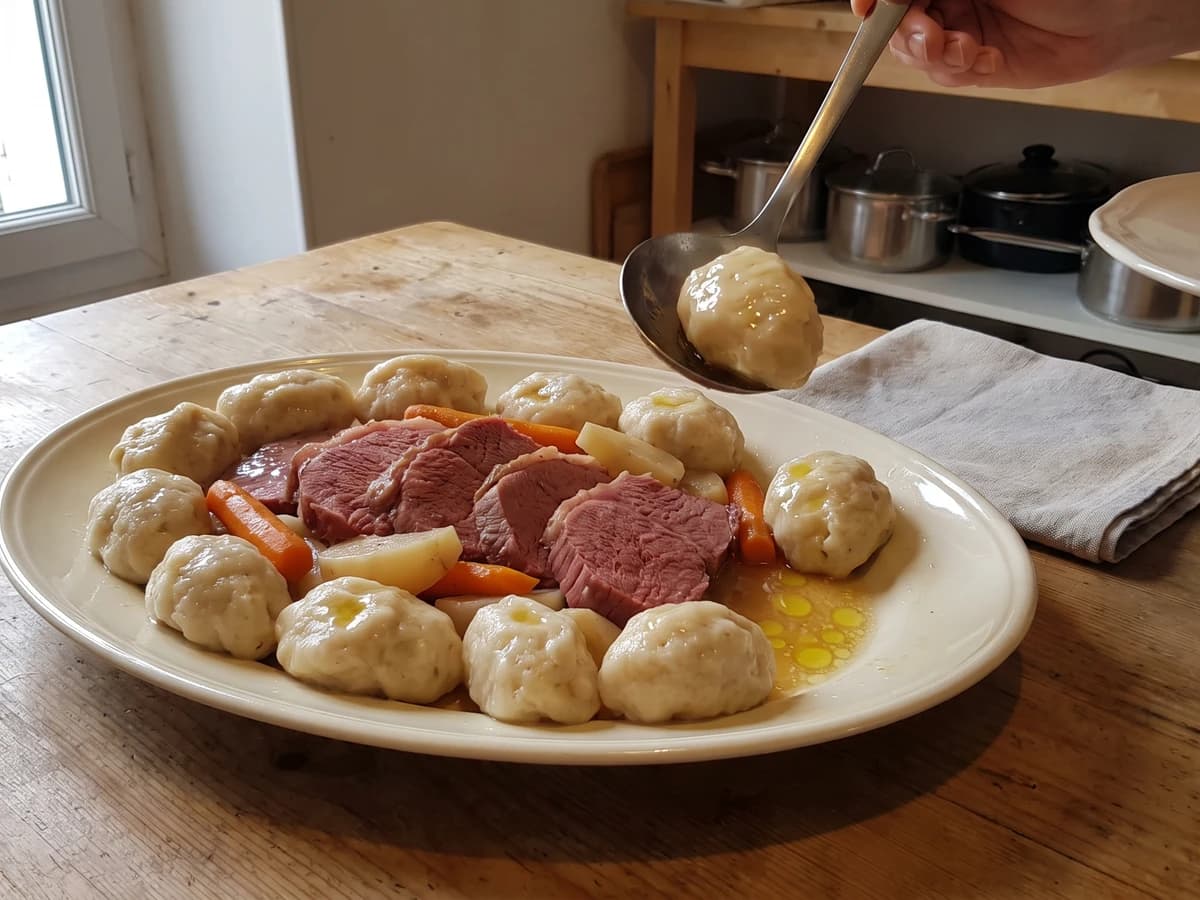
Suet Dumpling
Boulettes au suif, poached beside salt beef, turn equal weights of flour and finely chopped suet into tender, rich dumplings. Keep the beef liquor at a bare tremble and the old garnish works beautifully at home.
A cooking platform built around craft, culture, and the stories behind what we eat.

Created by Chef Juliette
Based on No. 2073, Champignons Sautés, from Le Guide Culinaire (1907) by Auguste Escoffier
Dry mushrooms, a broad hot pan, and real butter: champignons sautés turn bronze instead of grey, then take parsley at the last second. This quick side teaches the first law of sautéing.
Champignons sautés (butter-sautéed mushrooms) teach the cleanest law of the frying pan: dry mushrooms brown, wet mushrooms stew. Wash them because the source tells us to, but dry them with conviction. Once ciseled and seasoned, they must meet the hot pan immediately, before the salt draws moisture to the surface.
The original entry assumed a fierce range, a frying pan broad enough for service quantities, and a timbale, the deep metal serving dish kept ready for the table. It called for no saucier tending a sauce, no stock kept on the fire, and no salamander, so neither do you. For one cook, one stove, one evening, a 30 cm skillet used in two quick batches supplies the same fierce, dry heat, while a warmed shallow serving bowl replaces the timbale. The serving vessel is brigade scaffolding. The cisel cut, real butter, uncrowded heat, and parsley at the last second are the dish, and they must stay.
The step that decides everything happens before you light the flame: dry every cap and stem until no bead of water remains. Do that properly, then heat the pan hard and keep your nerve.
Champignons sautés belong to the French cuisine bourgeoise and the Parisian classical repertoire, where simply cooked vegetables served both as side dishes and as garnishes for eggs, poultry, and meat. The method moved easily from the household frying pan to brigade service because it asked for no sauce or stock, only a fierce fire, butter, and quick knife work before the mushrooms went into a timbale. The often-repeated rule that mushrooms must never be washed is a misconception here: the classical instruction washes them, then insists on thorough drying before the sauté.
Quantity
About 10 cups whole (2.4 L / 680 g)
quickly washed, thoroughly dried, and ciseled into 5 mm (¼-inch) slices
Quantity
3 tablespoons (45 ml / 42 g)
Quantity
¾ teaspoon (3.75 ml / 4.5 g)
Quantity
½ teaspoon (2.5 ml / 1 g)
Quantity
¼ cup (60 ml / 15 g)
finely chopped
| Ingredient | Quantity |
|---|---|
| firm button mushroomsquickly washed, thoroughly dried, and ciseled into 5 mm (¼-inch) slices | About 10 cups whole (2.4 L / 680 g) |
| unsalted butter | 3 tablespoons (45 ml / 42 g) |
| fine sea salt | ¾ teaspoon (3.75 ml / 4.5 g) |
| freshly ground black pepper | ½ teaspoon (2.5 ml / 1 g) |
| flat-leaf parsley leavesfinely chopped | ¼ cup (60 ml / 15 g) |
Tip the mushrooms into a colander and rinse them quickly under cool running water, rubbing away any grit with your fingertips. Do not soak them. Shake the colander firmly, spread the mushrooms over a clean towel, roll them gently, then move them to a second dry towel and blot every cap and stem. Leave them for 5 minutes while you prepare the knife and skillet. They are ready when no moisture beads on the surface.
Trim only the dry ends from the stems. Cisel is the book's word for cutting in close, even crosswise strokes, after the manner of a chaff cutter; slice the caps and stems about 5 mm (¼ inch) thick so they cook at the same rate. Divide the mushrooms into two equal batches. Set the empty skillet over high heat for 90 seconds, then season the first batch with half the salt and pepper immediately before it goes into the pan. Leave the second batch unseasoned for now, or its salt will begin drawing out water.
Add half the butter to the hot skillet. As soon as it foams briskly and begins to subside, add the first batch of mushrooms; they should hiss loudly. Spread them in one loose layer, leave them untouched for 45 seconds, then toss every 30 seconds until their released moisture has vanished and the cut faces are mottled deep gold and bronze, 4 to 5 minutes. If the pan fills with liquid, do not pour it away. Stop tossing, spread the mushrooms out, and hold the heat high until the water evaporates; only then resume tossing and let the butter do its browning work. Ça se rattrape. Transfer the first batch to a warm plate, reheat the empty skillet briefly, then repeat with the remaining butter, mushrooms, salt, and pepper.
Return the first batch to the skillet and toss everything together over high heat for 30 seconds. Pull the pan from the flame, sprinkle over the parsley at the last moment, and toss once more. Taste and correct the seasoning, then scrape the mushrooms and every drop of browned butter into a warmed shallow serving bowl. Serve immediately. À table!
1 serving (about 125g)
Culinary guides, cultural storytelling, and the editorial depth that makes cooking meaningful.
Discover Culinary ExplorerChef Juliette
Boulettes au suif, poached beside salt beef, turn equal weights of flour and finely chopped suet into tender, rich dumplings. Keep the beef liquor at a bare tremble and the old garnish works beautifully at home.

Chef Juliette
Bread, flour, frangipane, and rice become four cool, supple panades for binding forcemeats, each changing body and flavor while preserving tenderness. The finest Mousselines need none, and knowing that distinction is the lesson.

Chef Juliette
Panade au pain is bread, milk, salt, heat, and attention: stir until the paste releases cleanly, butter it against a skin, and you have the quiet binder behind tender French farces.

Chef Juliette
Panade de farine teaches the drying stroke behind pâte à choux: flour meets boiling buttered water, then stays over the fire until the paste gathers, smooths, and quits the pan cleanly.